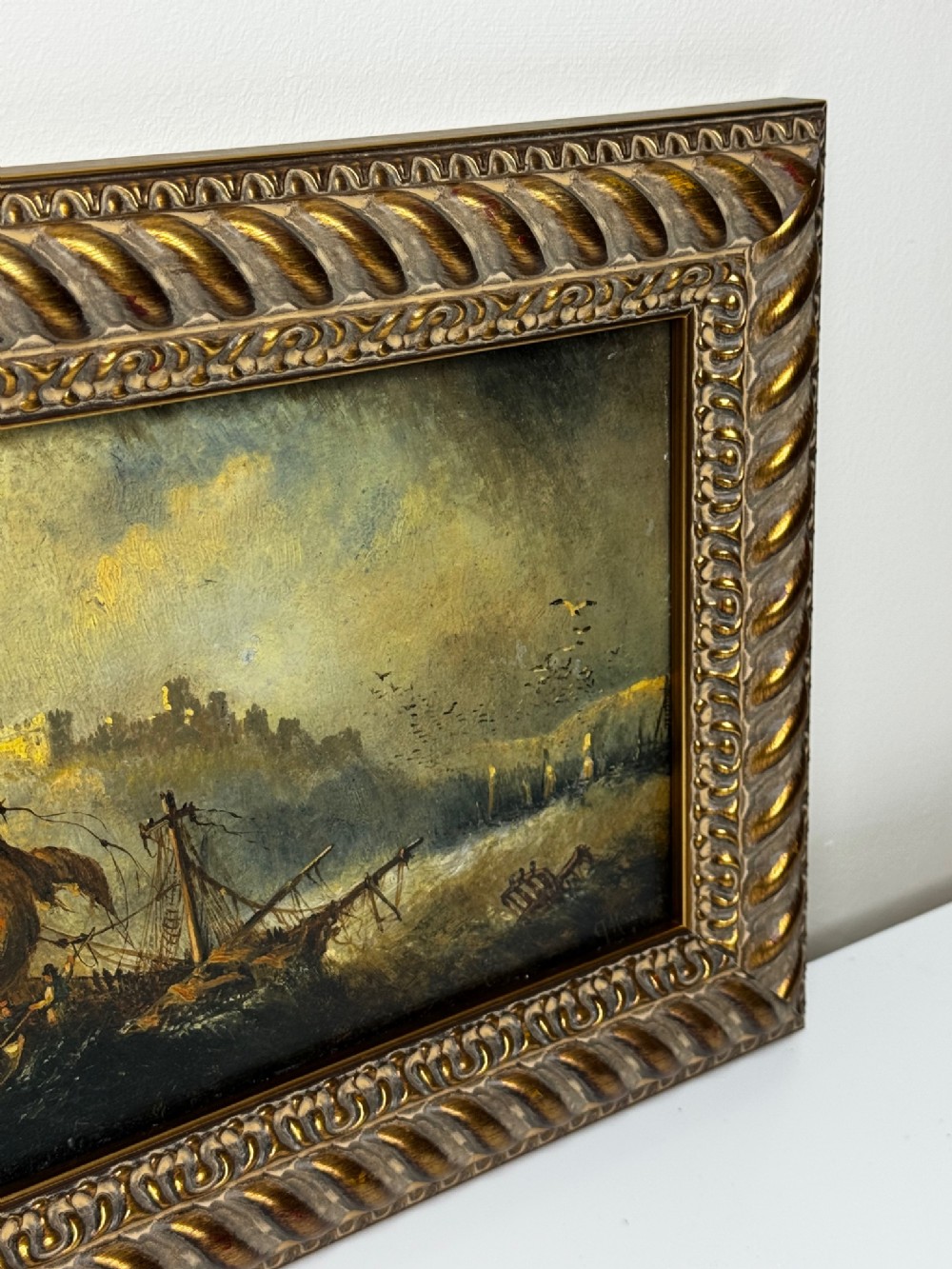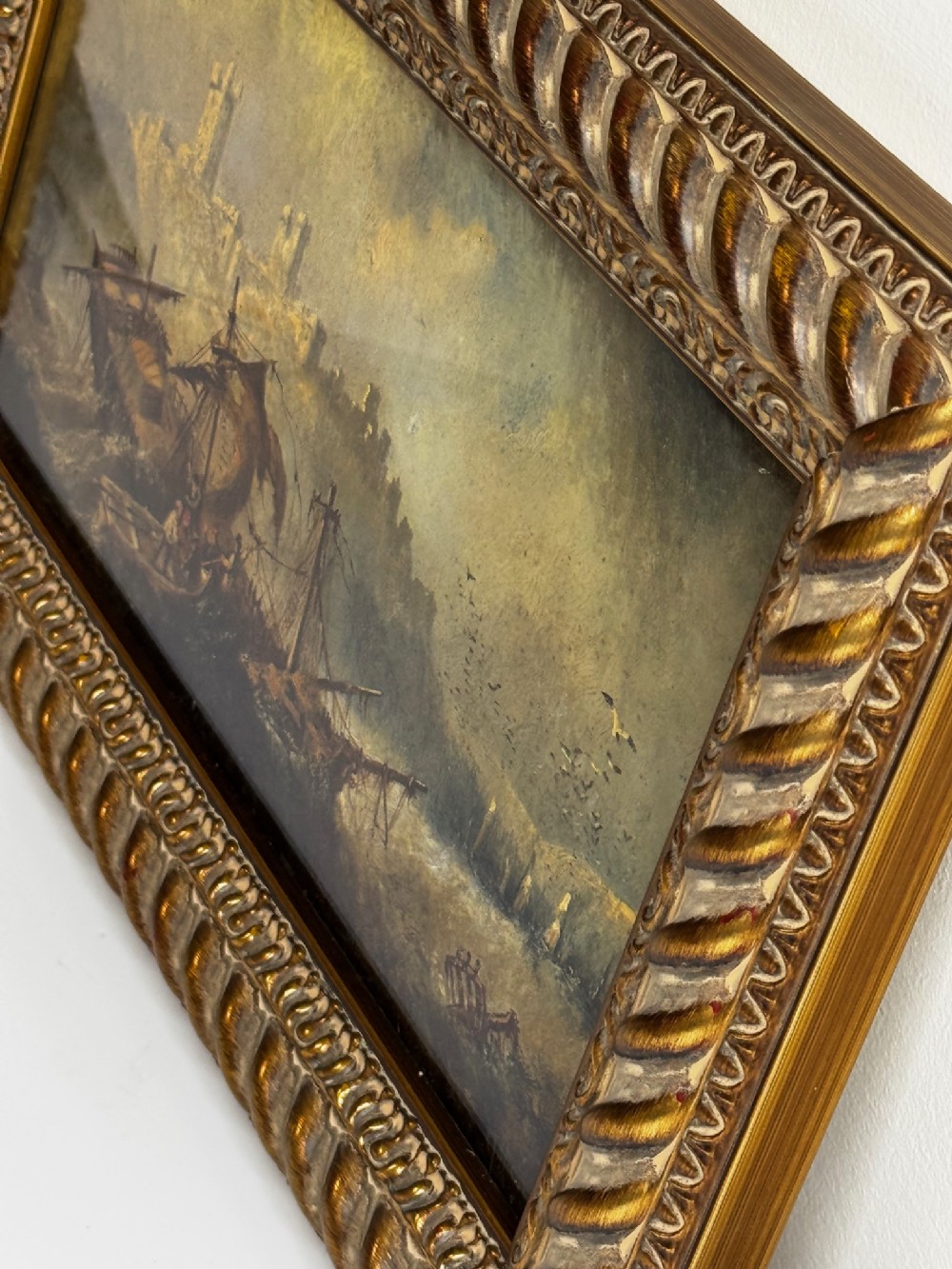
Cheshire Antiques Consultant Ltd has dated this Victorian Maritime Oil Painting to the Victorian era.
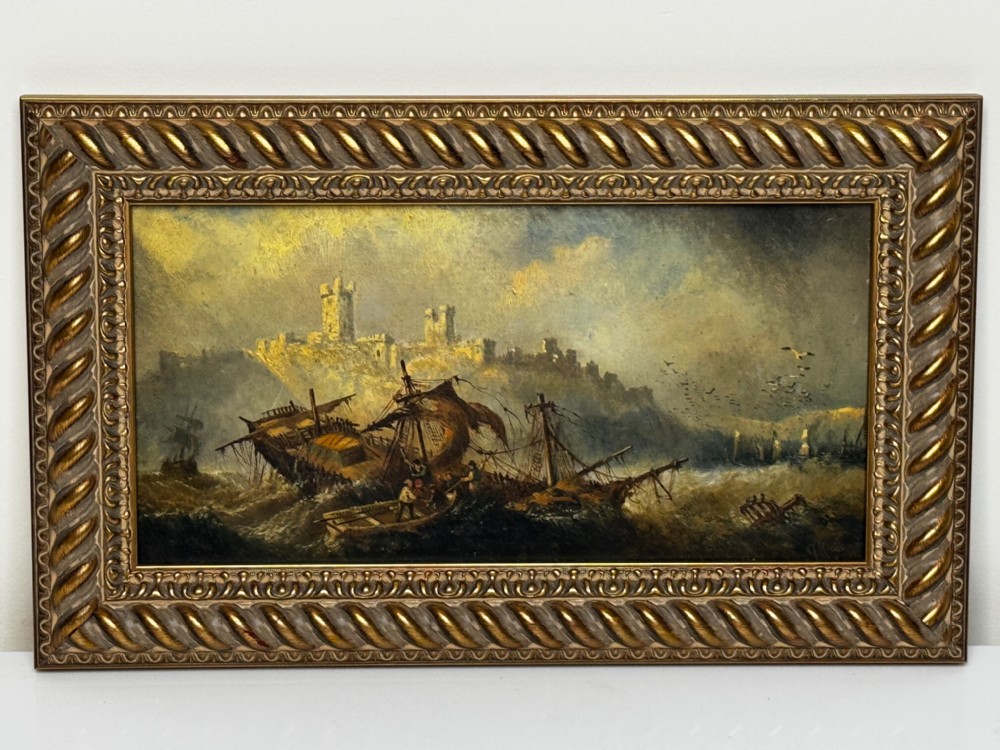
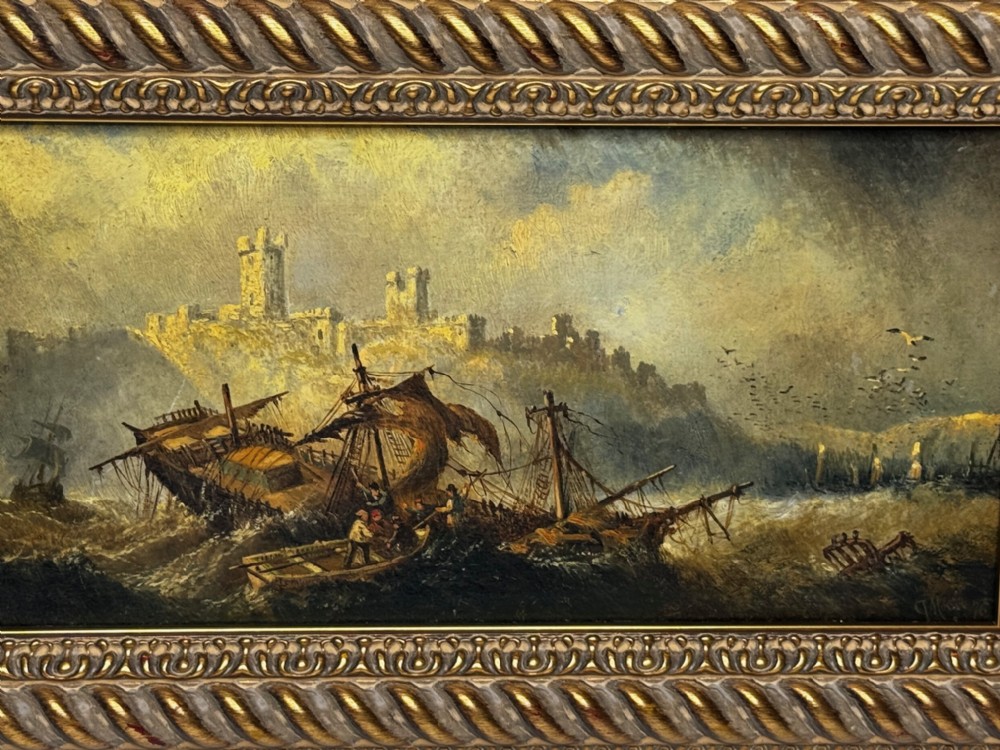
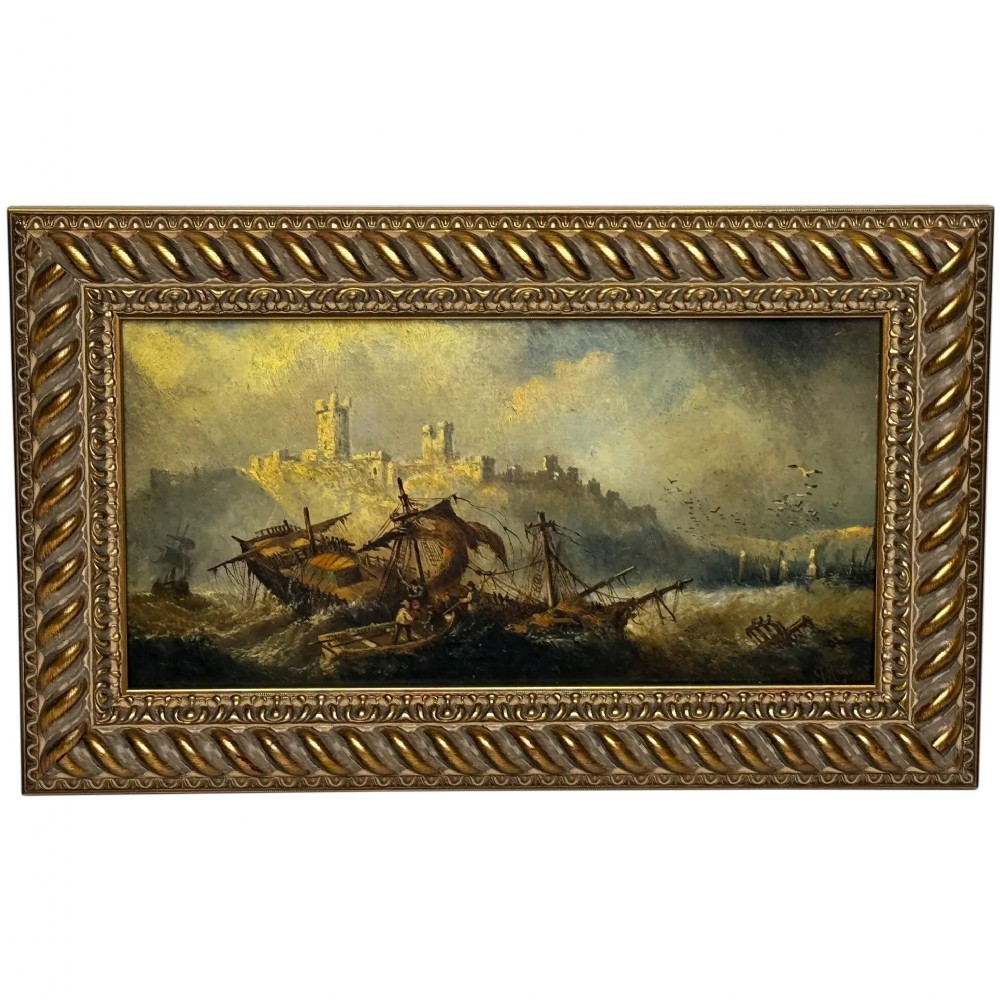
Fast on the Rocks off Dunstanburgh Castle, 1876
Oil on board
Subject & Medium
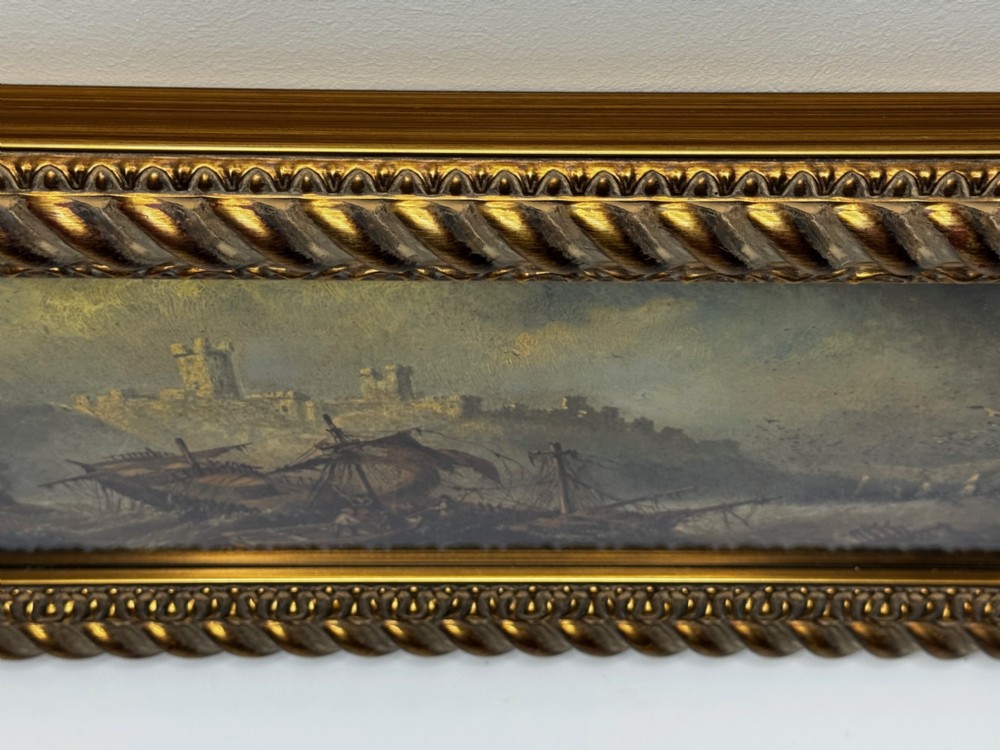
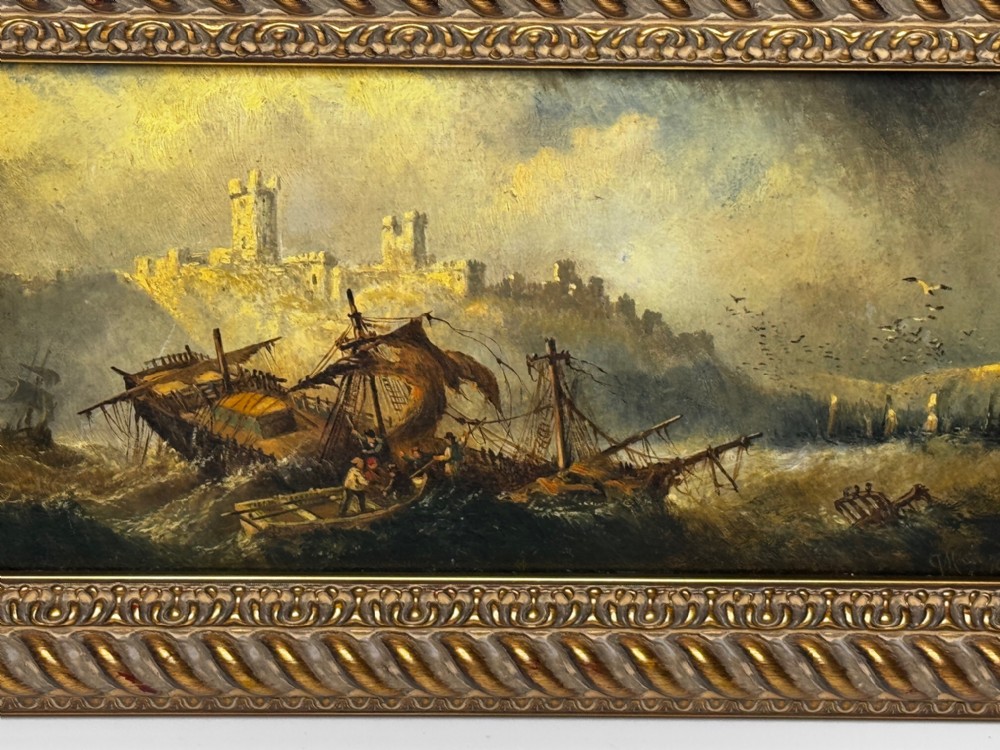
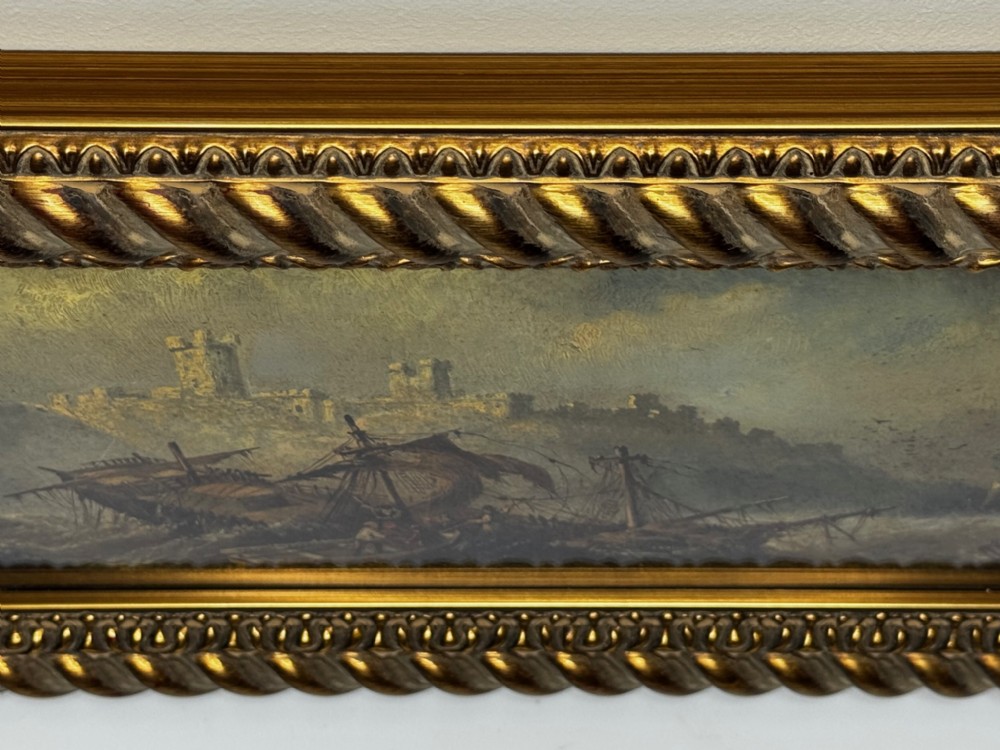
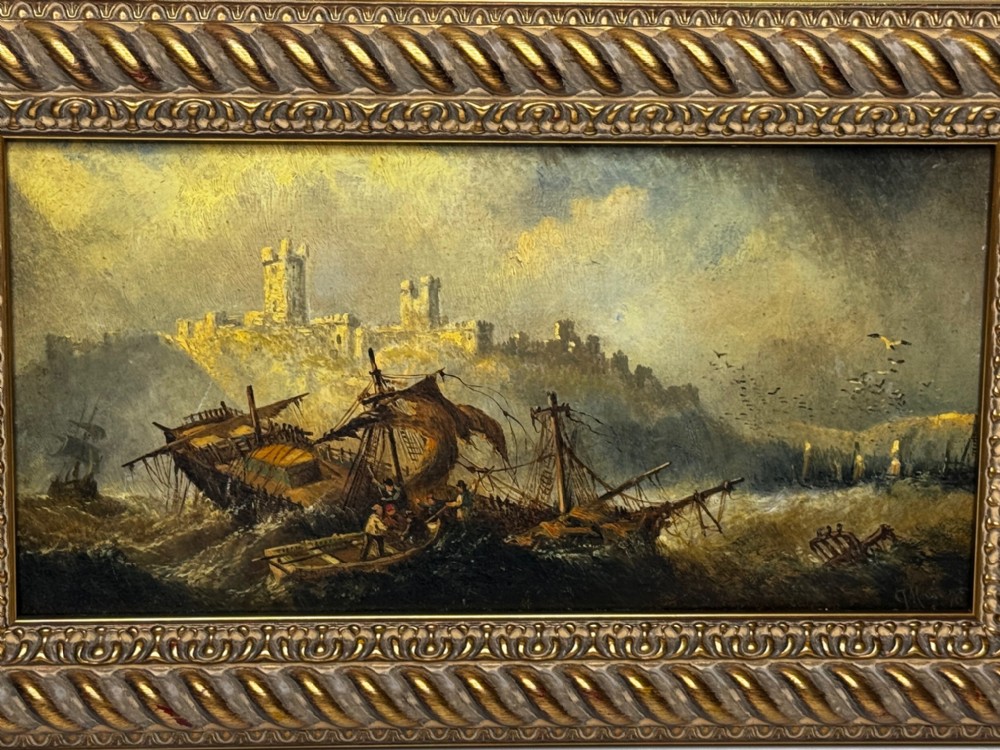
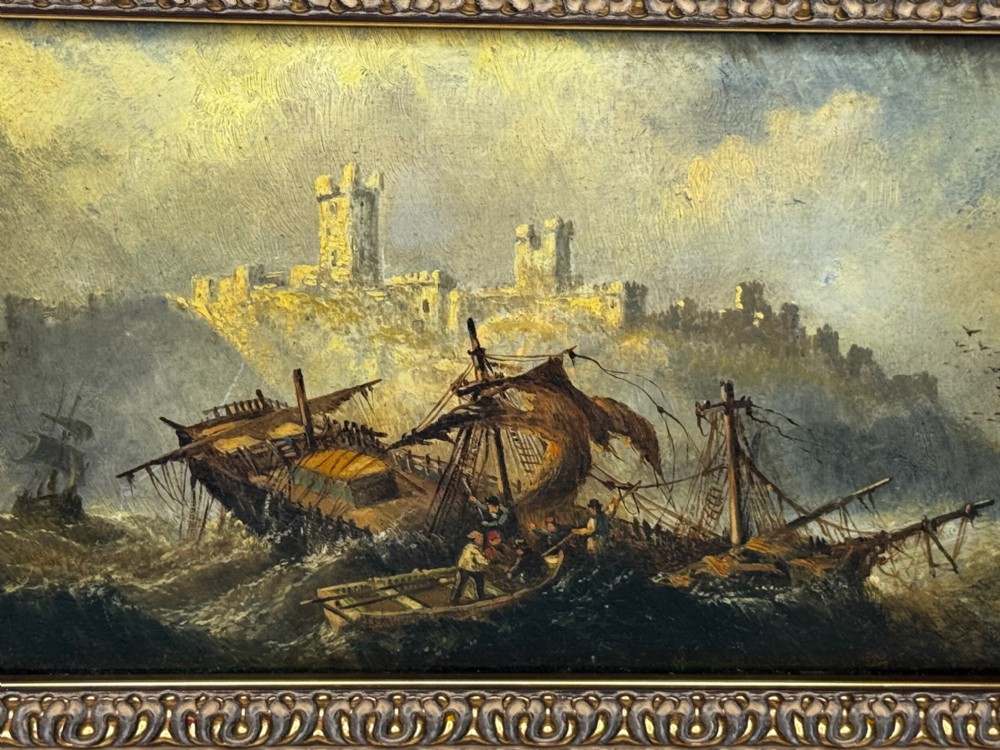
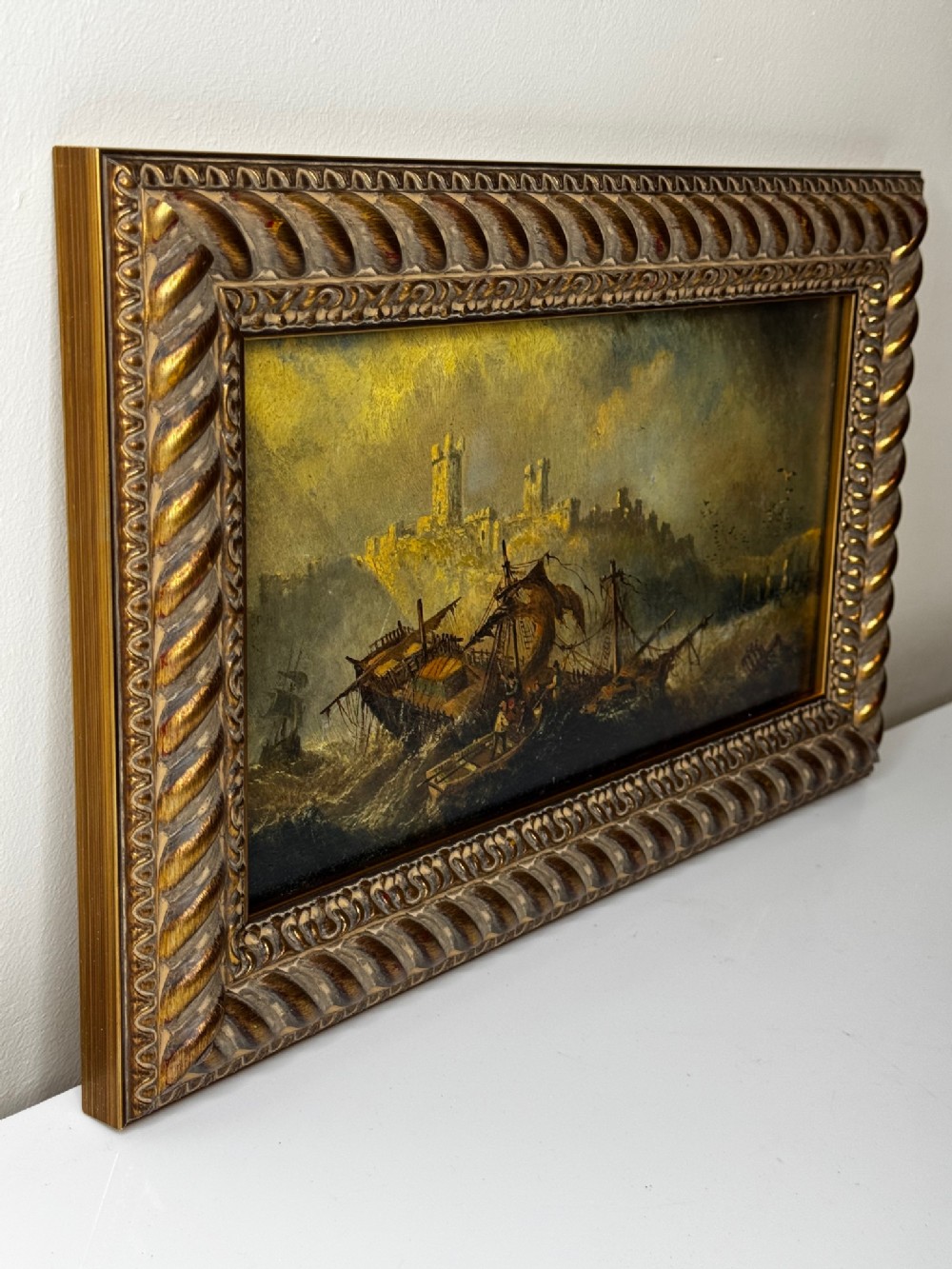
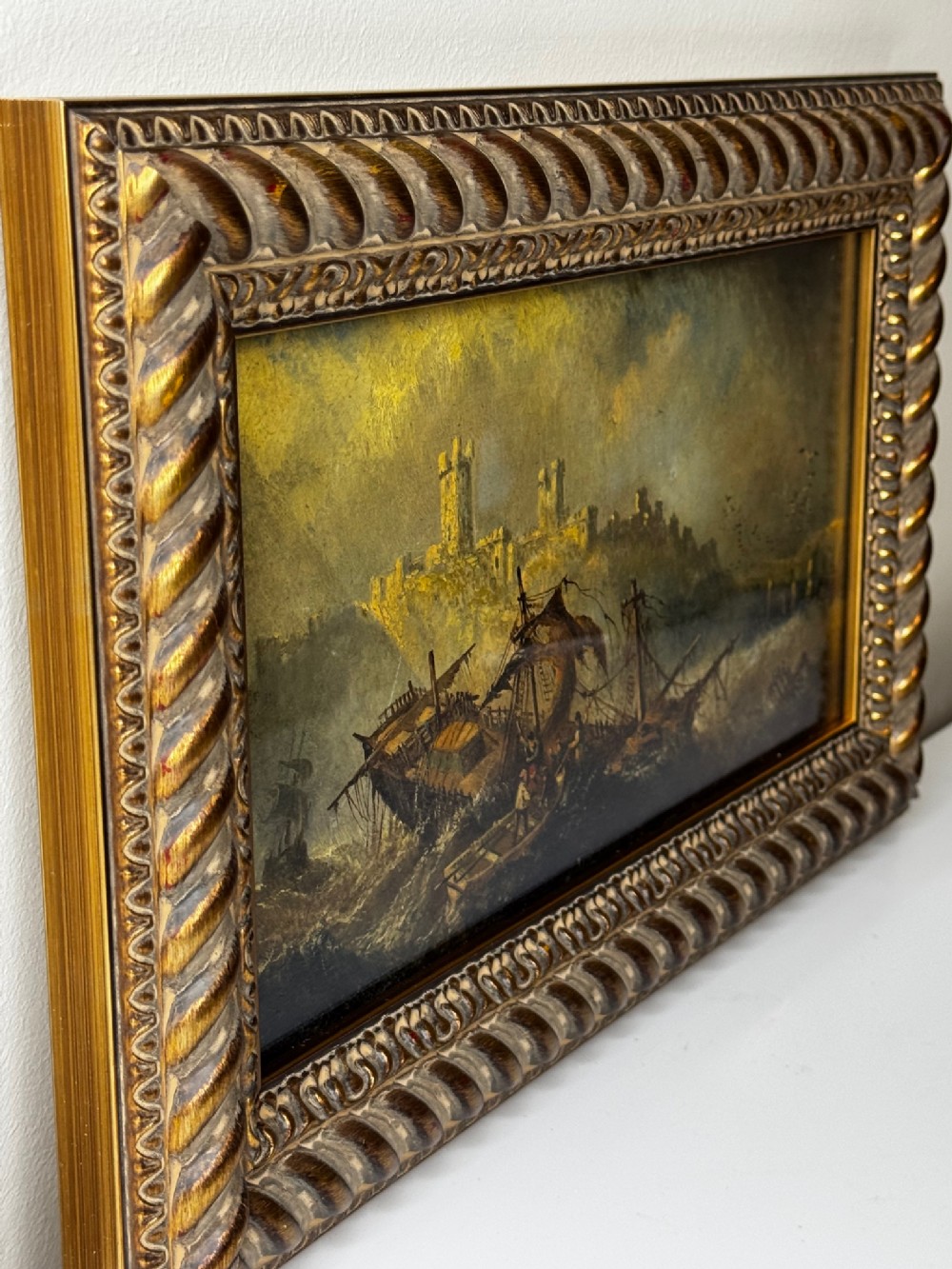
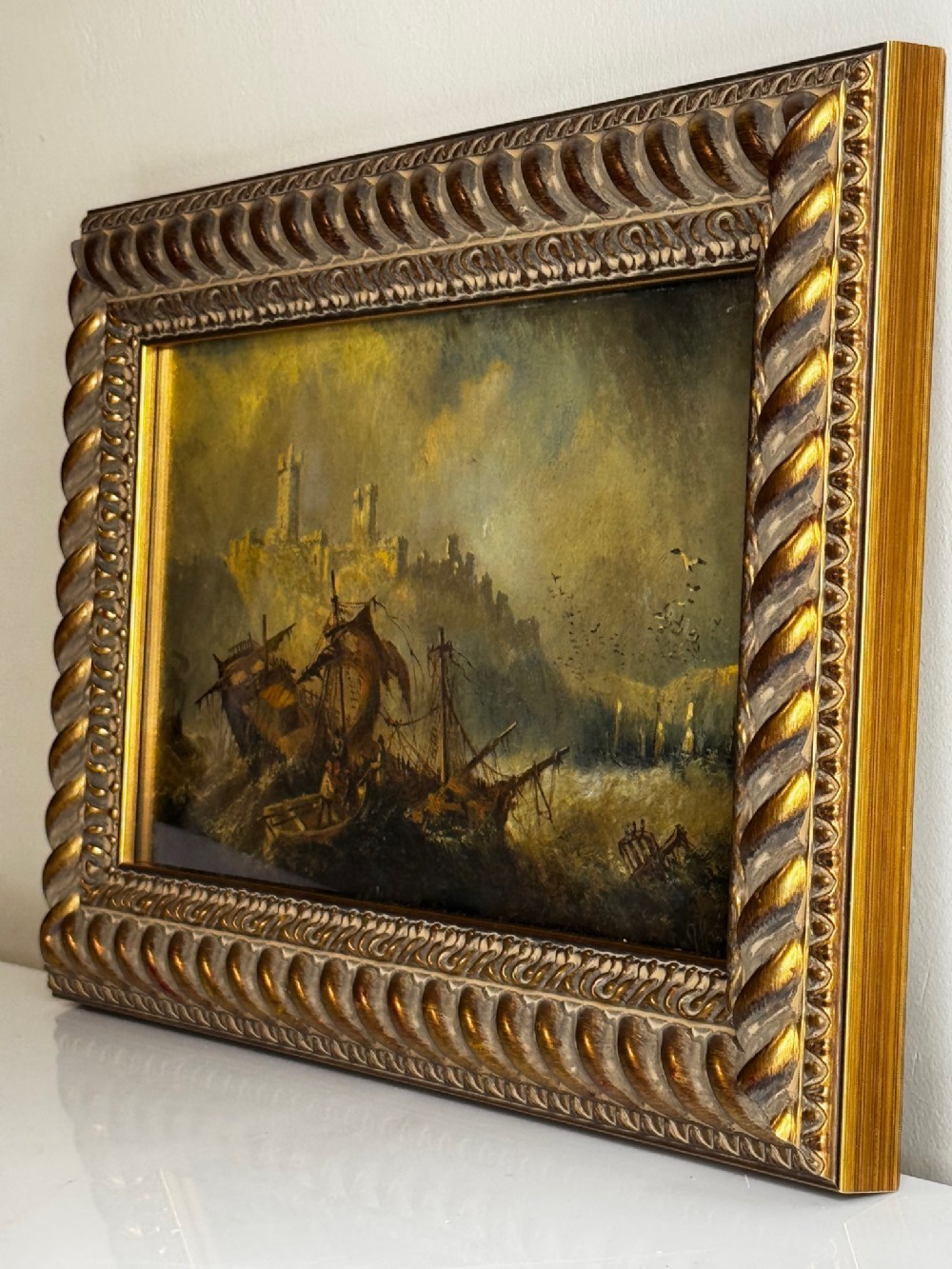
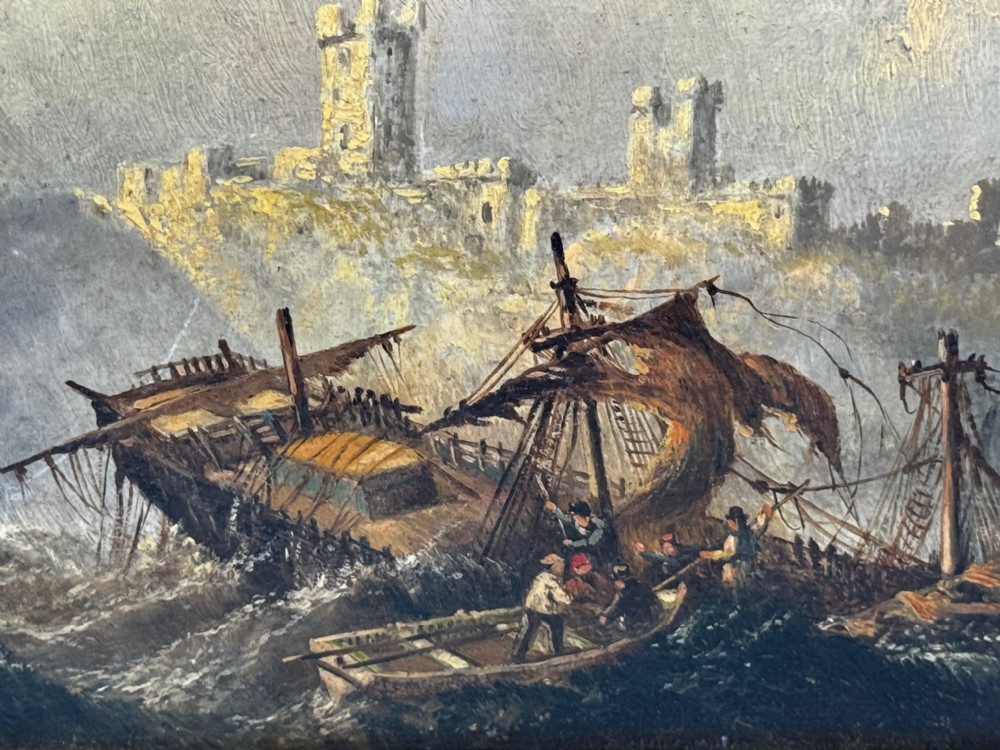
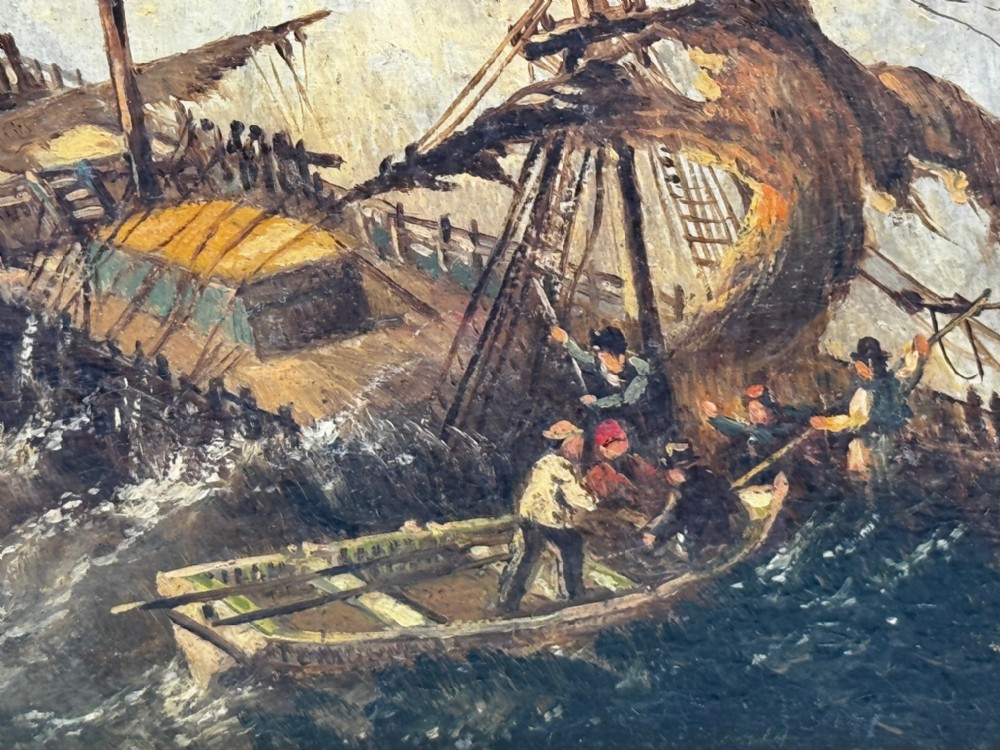
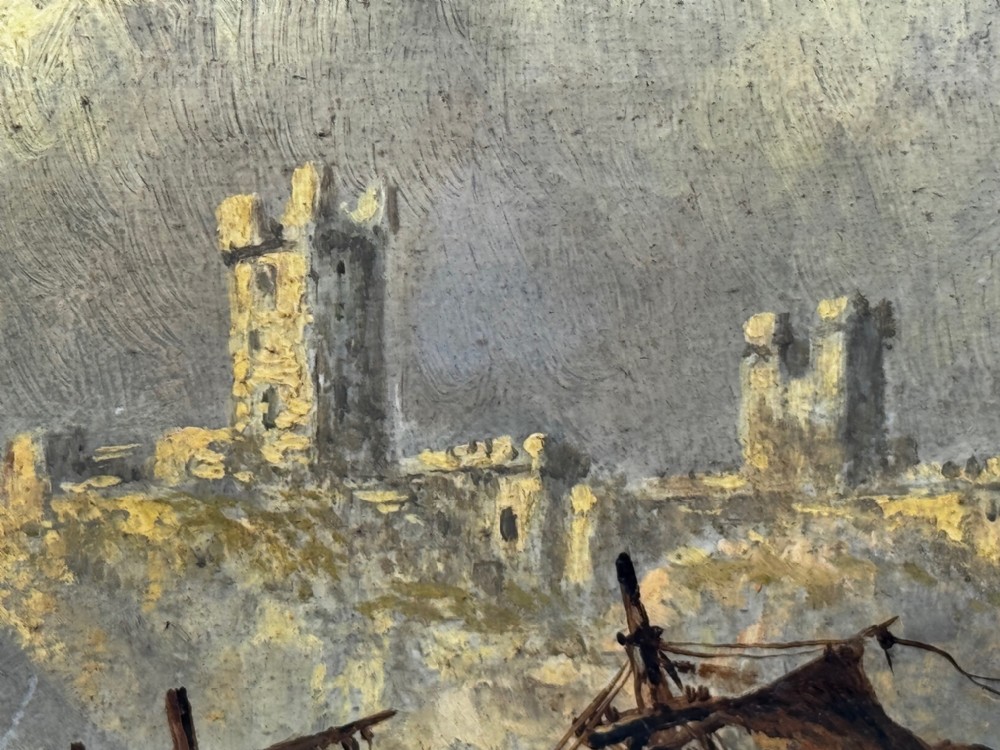
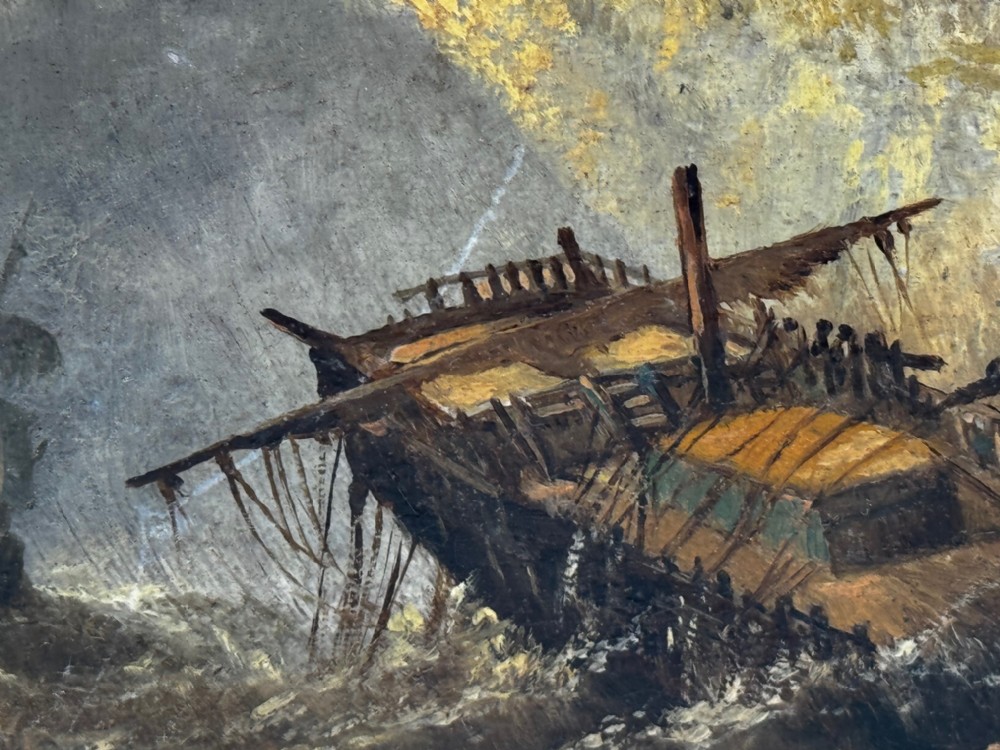
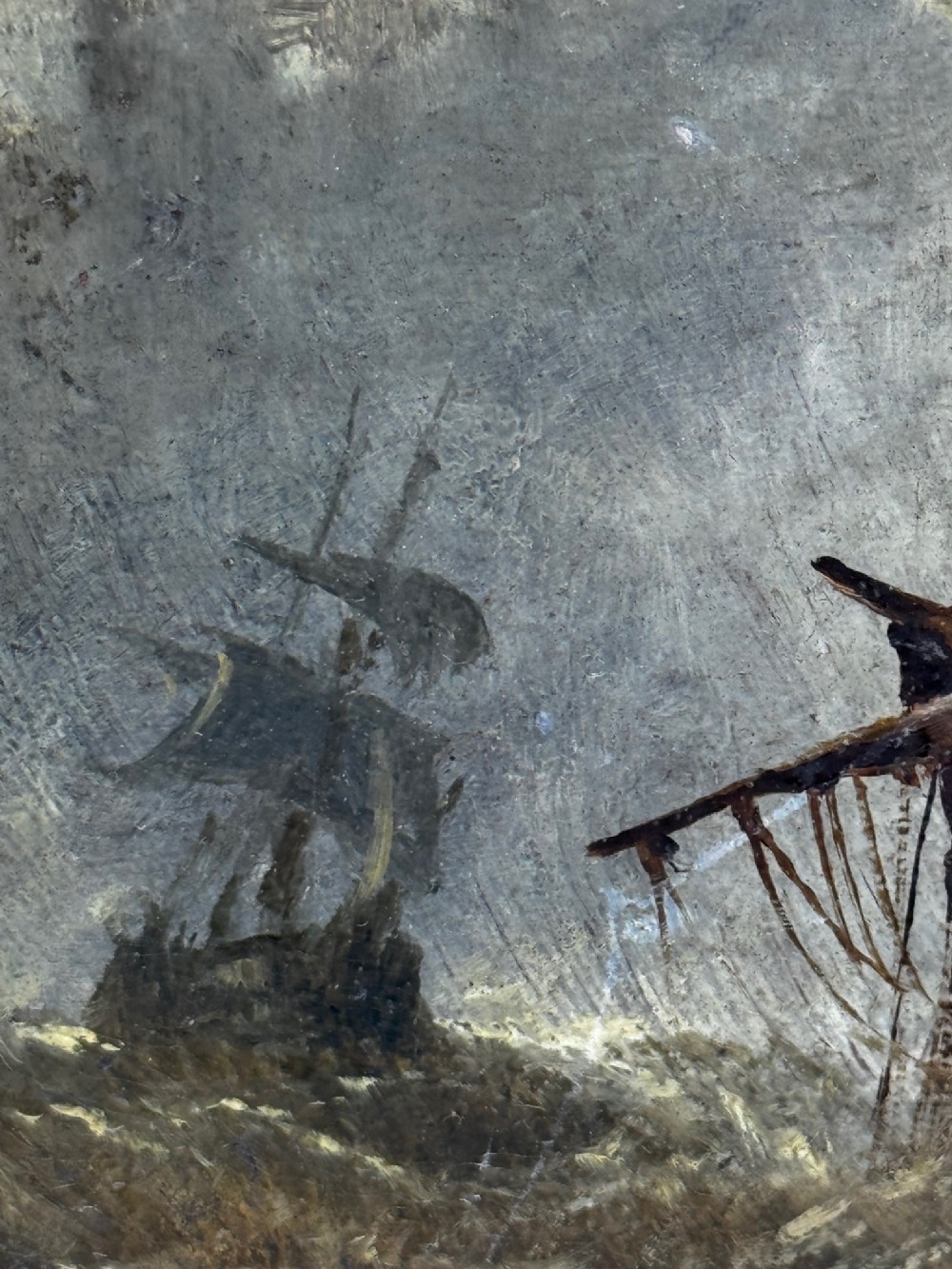
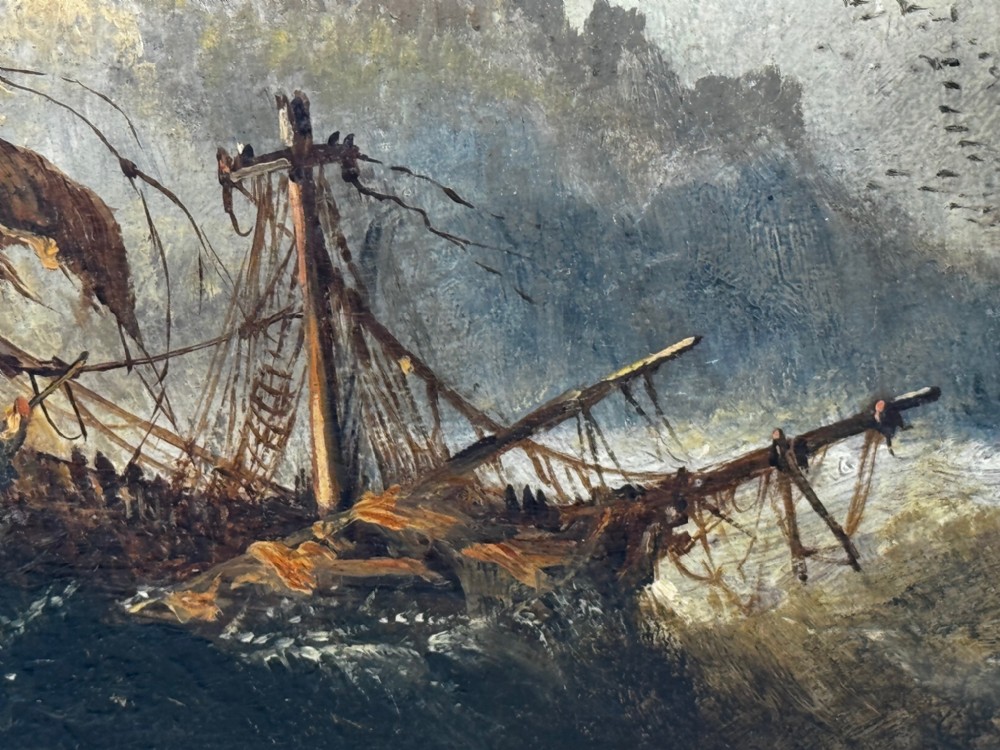
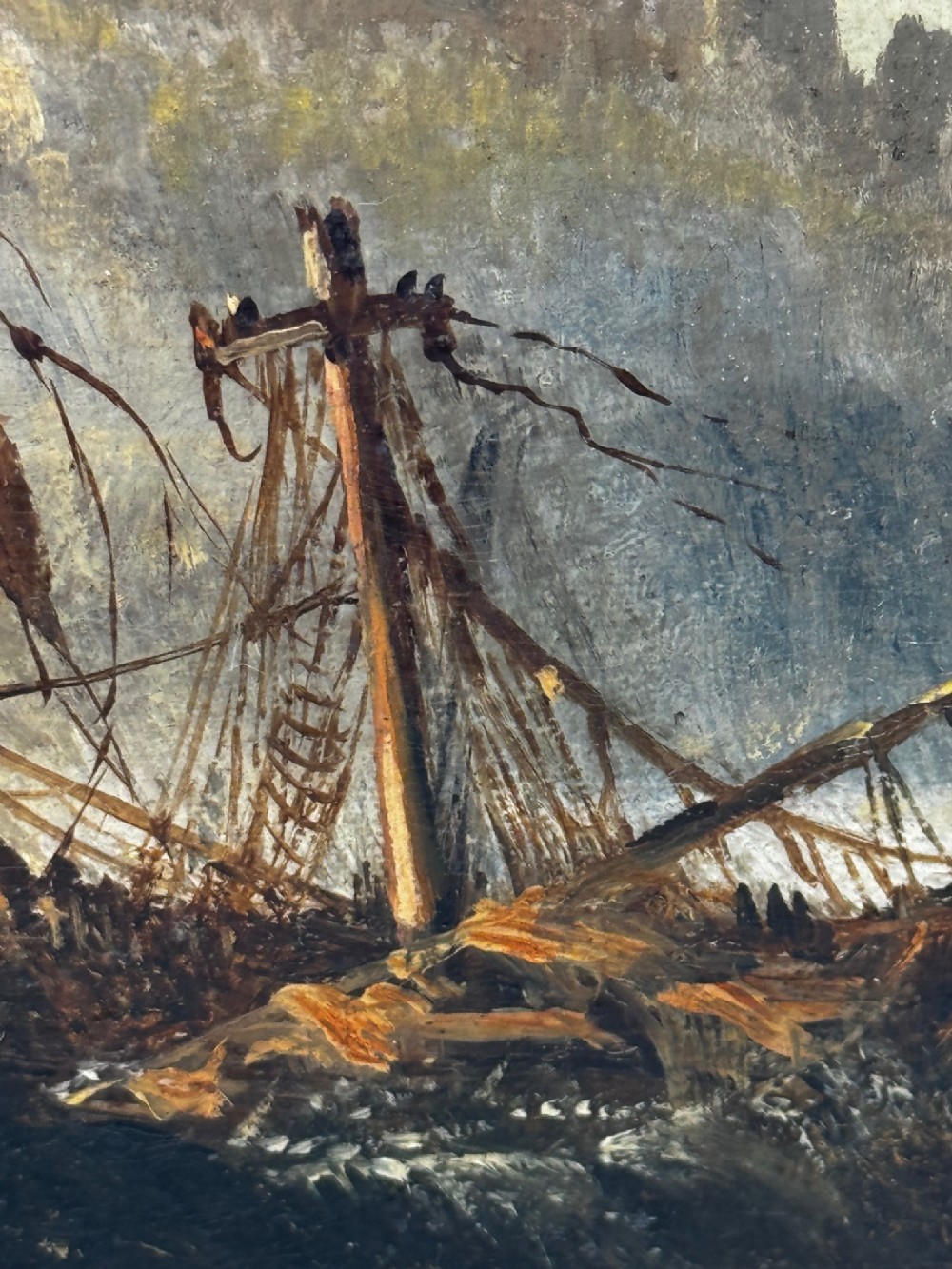
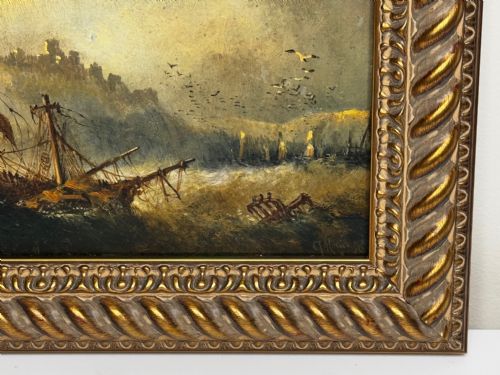
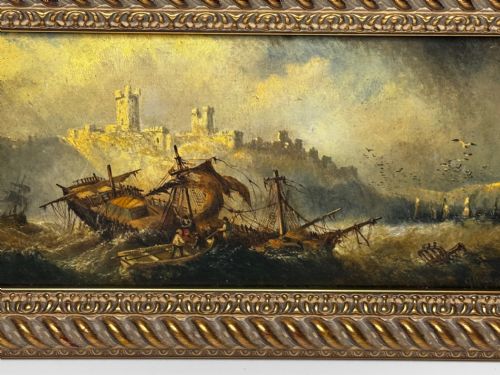
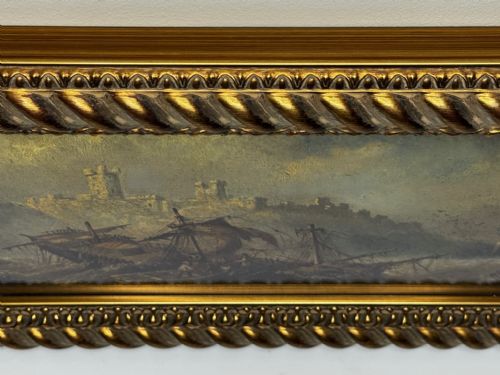
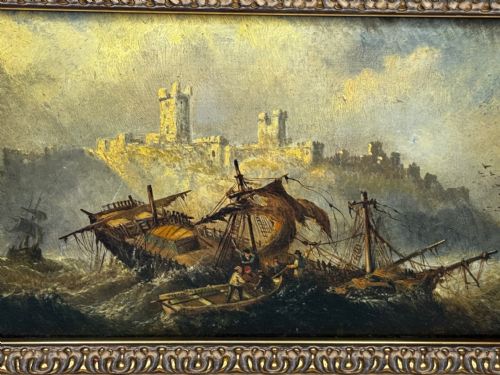
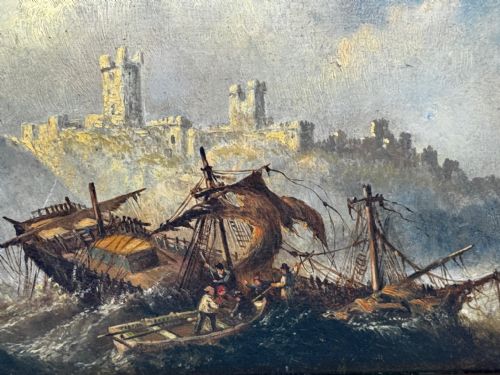
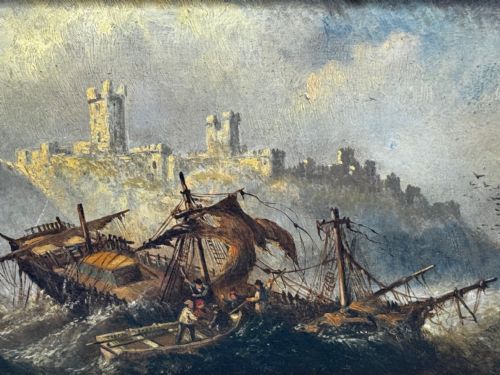
This dramatic coastal marine painting by Claude Thomas Stanfield Moore depicts a three-masted sailing ship wrecked and breaking apart beneath the looming silhouette of Dunstanburgh Castle on the Northumberland coast.
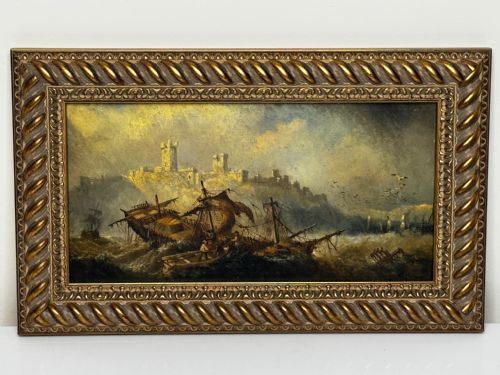
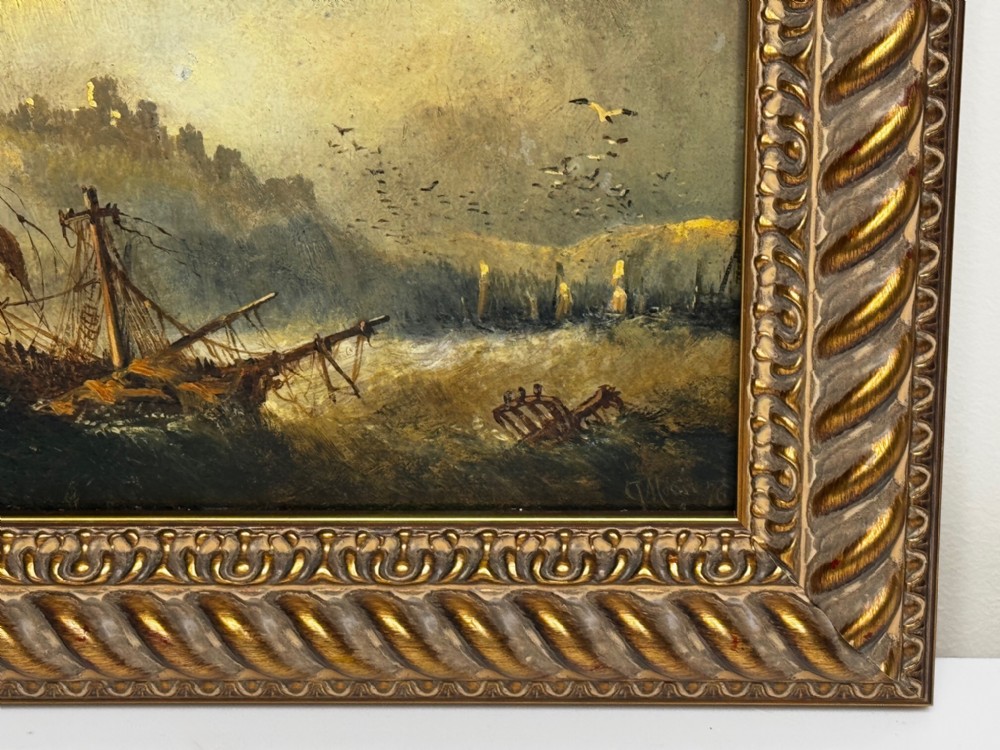
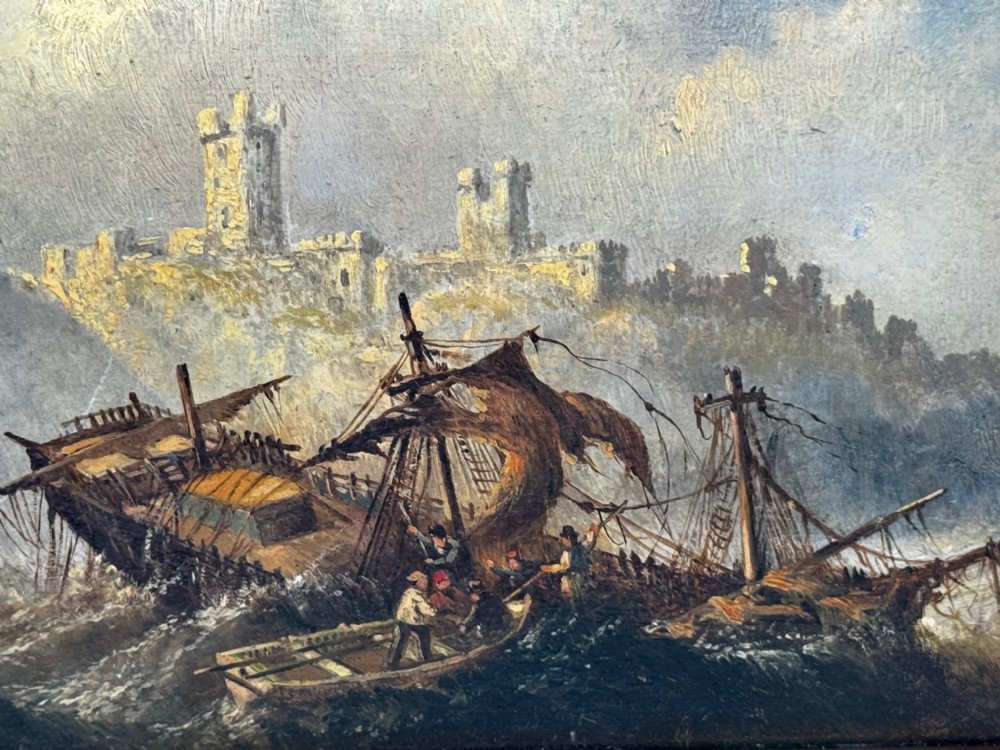
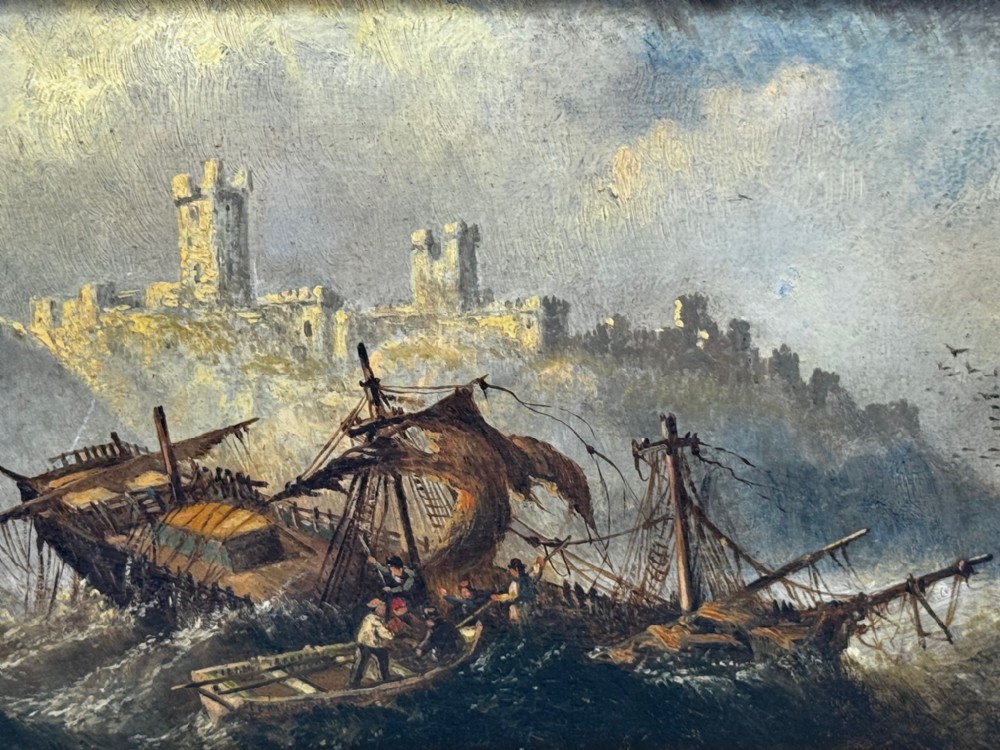
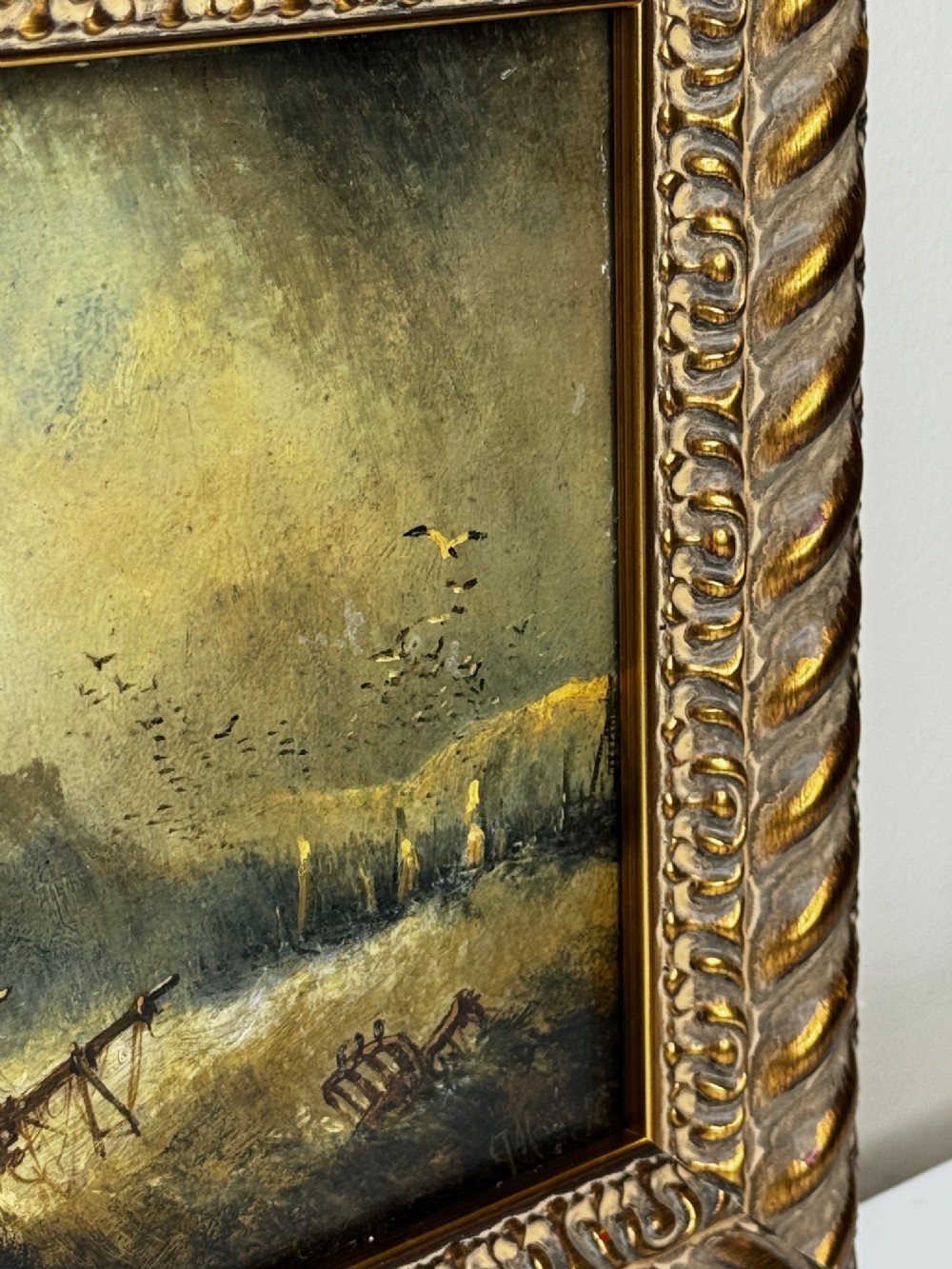
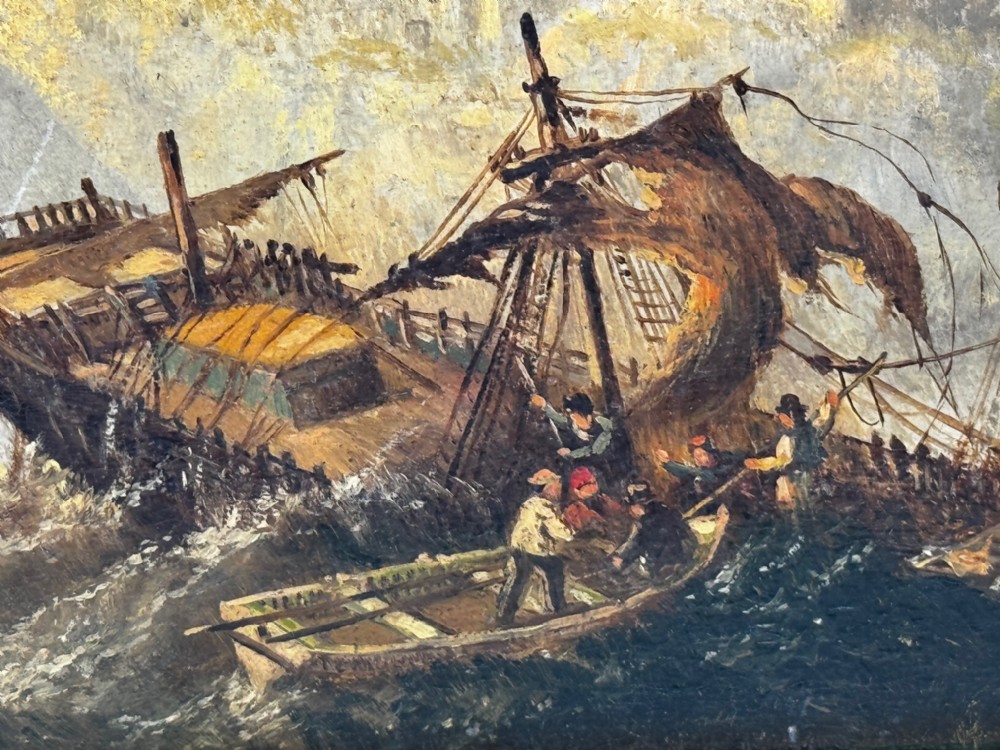
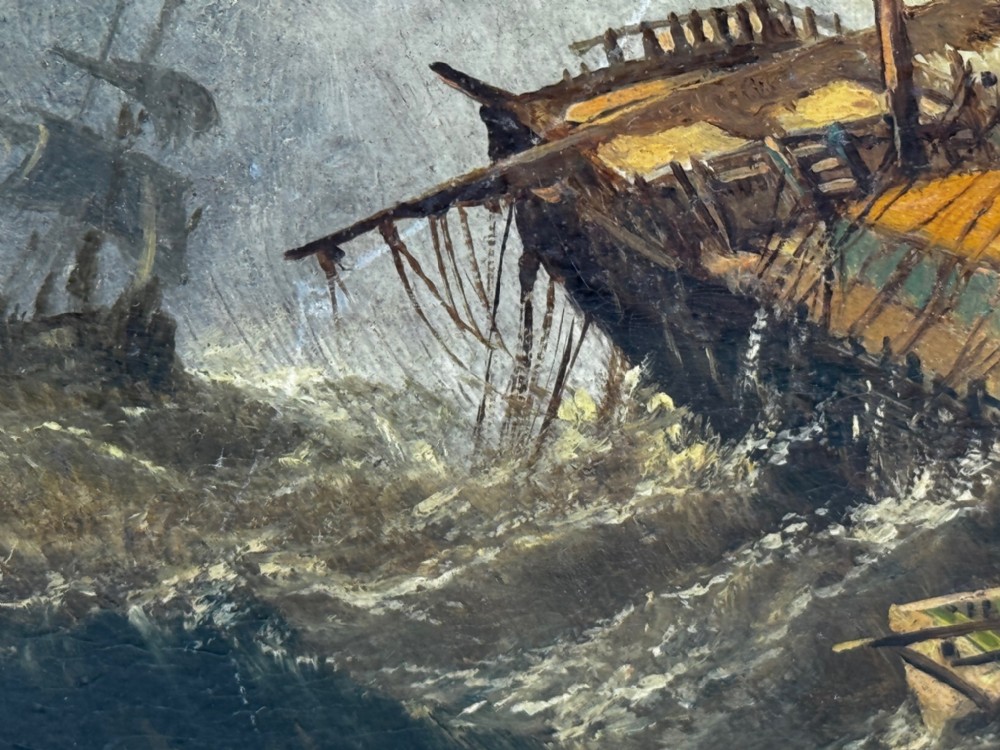
In the foreground, a shattered vessel lies broken against jagged rocks, its sails torn and mast collapsed. Nearby, sailors battle for survival in lifeboats as waves crash around them. Above, gulls wheel against a storm-tossed sky, while the castle’s medieval towers rise in dark silhouette, silent witnesses to tragedy.
Composition & Technique
Moore demonstrates a masterful command of Romantic narrative painting.
Composition: The foreground is alive with jagged rocks, foaming breakers, and the broken hull of the ship. The central struggle of sailors in lifeboats provides the emotional focus, while Dunstanburgh Castle looms on the horizon as a symbol of permanence.
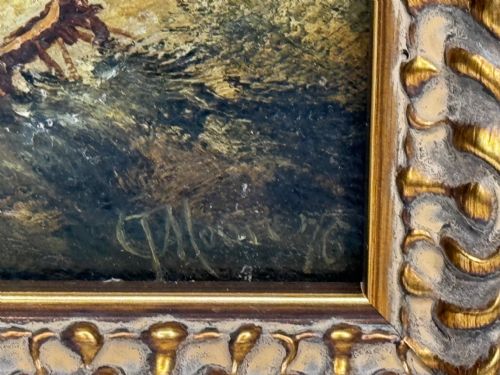
Brushwork: Expressive, sweeping strokes animate the sea and sky, while rigging, cliffs, and castle are rendered with precise control.
Palette: Deep greens, steel blues, and storm greys dominate, relieved by ochres and siennas in the wreckage, and pierced by shafts of radiant gold where sunlight breaks through.
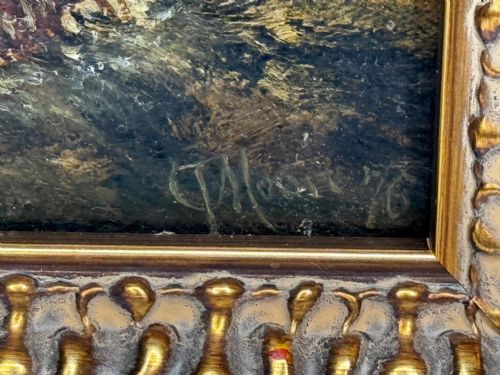
The treatment of atmosphere shows Turner’s influence, while the nautical precision recalls Clarkson Stanfield. This painting is more than a literal seascape: it is an allegory of tragedy, survival, and endurance, fully in line with the Victorian Romantic tradition.
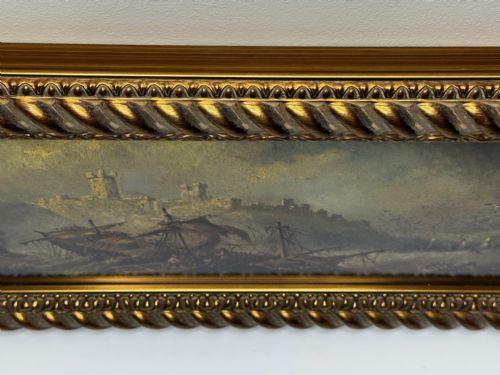
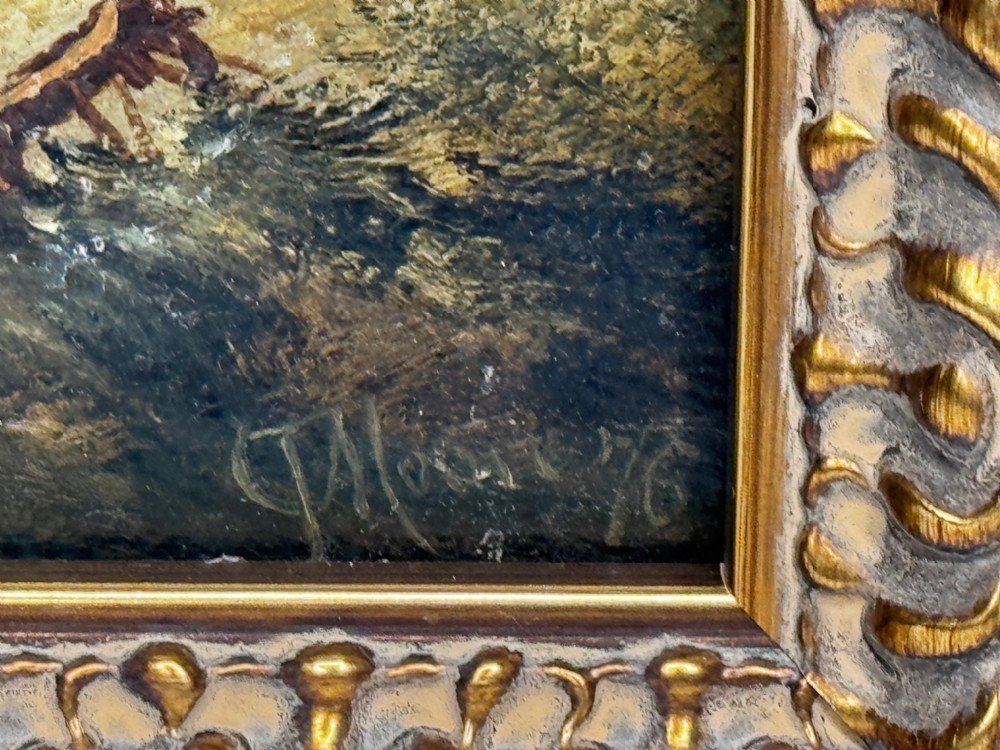
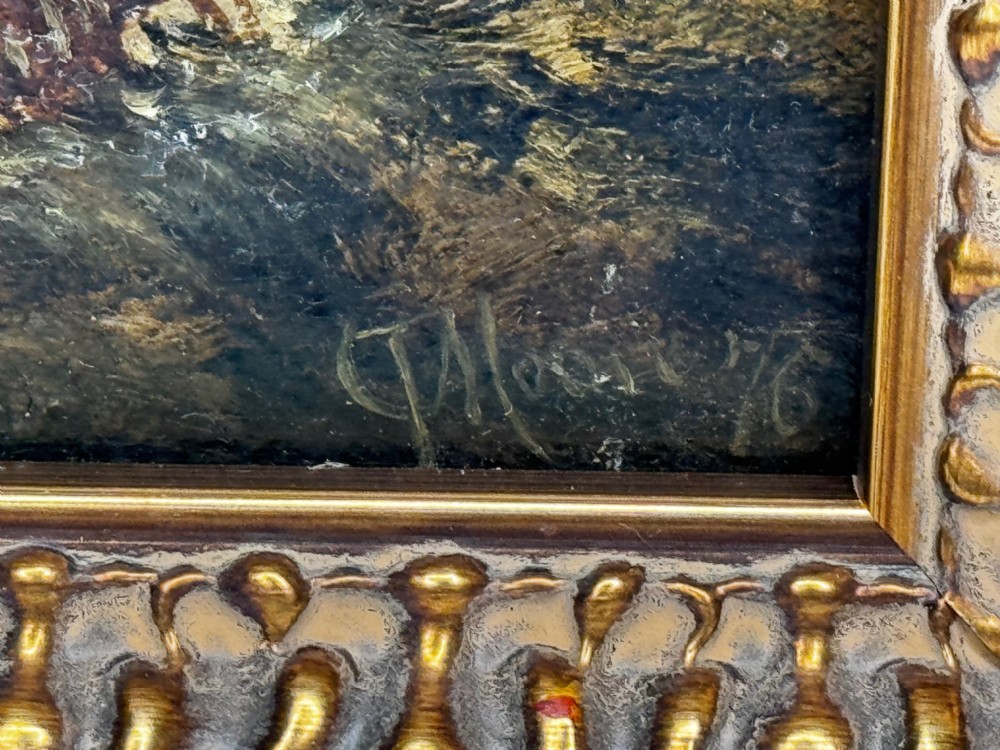
Signed
Lower right: C.T. Moore 1876
About the Artist
Claude Thomas Stanfield Moore (1853–1901) was a British painter celebrated for maritime and landscape subjects.
Exhibited regularly at the Royal Academy and the British Institution.
Influenced by Turner’s atmospheric mastery and Stanfield’s nautical accuracy.
Specialized in shipwrecks, storms, and coastal scenes, exploring the balance between human vulnerability and nature’s force.
Though his career was cut short at the age of 48, Moore’s works remain highly sought after, with auction results reaching $40,383 USD.
Frame
Recently refitted in a Larson Juhl gold-leaf “Venice” moulding with dome profile, paired with AR70 museum-grade glass for preservation and visual impact.
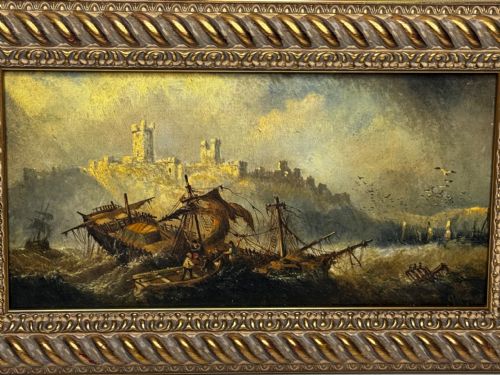
Dimensions: Frame: 44 × 27 × 3 cm
Dunstanburgh Castle – Symbolism & History
Commissioned in 1313 by Thomas, Earl of Lancaster, Dunstanburgh Castle played a role in England’s northern defenses and the Wars of the Roses, later passing through the hands of the Percy family. By the sixteenth century it fell into ruin, its stark silhouette later celebrated by artists including Turner and Girtin.
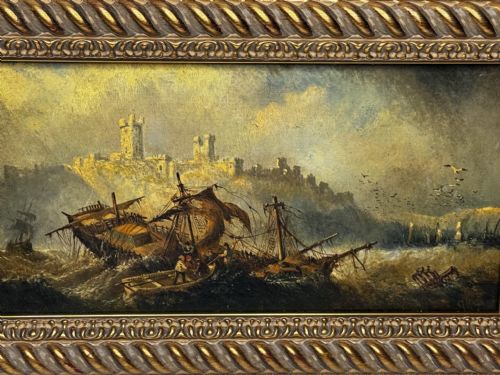
In Moore’s composition, the wreck below represents fleeting human struggle, while the castle above endures as a symbol of permanence and history.
Provenance
Signed, dated, and titled by the artist in 1876
Likely acquired by a private British collector in the late 19th century
Later appeared in a notable Northern shire auction
Curated by Cheshire Antiques Consultant LTD and exhibited at the Famous Lord Hill Museum
Market & Value
This is a prime example of Moore’s dramatic shipwreck scenes, dated and signed, with a strong Northumberland subject.
Auction Estimate: £10,000 (USD $12,500)
Potential for higher results given demand for Victorian shipwreck and coastal works.
Why Collect This Painting
A quintessential Victorian shipwreck drama with Turner-like atmosphere and Stanfield-like detail
Rare signed and dated 1876 work by Claude Thomas Stanfield Moore
Powerful subject: human struggle beneath the ruins of Dunstanburgh Castle
Rich Romantic palette of storm-greens, si
Cheshire Antiques Consultant Ltd has dated this Victorian Maritime Oil Painting to the Victorian era.
Source the historic in 17th, 18th, 19th & 20th century fine arts, painting, sculptures & collectibles
You can view the stock and full dealer information on the Cheshire Antiques Consultant Ltd Profile Page
Oil Painting Shipwrecked by Claude Thomas Stanfield Moore