

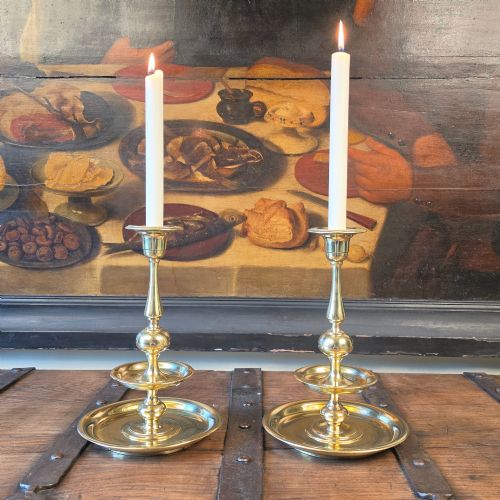
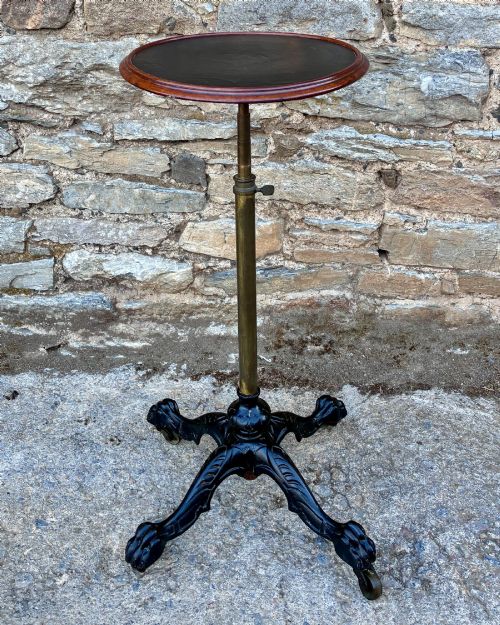
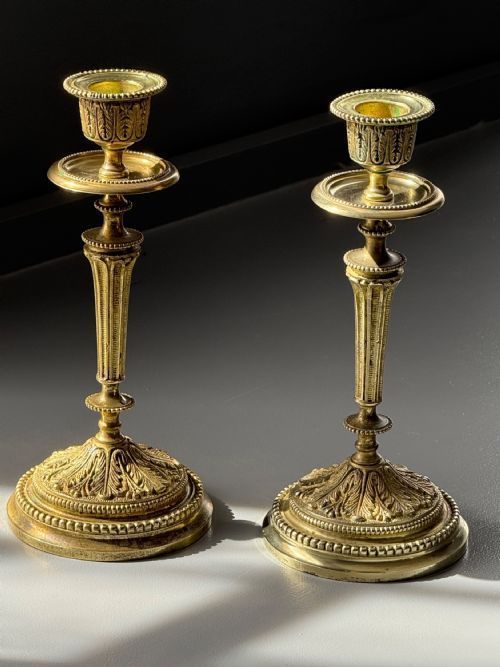
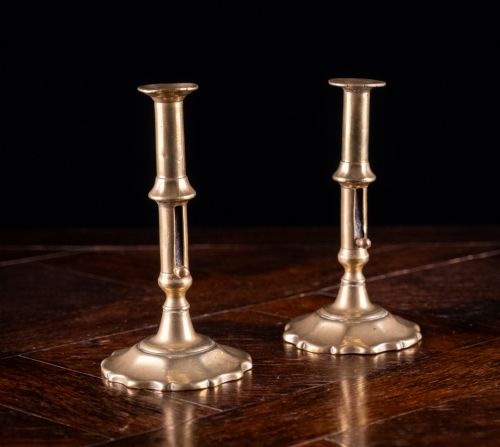

Brass Table Candle Stands
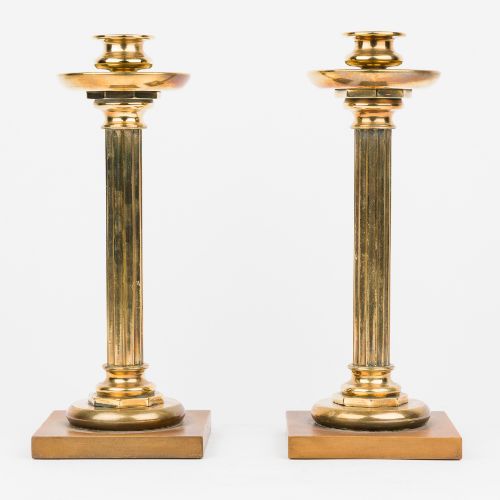
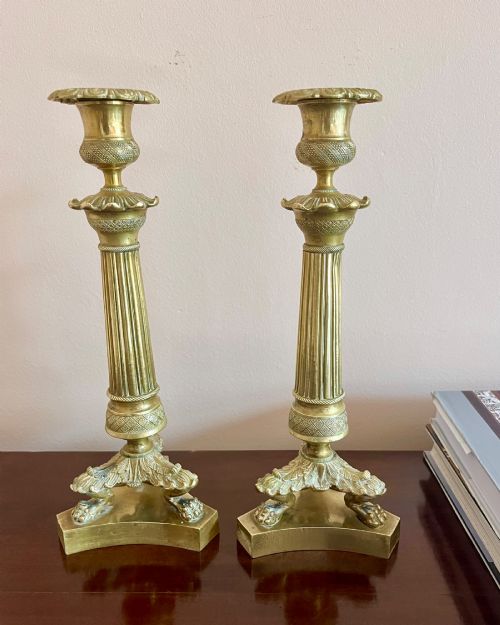
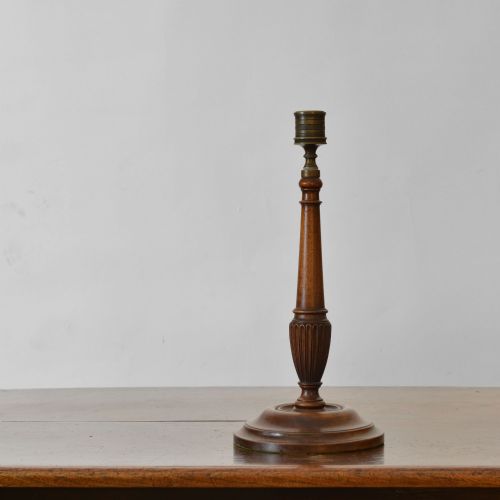
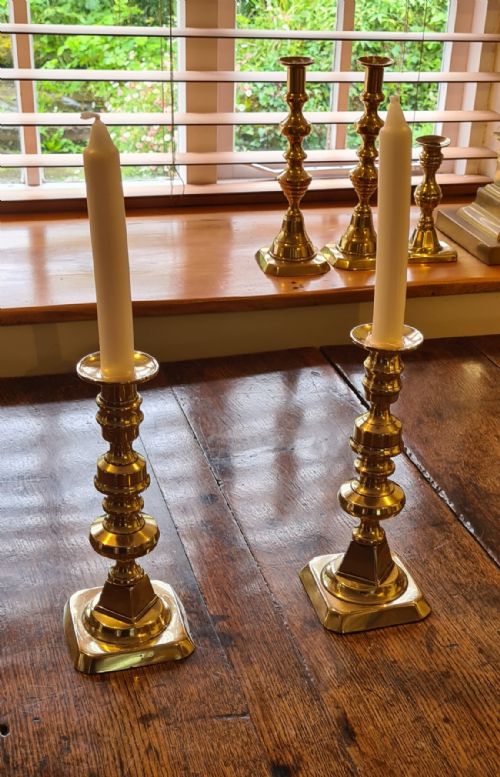
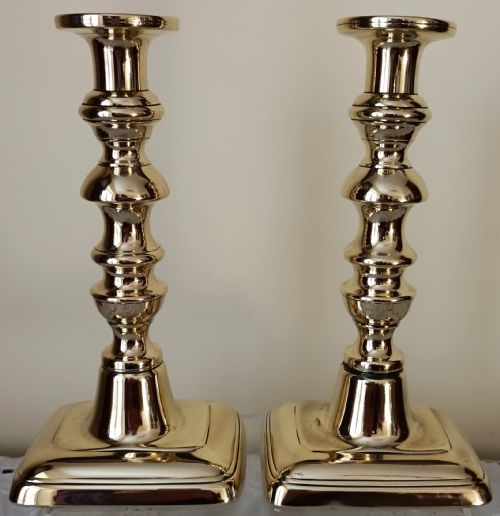
These brass table candle stands are functional pieces designed to elevate a light source, combining sturdy metalwork with periods spanning from the eighteenth century to the early twentieth century.
Brass Table Candle Stands
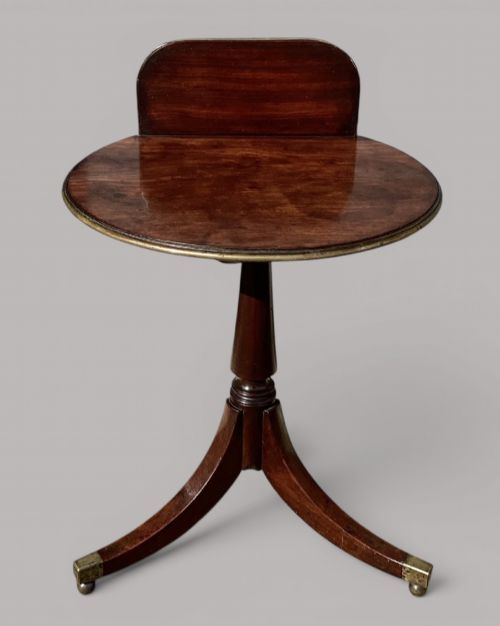
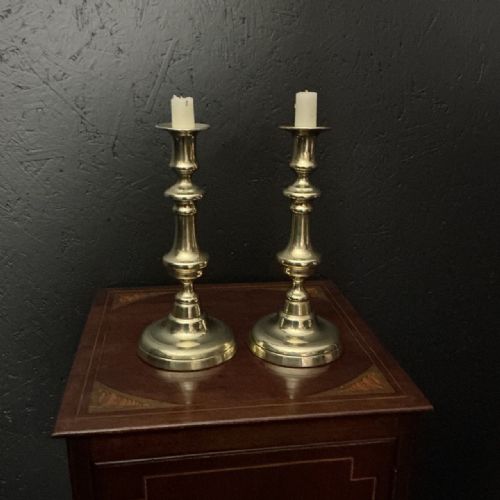
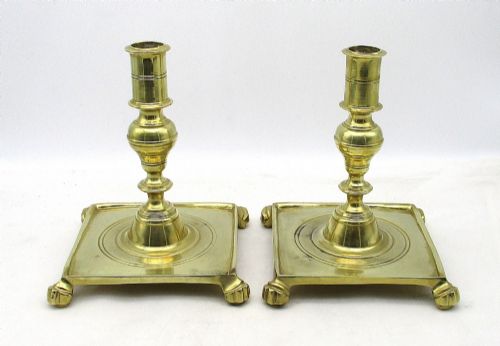
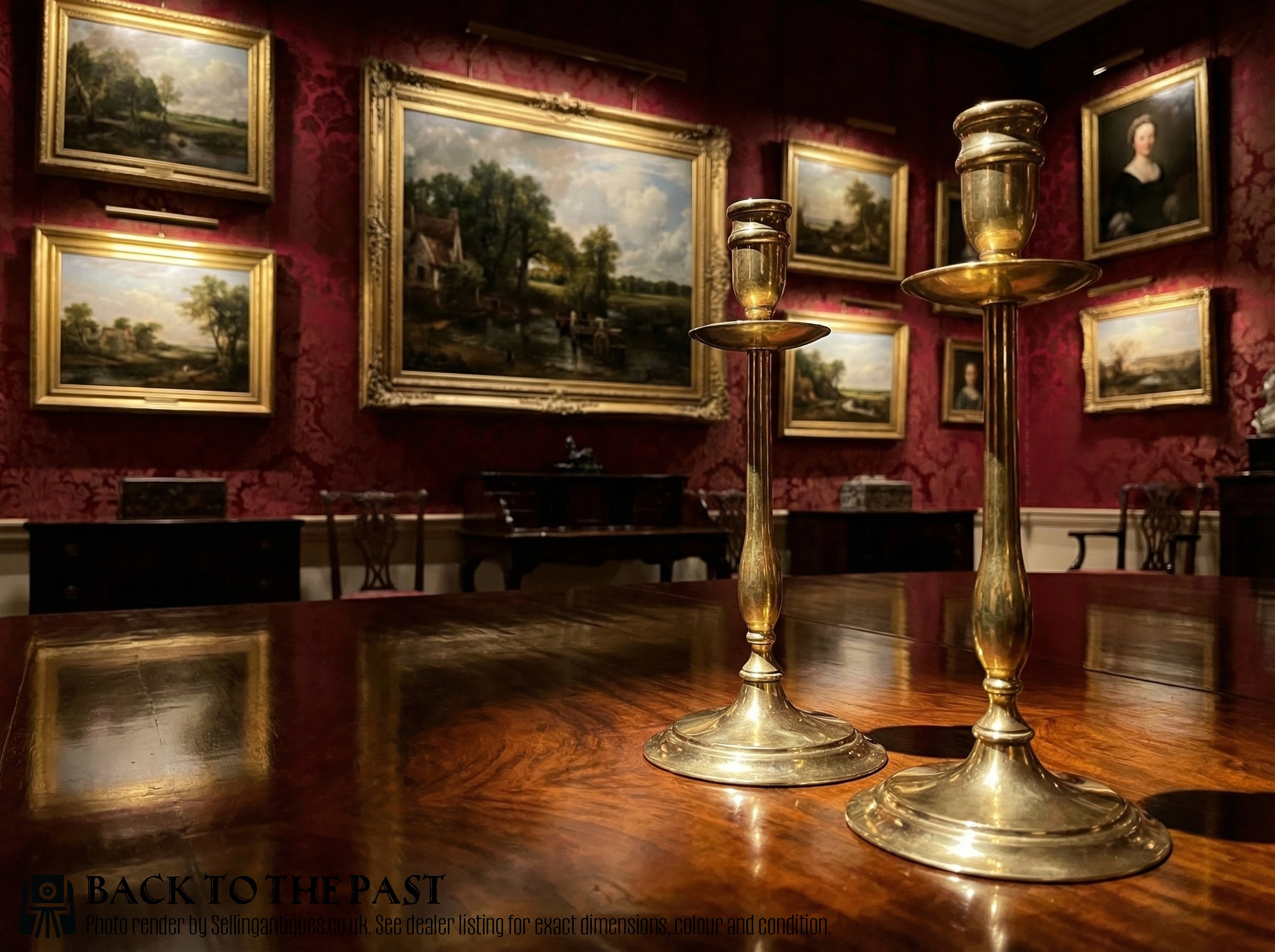
Brass table candle stands encompass candlesticks, candelabra, and occasional tables that incorporate candle holders, originating from periods such as the eighteenth century, Georgian era, and Victorian reign. A buyer searching for brass table candle stands will encounter items formed predominantly as pairs of candlesticks or multi-arm candelabra designed for placement on surfaces, alongside occasional tables fitted for display.
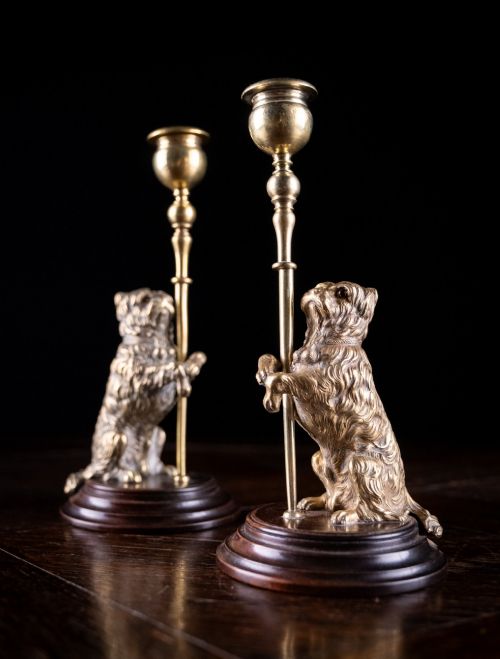
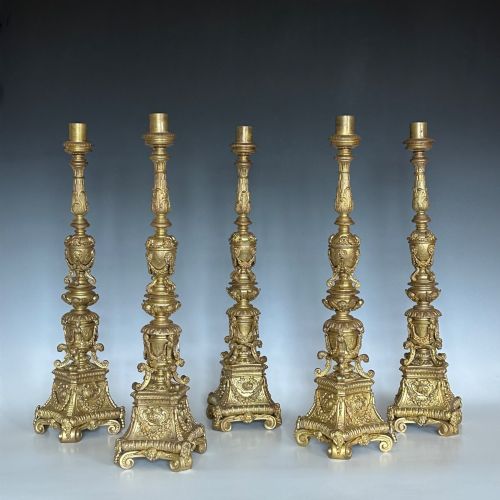
The selection ranges from mid-eighteenth-century seamed ejector designs and George II scalloped pieces to nineteenth-century telescopic examples and Edwardian terrier dog figures. Louis XVI style gilt bronze and French Empire interpretations also appear, showing how makers adapted classical motifs for domestic lighting over successive centuries.
What varies in quality
Quality in these pieces rests upon the crispness of the casting and the weight of the metal utilised in the construction. Heavier castings with sharp, deep chasing and well-defined decorative motifs sit at the upper end of the scale.
The sophistication of the mechanism in adjustable examples, such as telescopic tables or candle holders with moveable shades, also dictates the standard of manufacture. Finer pieces demonstrate precise fitting of components and careful finishing of surfaces, whether in polished brass or gilt bronze.
Listings feature brass table candle stands spanning the Georgian, Victorian, and Edwardian periods, alongside Louis XVI and Art Deco styles.
J.T. & Co·Frederick J Smith & Co·Wm. Tonks & Sons·AFC
The Brass Table Candle Stands Glossary
- Ejector candlestick
- A design featuring an internal push-rod mechanism to force out the remaining candle stub. This mechanical element is typical of eighteenth and nineteenth-century brass production.
- Ormolu
- Gilt bronze ornamentation applied to decorative metalwork and furniture. The technique involves a mercury gilding process on a bronze base.
- Champleve
- An enamelling technique where troughs are dug into a metal surface and filled with vitreous enamel before firing. It frequently appears on nineteenth-century decorative pieces.
- Pricket candlestick
- A candle holder featuring a central metal spike that presses directly into the base of the wax candle rather than sitting inside a socket. This form is often found on eighteenth-century examples.
- Telescopic table
- A support piece featuring an adjustable height mechanism operated through a sliding stem. These are recorded in nineteenth-century rosewood and occasional table formats.
Brass Table Candle Stands: Frequently Asked Questions
What are brass table candle stands?
They are lighting accessories and small support furniture items primarily constructed from brass, bronze, and various woods during the eighteenth, nineteenth, and early twentieth centuries.
These items range from simple domestic candlesticks to elaborate gilt bronze candelabra and adjustable display stands used in period interiors.
How do you date a brass candlestick?
Dating relies on manufacturing techniques, stylistic markers, and assembly methods characteristic of specific periods like the Georgian or Victorian eras. For instance, seamed construction often points to mid-eighteenth-century production.
Maker marks, where present, help narrow down the decade of manufacture by linking pieces to recorded nineteenth and twentieth-century firms.
What is an ejector candlestick?
An ejector candlestick incorporates a built-in internal mechanism that pushes the candle remnant upward for easy removal. This was a practical innovation common in nineteenth-century brass examples.
The sliding button on the side operates the internal stem, separating these functional pieces from standard socket designs.
Can these stands hold modern candles?
Most historical candle holders accommodate standard taper candles, though inner socket diameters vary depending on the exact period and origin of manufacture. Checking the specific dimensions of the nozzle ensures a proper fit for modern wax lights.
Where tolerances are tight, slight softening of the candle base helps secure it firmly within the brass cup.