


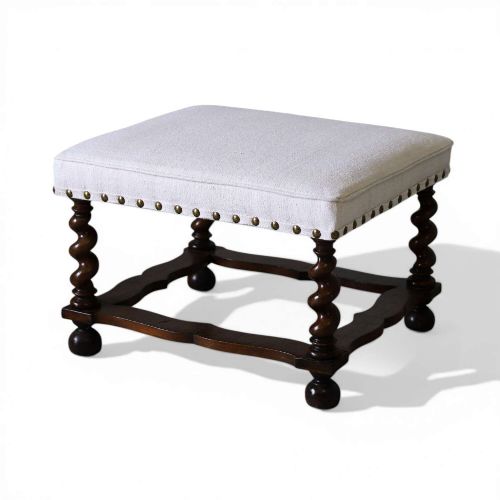

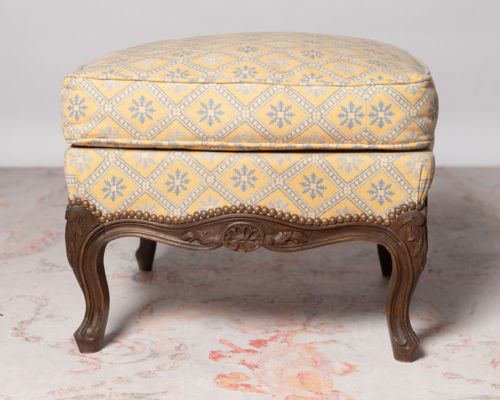


Brass Studded Footstool
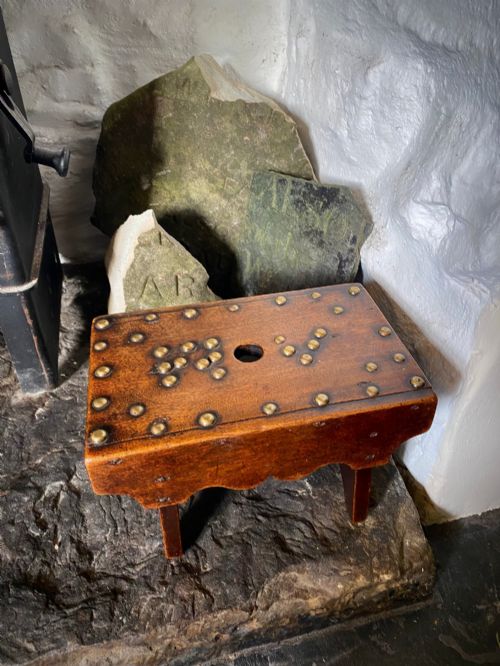
A brass studded footstool brings traditional seating into a room, offering low support built from mahogany, walnut or rosewood.
Brass Studded Footstool
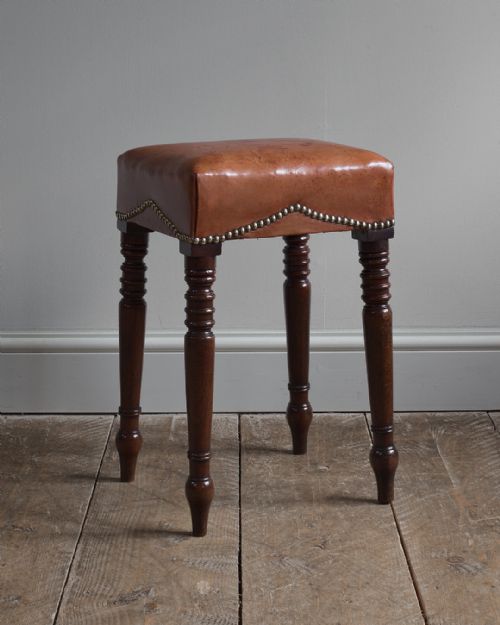
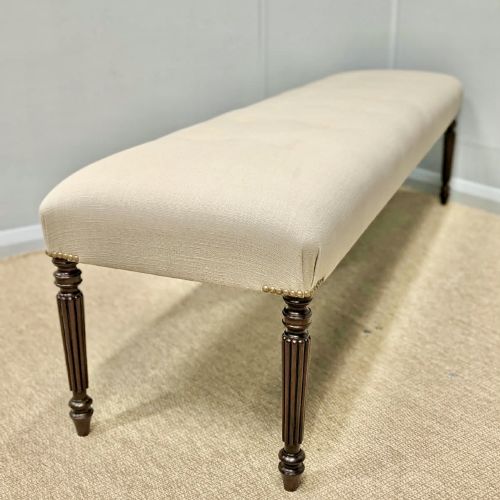
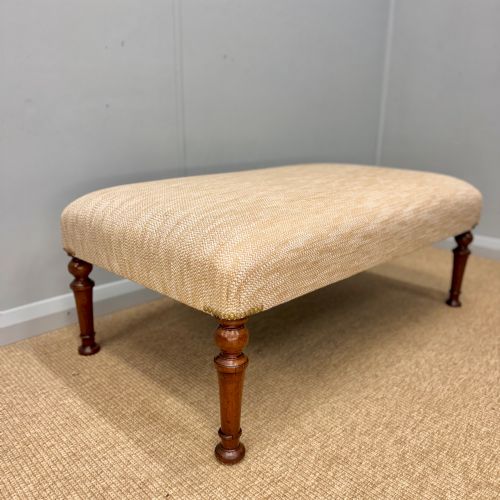
A brass studded footstool is a low seat or ottoman designed for resting feet or providing casual seating in a room. These pieces span several eras, including the Regency and Victorian periods, alongside Edwardian examples and later 20th-century revivals.
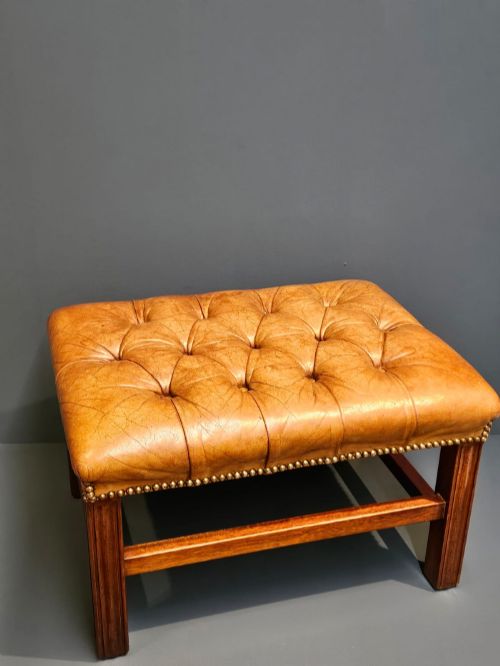
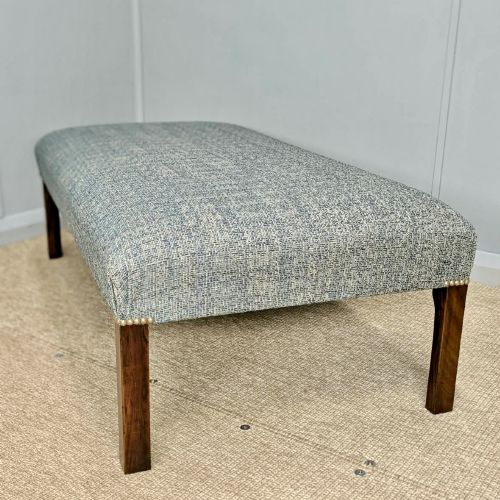
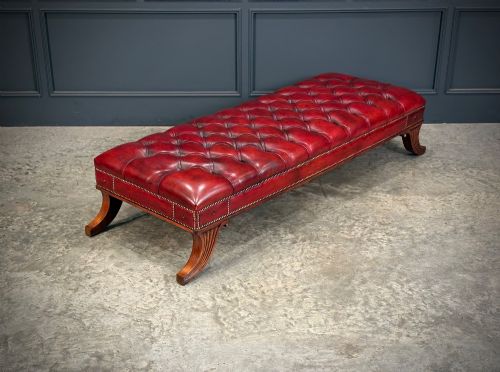
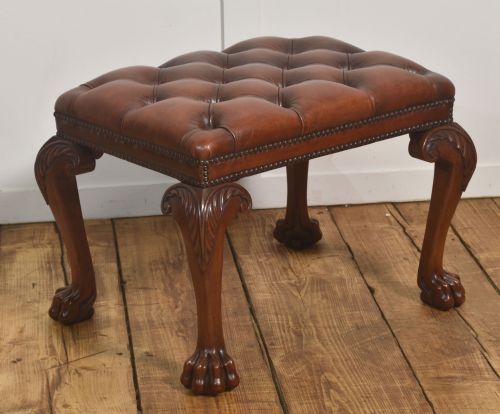
The version most commonly met on this page is the Victorian mahogany frame upholstered in leather, often featuring deep buttoning and decorative brass studs along the border. Buyers also encounter larger ottomans, box ottomans, and pieces rendered in walnut, oak or rosewood.
Makers and craftsmen across the 18th, 19th and early 20th centuries utilised diverse forms, from cabriole-legged dressing stools to substantial country house ottomans and Chippendale-style seats.
How they were made
Makers constructed the frames primarily from dense hardwoods such as mahogany, walnut, oak and rosewood, ensuring structural stability for daily use. Joinery techniques varied by period, supporting carved cabriole legs, barley-sugar turnings, or box ottoman compartments.
Upholstery formed a central part of the construction, employing leather, silk, fabric and textiles stretched over padded foundations. Individual brass studs were driven in by hand to secure the outer edges of the leather or fabric while adding decorative trim.
Brass Studded Footstool Retail Price Guide 2026
Typical asking prices for brass studded footstool among the pieces listed under this phrase on Sellingantiques today, from the lower quarter to the upper quarter. They describe what is for sale here now, not the wider market.
Current listings feature pieces spanning the 18th century, Regency era, Victorian period, and Edwardian times, constructed in mahogany, walnut, oak, and rosewood.
What varies in quality
The calibre of timber selection and depth of carving distinguish standard production from finer examples. Solid mahogany, rosewood and figured walnut frames exhibit crisper moulding and more deliberate proportions than plain secondary woods.
The execution of the upholstery work, the weight and finish of the leather, and the regularity of the brass studding reflect the original maker's skill. Robust internal framing and well-preserved joinery separate enduring seating from lesser pieces.
The Brass Studded Footstool Glossary
- Ottoman
- A low, upholstered seat or box without a back or arms, frequently used for storage or as a footrest. These pieces often feature hinged lids revealing compartment space within.
- Cabriole leg
- A furniture leg that curves outward at the knee and tapers inward toward the ankle, resembling animal limbs. This form appears frequently on Victorian and Georgian seating.
- Buttoning
- A method of upholstery where recessed buttons are pulled deep into the padding to create a quilted diamond pattern. This technique secures the stuffing and provides firm tension across leather surfaces.
- Box ottoman
- A functional seat constructed with a hollow interior accessed via a lift-up lid. They combine surface upholstery with hidden storage for blankets or household items.
- Stretcher
- A horizontal support connecting the legs of a stool to increase stability. In earlier periods, these components were turned or shaped to decorative effect.
Brass Studded Footstool: Frequently Asked Questions
What is a brass studded footstool used for?
These low seats function primarily as footrests or casual seating in living spaces, bedrooms and dressing rooms. Larger versions operate as ottomans that double as central room tables or blanket storage.
Their robust wooden frames and upholstered tops make them versatile additions to traditional and eclectic interiors alike.
How do I identify a Victorian footstool?
Victorian examples frequently utilise dark mahogany or walnut timbers, often shaped into cabriole legs or fitted with castors. Deep buttoned leather upholstery secured with heavy brass studding is characteristic of the period.
Proportions tend to be generous, reflecting the Victorian preference for substantial, comfortable furnishings in domestic reception rooms.
Are these footstools suitable for daily use?
Most pieces are built from dense hardwoods like oak, mahogany and rosewood, providing solid foundational strength. Their original construction was intended for active domestic environments.
Buyers should assess the stability of the frame and the condition of the upholstery to ensure the piece suits everyday seating requirements.
What is the difference between an ottoman and a footstool?
Footstools are generally smaller, lower stands designed purely for resting feet or sitting briefly. Ottomans often provide a wider surface area and frequently incorporate internal storage compartments beneath hinged lids.
Both forms utilise upholstered tops and decorative brass studding across various historical periods.