



Upholstered Vanity Stool
An upholstered vanity stool brings practical seating to a dressing table, combining period timber frames with comfortable textile seats.
Upholstered Vanity Stool
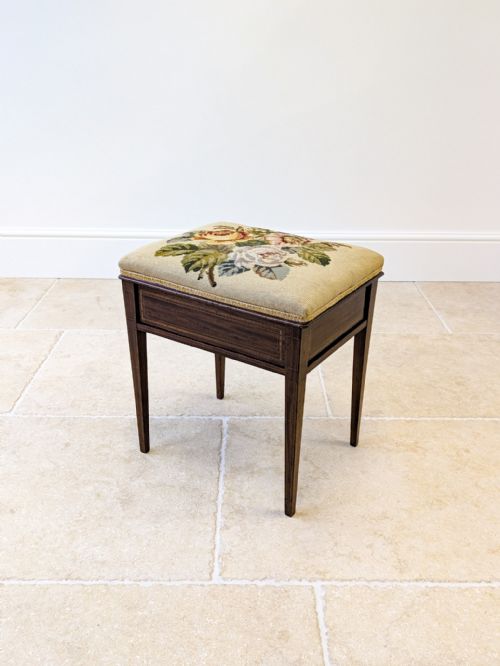
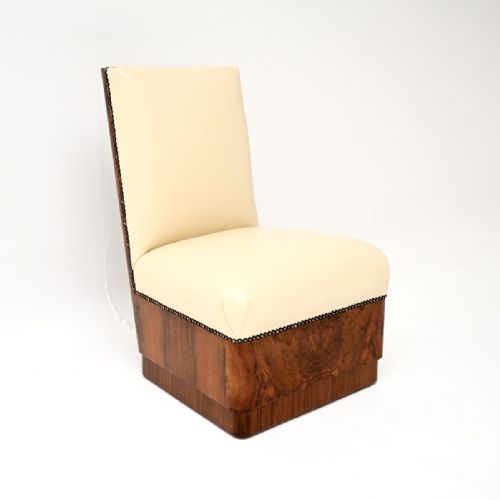
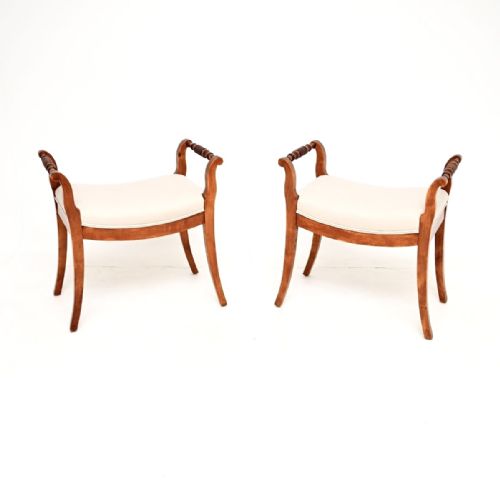
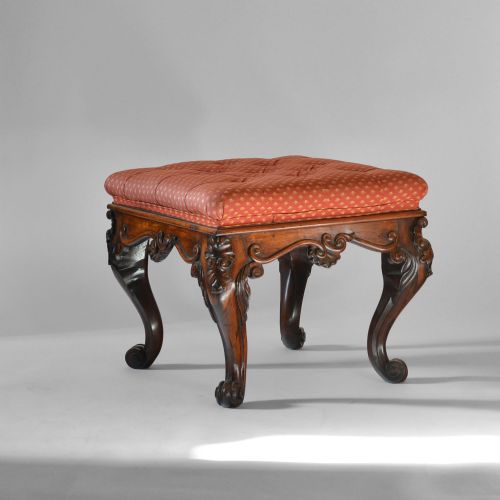
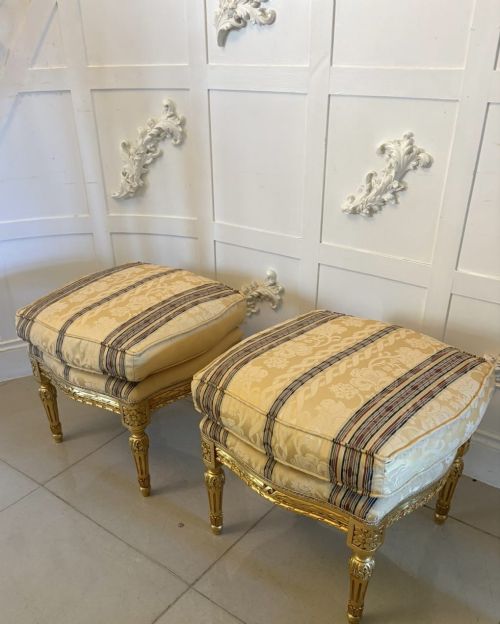
An upholstered vanity stool is a low seat designed for use at a dressing table or in a bedroom, appearing in forms such as dressing stools, piano stools, and small benches. The pieces span several eras, with Victorian, Edwardian, and Art Deco examples sitting alongside revival styles from the eighteenth and nineteenth centuries.
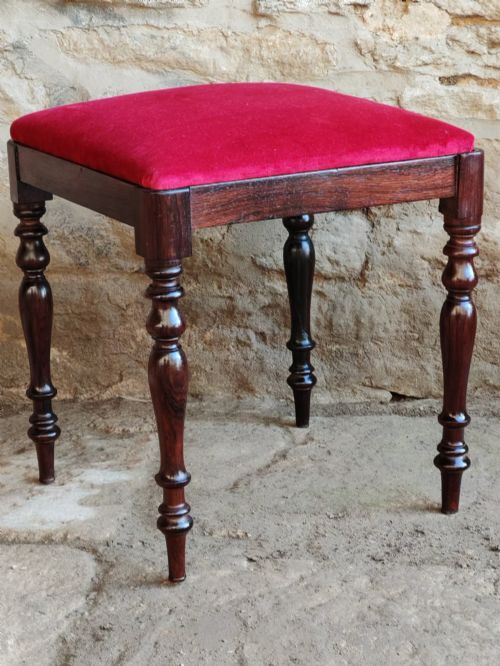
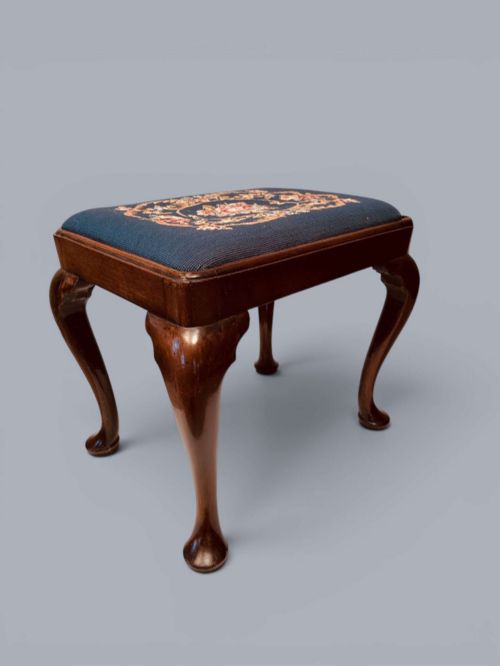
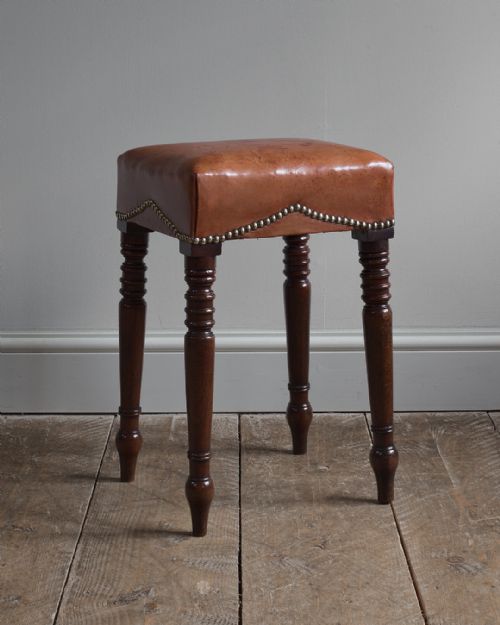
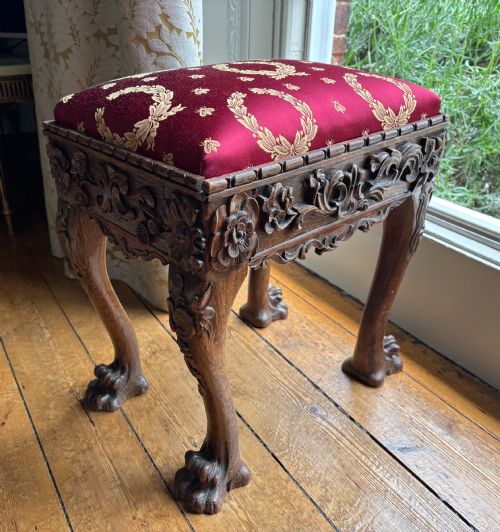
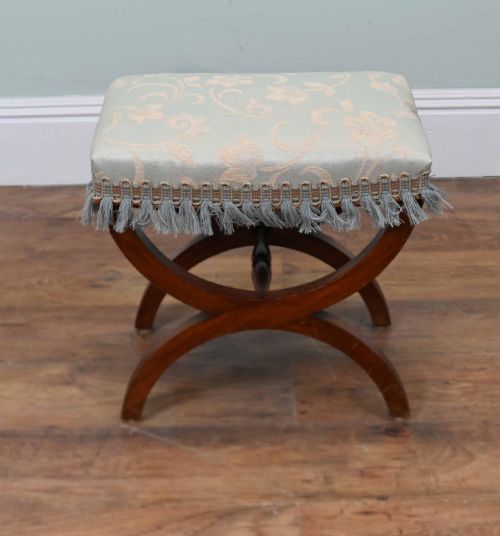
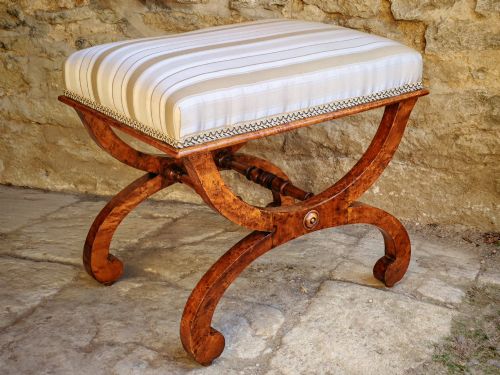
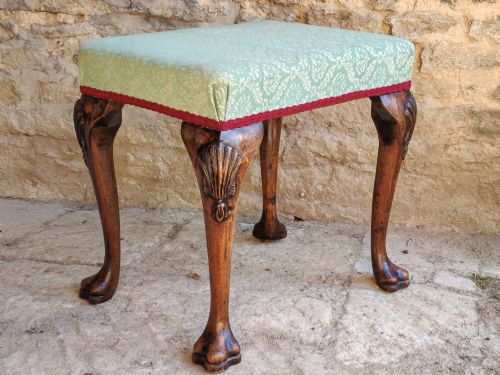
Makers utilised timber frames including walnut, mahogany, rosewood, and oak, often shaped in revival styles like Queen Anne, Chippendale, and Gustavian. These range from simple square and oval seats to X-frame designs and cabriole-legged stools with silk, velvet, fabric, or leather upholstery.
Materials and construction
Makers constructed the timber frames using traditional joinery methods in hardwoods such as mahogany, walnut, and rosewood, frequently incorporating carved details, gilded accents, or turned legs. Timber choices reflect the prevailing taste of the period, from rich nineteenth-century rosewood to lighter Edwardian mahogany and painted finishes.
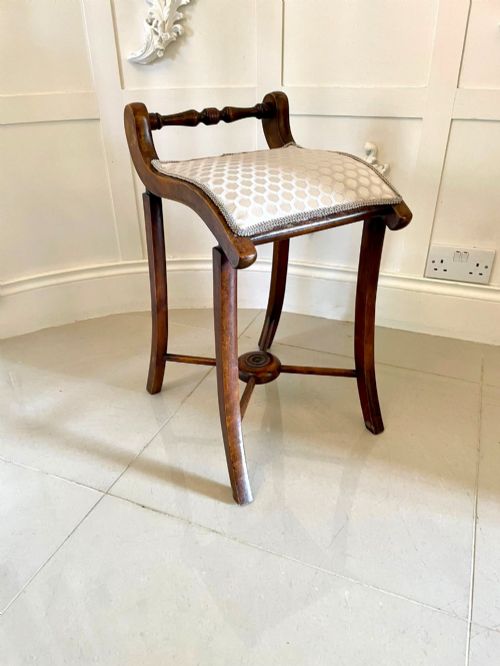
Upholstery techniques secured textile, silk, velvet, leather, or beadwork over padded seats, supported by webbed or solid bases within the wooden frame. Frames often display stylistic flourishes characteristic of their era, including cabriole legs, cross stretchers, or scroll carving.
Upholstered Vanity Stool Retail Price Guide 2026
Typical asking prices for upholstered vanity stool among the pieces listed under this phrase on Sellingantiques today, from the lower quarter to the upper quarter. They describe what is for sale here now, not the wider market.
Listings feature timber frames in walnut, mahogany, rosewood, and oak, spanning periods from the eighteenth century through to Art Deco.
Craftsmanship and design
Quality rests in the precision of the timber carving, the choice of dense hardwoods like walnut and rosewood, and the structural integrity of the frame joints. Better pieces show crisp detail in cabriole legs, gilding, or turned elements rather than soft or flat moulding.
The sophistication of the design distinguishes standard pieces from finer examples, with well-proportioned revival styles and unusual configurations such as X-frames or revolving mechanisms demonstrating superior workmanship.
The Upholstered Vanity Stool Glossary
- Cabriole leg
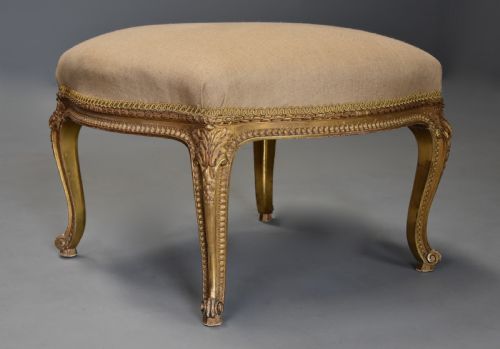
- A furniture leg that curves outward at the knee and tapers inward to an ankle, common in Queen Anne and Rococo revival pieces. This design adds an organic, flowing silhouette to the stool.
- X-frame
- A seating base formed by intersecting diagonal timbers that create an X shape from the side profile. This structural form appears in classical and nineteenth-century designs.
- Cross stretcher
- Wooden rails connecting the legs near the base to provide structural rigidity. They frequently feature central bosses or turned junctions.
- Giltwood
- Timber coated with a thin layer of gold leaf or gold paint for decorative effect. This finish highlights carved ornamentation on formal seating.
Upholstered Vanity Stool: Frequently Asked Questions
How do I date an antique stool?
Dating relies on identifying the timber species, joinery methods, and stylistic cues that correspond to specific periods like the Victorian era or Art Deco. Examining the wear on the wood and the construction of the frame helps place the piece within its historical context.
Revival styles often copy earlier centuries, so details in the carved legs and upholstery methods provide crucial clues to whether a piece is seventeenth-century in design or a nineteenth-century interpretation.
Where should I place a vanity stool?
These compact seats fit naturally beside a dressing table, in a bedroom corner, or as a flexible occasional seat in a hallway or living room. Their modest scale allows them to slide neatly underneath tables when not in use.
Consider the height of the table or surface to ensure comfortable seating, as piano stools and dressing stools can vary in elevation from standard chairs.
How should I clean the wooden frame?
Dust the timber regularly with a soft, dry cloth to prevent grime accumulation on carved surfaces and polished legs. Avoid modern silicone sprays, which can build up and damage antique finishes over time.
Feed dry hardwoods occasionally with a suitable wax polish applied sparingly and buffed gently to maintain the natural sheen of walnut, mahogany, or rosewood.
Are these stools comfortable for daily use?
Most pieces feature padded seats covered in textiles, leather, velvet, or silk designed for short periods of sitting at a dressing table. The comfort depends largely on the internal padding and upholstery support beneath the fabric.
Period seating can be firmer or lower than modern equivalents, reflecting the domestic habits and furniture proportions of the eras in which they were built.