

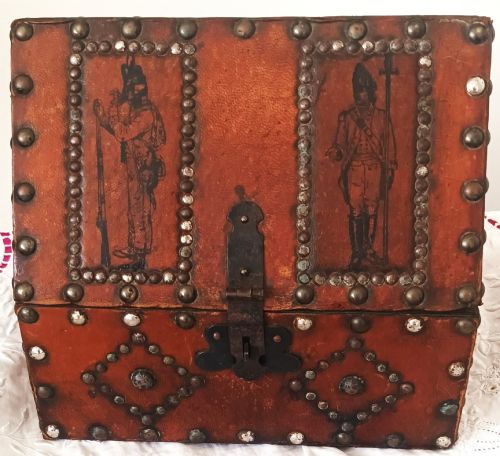


Brass Stud Chest
A brass stud chest provides portable storage clad in leather or exotic woods and secured with decorative metalwork.
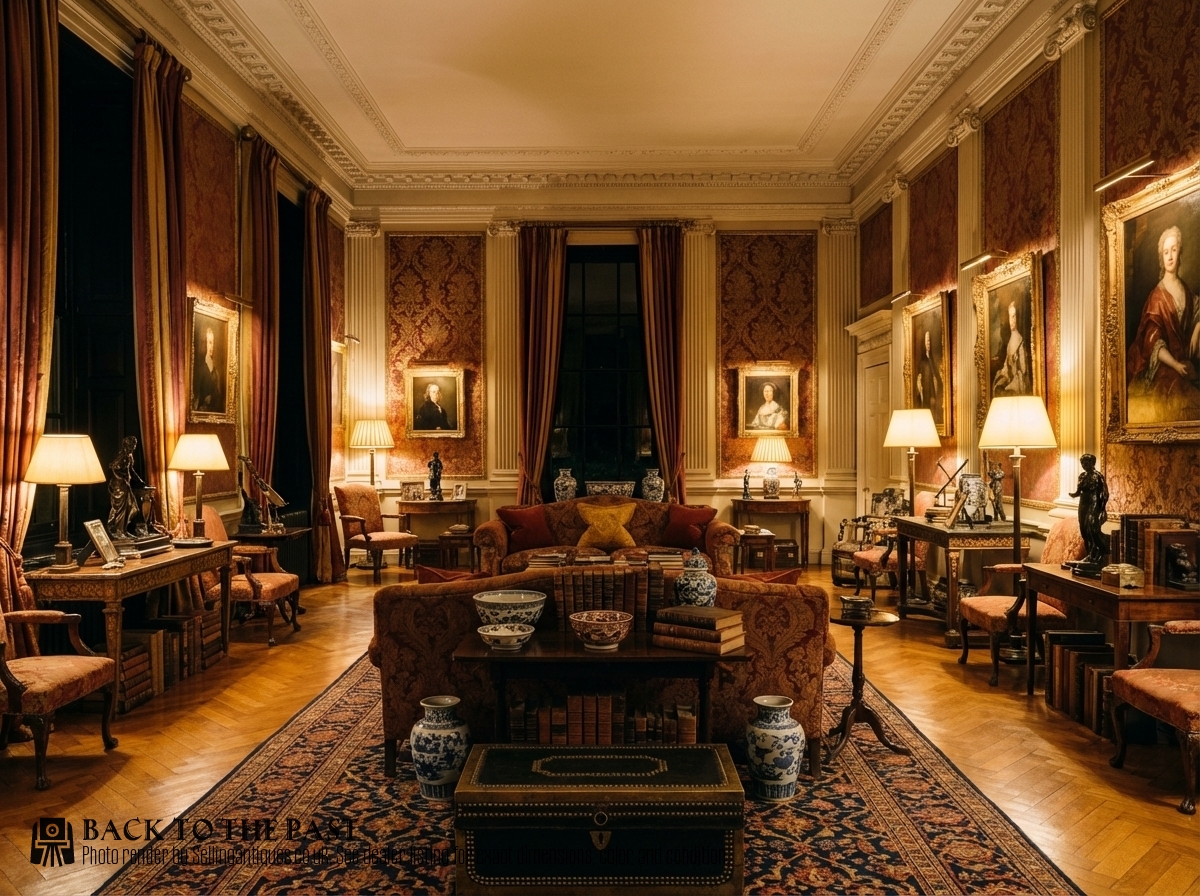
Brass Stud Chest
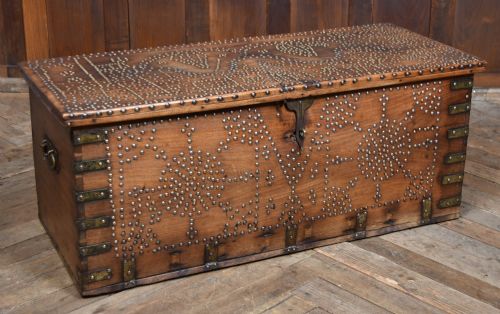
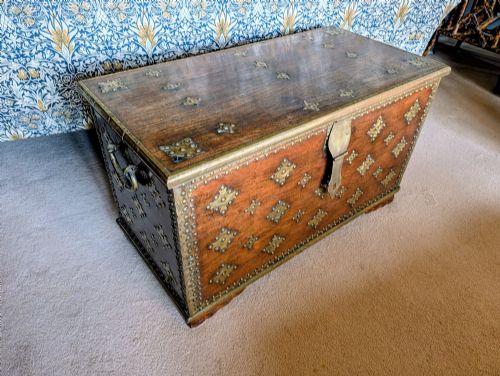
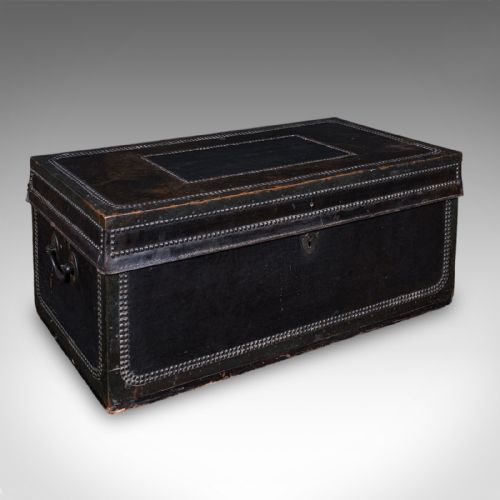
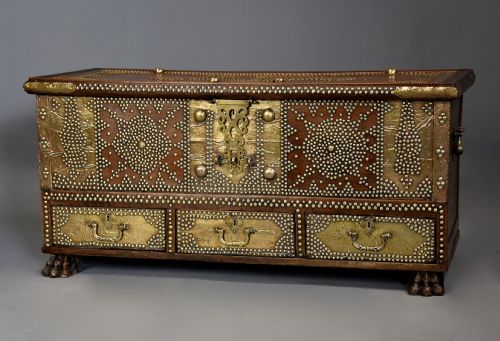
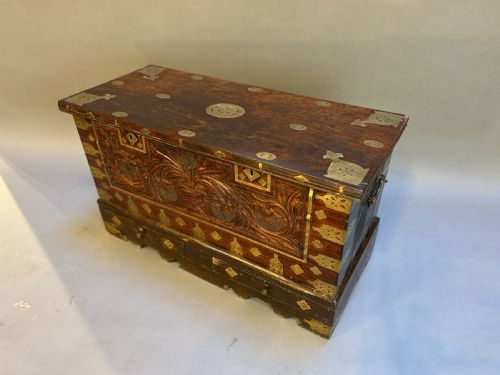
A brass stud chest is a heavy-duty container built for travel or domestic storage, heavily embellished with metal tacks and strapwork. You will frequently encounter nineteenth-century examples, particularly campaign trunks and Zanzibar trade chests originating from diverse global ports.
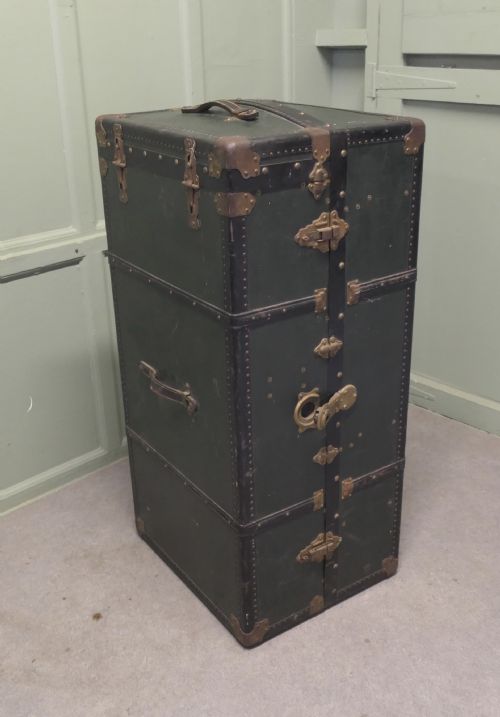
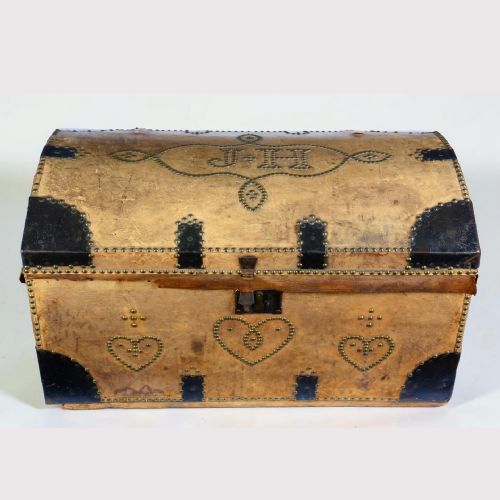
The form ranges from dome-topped coffers and blanket boxes to fitted travelling cases and ottomans. These pieces reflect centuries of maritime trade, colonial movement and domestic furnishing across British, European and Asian workshops.
How they were made
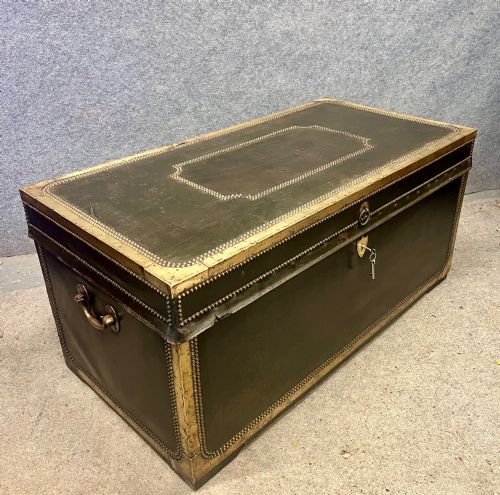
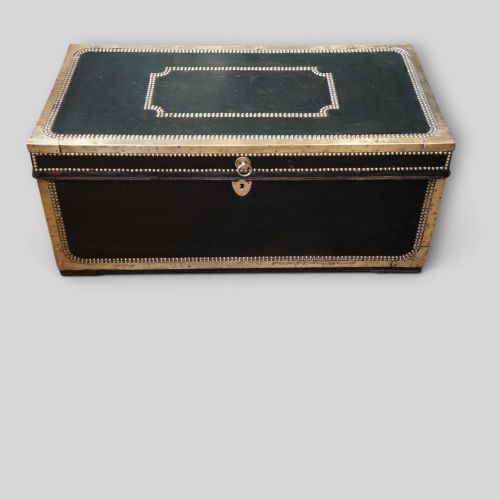
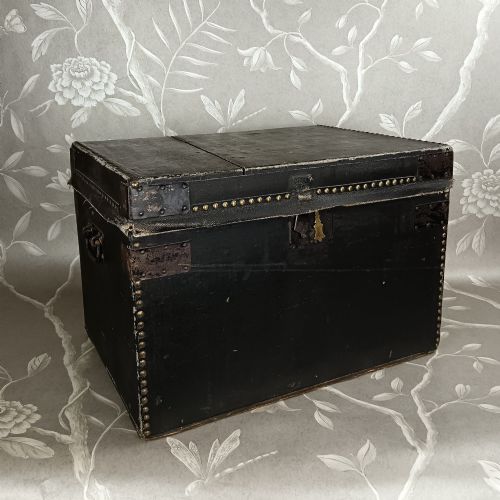
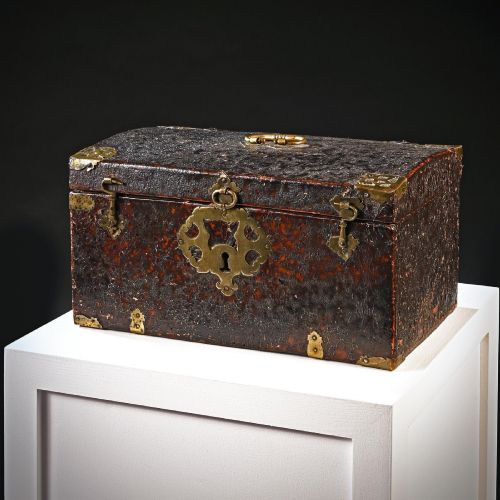
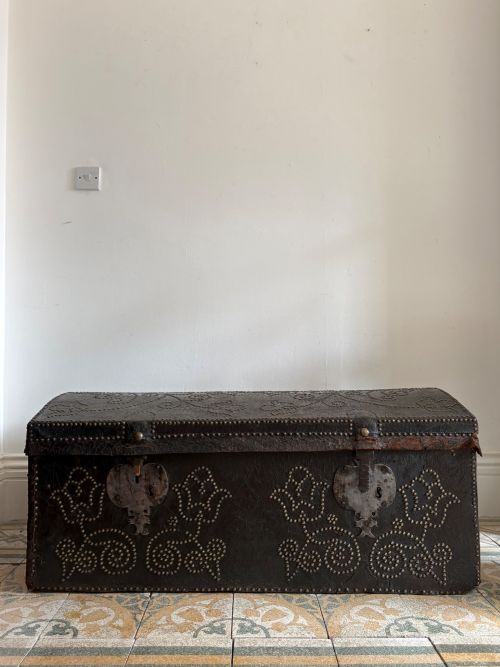
Cabinetmakers constructed the primary carcase from durable timbers such as teak, camphor wood, padouk and mahogany, often covering the exterior in hide or leather. Artisans then hammered thousands of individual brass studs and tacks through the leather to form geometric patterns and secure the structural edges.
Iron brackets, carrying handles and locking mechanisms reinforce the corners and lids for arduous journeys by sea and coach. The precision of the studwork and the selection of dense tropical hardwoods dictated the durability of each trunk.
Listings feature camphor wood, teak and padouk alongside traditional European leathers.
What varies in quality
The distinction between standard utility luggage and high-end pieces lies in the density and regularity of the brass studding, alongside the quality of internal fittings like candle boxes and secret drawers. Superior examples feature dense hardwoods such as padouk or shisham rather than soft secondary timbers.
Maker-marked locks and finely chased brass strapwork elevate a simple container into a bespoke commission. The survival of original leather upholstery and hand-dyed finishes also distinguishes museum-grade items from utilitarian survivors.
Samuel Pratt·Wm Insall of Bristol·Arthur Wannop·Chapple and Sons·Seabrook of St Pauls London
The Brass Stud Chest Glossary
- Zanzibar chest
- A heavy hardwood storage trunk decorated with brass studs and strapwork, traditionally associated with East African trade routes and Indian craftsmanship. These pieces often incorporate internal drawers and compartments.
- Campaign trunk
- A portable chest designed for military officers and travellers, featuring recessed brass handles and robust metal corner guards. They dismantle or stack easily for transit.
- Coffer
- A large wooden chest traditionally used for storing valuables, linens or documents, frequently fitted with a flat or domed lid. Early examples display thick leather cladding secured with iron and brass tacks.
- Shisham
- An Indian hardwood of the rosewood family, known for its rich grain and density, frequently utilised in colonial furniture and trade chests. It resists warping under tropical conditions.
Brass Stud Chest: Frequently Asked Questions
What is a brass stud chest used for today?
These trunks serve as functional coffee tables, blanket boxes and statement storage furniture in modern interiors. Their robust proportions allow them to conceal bulky household items while adding historical texture to a room.
The sturdy flat or domed lids provide practical surface space, making them adaptable for hallways, living rooms and bedrooms.
How do I identify a Zanzibar chest?
Zanzibar chests are distinguished by their heavy tropical hardwood construction, intricate brass stud patterns and often a concealed internal compartment known as a candle box. They frequently feature elaborate brass strapwork across the front and lid.
Unlike standard European trunks, these pieces carry distinct stylistic influences from Indian and East African coastal workshops.
Were these trunks meant for travel?
Many examples were engineered specifically for long-distance sea voyages and military campaigns. Side carry handles, reinforced iron bindings and leather cladding protected the contents from rough handling and moisture.
Others functioned as stationary dowry chests or domestic storage boxes that rarely left the home.
How do I care for leather and brass chests?
Historic leather benefits from occasional light conditioning to prevent drying and cracking around the studwork. Brass elements can be left with their natural aged patina or gently polished depending on personal preference.
Keeping the wood and leather away from direct heat sources and excessive moisture preserves the structural integrity of the piece.