
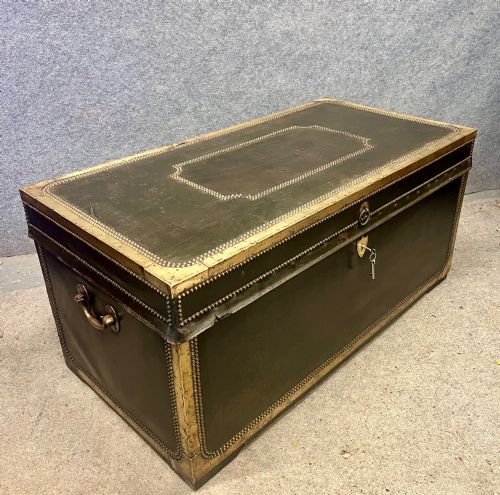

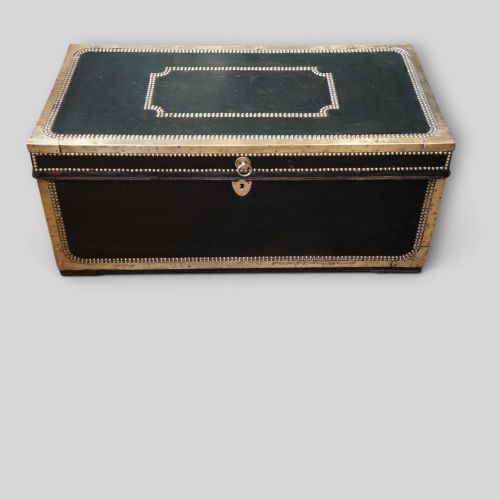
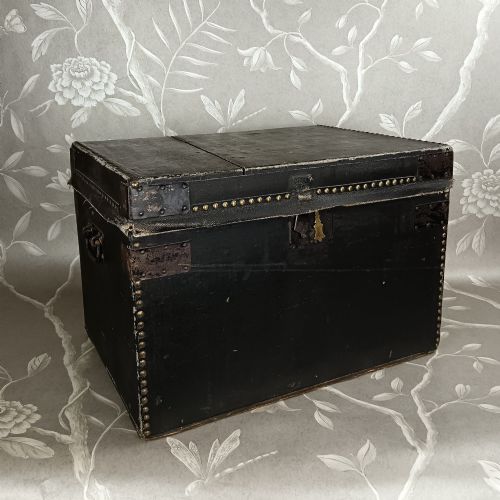
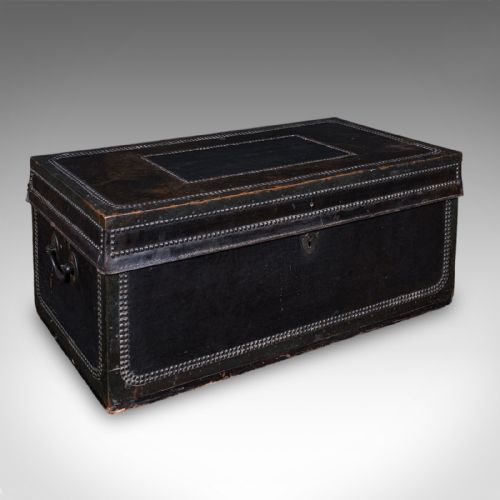


Leather Campaign Trunk
A leather campaign trunk is a travel container built for officers and travellers, offering robust portability and enduring style.
Leather Campaign Trunk
A leather campaign trunk meets the demands of military officers and travellers, designed to protect belongings during transit. These pieces appear frequently from the Regency, Victorian, and Georgian periods, reflecting an era of extensive travel and military movement.
The most common examples on this page combine wood or camphorwood with durable outer leather coverings, often reinforced with brass bindings and metal studs. Trunks and chests span various formats, from coaching and travelling trunks to specialised hat boxes and storage chests.
Origin variations include English workshops alongside China Trade and Chinese Export pieces, which frequently utilise camphor wood for its insect-repellent properties. Buyers encounter items ranging from compact travelling cases to large scale storage chests.

How they were made
Makers constructed these trunks using sturdy internal timbers such as camphorwood, wood, and iron, wrapped in tough outer hides of leather, hide, or canvas. This core structure provided the necessary rigidity for long journeys across land and sea.
Protective detailing involved heavy brass bindings, metal studs, and iron reinforcement fixed to the corners and edges to absorb impact. Artisans applied finishes including black lacquer and polychrome painting on select export and domestic examples.
Some trunks bear original traveller initials like I.M, hinting at vanished owners who crossed oceans with their worldly possessions.
What varies in quality
Quality rests upon the integrity of the internal wooden frame and the resilience of the outer leather covering. Superior examples retain their original brass mounts, working locks, and structural rigidity without excessive sagging.
Marked pieces bearing maker details or specific military initials indicate higher workshops standards and traceable provenance. The sophistication of internal fittings, such as compartments or multi-tier hat storage, also distinguishes finer output.
Samuel Pratt·Wm. Insall of Bristol·Chapple & Sons·JW Allen·Seabrook of St.Pauls, London·Drew & Sons·Thomas Griffith, London
The Leather Campaign Trunk Glossary
- Camphorwood
- An aromatic timber native to Asia, prized for its insect-repellent qualities and stability. It forms the primary internal structure of many export trunks.
- Brass-bound
- A construction method where brass strips protect the edges and corners of a trunk. This technique adds structural strength and visual contrast to the leather.
- China Trade
- Goods manufactured in China during the 19th century specifically for export to Western markets. These items often feature local timbers and distinctive decorative styles.
- Coaching trunk
- A heavy-duty travel chest designed to be strapped to the roof or boot of a stagecoach. They typically feature robust leather and iron protection.
- Studded leather
- An exterior finish utilising decorative metal tacks or studs to secure the leather hide to the wooden core. This method provides both reinforcement and pattern.
Leather Campaign Trunk: Frequently Asked Questions
What is a leather campaign trunk?
A leather campaign trunk is a portable storage chest built for military officers or travellers on active service. These containers protected uniforms and equipment during long journeys.
They combine a sturdy wooden or camphorwood carcass with an exterior of leather and metal reinforcements. Today, collectors value them as decorative furniture with practical storage utility.
How do I date a campaign trunk?
Dating relies on stylistic markers, materials, and construction techniques associated with periods like the Regency or Victorian eras. Brass bindings, lock designs, and nail patterns often shift across decades.
Maker stamps and engraved initials provide further clues to the manufacturing decade. Examining the internal timber and lining helps confirm the period of origin.
Where were these trunks used?
These trunks accompanied military officers on campaign, colonial postings, and long-distance maritime voyages. They fit easily into tents, carriages, and ship cabins.
Export pieces also saw use in international trade between Asia and Europe. Their durable construction ensured contents survived rough handling in transit.
How do I clean antique leather?
Antique leather requires gentle maintenance to preserve the original hide and prevent drying or cracking. Dusting with a soft cloth removes surface debris safely.
Specialist leather waxes or balms nourish the material without altering historical patination. Avoid harsh chemical cleaners or excessive moisture during upkeep.
Are camphorwood trunks safe for clothes?
Camphorwood naturally repels moths and insects, making these trunks suitable for storing textiles and woollens. The natural aromatic oils protect contents without chemical treatments.
Ensure the interior is clean and dry before placing fabrics inside. The subtle scent typically dissipates slightly once the lid remains open.