


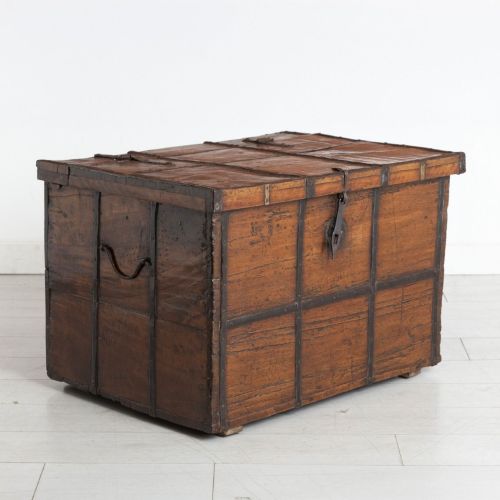
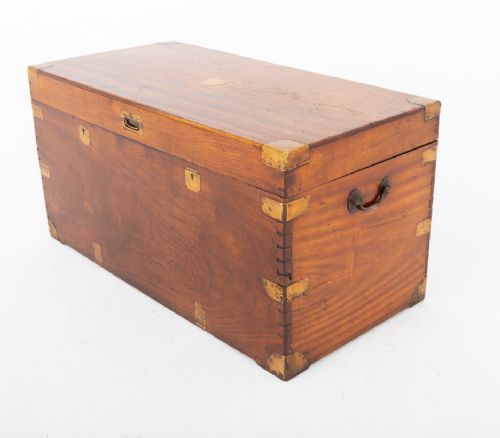
Campaign Coffer Box
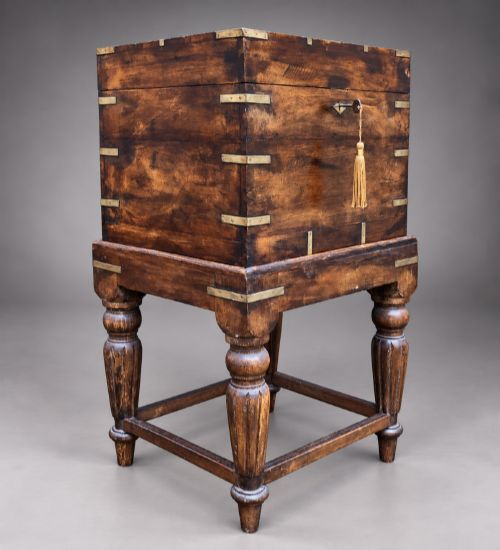
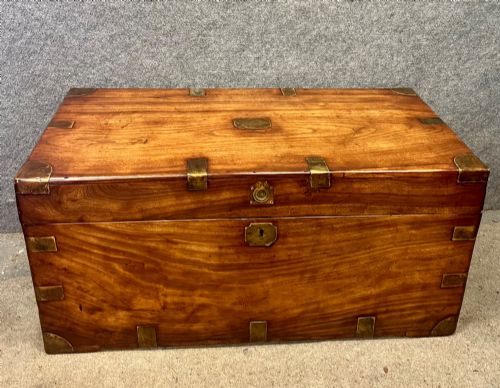
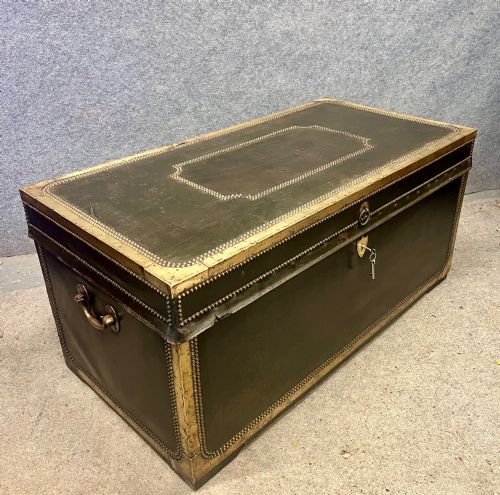
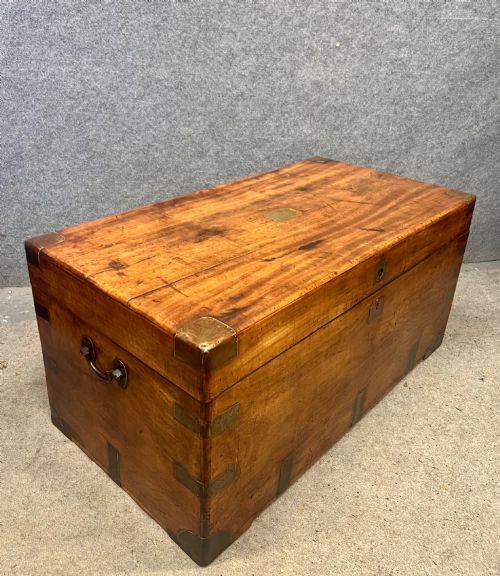
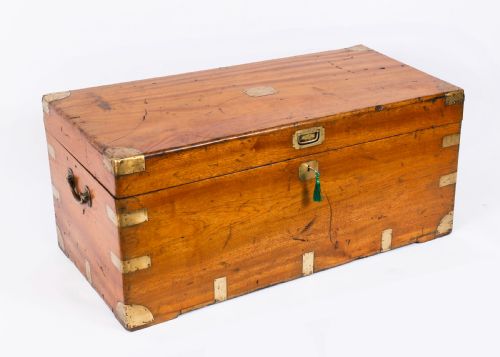
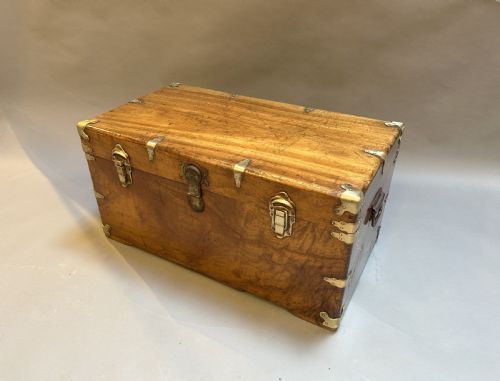
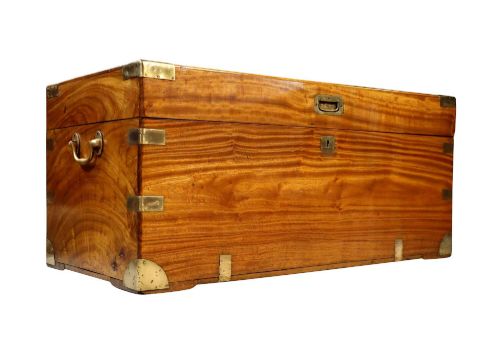
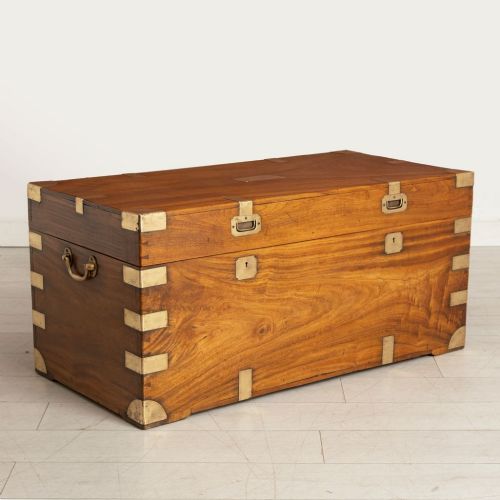
These campaign coffer box examples are portable storage trunks built for officers on the move, combining rugged utility with handsome timber and brass.
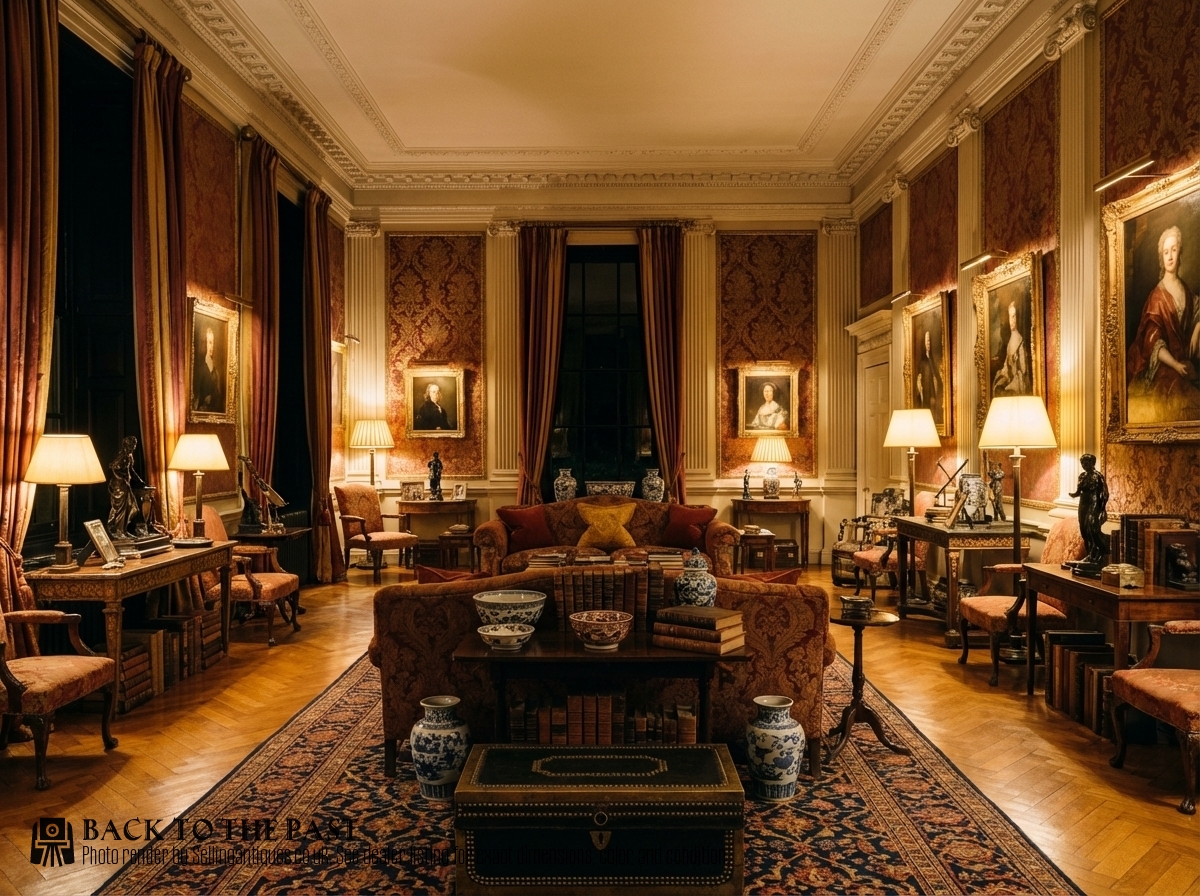
Campaign Coffer Box
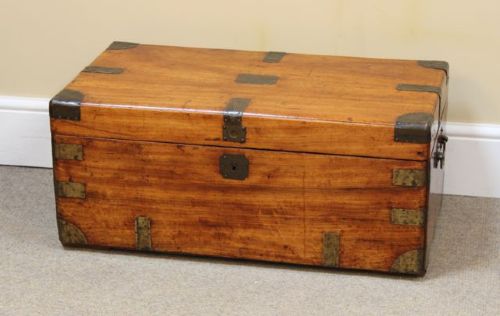
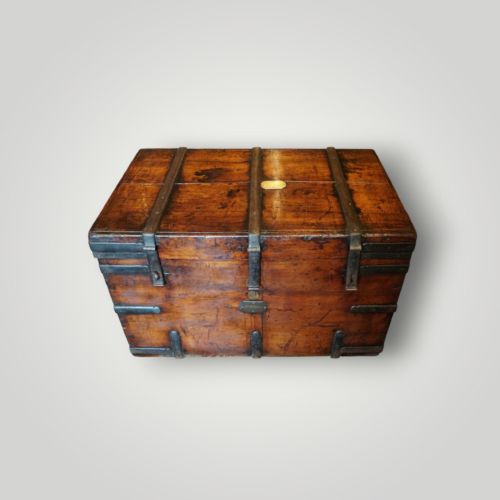
A campaign coffer box satisfies the collector searching for durable, travel-ready storage from past centuries. You will most frequently meet camphor wood or teak trunks bound in brass or iron, dating from the Georgian and Victorian eras.
These pieces served officers and travellers on long journeys across land and sea. They functioned as wardrobes, desk spaces, and secure vaults for valuables during military deployment.
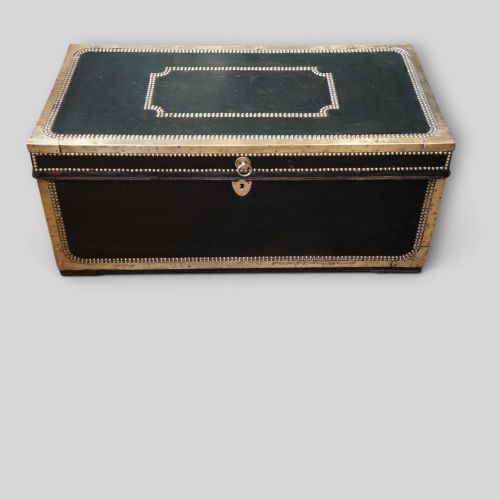
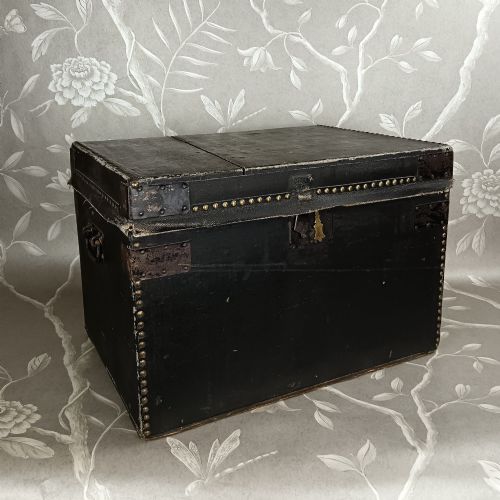
The form ranges from simple pine blanket boxes to elaborate Anglo-Indian cellarettes and leather-covered travel chests. Each item reflects the practical demands of British military life overseas.
Materials and Construction
Carpenters utilised resilient Asian hardwoods like camphor wood and teak because these timbers resisted tropical humidity and insects. Pine and mahogany also appeared, often selected for domestic or European travel requirements.
Metal reinforcement defined the construction, utilising heavy brass corners, straps, and corner brackets to absorb the heavy shocks of transit. Recessed brass carrying handles allowed multiple boxes to stack tightly inside cargo holds.
Listings feature camphor wood, teak, mahogany, and pine, bound in brass or iron across Georgian and Victorian periods.
Distinctions in Quality
Superior examples display crisp dovetail joinery and dense, unblemished timbers selected with care. The weight and gauge of the brass mounts also signal better workshops, showing sharp casting rather than simple sheet metal.
Original locks, flush-fitting handles, and maker stamps elevate a piece significantly above unmarked utilitarian trunks. Retaining the internal compartment trays and the original leather or canvas lining separates standard military issue from officer-grade commissions.
Samuel Pratt·Wm. Insall of Bristol·Chapple & Sons
The Campaign Coffer Box Glossary
- Camphor wood
- A fragrant Asian timber chosen for campaign boxes due to its natural insect-repelling properties. It holds a distinct aroma and polishes to a warm honey hue.
- Brass bound
- The practice of reinforcing box edges and corners with heavy brass strips and brackets. This protected the timber from splitting during rough transport.
- Cellarette
- A specialised storage chest designed for holding wine bottles securely on the move. They often feature internal partitions tailored for glass vessels.
- Anglo-Indian
- Describing items made in India by local craftsmen for British residents using native hardwoods. They combine traditional British forms with intricate regional joinery.
- Flush handle
- A metal carrying handle inset into the wood so it sits level with the surface. This prevented handles from catching during packing and stacking.
Campaign Coffer Box: Frequently Asked Questions
What is a campaign coffer box?
A campaign coffer box is a sturdy storage chest designed for military officers and travellers on long journeys. They were built to endure rough handling during transit by ship, rail, or wagon.
These boxes often feature reinforced corners and inset handles for easy stacking. Their robust construction made them essential equipment for British forces stationed abroad.
How were campaign chests used?
Officers utilised these chests to transport uniforms, documents, and personal valuables across the empire. Some functioned as portable desks or wine cellarettes on active service.
Once the owner reached a destination, the box doubled as furniture inside a tent or quarters. They provided secure, dust-free storage in difficult climates.
How do I care for camphor wood?
Camphor wood requires minimal maintenance due to its natural oils and dense grain structure. Keep the timber away from direct heat sources to prevent the wood from drying out.
Apply a gentle beeswax polish occasionally to maintain the sheen. Avoid harsh chemical cleaners that might strip the historic finish.
How can I date a campaign trunk?
Dating relies on examining the timber species, the style of brass hardware, and the construction methods. Georgian examples often feature heavier iron mounts, while Victorian pieces lean towards refined brass bindings.
Maker stamps and original paper labels inside the lid offer the most precise clues. Hardware design evolved from simple hand-forged straps to standardised machine-made fittings by the late nineteenth century.