



Maritime Travel Chest
A maritime travel chest is a sturdy box built for sea journeys and military campaigns, prized for its robust construction and exotic timber.
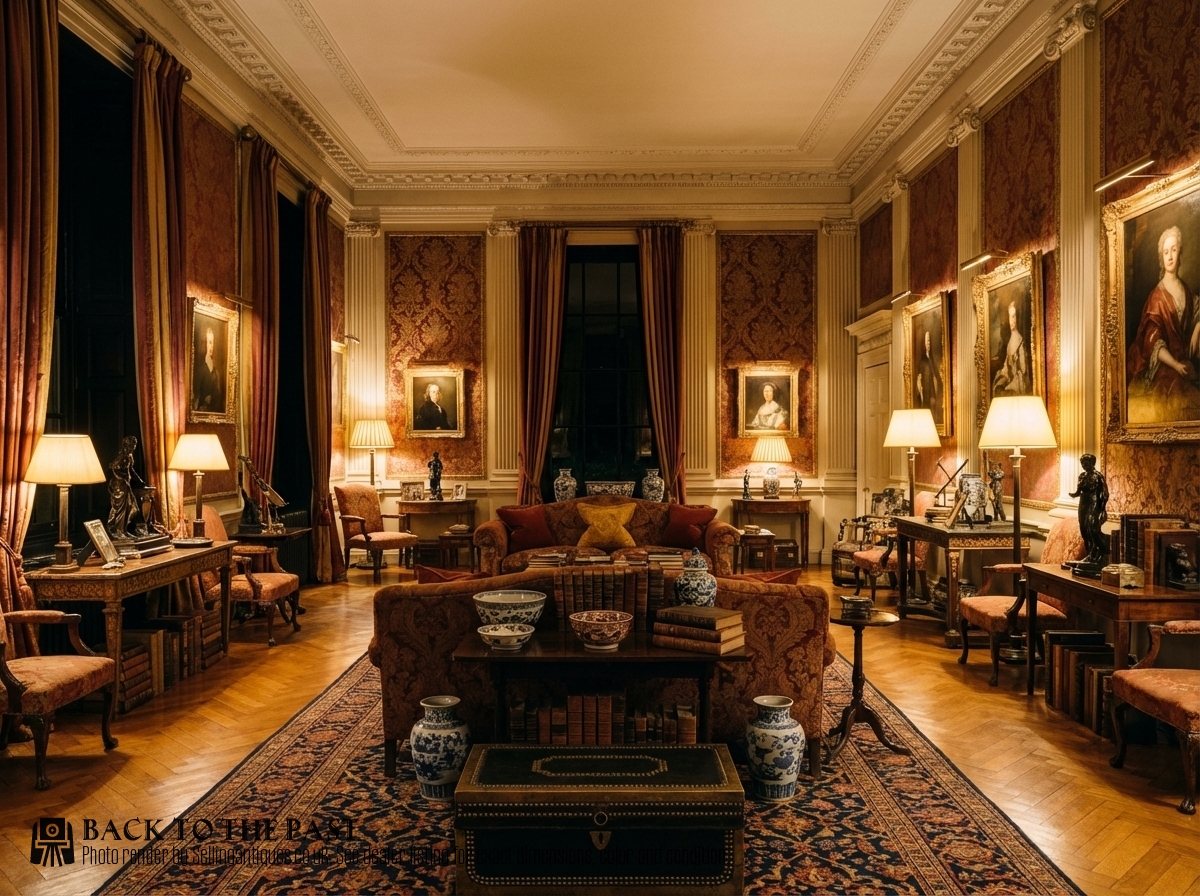
Maritime Travel Chest
When you search for a maritime travel chest, you encounter sturdy boxes designed for transport across oceans and deployment in distant campaigns. These pieces originate from the nineteenth and early twentieth centuries, spanning the Victorian and Edwardian eras.
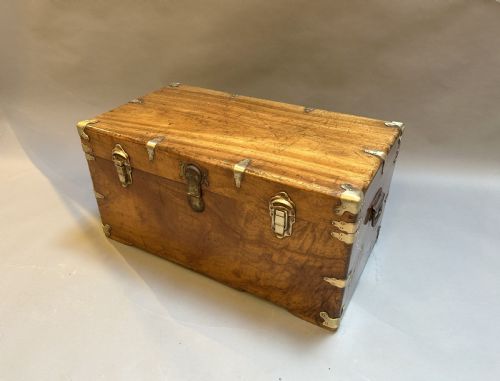
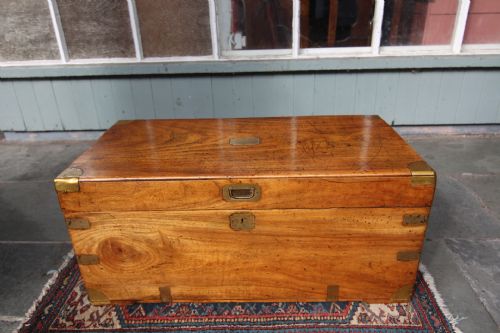
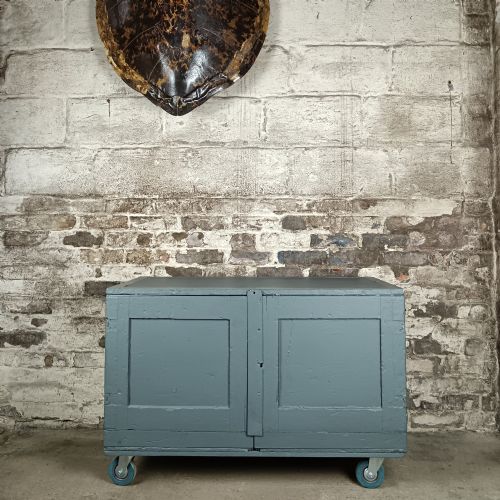
The versions most commonly met on this page are camphorwood chests styled for military use, alongside painted pine travel trunks and steel steamship luggage. They function as storage trunks, blanket boxes, and coffering for officers on the move.
Makers built these objects with portability in mind, utilising resilient timbers that survived moisture and insects during colonial service. China trade examples also appear, reflecting global trade routes and naval journeys.
How they were made
Carpenters constructed these chests primarily in camphorwood, teakwood, and pine, selecting timbers known for durability and natural resistance to pests. Camphorwood remains prominent for its aromatic qualities and stability in humid climates.
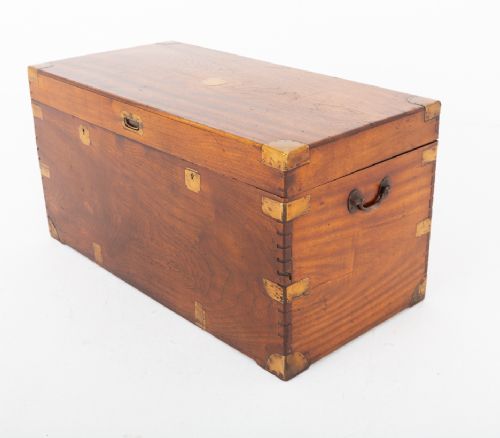
Workshops reinforced the corners and edges with brass strapwork and iron banding to withstand rough handling aboard ship and in transit. Recessed brass handles and lockplates prevented snagging during loading and allowed compact stacking.
Maritime Travel Chest Retail Price Guide 2026
Typical asking prices for maritime travel chest among the pieces listed under this phrase on Sellingantiques today, from the lower quarter to the upper quarter. They describe what is for sale here now, not the wider market.
Listings feature nineteenth-century camphorwood and teak alongside Edwardian travelling coffers, constructed with brass binding and iron hardware.
What varies in quality
The distinction between standard utility trunks and superior campaign pieces lies in the choice of cabinet timber and the weight of the hardware. Solid camphorwood and heavy brass binding indicate a higher standard of manufacture intended for officers rather than general cargo.
Finishing details such as dovetail joints, original locks with functioning keys, and well-fitted interior compartments elevate a piece. Painted pine versions display varying levels of decorative preservation rather than complex joinery.
The Maritime Travel Chest Glossary
- Camphorwood
- An aromatic timber native to Asia, utilised for trunks because its natural scent deters insects and protects textiles during long voyages.
- Campaign chest
- A form of furniture designed to dismantle or travel easily, equipped with recessed brass handles and corner brackets to protect against knocks.
- Steamer trunk
- A lower-profile luggage piece developed for ocean liner travel in the late nineteenth and early twentieth centuries, fitting beneath cabin berths.
- Coffer
- A heavy wooden box used for safekeeping valuables, often predating standard trunk designs but sharing robust domestic and travel functions.
Maritime Travel Chest: Frequently Asked Questions
How do I date a camphorwood chest?
Dating these chests involves examining the construction methods, the type of hardware, and any remaining maker stamps or shipping labels. Nineteenth-century examples often feature hand-cut dovetails and heavy cast brass mounts.
Victorian and Edwardian pieces display evolving lock mechanisms and construction styles. Pieces linked to specific shipping lines like Cunard provide a clear terminus post quem for their manufacture.
Why use camphorwood for trunks?
Camphorwood was selected for travel chests because its strong natural aroma repels moths, silverfish, and other wood-boring insects. This protected uniforms and woolens during long sea voyages in humid climates.
The timber is also remarkably stable and resistant to warping when exposed to changing weather conditions at sea. Its distinct scent remains detectable decades later.
Where were campaign chests used?
Campaign chests travelled with British military officers, colonial administrators, and diplomats across India, Africa, and the wider Empire. They were designed to withstand rough handling on pack animals, wagons, and merchant ships.
Upon reaching a posting, the chest doubled as a desk, tabletop, or bedside storage unit. Their modular design allowed quick packing when orders arrived to move camp.
How do I care for antique camphorwood?
Maintaining camphorwood requires keeping the timber away from direct sunlight and extreme radiator heat, which can dry out the natural oils. Dust the surface regularly with a dry cloth rather than using harsh chemical polishes.
Conditioning the wood occasionally with appropriate wax helps maintain its lustre. Allowing air circulation inside the chest preserves the interior timber.