




Brass Planter Stand
These pieces known as a brass planter stand bring botanical focus indoors, combining metalwork and timber to hold heavy plants.
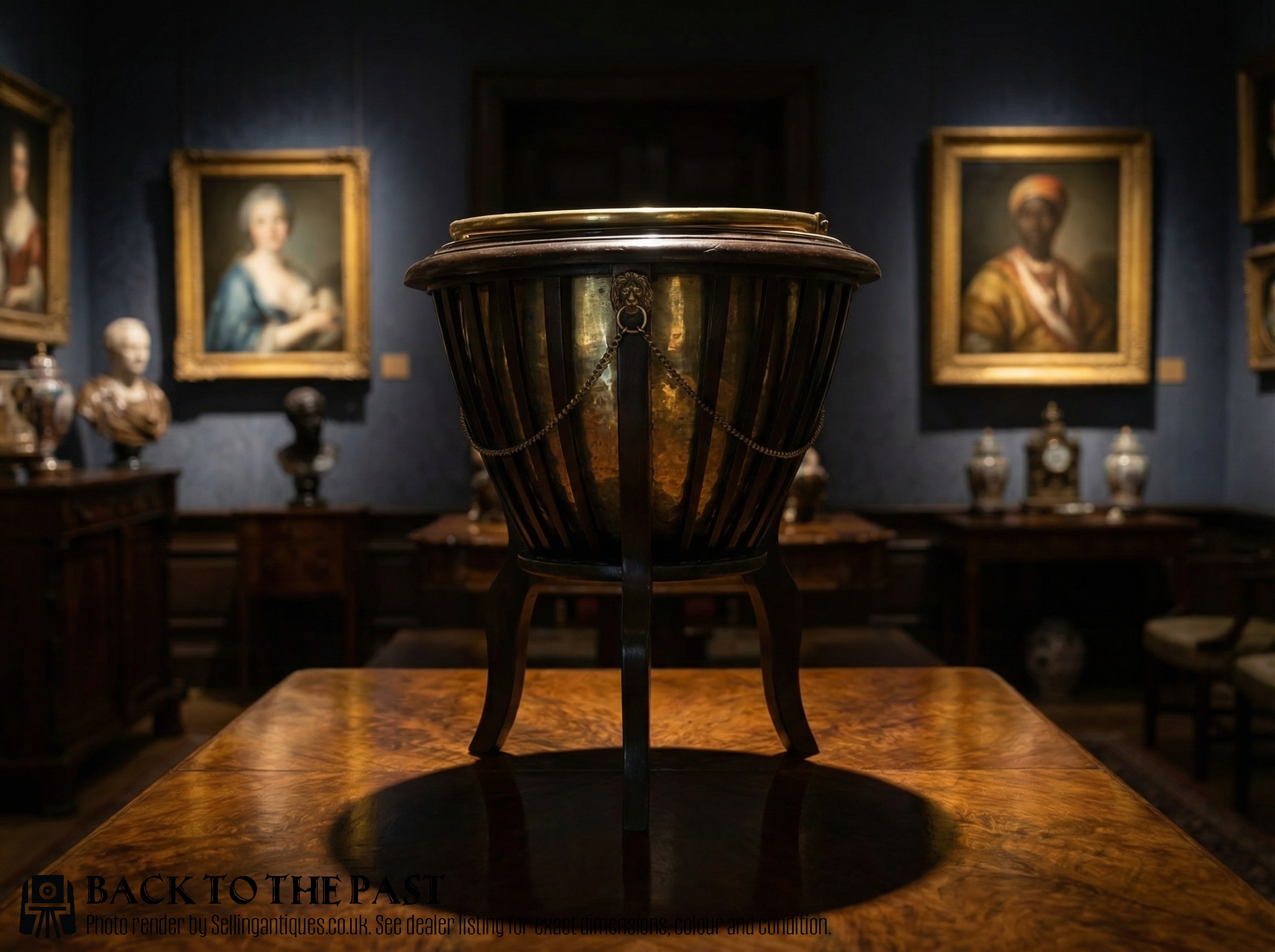
Brass Planter Stand
A brass planter stand brings together metal containers and fitted wooden supports, taking forms like wine coolers, coopered buckets, and dedicated jardinieres. The search phrase covers functional vessels designed to house indoor greenery, often raised on dedicated legs or low tables.
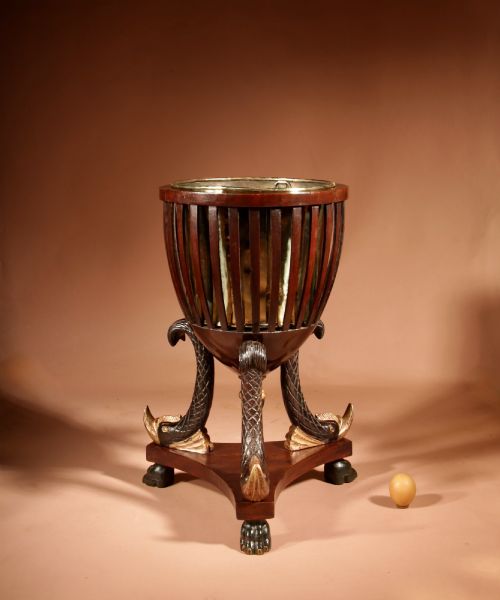
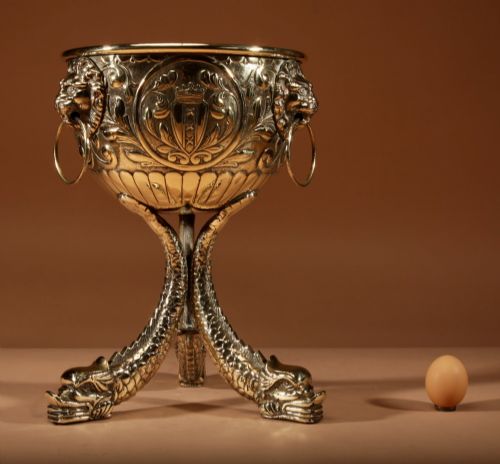
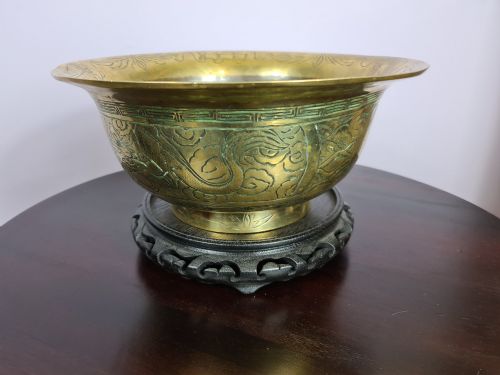
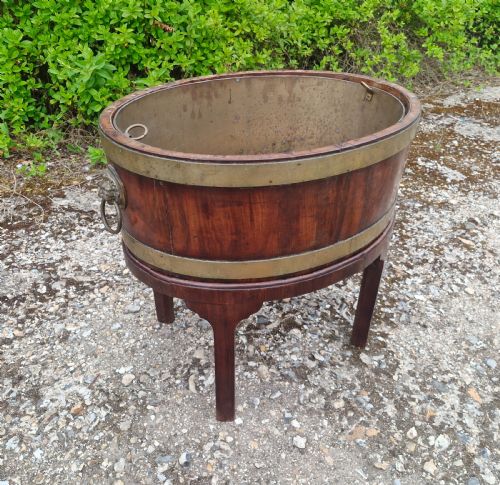
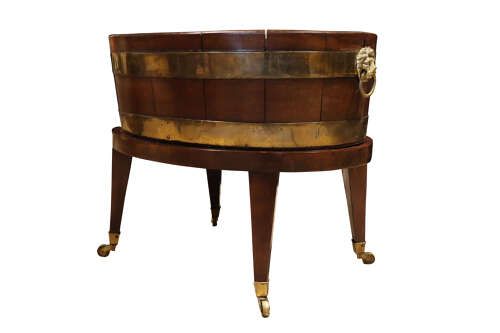
Examples on this page span the Georgian, Victorian, and Edwardian periods alongside French Empire and Dutch Traditional styles. Buyers frequently encounter coopered oak or mahogany barrels banded in bright metal alongside cast and embossed brass bowls.
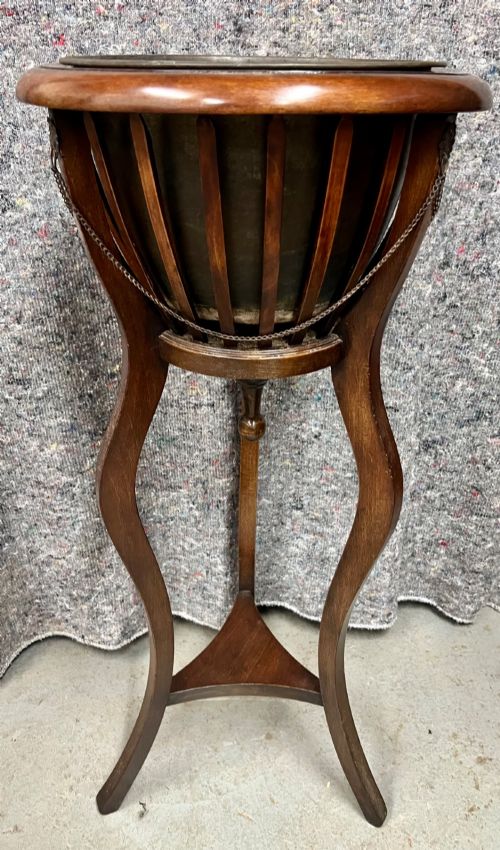
Origins stretch across English, French, Dutch, and Chinese workshops, moving from formal George III dining rooms to domestic Edwardian hallways. Each piece demonstrates how makers adapted practical containers for display.
The objects serve multiple botanical and decorative roles, functioning as plant stands, jardiniere tables, and converted wine coolers. Their survival depends on sturdy internal metal liners that protected the surrounding timber from damp soil.
How They Were Made
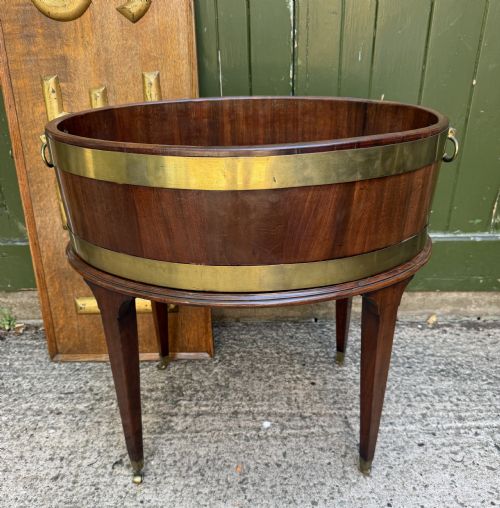
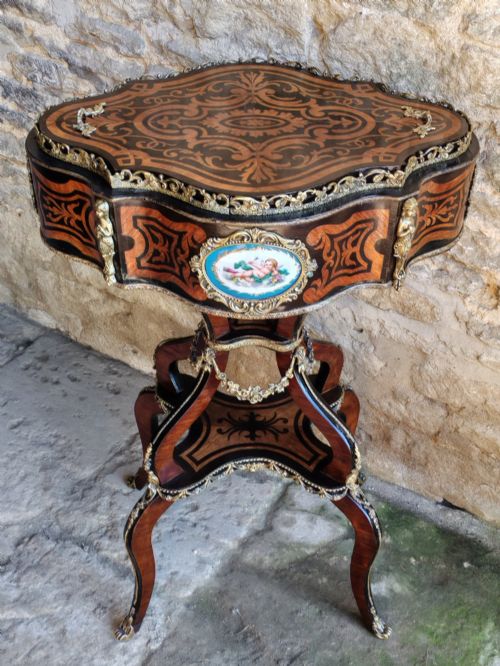
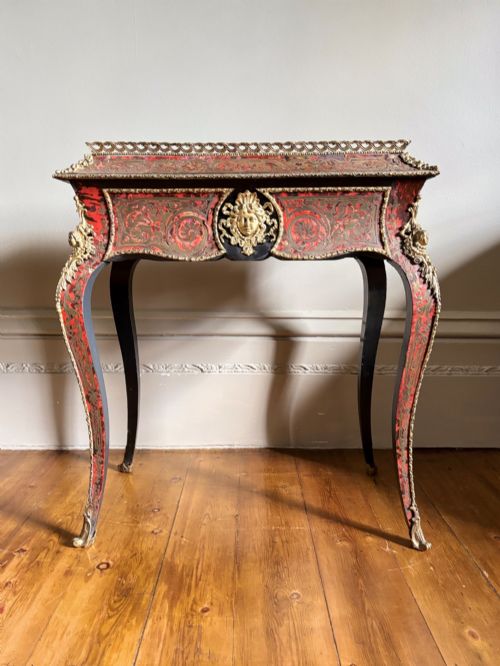
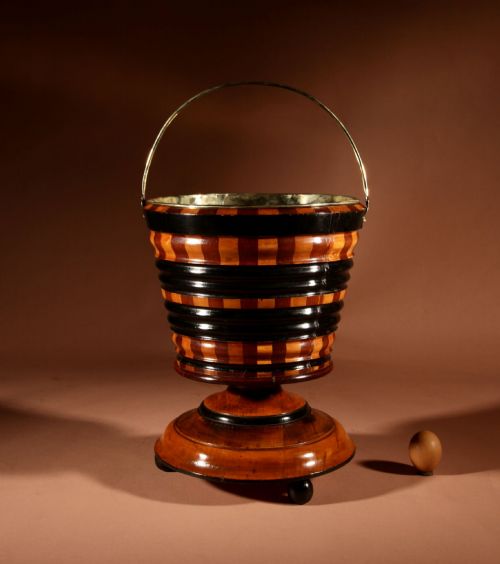
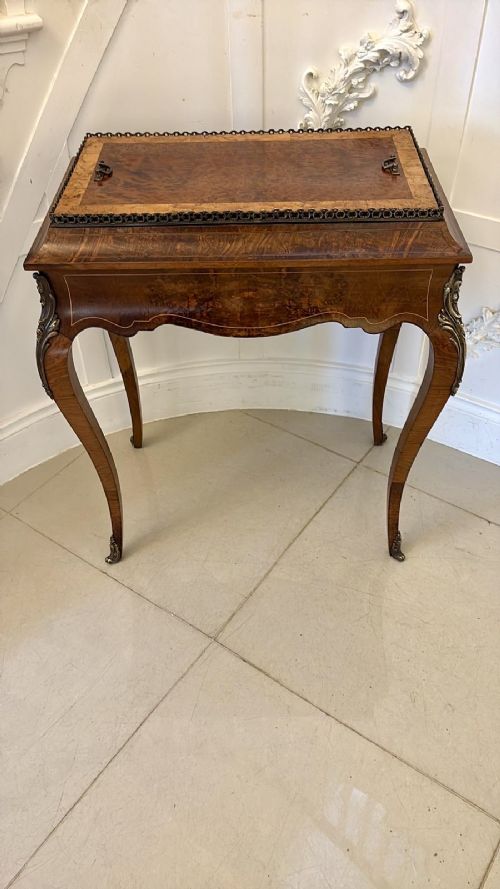
Construction relies on traditional coopering techniques for timber bodies, binding staves of oak, mahogany, walnut, or satinwood with heavy brass bands and rivets. Cabinetmakers shaped exotic veneers and marquetry inlays for French and Dutch examples, while metalworkers cast, embossed, and etched sheet brass.
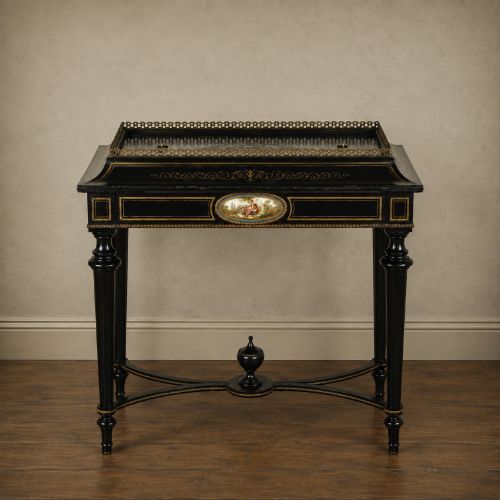
Internal waterproofing required fitted zinc or copper liners to hold soil and water safely without rotting the outer wooden staves. Joiners constructed separate stands using turned legs, brass mounts, and occasional porcelain plaques to elevate the primary vessel.
Listings feature oak, mahogany, walnut, and satinwood vessels bound in brass and copper, spanning the Georgian to Edwardian eras.
What Varies in Quality
Quality rests on the integrity of the timber selection and the weight of the metal components, distinguishing robust cabinetwork from lighter decorative pieces. Superior items employ dense figured mahogany, burr walnut, or finely cast ormolu mounts rather than thin plated alternatives.
The relationship between the container and its stand reveals much about origin, as integrated designs show greater cohesion than later marriages of separate objects. Original fitted metal liners and crisp hand-chased brass work indicate superior workshop standards.
The Brass Planter Stand Glossary
- Jardiniere
- An ornamental pot or stand for holding plants or flowers. These vessels form the central container for the majority of botanical displays.
- Coopered
- Made by assembling curved wooden staves held together with metal hoops, much like a barrel. This technique provides structural strength for holding damp soil.
- Cellarette
- A lockable container used originally for storing wine bottles in dining rooms. Many examples found a second life as plant holders due to their waterproof linings.
- Dinanderie
- Objects made of beaten and engraved brass or copper, originating from towns along the Meuse valley. The term describes decorative metal vessels and embossed surfaces.
- Ormolu
- Gilded bronze used for decorative mounts on fine furniture and stands. This finish adds bright metallic contrast to dark woods like mahogany and ebonised timber.
Brass Planter Stand: Frequently Asked Questions
Were these originally made for plants?
Many examples began life as wine coolers, cellarettes, or peat buckets before being repurposed as plant stands by later owners. The deep coopered bodies and metal linings made them ideal for holding heavy pots of damp earth.
Dedicated botanical stands emerged during the nineteenth century as interior plant display grew fashionable in European homes. Makers adapted dining room serving vessels into decorative furniture designed specifically for indoor greenery.
How do I tell a Georgian piece from a Victorian one?
Georgian versions tend to feature understated mahogany or satinwood with restrained brass banding, reflecting formal dining room use. Their lines remain clean and architectural, following classical proportions.
Victorian pieces often introduce heavier ornamentation, ebonised woods, or pressed brass panels influenced by diverse stylistic revivals. The metalwork on later examples becomes more decorative, sometimes incorporating porcelain plaques or intricate cast mounts.
Can these stands support heavy plants safely?
Sturdy construction with thick timber staves and secure metal bands allows these pieces to bear considerable weight without structural strain. The base framework must match the proportions of the upper bowl to maintain balance.
Heavy wet soil adds significant mass, so checking the joinery where the bowl meets the stand ensures lasting stability. Floor standing models distribute this weight evenly across four legs or a solid pedestal.