
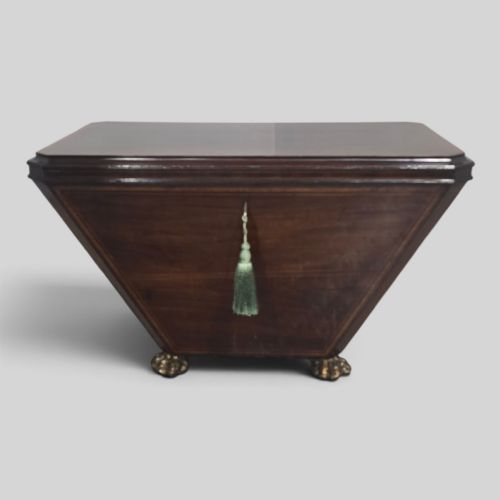
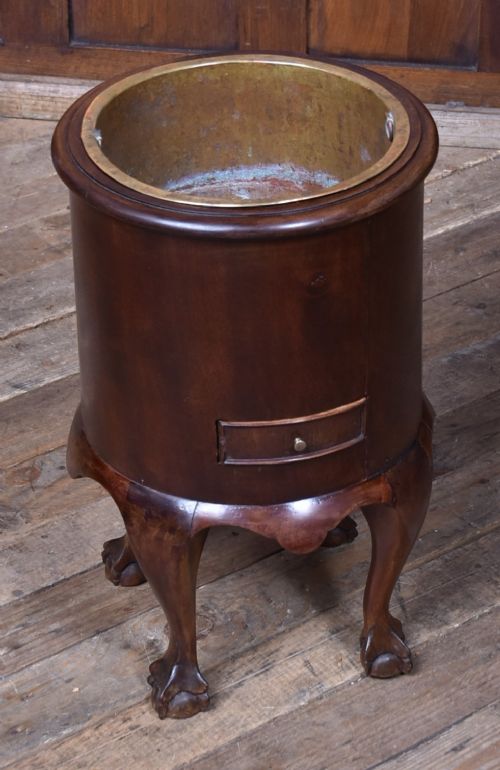


Edwardian Brass Cellarette
These edwardian brass cellarette pieces combine robust metalwork with fine timber to hold wine and spirits in style.
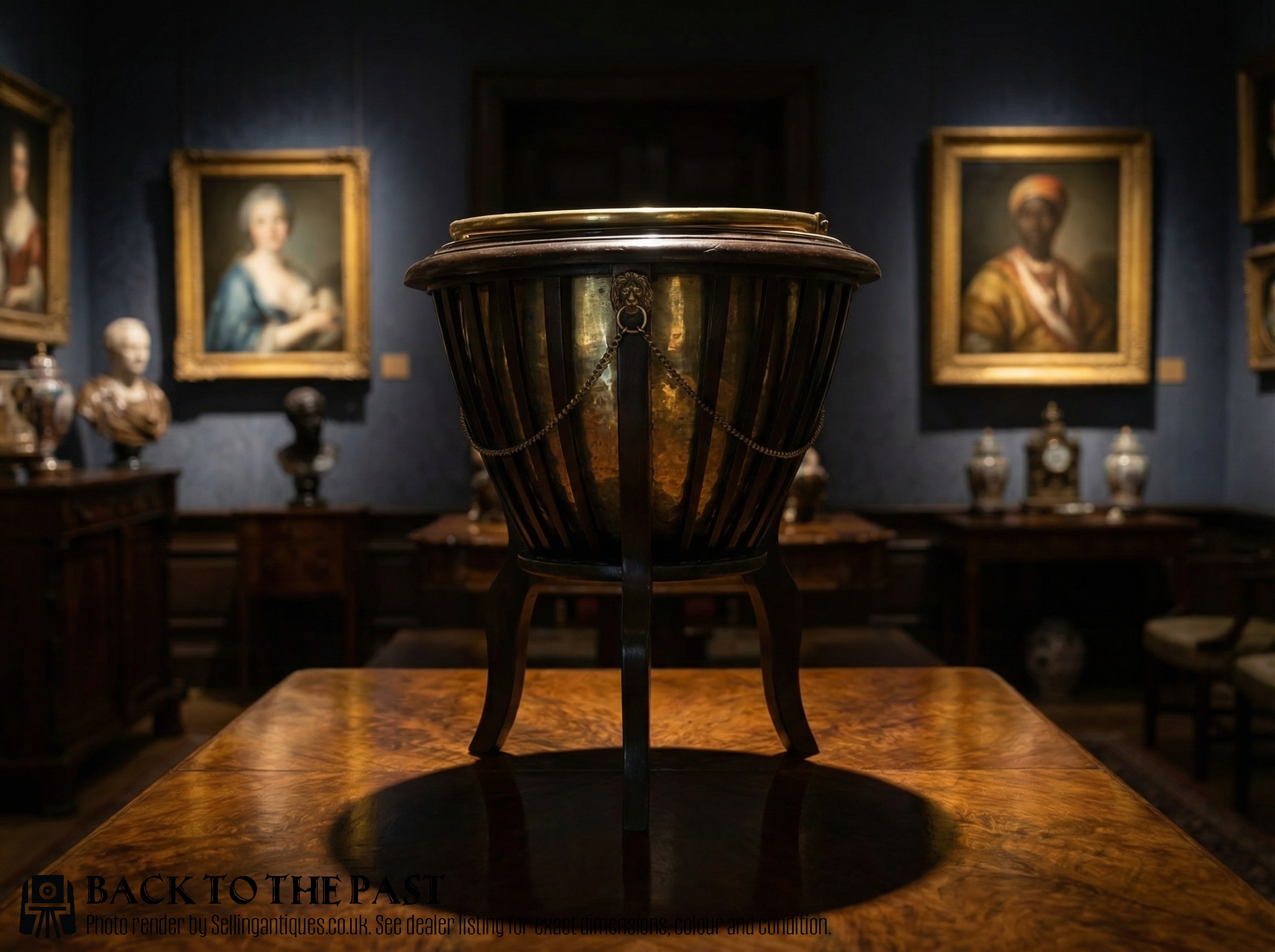
Edwardian Brass Cellarette
When searching for an edwardian brass cellarette, buyers encounter a specific form of drinks furniture designed to hold bottles securely. The listings on this page include examples spanning from Georgian origins through Victorian and Edwardian periods up to the mid-century.
Most pieces seen here take the form of wine coolers, decanter boxes, and drinks tables fitted with metal bands. Mahogany and oak dominate the construction, often enhanced with satinwood and boxwood inlay.
Makers such as Edwards and Roberts and Whytock and Reid appear alongside unmarked items showing revival styles. Buyers are most likely to meet Edwardian and early twentieth-century interpretations that adapt earlier Georgian and Regency designs for modern homes.
Construction and materials
The primary structure relies on dense hardwoods like mahogany, oak, walnut, and burr walnut. These timbers provide the weight and stability needed to support heavy glass decanters and liquid contents.
Brass bands encircle the wooden bodies to reinforce the joints and add decorative contrast. Inlay work in satinwood and boxwood further decorates the surfaces of refined examples.
Glass liners and internal partitions appear in several pieces to protect bottles and manage ice or water. Cabinetmakers joined the timber using traditional methods suited to heavy daily use.
Some containers doubled as bottle storage for Guinness, proving that stout lovers also required fine cooperage.
Judging quality and craftsmanship
Quality rests on the selection of timber and the precision of the joinery. Dense grain patterns in mahogany or burr walnut indicate superior stock chosen by the cabinetmaker.
The weight and thickness of the brass fittings distinguish better examples from simpler production. Well-cast bands and secure fixings demonstrate attention to detail during assembly.
Inlay work requires careful hand-cutting and fitting into the surrounding wood surface. Crisp edges and tight joints in the marquetry separate exhibition pieces from standard workshop output.
Edwards and Roberts·Whytock and Reid
The Edwardian Brass Cellarette Glossary
- Cellarette
- A lockable container or chest designed to hold wine bottles near the dining table. They often feature metal liners and robust carrying handles.
- Brass bound
- A method of reinforcing wooden containers using strips of metal fastened around the exterior. This technique adds both structural strength and visual contrast.
- Inlay
- The practice of embedding pieces of contrasting timber into a recessed wood surface to create decorative patterns. Satinwood and boxwood are common choices for this work.
- Jardiniere
- A large ornamental pot or stand intended to hold plants or flowers. In this context, certain metal-lined vessels served multiple functions as planters or wine coolers.
Edwardian Brass Cellarette: Frequently Asked Questions
What is an edwardian brass cellarette?
An edwardian brass cellarette is a wooden container reinforced with metal bands, built to store and cool wine bottles. These vessels combine practical storage with decorative presence in dining rooms.
They reflect the formal hospitality customs of the early twentieth century, adapting eighteenth and nineteenth-century forms for contemporary interiors.
How were these pieces used originally?
Wealthy households placed them near the dining table to keep wine and spirits within arm's reach of the host. Servants loaded the interiors with ice or cold water to chill the bottles.
Over time, many adapted to hold decanters, games equipment, or even plants as household needs shifted.
How do I care for the wood and brass?
Keep the timber clean with a soft cloth and occasional wax polish to maintain the finish. Avoid placing them near direct heat sources that could dry out the wood.
Polish the brass sparingly using a gentle cleaner to preserve its natural tone without wearing down the metal surface.
How can I tell the period?
Examine the secondary woods, construction methods, and hardware styles to determine the era. Edwardian pieces often revive earlier Georgian proportions while incorporating lighter inlay techniques.
Maker marks, where present, help confirm the workshop origin and narrow down the date of production.