


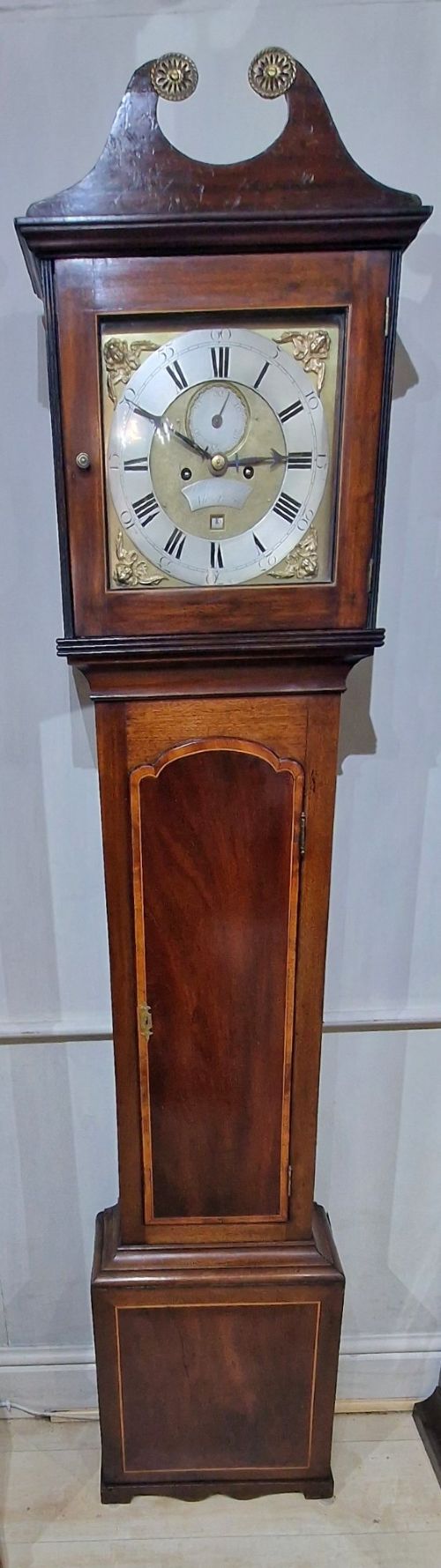
Brass Mahogany Clock
A brass mahogany clock combines rich timber with warm metal work, spanning longcase, bracket and wall designs from Georgian to Edwardian periods.
Brass Mahogany Clock
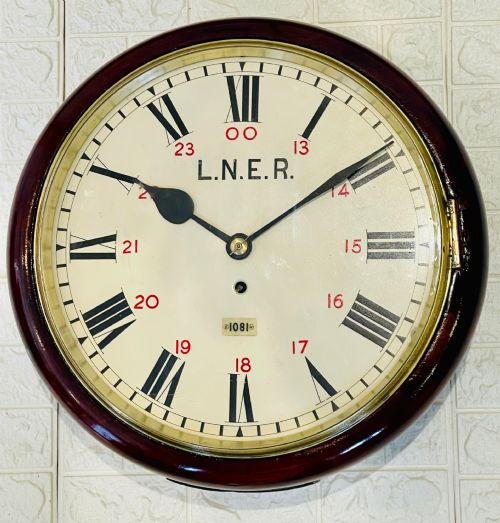
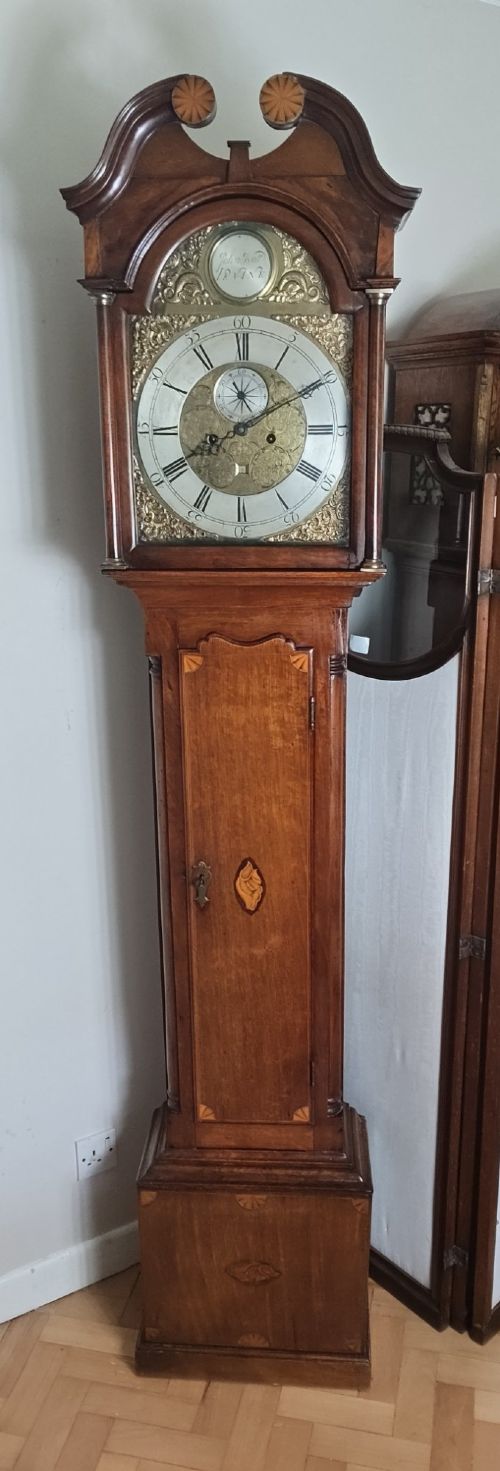
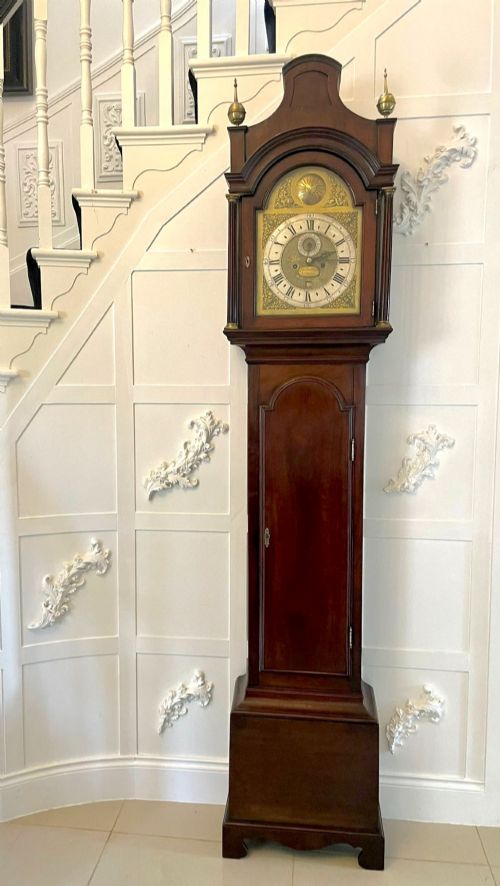
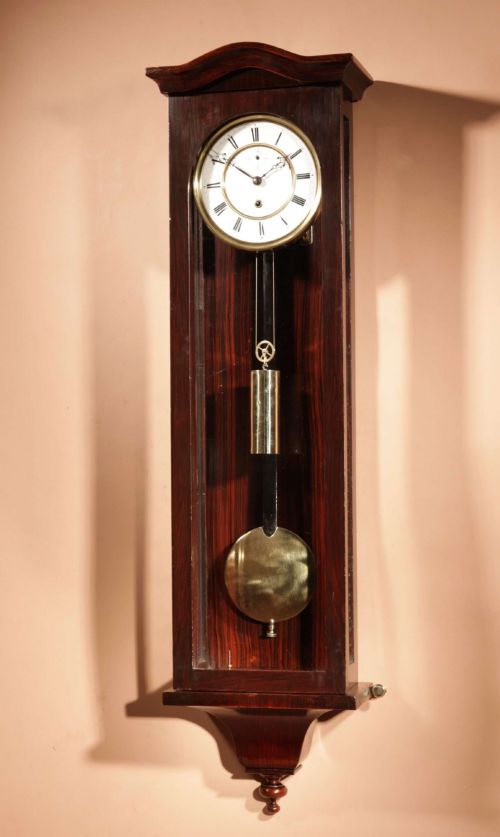
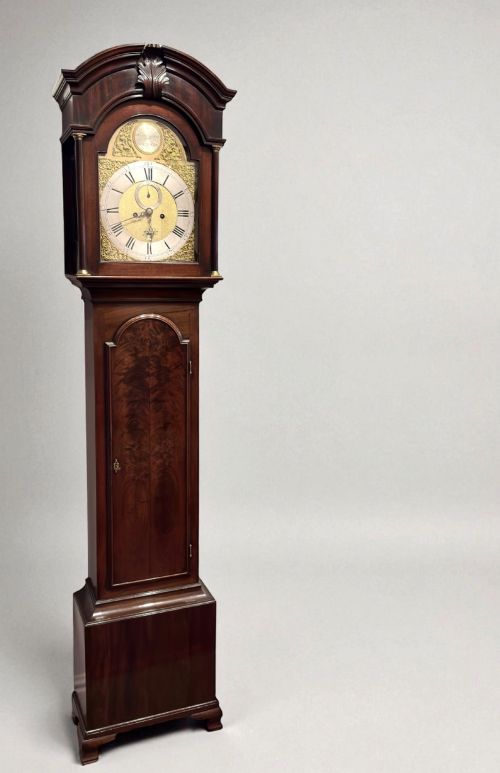
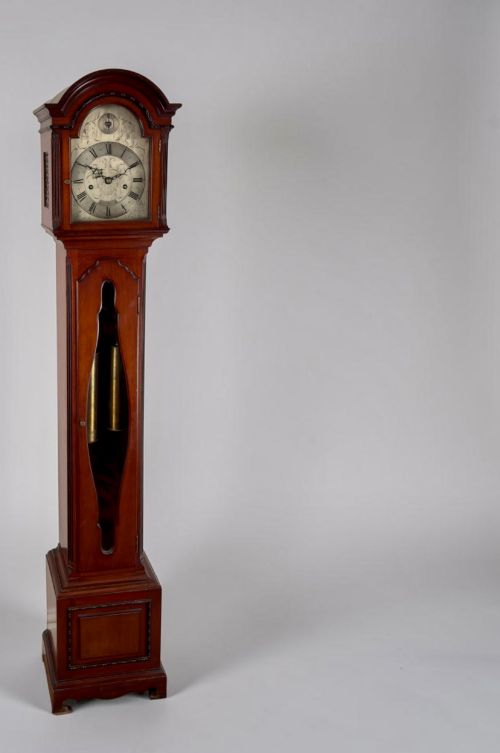
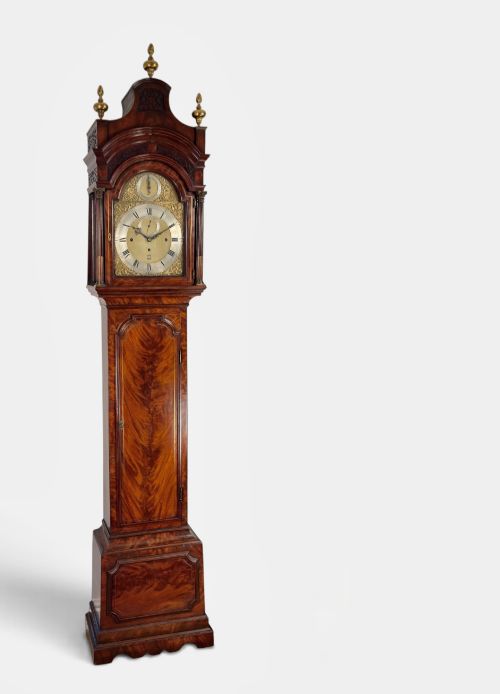
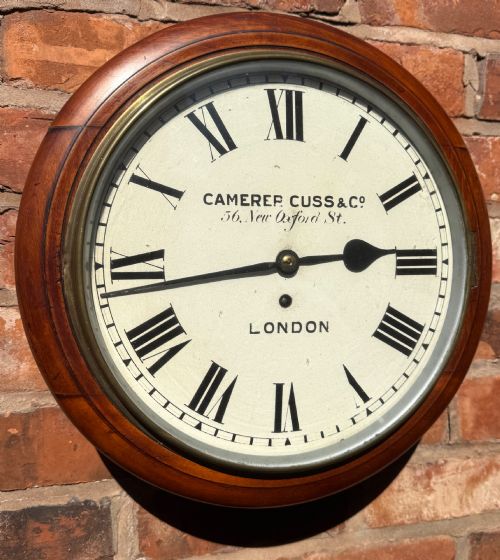
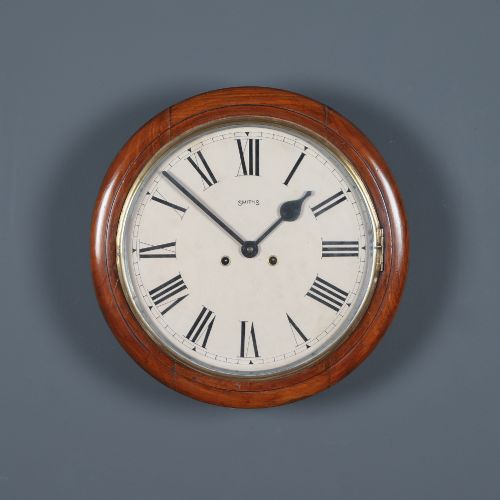
Longcase clocks dominate the larger formats, often housing brass dials within architectural hoods and mahogany trunk cases. Smaller wall clocks and fusee dial clocks utilise mahogany surrounds paired with cast brass bezels for commercial and domestic settings.
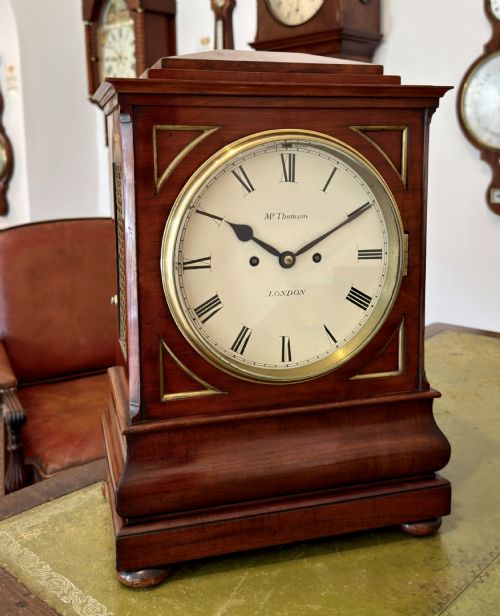
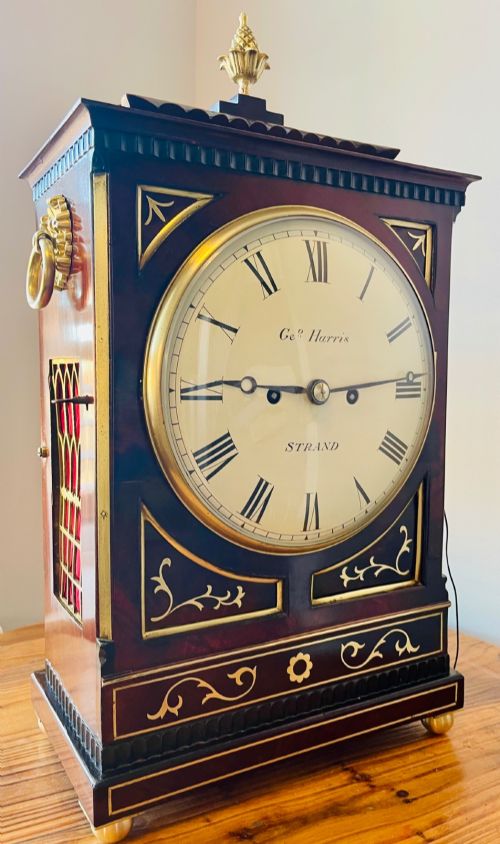
Bracket clocks and mantel pieces provide portable alternatives, frequently integrating brass mounts, side sound frets and inlaid flame veneers. These pieces originate from both English workshops and continental makers active through the nineteenth century.
Materials and construction
Clock movements rely on brass plates and wheels driven by iron weights, steel springs or fusee chains. Silvered metal frequently forms chapter rings, while glass protects delicate painted dials and pendulum chambers.
Listings feature movements ranging from simple timepieces to complex three train chiming longcases housed in mahogany.
Assessing quality
Quality rests upon the crispness of brass dial engraving, the depth of chasing on spandrels, and the precision of the movement train. Maker signatures from known London or provincial horologists elevate a piece above standard workshop production.
Cabinetwork distinguishes finer examples through matched flame mahogany veneers, precise brass inlay and original architectural mouldings. Retaining original components, from the pendulum to the brass finials, defines higher survival standards.
Charles Shuckburgh·John Ellicott·Camerer Cuss and Co·James McCabe·Thwaites and Reed
The Brass Mahogany Clock Glossary
- Fusee
- A conical pulley used in spring driven clocks to equalise the declining power of the mainspring as it unwinds. This mechanism helps maintain consistent timekeeping across the duration of the wind.
- Spandrel
- The ornamental corner piece mounted on a clock dial outside the chapter ring. These cast brass appliques frequently reflect the stylistic period of the movement.
- Chapter ring
- The metal ring bearing the hour numerals on a clock face. They are commonly fashioned from silvered brass with engraved markers.
- Anchor escapement
- A clock mechanism that controls the release of gear trains to regulate the swing of the pendulum. It forms the standard controlling heartbeat of many 18th and 19th-century clocks.
- Quarter striking
- A mechanical function that chimes the quarters of the hour on bells or gongs in addition to sounding the full hour count. It requires a secondary or tertiary train within the movement.
Brass Mahogany Clock: Frequently Asked Questions
How do I wind an eight day clock?
Insert the winding key into the dial holes corresponding to the time and striking trains, turning gently until resistance increases. Avoid over winding to prevent damage to the internal springs or gut lines.
Ensure you support the motion of the key and maintain a steady rhythm during the process. For weight driven longcases, draw the weights up carefully using the winding crank provided.
What is a fusee movement?
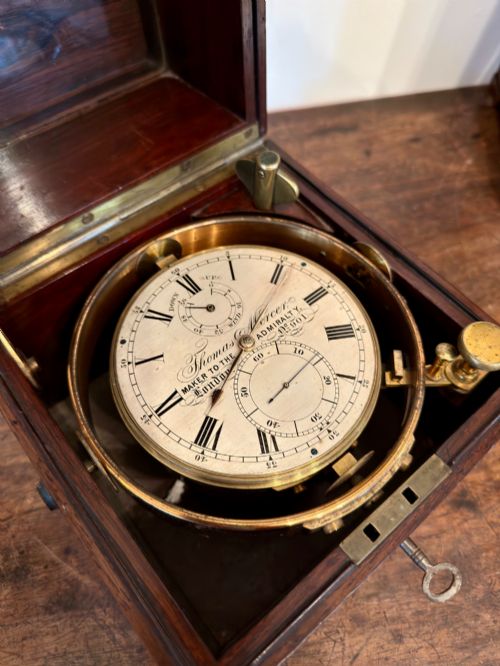
A fusee movement incorporates a cone shaped pulley connected to the mainspring via a chain or cord. This clever arrangement compensates for the drop in spring tension as it unwinds.
Such systems were favoured in better quality bracket and wall clocks to ensure uniform torque delivery to the escapement. You will often see them in British maritime and library timepieces.
How do I date a mahogany clock?
Examine the dial style, case proportions, wood grain and construction methods employed within the interior trunk. Painted white dials often indicate the late 18th century or later, while square brass dials generally point earlier.
Maker signatures and tax stamps on the movement plates can also narrow down the production decade. Cabinet details such as bracket feet versus plinth bases help separate Georgian from Victorian eras.
Where should I place a longcase clock?
Position your longcase against an interior wall away from direct sunlight, heating vents and damp environments. Stable ambient temperatures protect the mahogany veneer from splitting and warping over time.
The floor must be level to ensure the pendulum swings symmetrically and the gear train runs reliably. Fixing the upper case to the wall using a bracket provides additional stability.