
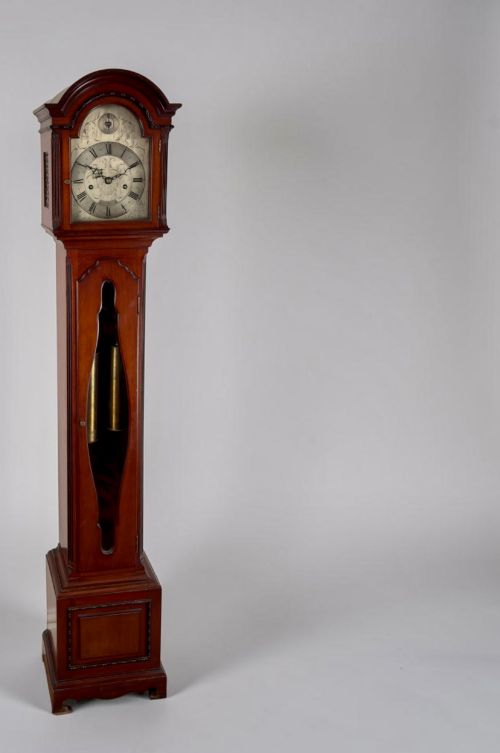

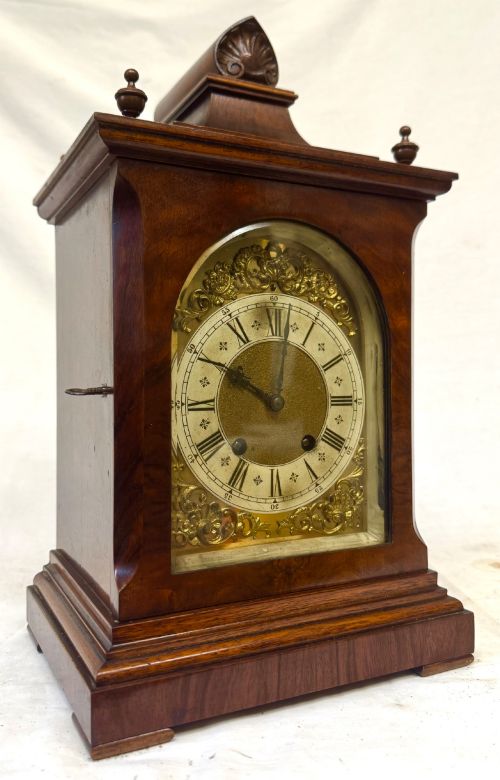
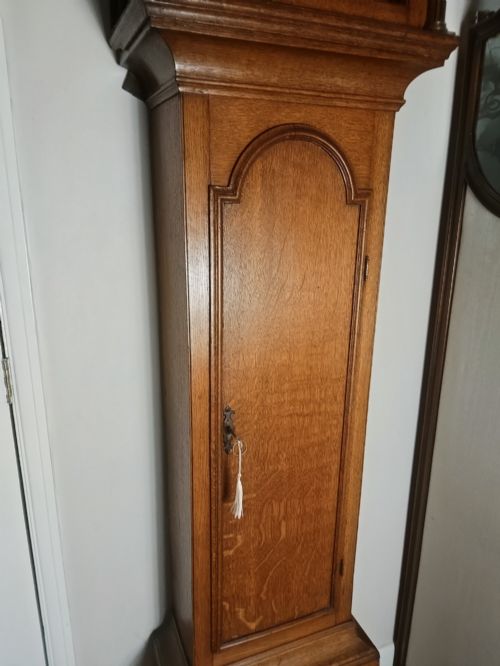
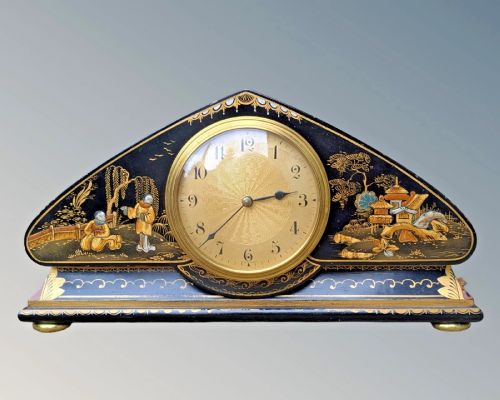
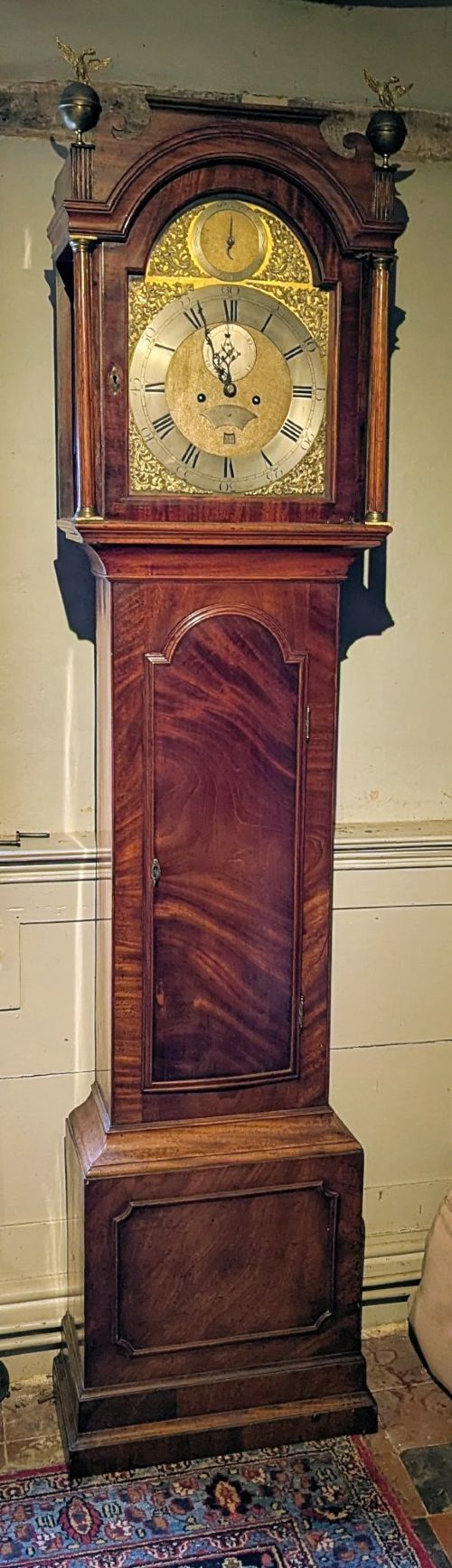
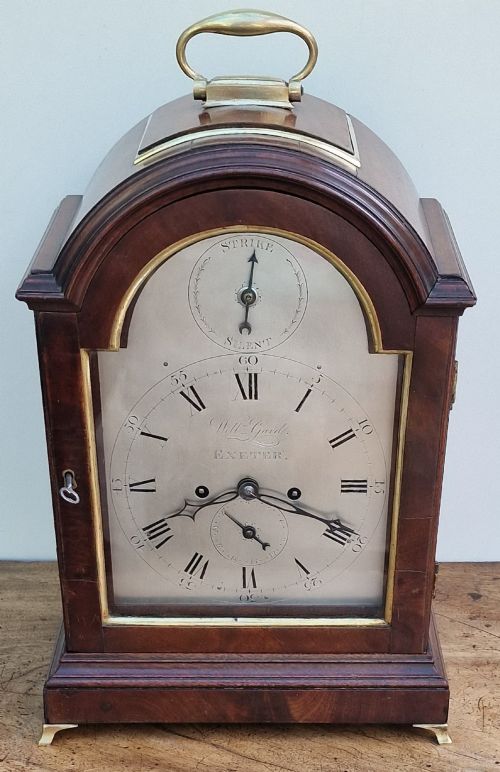
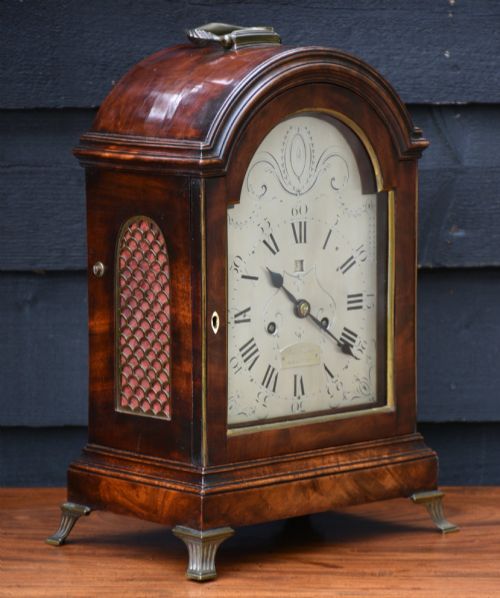
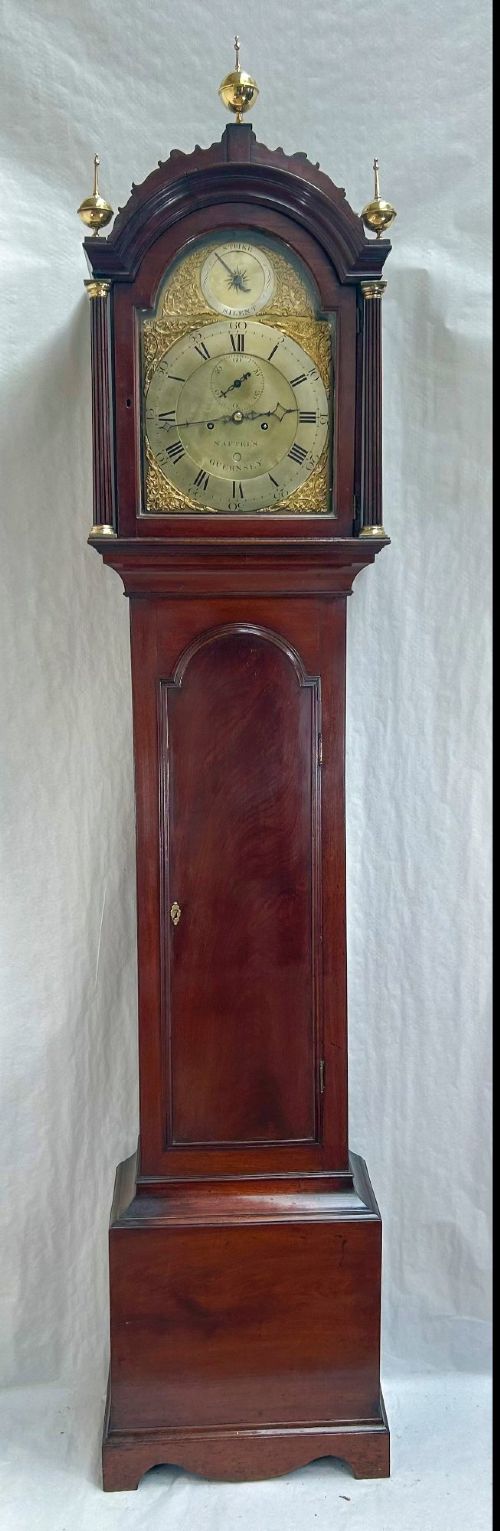
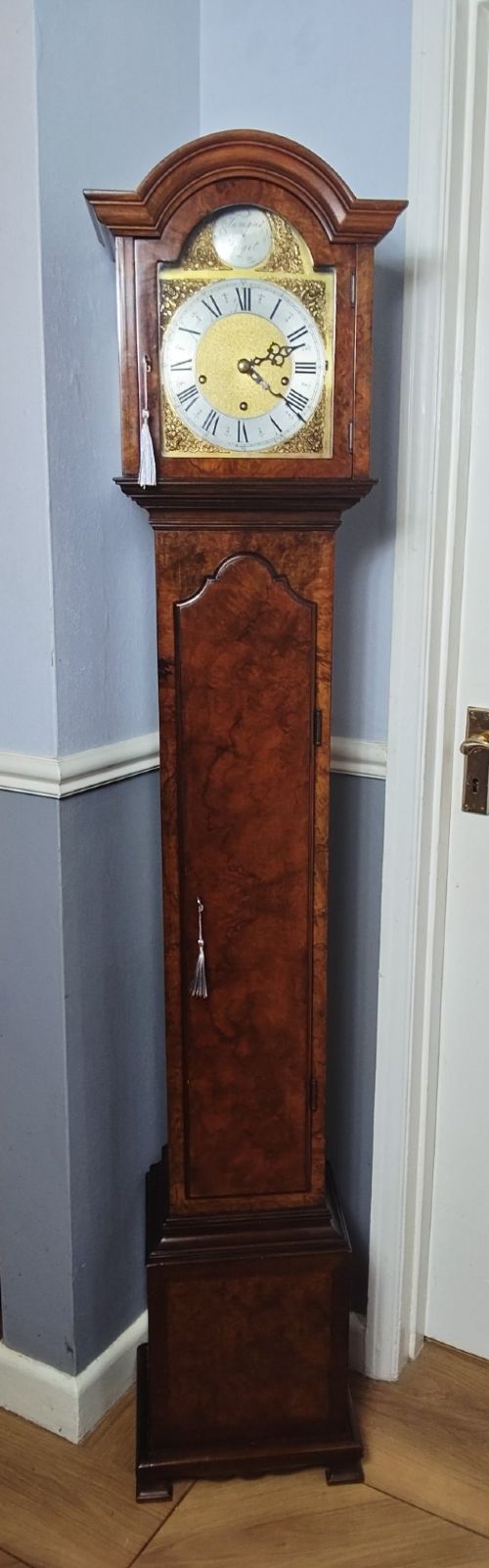
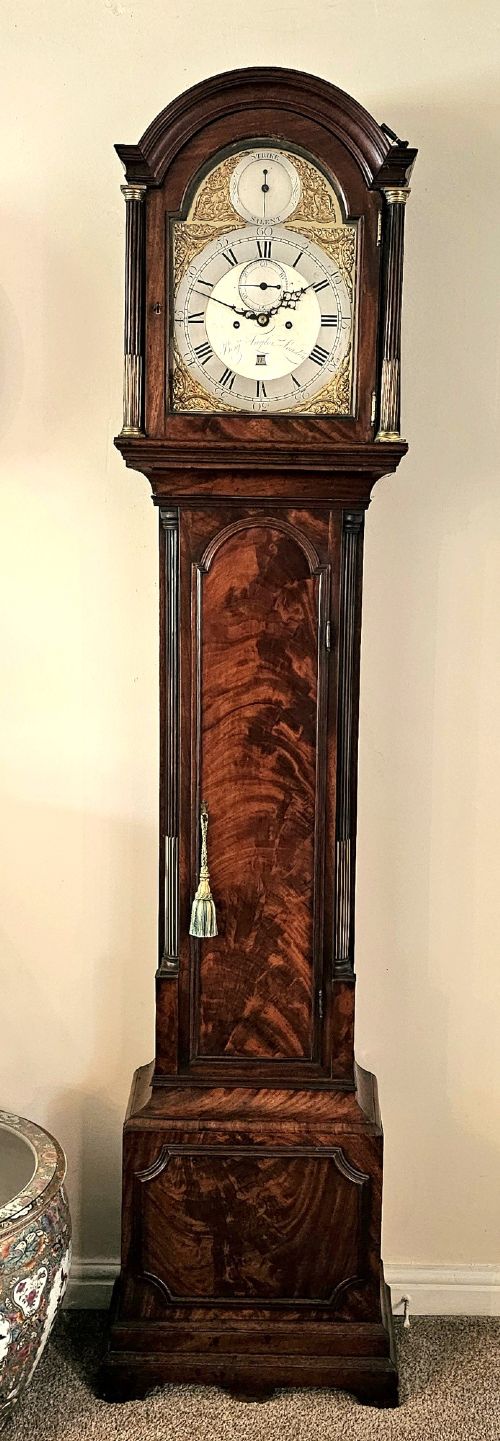
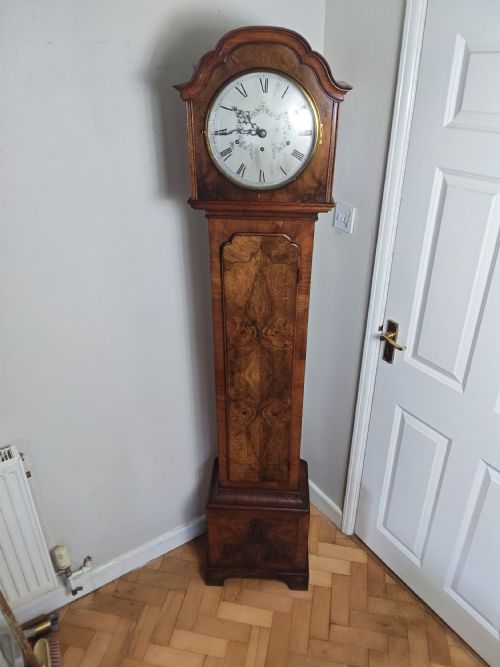
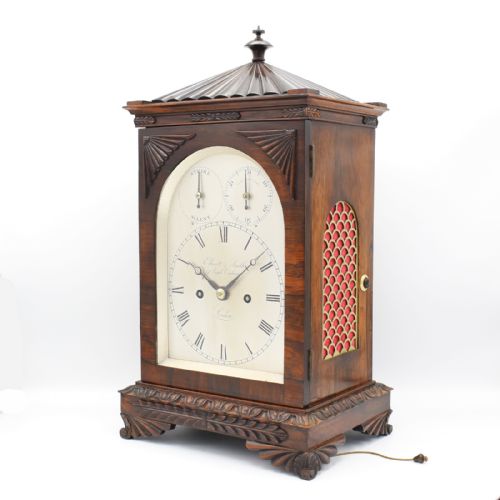
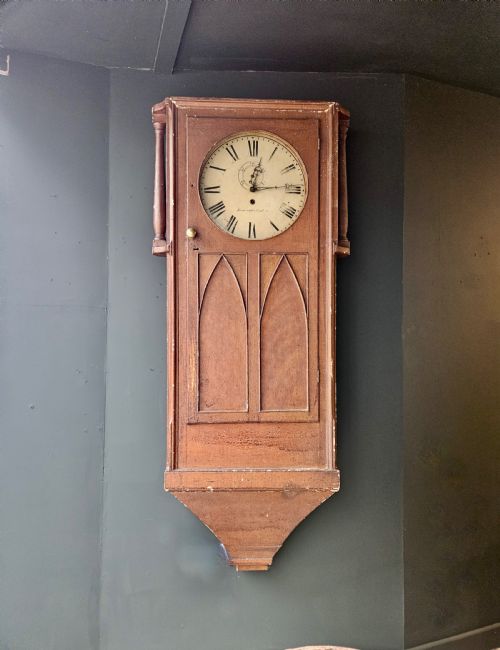
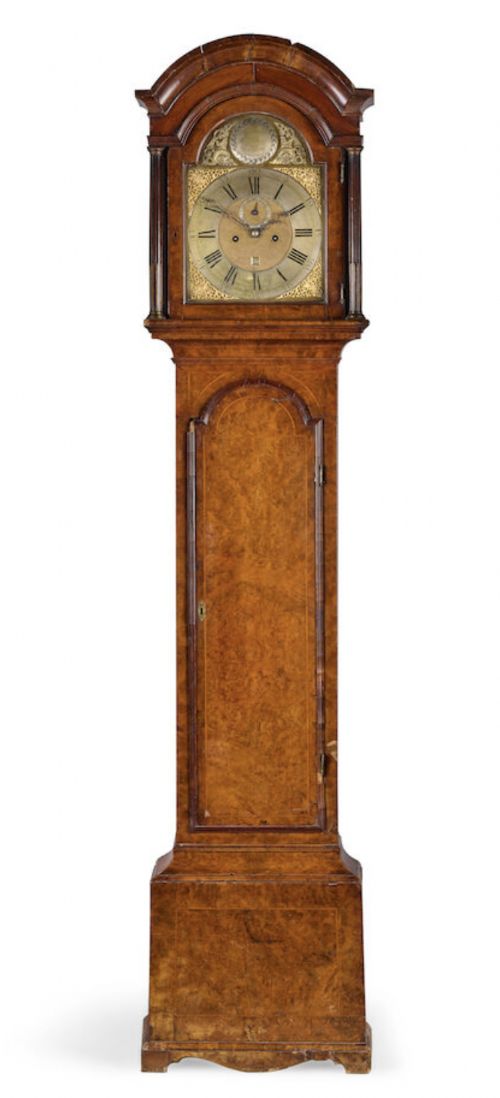
Arch Dial Clock
An arch dial clock brings a sophisticated arched face and precise mechanical movement into a room, offering a functional centrepiece rooted in centuries of horology.
Arch Dial Clock
Makers from London and provincial towns across Britain dominate the historical record, though continental and later twentieth-century examples also appear.
How they were made
Casework relies on traditional cabinet-making timbers such as mahogany, oak, and walnut, often enhanced with burr veneers, brass dial appliques, and silvered chapter rings.
Internal movements combine brass wheels and steel pinions, utilising gravity-driven weights or spring-powered fuses to regulate time and drive striking or chiming trains.
Some provincial makers included local tide indicators, proving that even a clock cared deeply about fishing.
What varies in quality
The refinement of the movement and the crispness of the brass dial engraving separate standard production from masterwork horology, alongside the choice of secondary timbers and cabinet proportions.
Originality of the case finish, the integration of the movement to the dial, and the presence of specialised complications such as moon rollers or musical chiming trains elevate a piece.
Gillett & Johnston·James Field·Lenzkirch·Benjamin Taylor·Ellicott & Smith·Windmills and Wightman·Priory of Dundee·Bravingtons·Benj Reeves·Handley & Moore·Des Granges·J Edwards·Anthony Binks·Tregent
The Arch Dial Clock Glossary
- Arch dial
- A clock face featuring a curved upper section, often utilised for auxiliary displays like lunar calendars or strike/silent indicators.
- Longcase clock
- A tall pendulum clock enclosed in a wooden case, historically termed a grandfather clock.
- Bracket clock
- A portable table or mantel clock originally designed to sit upon a wall bracket.
- Moon roller
- A revolving disc beneath the arch of the dial that tracks the phases of the moon.
- Chapter ring
- The outer ring of a clock dial bearing the numerals for hours and minutes.
Arch Dial Clock: Frequently Asked Questions
How do I wind an antique clock?
Winding requires inserting a appropriate key into the winding holes on the dial face and turning it gently until resistance is met. Care must be taken not to overwind the movement.
For weight-driven longcase clocks, the weights are drawn up using a crank or pulling the chains, depending on the specific mechanical setup of the movement.
Where were these clocks made?
The majority of these clocks originate from workshops across Britain, with significant hubs of horological production in London alongside regional centres in Scotland and provincial English towns.
Some later nineteenth and twentieth-century examples also stem from continental makers, reflecting shifting European styles and manufacturing methods.
What does moon phase mean?
A moon phase mechanism tracks the synodic lunar month across a painted or engraved disc visible through an opening in the arch of the dial. This complication was particularly useful for navigation and evening travel in periods before street lighting.
In maritime regions, these displays often functioned as high water indicators to assist with local shipping and coastal trade.