


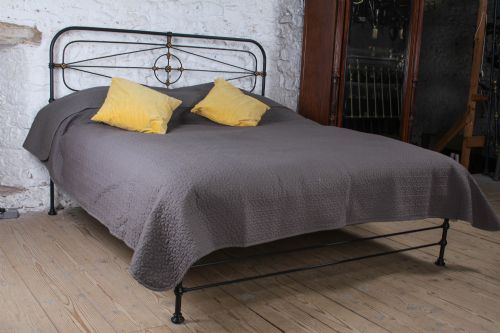
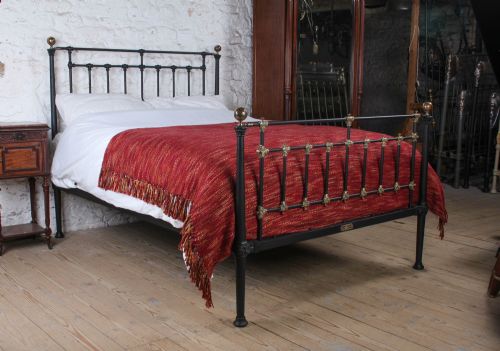
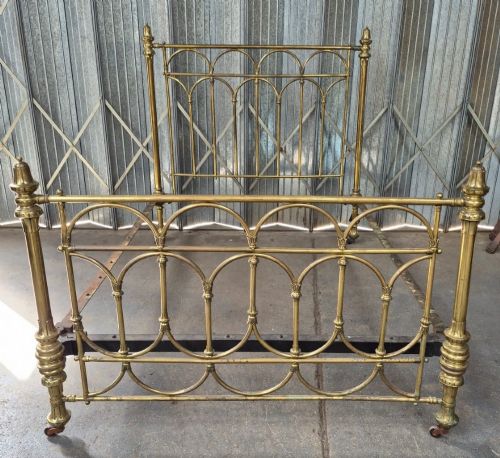
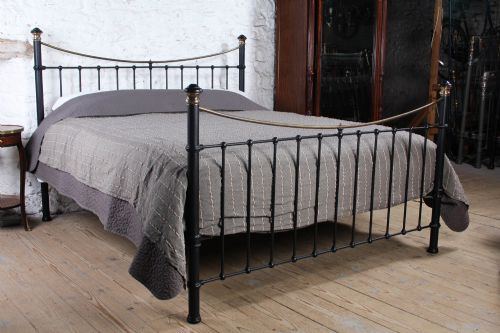
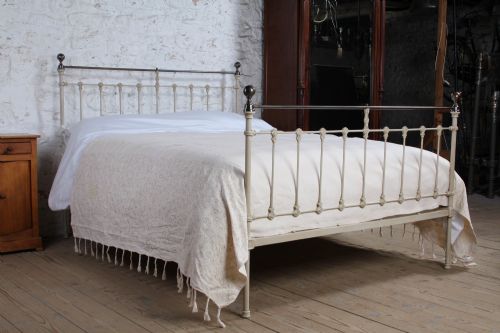

Brass King Bed Frame
A brass king bed frame brings generous proportions and warm metalwork into a bedroom, combining sturdy nineteenth-century construction with substantial sleeping space.
Brass King Bed Frame
A brass king bed frame anchors a bedroom with substantial presence, drawing on nineteenth-century and early twentieth-century forms. When searching for a brass king bed frame, buyers encounter pieces spanning the Victorian, Edwardian, and nineteenth-century periods, alongside French interpretations.
Origins include English workshops alongside Irish pieces and French models with characteristic brass detailing or hospital style frames. These large beds accommodate modern king and super king mattresses while retaining their historical framework.
Materials and construction
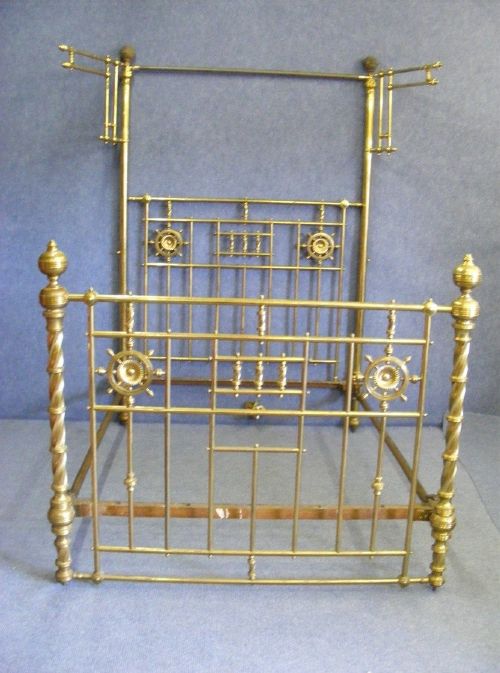
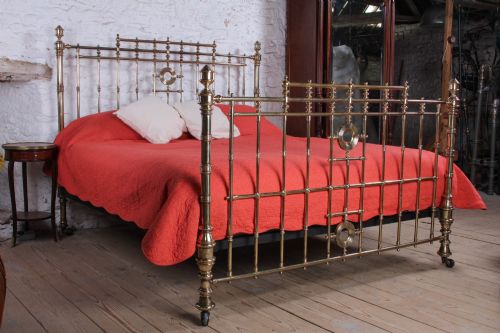
These frames utilise a combination of solid brass tubing, cast brass components, and structural iron elements for stability. Cast iron and wrought iron provide the hidden backbone and side rails, while visible brass elements deliver the polished finish.
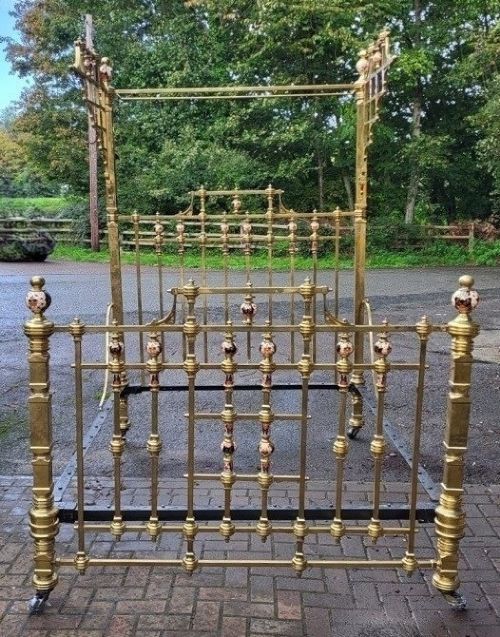
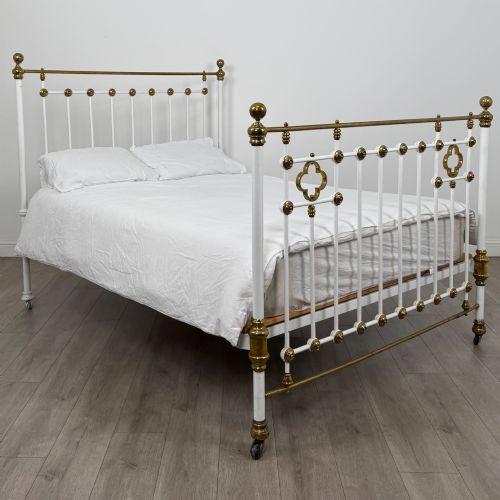
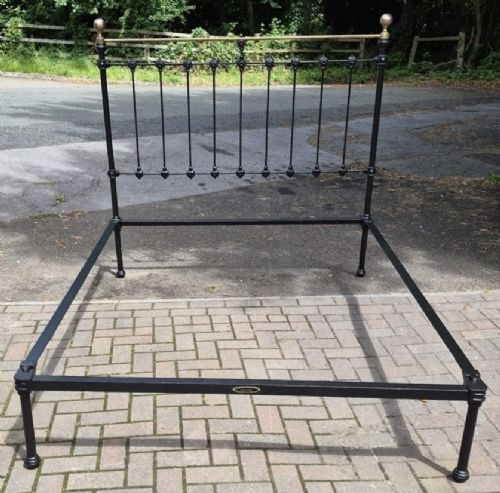
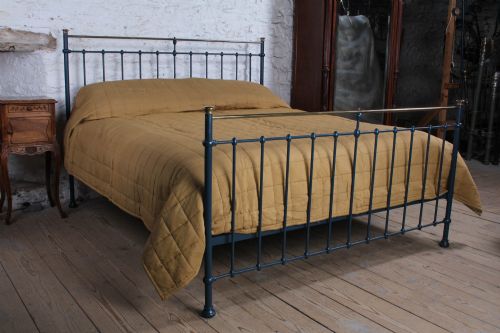
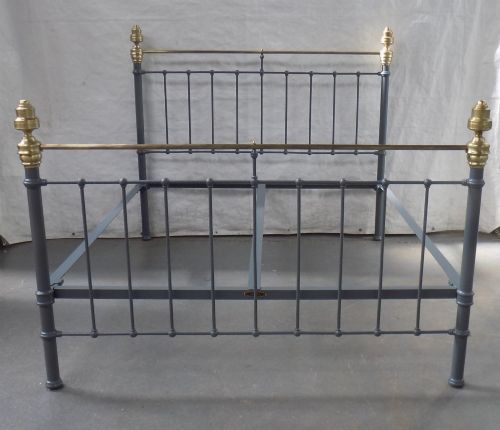
Makers incorporated decorative cast brass details, ceramic accents, and turned spindles fixed into iron or painted metal frames. Some pieces feature painted iron finishes in black, ivory, or cream contrasting against polished brass rails and finials.
Some French hospital style frames were originally designed with open ends to let doctors tend to patients from any angle.
Assessing quality
Quality in these large frames rests upon the weight and integrity of the castings and the thickness of the brass tubing. Finer examples display crisper detailing in the brass mounts and more substantial corner brackets that keep the heavy structure square.
The distinction between standard production and exhibition quality lies in the heft of the metal and the complexity of the decorative elements, such as intricate Gothic Revival tracery or aesthetic movement motifs.
Winfield·Maple & Co·James Shoolbread & Co
The Brass King Bed Frame Glossary
- Half tester
- A bedstead featuring a short canopy extending partway over the head of the bed from the wall or headboard. This canopy traditionally supported curtains to keep out draughts.
- Dip-rail
- A headboard or footboard rail that curves downward in the centre. This profile became popular during the Edwardian period.
- Finial
- A decorative terminal ornament screwed or fitted to the top of bedposts. They take various cast and turned shapes.
- Castings
- Shaped metal components poured into moulds to create decorative joints and ornaments on the bed frame. Higher quality pieces feature sharply defined casting work.
- Bedstead
- A framework of wood or metal designed to support a mattress and bedding. In antique listings, it refers to the complete standing bed structure.
Brass King Bed Frame: Frequently Asked Questions
Will modern king mattresses fit these antique frames?
Many nineteenth-century frames measure close to modern king or super king proportions, though exact historical sizes vary slightly from today's standardised dimensions.
It is essential to check the internal length and width specifications of each individual bedstead before attempting to fit a contemporary mattress.
How do I assemble a brass and iron bed?
These frames typically utilise heavy-duty iron side rails that wedge or bolt directly into the corner mounts of the headboard and footboard. A rubber mallet is often helpful for gently tapping the tapered joints into a secure lock.
Once the four main structural pieces are connected, wooden slats or a modern slatted base drops inside to support the mattress.
How do I distinguish Victorian from Edwardian frames?
Victorian frames often display heavier ornamentation, including Gothic Revival influences, aesthetic movement patterns, or robust brass castings paired with dark iron. Edwardian examples tend to feature lighter proportions, simpler dip-rails, and more restrained decoration.
Makers working around the turn of the twentieth century also introduced cleaner lines while retaining traditional brass and iron construction methods.
Are painted iron parts original?
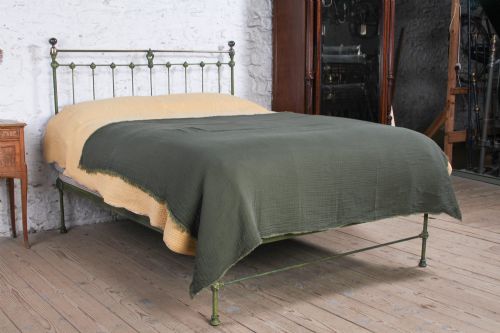
Many iron frames and components left nineteenth-century workshops with painted finishes in black, ivory, or cream to contrast against bright brass elements. Surviving original paintwork often shows minor age-related wear rather than a modern dipped finish.
Examining the surface closely helps determine whether the paint represents historical factory finishing or later redecoration.