
Brass Inlay Side Table
A brass inlay side table brings striking metalwork together with rich timber, offering a functional surface rooted in Regency, Victorian, and Edwardian design.
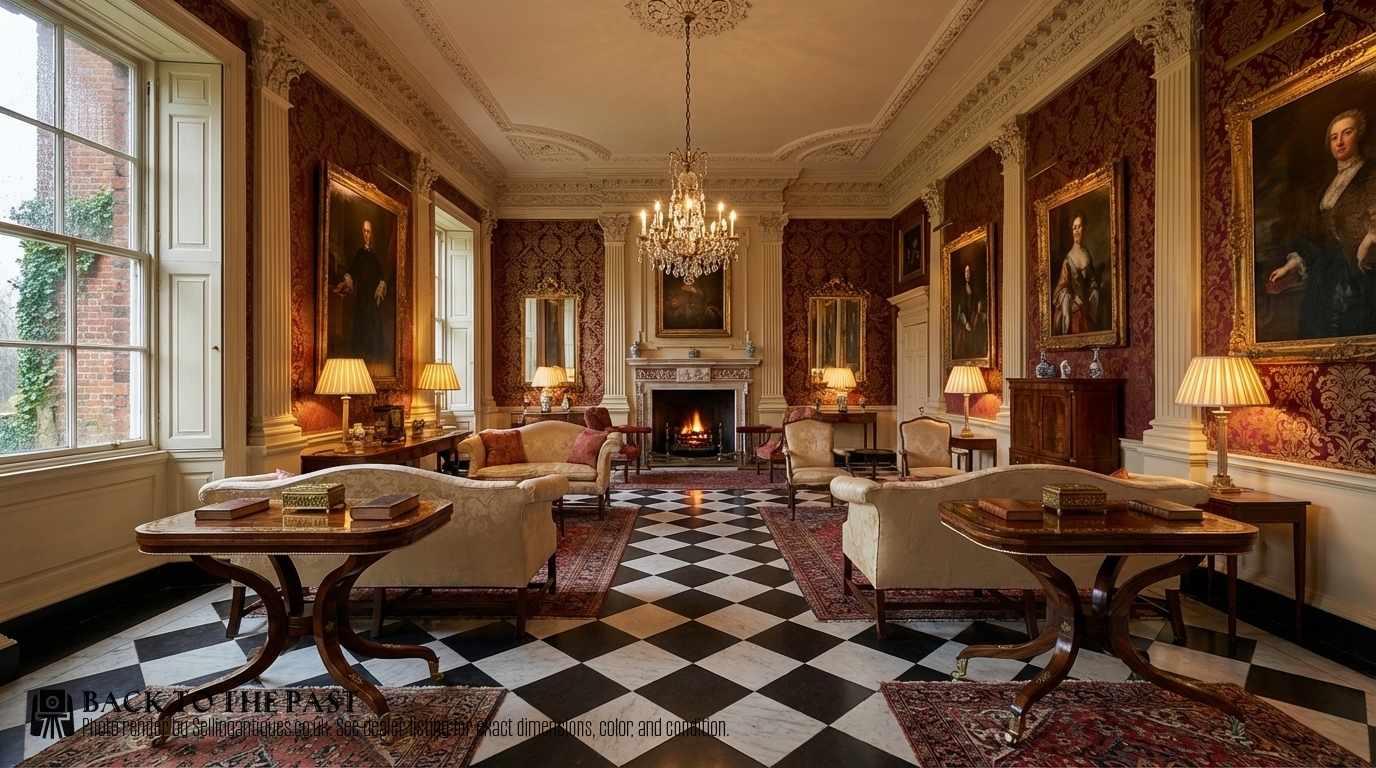
Brass Inlay Side Table
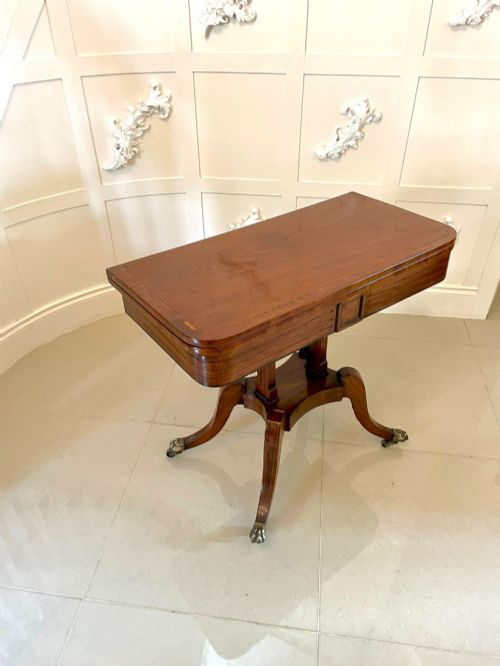
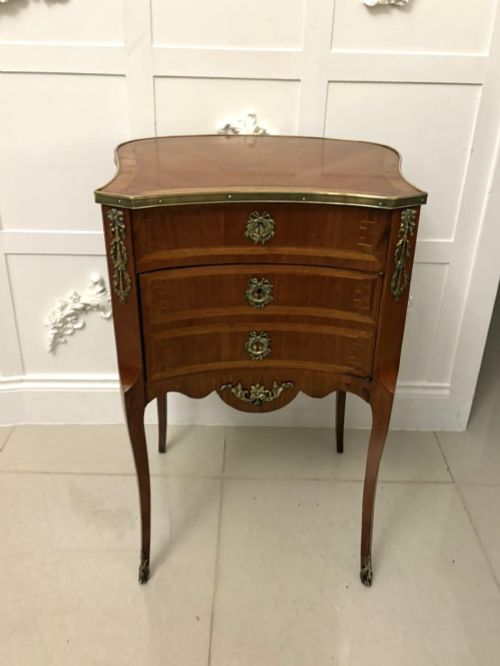
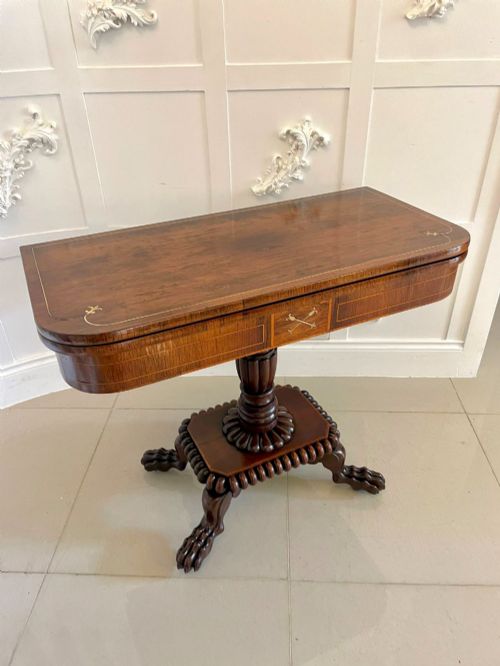
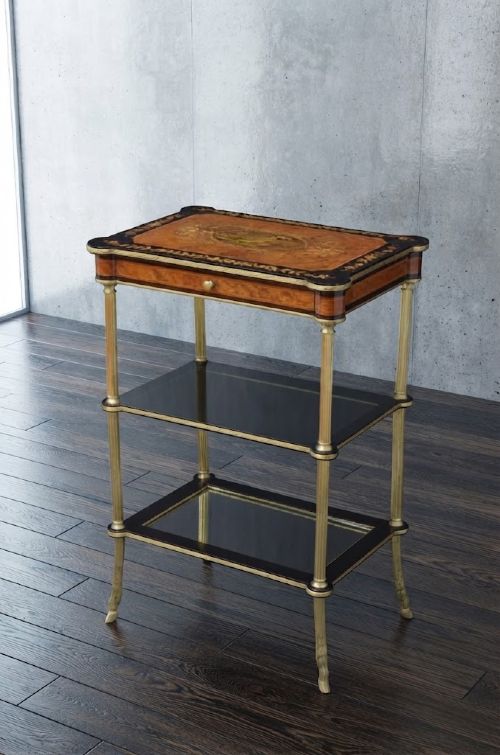
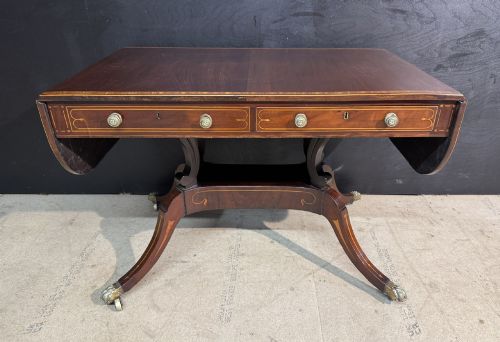
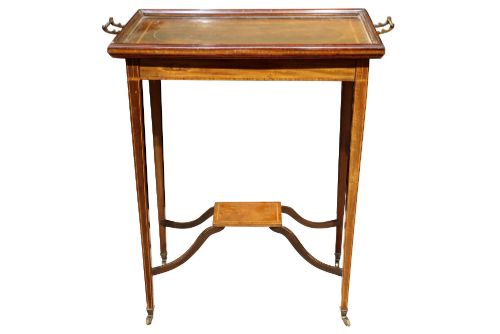
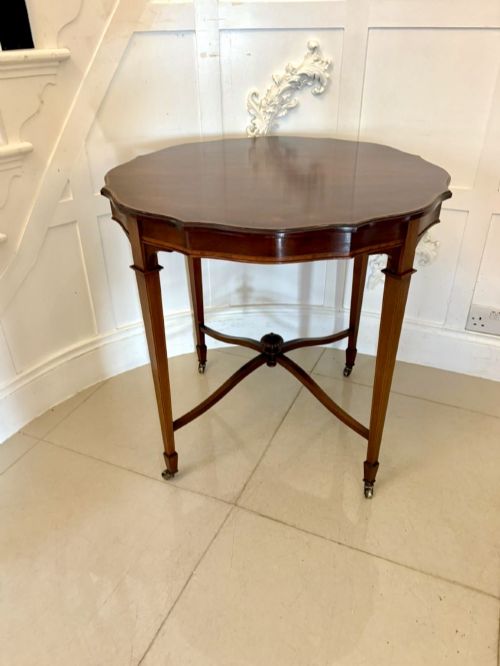
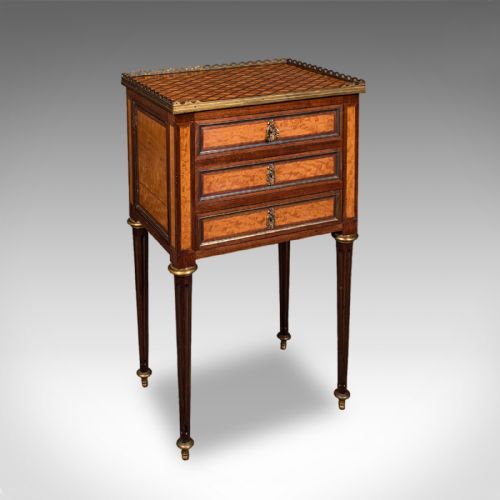
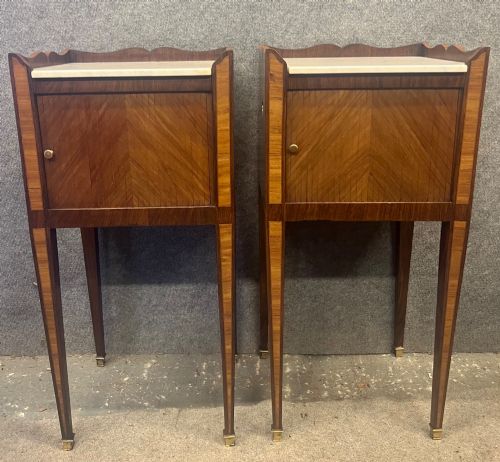
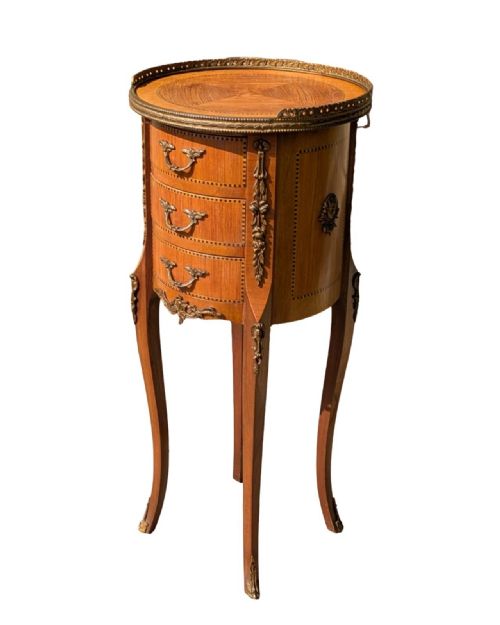
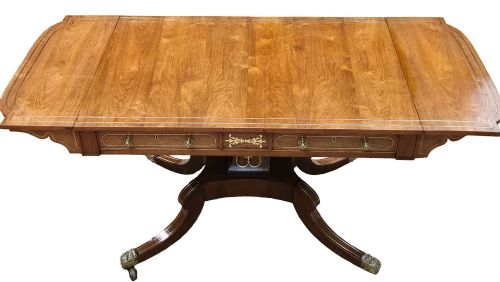
A brass inlay side table combines timber frameworks with fine metal detailing, taking forms such as occasional tables, card tables, sofa tables, and bedside cabinets. These pieces emerge predominantly from nineteenth-century workshops and early twentieth-century revivals.
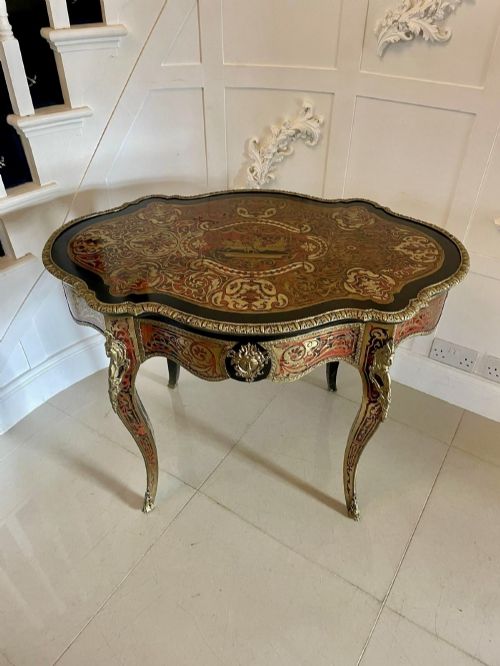
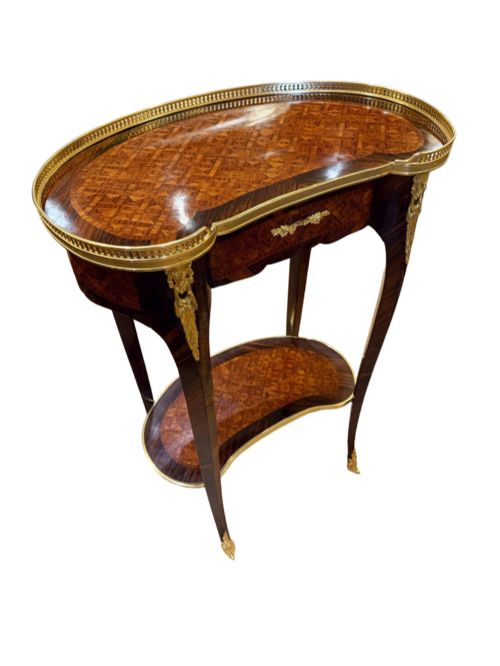
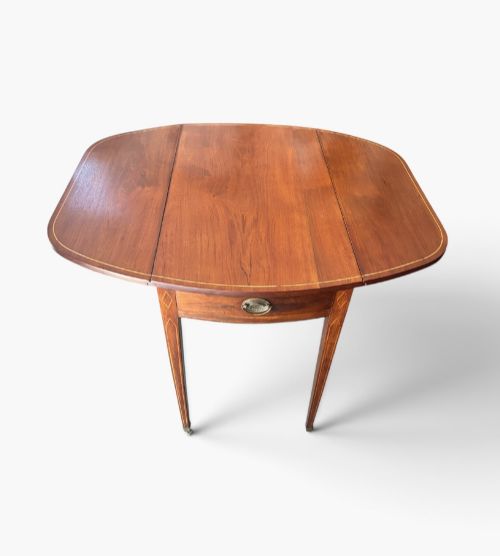
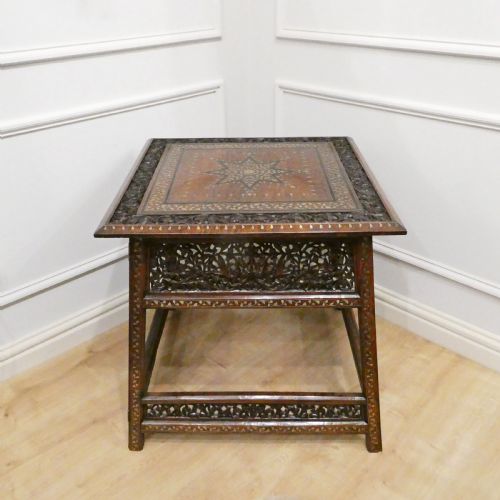
Buyers encounter numerous variations on this page, ranging from English Regency rosewood and mahogany card tables to French ebonised and kingwood occasional pieces. Anglo-Indian and Cairoware examples introduce distinct regional metalwork traditions to the selection.
The core function remains small-scale support within a room, serving as lamp tables, display surfaces, or bedside storage. Their enduring appeal rests on the contrast between polished brass wire or marquetry and dark hardwoods.
Materials and construction
Cabinetmakers built the foundational carcasses using dense hardwoods including mahogany, rosewood, walnut, satinwood, and kingwood, occasionally applying ebonised finishes. Timber selection dictated the structural stability required for intricate surface decoration.
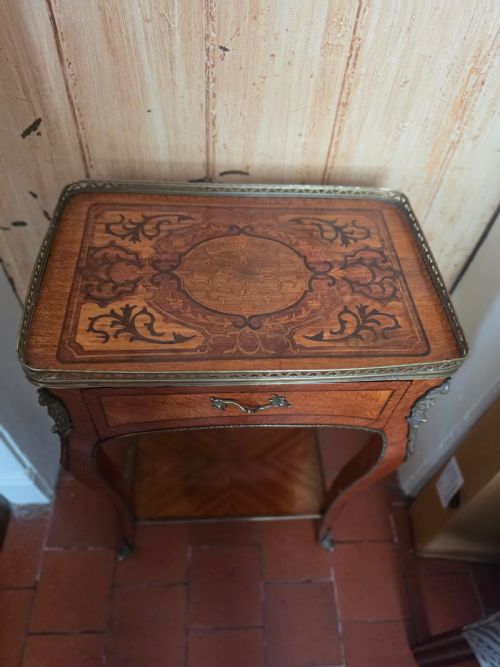
Craftsmen embedded brass into channels carved directly into the wood, utilising brass stringing, marquetry, and parquetry techniques. Ormolu mounts and brass galleries further complemented the inlaid surfaces on specific French and English models.
Brass Inlay Side Table Retail Price Guide 2026
Typical asking prices for brass inlay side table among the pieces listed under this phrase on Sellingantiques today, from the lower quarter to the upper quarter. They describe what is for sale here now, not the wider market.
Several tables arrive with hidden folding leaves or tiny bedside drawers ready to keep secret late-night notes.
Assessing quality and execution
Quality rests upon the precision of the brass work and the integration of the metal into the surrounding timber grain. Superior examples display tight joints, crisp brass stringing without gaps, and well-figured timber veneers that have aged uniformly.
The integrity of the structural joinery and the retention of original mounts, castors, or sabots distinguish finer pieces from later or heavily restored alternatives. Proportion and balance within the table legs and aprons determine the visual success of each design.
The Brass Inlay Side Table Glossary
- Brass stringing
- Narrow strips of brass embedded flush into channels cut into the wood surface. This technique defines much of the linear decoration found on Regency pieces.
- Marquetry
- Decorative patterns formed by fitting together pieces of veneer into wooden panels. Artisans employ various exotic woods alongside metal to create pictorial designs.
- Etagere
- A set of open display shelves supported by columns or slender legs. These tiered tables often incorporate inlaid tops and brass galleries.
- Sofa table
- A long, narrow table designed to stand in front of a sofa, typically featuring drop leaves at either end. Examples frequently incorporate brass inlay and twin pedestal supports.
- Cairoware
- Metalwork objects produced in Cairo featuring intricate geometric inlays of silver, copper, and white-metal into brass bases. These pieces include hexagonal occasional tables and Quran stands.
Brass Inlay Side Table: Frequently Asked Questions
What periods do these tables come from?
The pieces span the nineteenth century and the early twentieth century, encompassing Regency, Victorian, Edwardian, and later revival periods.
Craftsmen across these eras adapted classical forms, incorporating brass inlay into both English cabinetmaking and continental European furniture styles.
How do I care for a wood and brass table?
Maintain the timber and metal surfaces using a soft cloth and avoid excessive moisture or direct sunlight. Gentle polishing preserves the natural patina of both the wood and the brass inlay.
Harsh chemical cleaners should be avoided to prevent damage to the surrounding veneer and antique finishes.
Where were these tables originally placed?
These tables served various domestic functions, acting as lamp tables in sitting rooms, bedside cabinets in bedrooms, or card tables for evening entertainment.
Their compact sizes allowed them to be moved easily around the home to suit immediate functional needs.
What is the difference between stringing and marquetry?
Brass stringing involves thin, linear strips of metal embedded into straight or curved channels to trace the outlines of a table top. It creates a neat, restrained geometric border.
Marquetry covers broader surface areas with complex pictorial or abstract patterns assembled from different wood veneers and metals.