
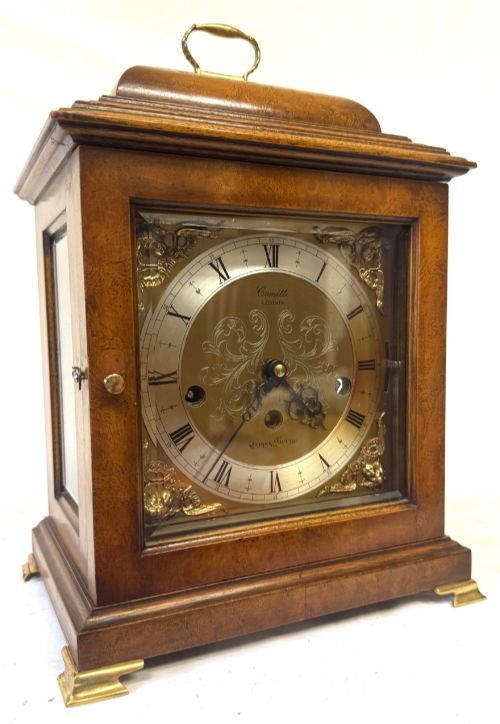
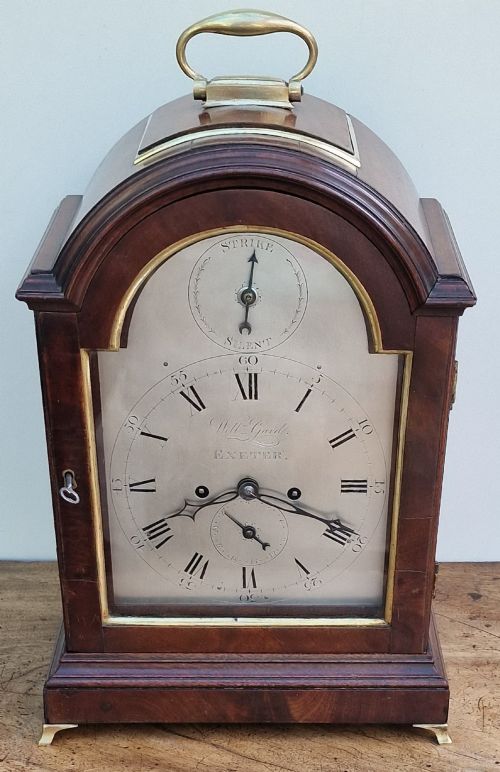

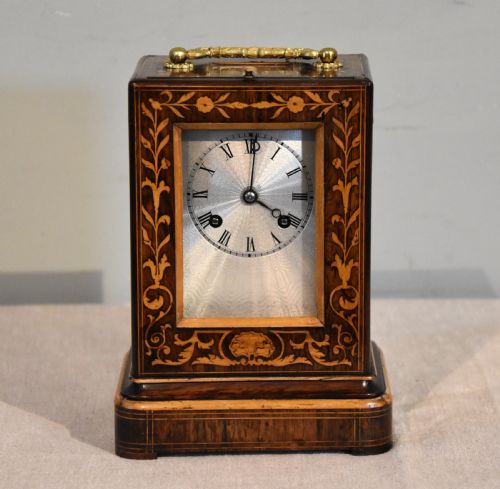
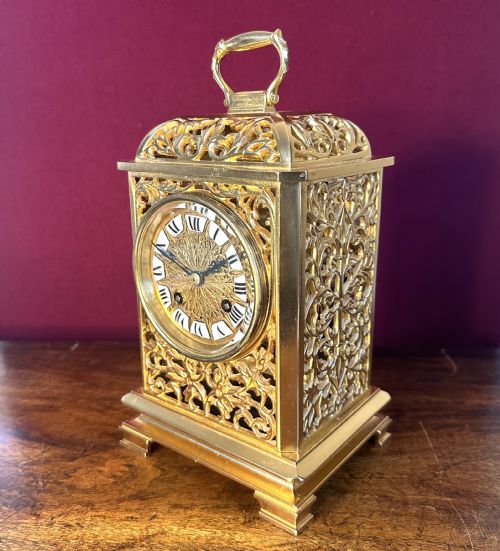


Brass Handle Bracket Clock
A brass handle bracket clock brings ticking precision and architectural wood cases into the room, built to sit solidly on a desk or shelf.
Brass Handle Bracket Clock
When you search for a brass handle bracket clock, you examine portable timekeepers designed to be lifted by their top mounts and moved between rooms. The examples on this page span the eighteenth century, the Regency era, the nineteenth century, and later revivals, displaying forms such as bell tops, pad tops, and break-arches.
You will encounter mahogany, ebonised wood, and rosewood cases housing silvered metal dials and enamel chapters. These pieces originate from London workshops, provincial makers, and French makers, offering striking mechanisms, musical movements, or simple timepieces.
How they were made
Case makers built these housings from hardwoods including mahogany, walnut, and rosewood, sometimes applying ebonised finishes or red and gold lacquer. Brass formed the carrying handles, feet, bezels, and dial mounts, providing both structural support and decorative contrast.
Clockmakers fitted fusee movements, verge escapements, and platform escapements behind silvered metal or enamelled dials. Cabinets incorporated glazed panels and detailed mouldings, such as bell tops and caddy tops, to house the intricate striking and chiming trains.
At least one clockmaker added an alarm alongside the striking train, ensuring nobody slept through the morning routine.
What varies in quality
The standard of a piece rests in the crispness of the brass castings, the depth of the wood grain in the mahogany or rosewood case, and the legibility of the engraved silvered metal dial. Finer examples retain their original matching components and display clean, unblemished movement plates signed by established makers.
Proportion and execution define the upper tier, where mouldings align precisely and handles secure firmly to the case without play. Lesser examples show mismatched elements, worn dial lettering, or replacement components that alter the original profile.
Comitti Of London·Mappin And Webb·Des Granges Of London·Arnold And Frodsham·John Ellicott
The Brass Handle Bracket Clock Glossary
- Bracket clock
- A portable timekeeper originally designed to stand on a wall bracket or a table. These domestic clocks typically feature carrying handles on top.
- Fusee
- A conical pulley used in spring-driven clocks to maintain equal power as the mainspring unwinds. This mechanism improves timekeeping accuracy across the running period.
- Verge escapement
- An early type of escapement mechanism that controls the release of power in a clock. It works in conjunction with a balance spring or pendulum.
- Silvered metal
- A brass dial plate treated with a silver solution to create a pale, matte surface. Numbers and maker signatures are usually engraved and blackened for legibility.
- Bell top
- A stepped, domed case shape resembling the profile of a handbell. This silhouette is common on eighteenth-century and Regency bracket clocks.
Brass Handle Bracket Clock: Frequently Asked Questions
Where did people place these clocks?
These clocks sat on sturdy tables, sideboards, or dedicated wall brackets in principal rooms of the house. Their portable nature allowed owners to move them between studies, libraries, and parlours.
Because they incorporated carrying handles on top, servants could transport them safely without disturbing the delicate internal mechanism.
How do I wind a bracket clock?
Winding requires inserting a key into the winding holes on the dial and turning it gently until resistance is felt. Care must be taken not to overwind the mainspring.
Many examples feature multiple winding squares for the timekeeping, striking, and chiming trains, each requiring attention at regular intervals.
What is a fusee movement?
A fusee is a conical pulley connected to the mainspring by a fine chain or cord. As the spring loses tension, the chain moves to a wider part of the cone to maintain steady power.
This clever device ensures the clock runs with consistent force from the moment it is fully wound until it needs attention again.
How can I tell the period of a case?
Case silhouettes and timber choices offer clear clues to the era of manufacture. Eighteenth-century examples often feature bell tops and mahogany veneers, while Regency pieces display cleaner architectural lines and brass inlay.
Later Victorian and revival pieces frequently adopt earlier George II styles or incorporate visible platform escapements behind glass panels.