


Horological Mantel Clock
A horological mantel clock sits on a surface measuring time through brass, glass, and wood, bringing both craftsmanship and movement into a room.
Horological Mantel Clock
A horological mantel clock covers a broad sweep of timekeeping instruments designed for domestic interiors, ranging from compact travel timepieces to large bracket clocks. When searching for a horological mantel clock, buyers encounter diverse forms including carriage clocks, skeleton clocks, and four-glass cases.
The pieces on this page draw from the Victorian and Edwardian eras, alongside the eighteenth and nineteenth centuries, reflecting styles from French carriage designs to traditional English bracket models. Materials span mahogany, oak, and ebonised wood alongside polished brass and delicate glass.
Mantle and mantel clocks appear across the listings in various formats, offering movements that include grand sonnerie, quarter striking, and verge escapements. Each object represents a specific period of mechanical development and domestic utility.
Factors of quality
The standard of a horological mantel clock depends upon the complexity of its movement and the precision of its finishing, such as engraved mask dials or fire-gilt surfaces. Heavier, more substantial brass construction and original escapements distinguish finer examples from standard production pieces.
The integrity of the case, whether ebony-veneered wood, champlevé enamel, or bevelled glass panels, determines the overall refinement. Clocks retaining their original travel cases, specialised escapements, or complex striking trains command greater attention from collectors.
Listing periods range from the eighteenth century through the Victorian and Edwardian eras into the nineteen-sixties.
Henri Jacot·Joseph Windmills·Jas Whitelaw of Edinburgh·William Evans of Handsworth·Drocourt and Holingue·Mathias Bauerle·Perigal and Duterrau·James Maitland·Barwise London·Brocot
The Horological Mantel Clock Glossary
- Verge escapement
- An early mechanical regulation device that controls the speed of a clock by interacting with a crown wheel. This mechanism is frequently found in seventeenth and eighteenth-century bracket clocks.
- Grand sonnerie
- A striking mechanism that sounds both the hours and the quarters automatically on every quarter hour. It represents a high level of horological complication.
- Skeleton clock
- A timepiece designed with an open framework that exposes the entire gear train and movement to view. These pieces are typically encased in glass domes or four-glass housings.
- Champlevé
- An enamelwork technique where troughs are dug into a metal surface and filled with vitreous enamel before firing. It appears frequently on decorative nineteenth-century clock cases.
- Fusee
- A conical pulley used in clock movements to maintain an even pull on the gear train as the mainspring unwinds. This ensures consistent timekeeping accuracy across the power reserve.
Horological Mantel Clock: Frequently Asked Questions
What is a carriage clock?
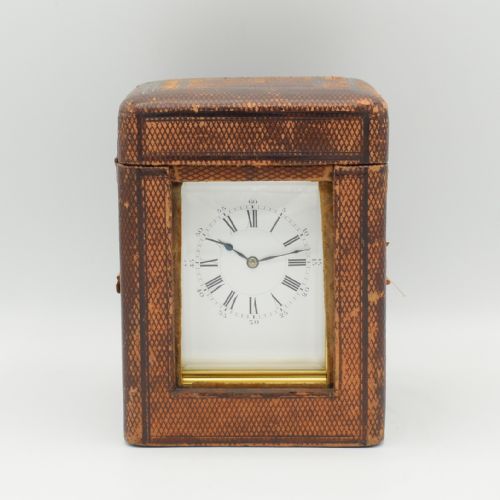
A carriage clock is a portable timepiece originally designed for travellers during the nineteenth century, typically housed in a brass case with glass panels.
These pieces often feature folding handles and platform escapements, allowing them to keep accurate time while being transported.
How do four glass clocks work?
Four glass clocks utilise transparent panels on all sides to display the internal pendulum and movement without obstruction.
They rely on precise weight or spring-driven mechanisms suspended within the glass enclosure, reflecting late nineteenth and early twentieth-century manufacturing techniques.
What is a bracket clock?
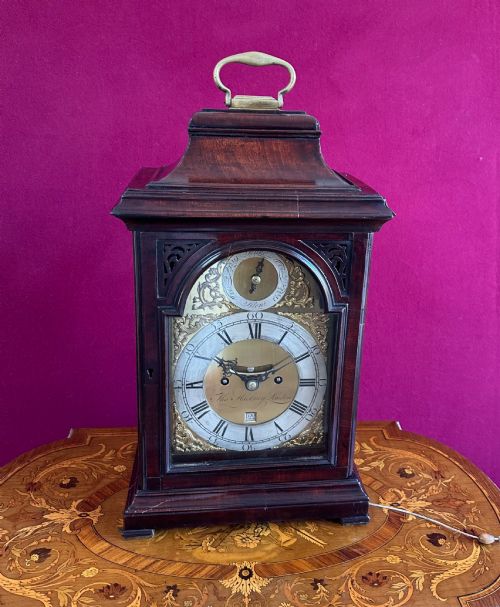
A bracket clock is a portable table clock historically placed upon a matching wall bracket or furniture surface.
Originating in earlier centuries, these wooden-cased pieces frequently house intricate verge or anchor movements with striking capabilities.
How are skeleton clocks displayed?
Skeleton clocks are designed with stripped-down frames that reveal the gear trains, typically protected beneath a blown glass dome.
This presentation allows light to pass through the movement, highlighting the intricate brass wheelwork and escapement.