

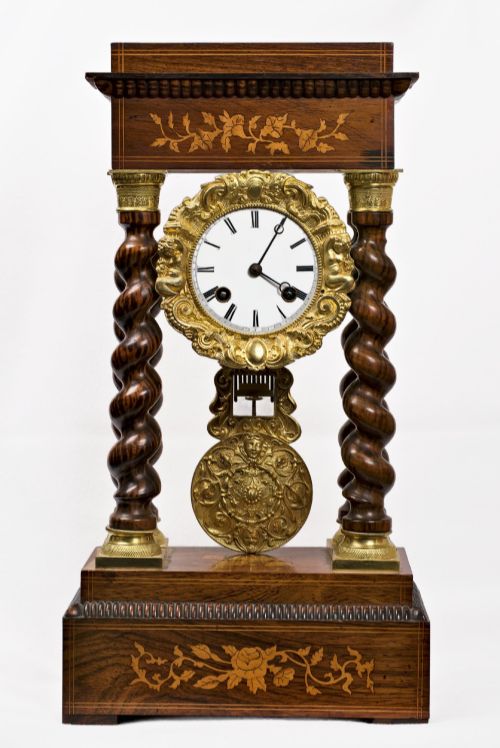
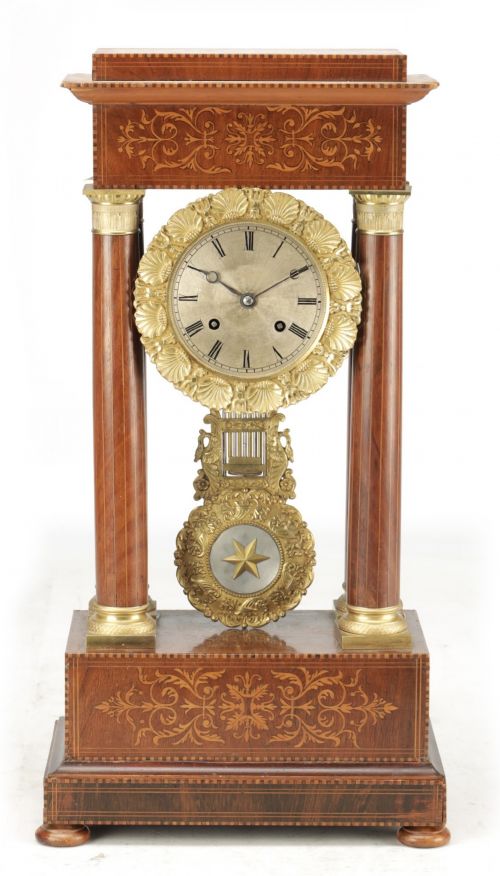


Floral Marquetry Mantel Clock
These floral marquetry mantel clocks bring together rich timbers and intricate inlay, offering both functional timekeeping and striking nineteenth-century decoration for the home.
Floral Marquetry Mantel Clock
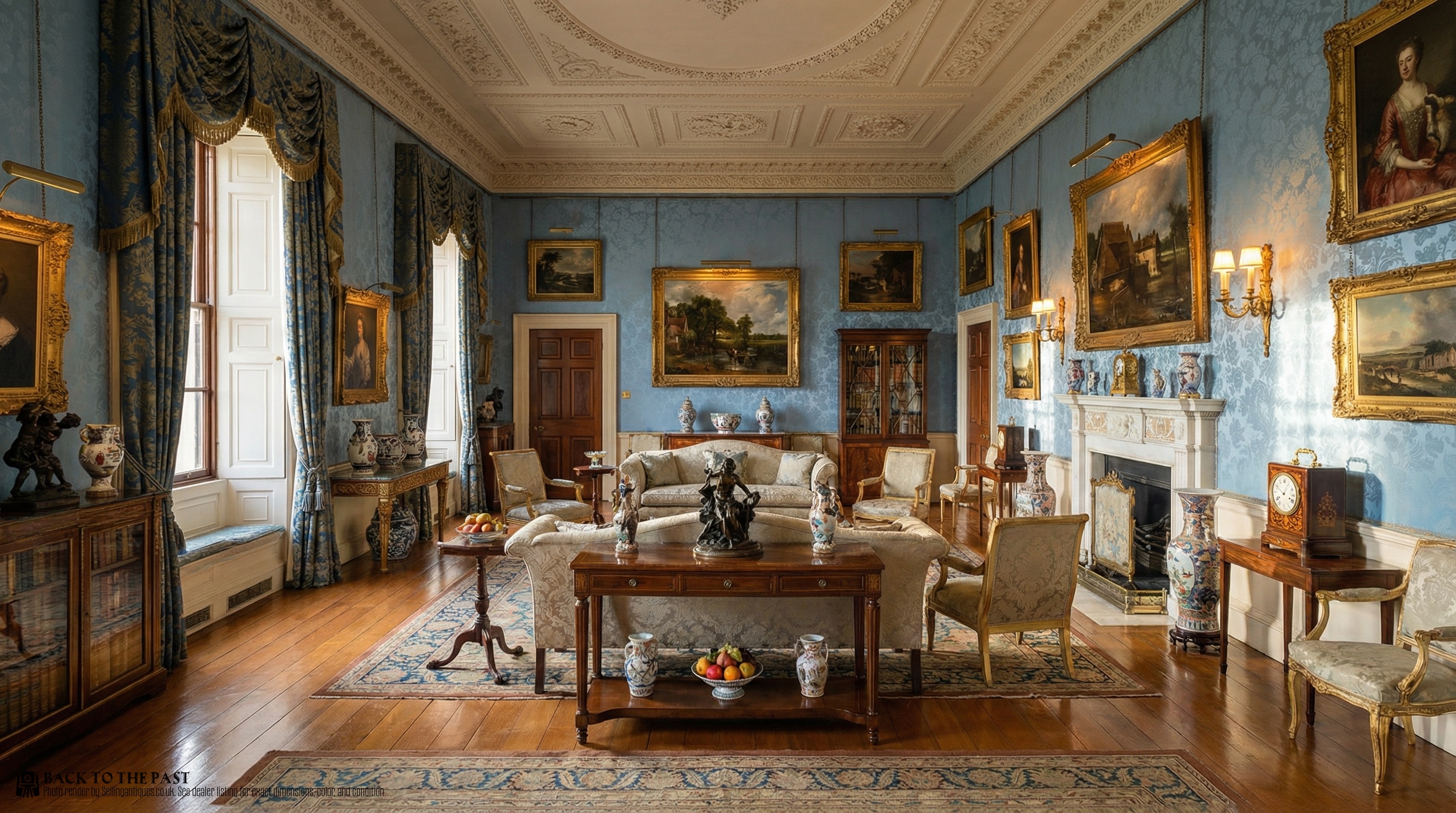
A floral marquetry mantel clock sits upon a fireplace shelf or side table, combining a mechanical movement with detailed wood inlay. These pieces serve as both practical timepieces and decorative focal points for a room.
The selections available here span the nineteenth century into the Edwardian era, encompassing both British mahogany examples and French rosewood designs. Makers from Paris feature prominently alongside British cabinetmakers.
Most examples rely on pendulum or eight-day movements housed behind glass doors, often accented with enamel dials and brass bezels. Shaped cases and portico designs appear alongside traditional bracket clock forms.
Materials and construction
Cabinetmakers built the foundations of these cases using dense hardwoods like rosewood and mahogany, often applying boxwood and satinwood for contrasting details. Marquetry inlay was then meticulously cut and fitted into the timber surface to create floral motifs.
Floral Marquetry Mantel Clock Retail Price Guide 2026
Typical asking prices for floral marquetry mantel clock among the pieces listed under this phrase on Sellingantiques today, from the lower quarter to the upper quarter. They describe what is for sale here now, not the wider market.
Judging the work
The distinction between standard and superior pieces lies in the crispness of the timber inlay and the harmony of the case proportions. Finer examples display intricate botanical details utilising multiple contrasting woods without gaps in the veneer.
Henry Marc·Savory & Fils A Paris·Malecot of Paris
The Floral Marquetry Mantel Clock Glossary
- Marquetry inlay
- Decorative patterns formed by fitting thin pieces of wood veneer into a solid ground. This technique allows for elaborate floral designs across the clock case.
- Portico clock
- A architectural clock design supported by four columns, popular during the nineteenth century. These often feature rosewood and gilt brass elements.
- Enamel dial
- A metal clock face fused with powdered glass to create a smooth, white background for painted numerals. They provide a durable and legible surface.
- Bracket clock
- A portable clock originally designed to sit on a wall bracket. Later versions function as mantel clocks while retaining the traditional enclosed box shape.
- Eight-day movement
- A mechanical clock movement that requires winding once a week. This system was standard in better quality domestic clocks of the period.
Floral Marquetry Mantel Clock: Frequently Asked Questions
How do I wind an antique mantel clock?
Most mechanical clocks utilise a key inserted into the dial holes to tension the mainspring.
Care should be taken not to overwind the mechanism, stopping as soon as resistance is felt.
Where should I place a rosewood clock?
These clocks suit mantelpieces, sideboards, or desks away from direct sunlight and dampness.
Stable indoor temperatures help protect the delicate marquetry veneers and wooden cases.
How do I identify a French mantel clock?
French pieces often feature rosewood or gilt brass frames with distinct pendulum suspensions and signed movements.
Maker signatures on the enamel dials or backplates typically point to Parisian workshops from the nineteenth century.
What is the difference between Edwardian and Victorian clocks?
Victorian examples frequently utilise rosewood and heavy marquetry with ornate classical or portico styling.
Edwardian pieces often shift towards mahogany or lighter satinwood inlay, alongside emerging Art Nouveau curves.