
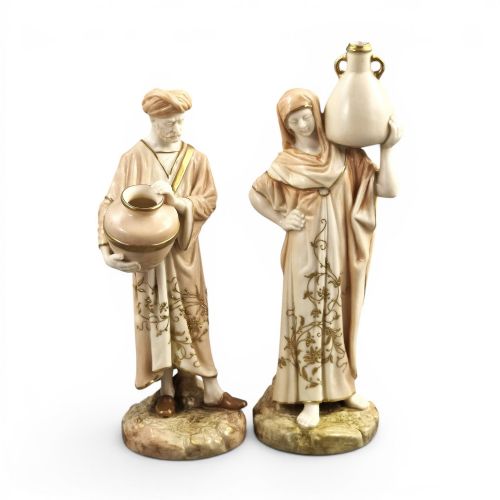


Blush Ivory Porcelain Figures
These blush ivory porcelain figures bring together muted cream ceramic tones, delicate enamel work and subtle gilding from the late nineteenth and early twentieth centuries.
Blush Ivory Porcelain Figures
These blush ivory porcelain figures comprise decorative figurines, statuettes and figural candlesticks produced predominantly during the Victorian and Edwardian periods. Collectors encounter works depicting figures from various global cultures, classical subjects and mythological characters such as satyrs.
The objects stem largely from the late nineteenth century and early twentieth century, spanning decades from the eighteen-seventies through to nineteen-thirty. Most pieces recorded here originate from English production, notably from the Royal Worcester factory and models designed by James Hadley, alongside examples from Royal Dux.
Buyers mostly find these pieces taking the form of standalone figures, balanced pairs of candlesticks, and larger candelabra mounted on circular rustic bases. The subject matter ranges from single ladies with drums and jugs to named studies of foreign craftsmen and musicians.
How they were made
Makers utilised a specialised blush ivory glaze applied to porcelain bodies to create a soft, matte cream surface without high gloss. This ceramic base served as the canvas for further hand-painting and tinting.
Artisans layered delicate enamel colours onto the blush ivory ground to define garments, skin tones and naturalistic settings. Gilding, gold leaf and gilt highlights were then applied by hand to accent borders, drapery and structural elements of the candlesticks and figures.
Some Victorian water carriers must haul their liquid while maintaining absolute ceramic composure.
What varies in quality
Quality rests significantly upon the complexity of the modelling and the depth of the sculptural detail visible in the drapery, facial expressions and bases. Hadley designs and named Eastern or classical subjects often display superior artistic ambition compared to standard decorative figures.
The finesse of the hand-painted enamel work and the precision of the gilding dictate the visual distinction of an individual piece. Finer examples maintain crisp separation between the soft ivory body and the applied gilt and enamel colours without blurring.
Royal Worcester·James Hadley·Royal Dux
The Blush Ivory Porcelain Figures Glossary
- Blush ivory glaze
- A matte, tinted ceramic finish developed to resemble soft ivory, forming the background tone for these figures.
- Gilt
- A thin layer of gold or gold-like material applied to surfaces to provide metallic highlights on garments and bases.
- Figurine
- A small modelled statuette depicting a human or mythological subject, designed primarily for decorative display.
- Candelabra
- A branched candleholder designed to hold multiple tapers, often sharing stylistic motifs with the figures.
- Enamel
- A decorative glass-like substance fused to the porcelain surface through firing to add permanent colour.
Blush Ivory Porcelain Figures: Frequently Asked Questions
What periods do these figures come from?
The pieces span from the late nineteenth century through to the nineteen-thirties, covering the Victorian, Edwardian and later periods.
Most examples originate from the Victorian and Edwardian eras, reflecting the manufacturing output of factories active during those decades.
How do I identify James Hadley pieces?
James Hadley worked closely with Royal Worcester, designing complex figures and candlesticks that often bear specific model numbers.
His works frequently depict Eastern subjects, water carriers, and musicians, sometimes carrying signatures or specific stylistic attribution from the late nineteenth century.
How should I display candlesticks and figures?
These decorative objects suit placement on mantelpieces, side tables or dedicated cabinets where their matte glaze and gilt highlights catch ambient light.
Pairs of candlesticks and candelabra work well arranged symmetrically, while individual figures anchor a tabletop display.
What is the difference between figures and candelabra?
Figures are standalone sculptural representations of people or mythological characters intended purely for visual ornament.
Candelabra combine the sculptural figural element with functional candle-holding branches, often produced as balanced pairs.