


James Hadley Royal Worcester
James Hadley Royal Worcester pieces bring sculptural Victorian orientalism and figural charm to interiors through finely modelled ceramics.
James Hadley Royal Worcester
Collectors searching for james hadley royal worcester encounter sculptural ceramics designed by this notable modeller during the nineteenth and early twentieth centuries. The selection spans Victorian and Edwardian periods, featuring elaborate figures, water carriers, musicians, and decorative vessels.
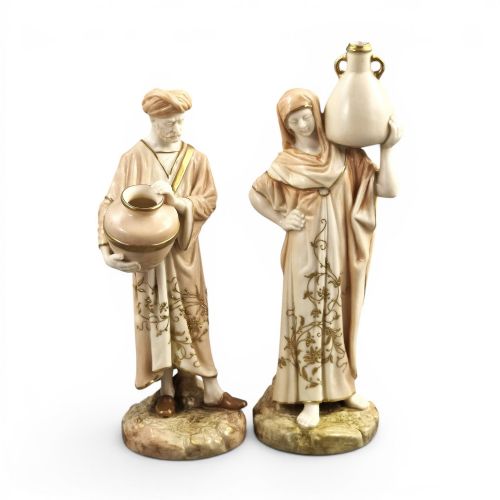
Figurines and character studies dominate the output, ranging from Egyptian and Arab water carriers to traditional figures representing countries and literary themes. Utility pieces such as jardinieres, pot pourri urns, and candelabra also appear alongside standalone statuettes.
The aesthetic bridges classical revival movements with orientalist subjects, reflecting Victorian fascination with diverse cultures and romanticised figures. These works demonstrate the technical scope of the Hadley period within the broader Worcester factory history.
How They Were Made
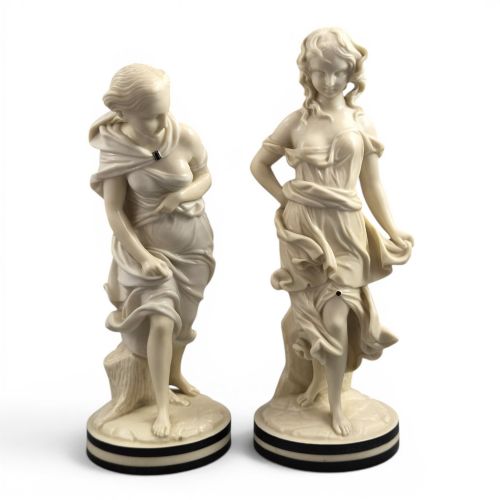
The works utilise fine porcelain and parian ware, shaped into complex figural compositions and decorative vessels. Potteries applied specialised finishes including the characteristic blush ivory glaze, patent metallic glazes, and shot-enamel effects.
Detailing relied on meticulous hand-painting, gold leaf, gilding, and gilt accents to highlight sculptural folds in drapery and facial expressions. Model numbers stamped or painted on the underside link individual pieces to factory production records.
Listings feature Victorian and Edwardian works in porcelain, parian ware, and blush ivory glaze.
What Varies In Quality
Pieces carrying specific model numbers or documentary signatures reflect the higher tiers of Hadley production. The preservation of delicate gilt highlights and enamel colours without wear distinguishes superior survivals.
Royal Worcester·James Hadley
The James Hadley Royal Worcester Glossary
- Blush Ivory Glaze
- A soft, matte cream-coloured ceramic ground used extensively by Royal Worcester to create a subtle canvas for hand-painted floral and figural decoration. This proprietary technique produced a warm, non-reflective surface highly characteristic of late nineteenth-century production.
- Parian Ware
- A fine-grained, unglazed porcelain resembling white marble, named after Parian marble from the Greek island of Paros. It was frequently utilised for Victorian figures and portrait busts to give a smooth, sculptural finish.
- Pot Pourri Urn
- A decorative pierced vessel designed to hold dried flowers mixed with spices for room fragrance. These pieces often feature elaborate covers and modelled bodies.
- Shot-Enamel
- A special colour effect where metallic oxides produce shifting tones depending on the angle of light. This technique added shimmering depth to garments and background surfaces.
- Patent Metallic
- A specialised glaze finish developed during the late nineteenth century to simulate bronze or other metals on ceramic surfaces. It provided an industrial yet decorative sheen to sculptural models.
James Hadley Royal Worcester: Frequently Asked Questions
What subjects did James Hadley design?
James Hadley designed a wide variety of figures, including water carriers from Egypt and Arabia, musicians, and character studies representing different countries and walks of life.
His portfolio also encompasses classical maidens, allegorical figures like the wind maidens, and decorative utility items such as candelabra and jardinieres.
What periods do these ceramics cover?
The available pieces primarily date from the Victorian era through the Edwardian period, spanning the late nineteenth and early twentieth centuries.
Production years recorded in the evidence cluster around the 1870s to the early 1900s, reflecting Hadley's active years with the factory.
How should I display candelabra and figurines?
These decorative works suit placement on mantelpieces, sideboards, or central tables where their sculptural forms and painted details remain visible from multiple angles.
Care should be taken to position them away from direct sunlight and heavy foot traffic to protect delicate gilding and fragile porcelain extremities.