
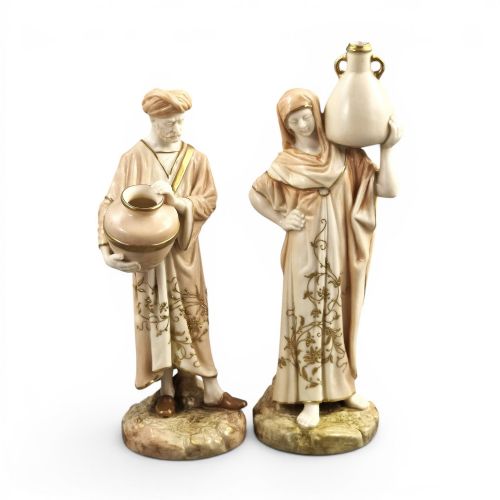


Blush Ivory Statues
Blush ivory statues are distinctive decorative figures prized for their soft, muted tones and intricate modelling.
Blush Ivory Statues
When you search for blush ivory statues, you encounter fine ceramic figures produced primarily by major British factories during the nineteenth and early twentieth centuries. The selection ranges from late Victorian and Edwardian pieces down to examples from the nineteen-thirties, spanning periods such as Victorian Orientalism and Art Nouveau.
The form most commonly met on this page is the porcelain figurine, often depicting named characters, dancers, musicians or classical figures. These objects encompass everything from individual porcelain figures on rustic bases to pairs of water carriers and exotic representations.
Makers recorded in the inventory include Royal Worcester and Royal Dux, with specific model numbers and named designers such as James Hadley appearing frequently. Pieces reflect distinct cultural interests of their era, including classical revivals and Orientalist themes.
Materials and construction
These works rely on porcelain bodies finished with specialised enamel glazes that create the characteristic matte, tinted surface known as blush ivory. Artisans applied delicate hand-painted details and highlights in gold leaf or gilding to accentuate specific robes, ornaments and architectural elements.
Modelled forms were cast or pressed in sections before firing, often utilising detailed moulds created by notable modellers and sculptors. Finished surfaces combine unglazed or softly tinted biscuit porcelain with glossy enamel accents to create texture and contrast.
Listings incorporate items spanning multiple decades, utilising porcelain, enamel, gold leaf, and gilding across diverse Victorian and Edwardian styles.
Assessing quality and execution
Quality in these figures rests upon the crispness of the modelling and the subtlety of the tinting across the porcelain surface. Superior examples display delicate facial expressions, finely articulated hands and garments that drape naturally without losing definition in the kiln.
The application of gilding and enamel work also distinguishes finer pieces, where gold leaf remains sharp and clean rather than smudged or heavy-handed. The presence of clear factory marks, registered design numbers and recognisable modeller signatures adds authority and demonstrates higher workshop standards.
Royal Worcester·Royal Dux·James Hadley
The Blush Ivory Statues Glossary
- Blush ivory
- A specific ceramic finish featuring a warm, tinted cream or ivory enamel ground often highlighted with gilt. This finish became popular in late Victorian pottery production.
- Figurine
- A small three-dimensional sculpted figure depicting a human or animal form. These objects served as decorative mantel or tabletop ornaments.
- Gilding
- The application of gold leaf or gold paint to ceramic surfaces. It highlights decorative motifs and trim.
- Biscuit
- Unglazed ceramic fired once before the application of enamels or glazes. It provides a porous, matte base for subtle tinting.
- Orientalism
- An artistic style incorporating themes and subjects from Middle Eastern and Asian cultures. It strongly influenced late nineteenth-century decorative arts.
Blush Ivory Statues: Frequently Asked Questions
What are blush ivory statues?
Blush ivory statues are nineteenth and twentieth-century porcelain figures finished with a soft, tinted ivory glaze. They typically depict human subjects ranging from classical maidens to musicians and Orientalist water carriers.
These pieces were produced primarily as decorative ornaments for parlours and drawing rooms. They reflect the shifting aesthetic tastes of the Victorian and Edwardian eras.
How do I date a figure?
Dating relies upon factory date ciphers, registration numbers stamped into the ceramic base, and stylistic cues. Victorian examples often feature ornate classical or exotic costumes, while later pieces adopt simpler lines.
Comparing model numbers with factory records helps narrow the production year. Changes in printed backstamps also provide reliable chronological markers.
How should I display them?
These figures require stable placement away from high-traffic areas where they might be knocked or dropped. Displaying them on sturdy mantelpieces or inside glass cabinets protects the delicate porcelain and gilt highlights.
Good ambient lighting enhances the subtle matte finish of the glaze. Keeping them out of direct sunlight prevents any fading of the hand-painted enamels.
How do I clean porcelain figures?
Dusting should be done gently using a soft, dry artist's brush or a feather duster. Avoid using water or chemical cleaners, as moisture can damage delicate gilt highlights or unglazed surfaces.
If stubborn grime accumulates, consult a professional conservator rather than attempting aggressive cleaning. Gentle preventative care preserves the original factory finish.