




Blue Wool Wall Tapestry
A blue wool wall tapestry brings centuries of woven texture and deep botanical colour directly into a room.
Blue Wool Wall Tapestry
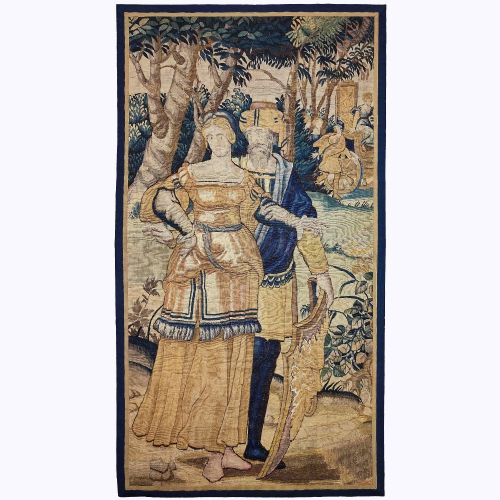
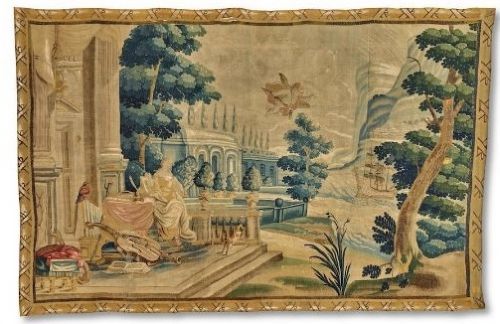
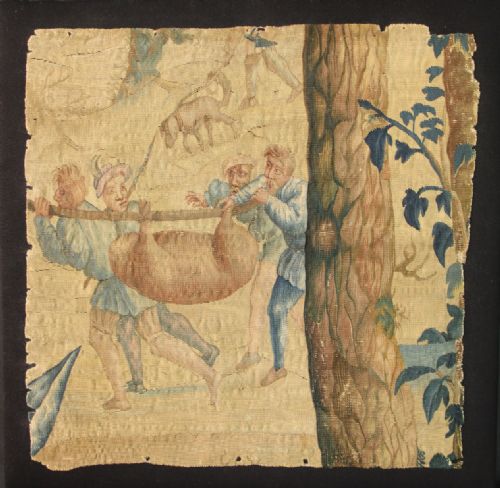
When you search for a blue wool wall tapestry, you encounter heavy textile art, including verdure panels, tribal rugs, and decorative fragments. These pieces originate from Flemish, French, and Caucasian workshops spanning the sixteenth century to the Victorian era.
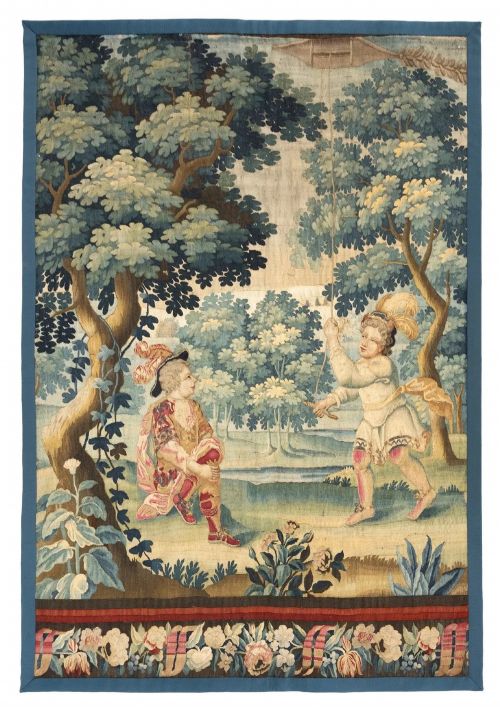
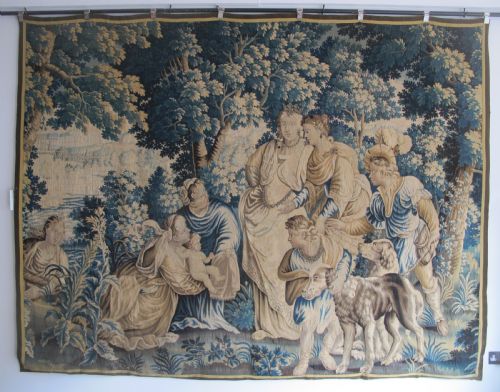
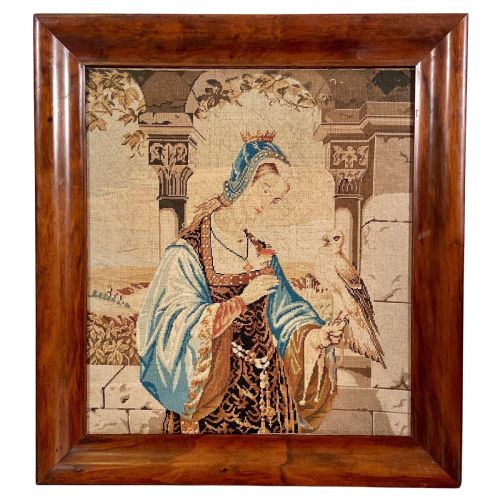
The selections available here lean heavily toward seventeenth-century Flemish verdure compositions and nineteenth-century tribal textiles. Buyers find large-scale architectural wall hangings alongside smaller cushion covers and framed needlework panels.
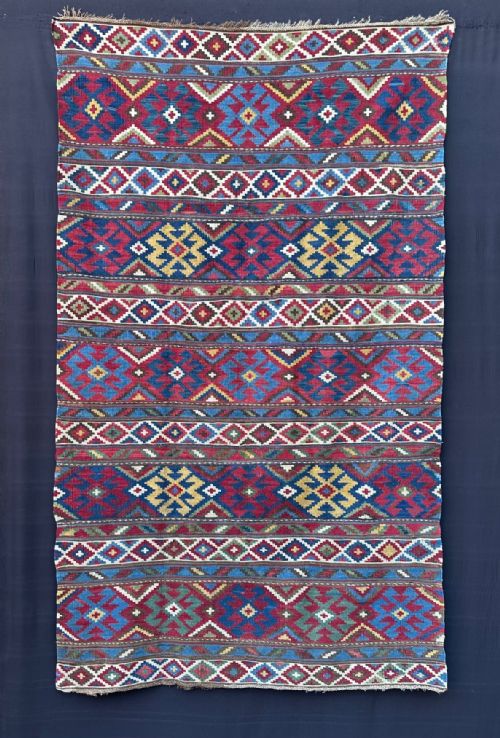
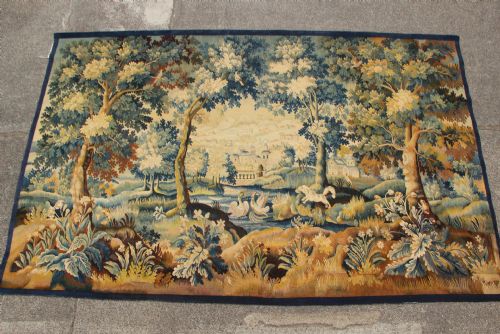
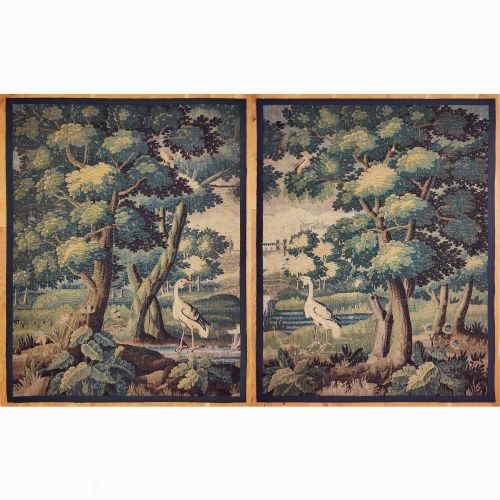
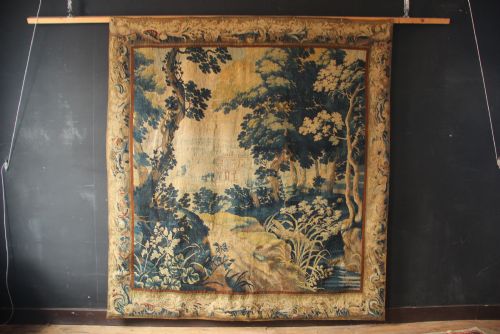
Verdure designs dominate the European examples, depicting stylised woodlands, foliage, and game parks in deep wool and silk threads. Tribal rugs and saddlebag panels offer geometric alternatives woven in wool and cotton.
Materials and construction
These textiles rely primarily on wool, paired frequently with silk, linen, and cotton for structural support and finer detail work. Weavers utilised loom techniques to interlace these fibres, building dense pictorial surfaces.
European workshops constructed verdure and mythological tapestries on vertical or horizontal looms using dyed wool yarn. Tribal weavers in the Caucasus and Central Asia employed sumac and kilim methods to produce flat-woven rugs and sofreh cloths.
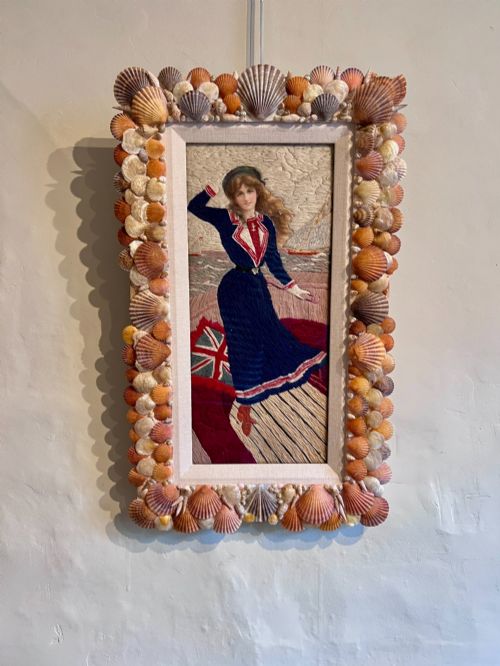
Sailor girls keep watch alongside nineteenth-century woolwork ships.
Judging quality in woven textiles
Quality rests on the density of the weave and the complexity of the pictorial design. Finer panels display intricate botanical shading and clear narrative depth within the wool and silk threads.
The survival of original dimensions and the integrity of the textile margins influence the standing of a piece. Intact borders and well-preserved verdure foliage separate major wall hangings from smaller fragments.
The Blue Wool Wall Tapestry Glossary
- Verdure
- A tapestry woven with a dominant landscape or foliage design, typically featuring trees, leaves, and wildlife in muted tones. These scenes formed the staple output of seventeenth-century Flemish and French workshops.
- Sumac
- A flat-weave textile technique involving coloured weft threads wrapped around warp threads to create a textured pattern. It appears frequently on Caucasian saddlebags and panels.
- Sofreh
- A traditional woven eating cloth or flat-weave spread originating from nomadic and village communities in Central Asia and Persia. They are constructed in wool and cotton.
- Tapestry
- A form of textile art woven on a loom rather than embroidered on a base fabric, designed traditionally for hanging on interior stone walls for insulation and decoration.
Blue Wool Wall Tapestry: Frequently Asked Questions
How do I hang a heavy wall tapestry?
Heavy wool textiles require even weight distribution across a concealed wooden batten or metal rod. Stitching a strong cotton sleeve to the reverse edge allows the piece to slide securely onto the support without placing strain on the antique fibres.
Avoid hanging tapestries in direct sunlight or damp environments, as wool and silk absorb moisture and fade under prolonged exposure. Leave a small gap between the wall and the textile to permit natural air circulation.
What is a verdure tapestry?
A verdure tapestry depicts a lush landscape filled with stylized trees, dense foliage, and often birds or animals. These works served as portable woodlands for seventeenth-century interiors.
Blue and green wool yarns predominated in these woodland scenes, creating deep atmospheric shadows beneath the canopy of leaves.
How can I tell a Flemish tapestry from a tribal rug?
Flemish tapestries display pictorial European landscapes, mythological scenes, or architectural verdure panels woven with fine wool and silk. Tribal rugs feature geometric motifs, medallions, and nomadic symbols characteristic of Caucasian or Central Asian production.
The weave structure and subject matter immediately distinguish European wall art from regional flat-woven floor and storage textiles.