

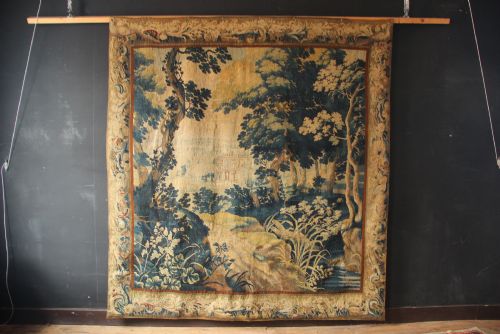


Hand Woven Tapestry
These hand woven antique tapestry pieces bring centuries of textile history into your home, ranging from tribal hangings to European verdure scenes.
Hand Woven Tapestry
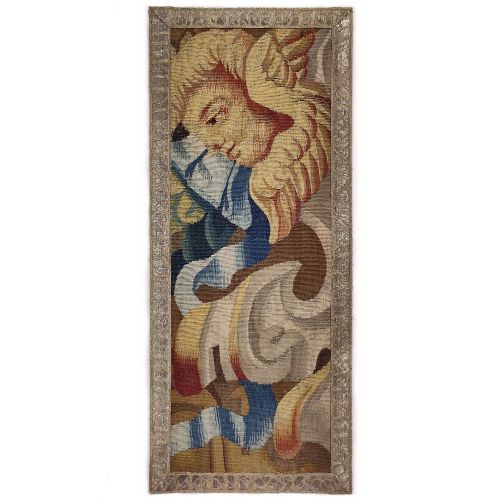
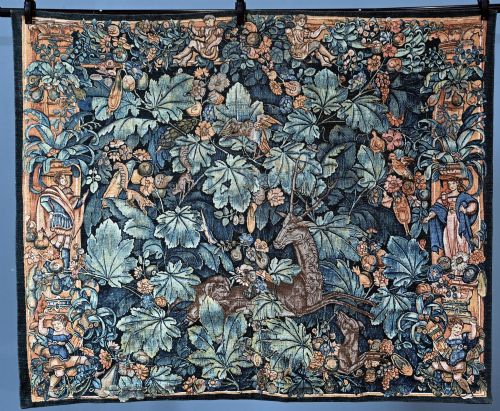
A hand woven antique tapestry covers a diverse group of textiles, spanning European wall hangings and Central Asian tribal weavings. When searching for a hand woven antique tapestry, collectors often encounter Flemish verdure scenes alongside Turkmen asmalyks and chuval faces.
The objects on this page include wall tapestries, rugs, fire screens, and tribal textiles originating from periods such as the seventeenth century, the eighteenth century, and the Victorian era. European examples lean towards French Baroque and Flemish styles, while Central Asian pieces represent tribal traditions from regions like Turkmenistan.
Most items you will meet here combine practical historical utility with decorative wall art, whether as large European verdure compositions or smaller tribal items like engsis and asmalyks.
Assessing Quality and Execution
Quality in these textiles rests upon the precision of the hand weaving, the density of the fibre construction, and the complexity of the pictorial design.
European verdure pieces achieve distinction through detailed rendering of foliage and landscape elements, whereas tribal weavings depend on the clarity of traditional guls and structural symmetry.
Hand Woven Tapestry Retail Price Guide 2026
Typical asking prices for hand woven tapestry among the pieces listed under this phrase on Sellingantiques today, from the lower quarter to the upper quarter. They describe what is for sale here now, not the wider market.
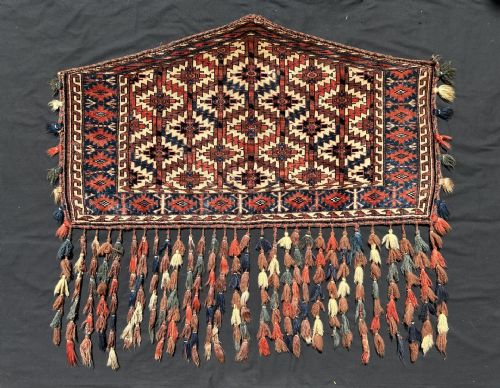
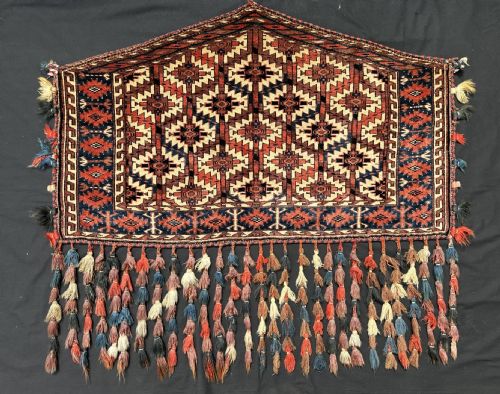
Wedding camels wore ornate asmalyks on their flanks, transforming working animals into moving galleries of tribal woolwork.
The Hand Woven Tapestry Glossary
- Verdure Tapestry
- A European wall hanging dominated by lush foliage, trees, and landscape motifs. These scenes often incorporate subtle animal or architectural details within the green foliage.
- Asmalyk
- A pentagonal or hexagonal tribal trapping originating from Central Asia, traditionally used during wedding ceremonies. Yomut weavers produced notable examples featuring distinctive geometric patterns.
- Chuval
- A large storage bag face made by Turkmen tribes, displaying repeated guls across the surface. These pieces show high knot densities and traditional vegetable dyes.
- Engsi
- A tribal door hanging placed at the entrance of a yurt, characterised by a cross-panel design. They served both protective and decorative functions in nomadic life.
- Gul
- A medallion motif repeated across tribal rugs and trappings to identify specific clans or regions. These octagonal or polygonal forms form the backbone of Central Asian design.
Hand Woven Tapestry: Frequently Asked Questions
Where were antique tapestries hung?
European wall tapestries were traditionally hung in large halls and drawing rooms to insulate stone walls and display wealth through narrative scenes.
Smaller pieces, such as fire screens or needlework panels, found placement around domestic hearths and intimate sitting rooms.
How do I care for a textile?
Keep textile pieces away from direct sunlight to prevent natural dyes from fading over time.
Support large wall hangings properly across their entire top edge rather than pinning them through the fabric.
What is a verdure scene?
A verdure scene depicts stylised plants, trees, and landscapes without necessarily telling a specific human story.
These forest designs allowed weavers to focus on rich gradations of green and brown wool threads.
How are tribal pieces different?
Tribal weavings like asmalyks and chuvals reflect nomadic traditions and specific clan patterns rather than European court tastes.
They utilise geometric structures and repeated motifs that passed down through generations of weavers.