


Green Foliage Verdure Tapestry
A green foliage verdure tapestry brings woodland depth and botanical richness indoors, woven to transform plain stone or plaster walls with layered garden scenes.
Green Foliage Verdure Tapestry
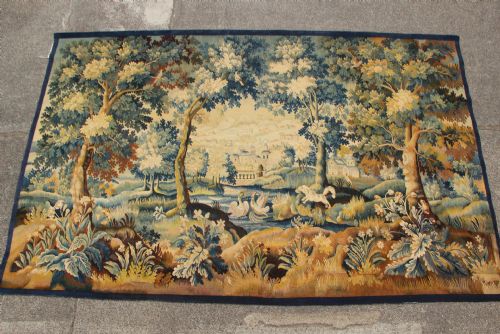
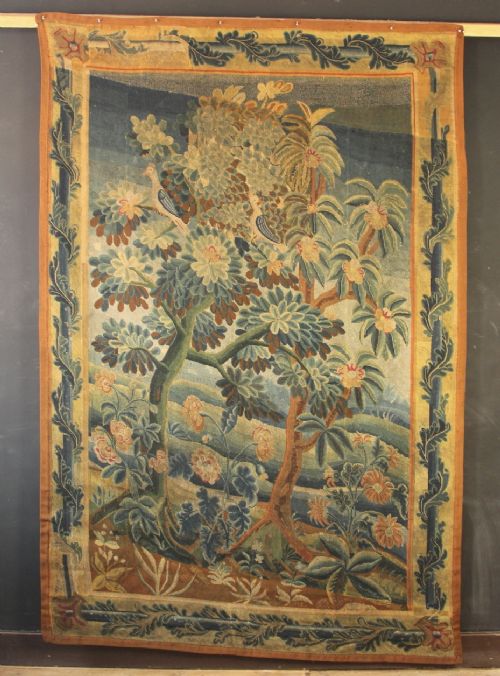
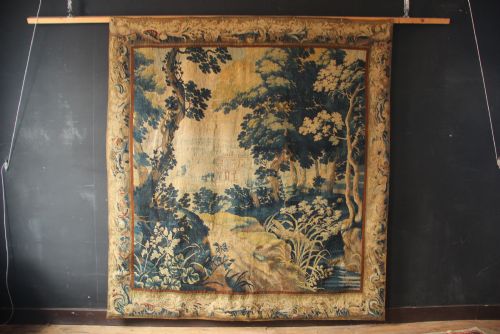
A green foliage verdure tapestry displays dense thickets, leafy canopies, and quiet garden landscapes dominated by verdant botanical shades. Buyers seeking a green foliage verdure tapestry explore large wall hangings originating from Flemish and French workshops.
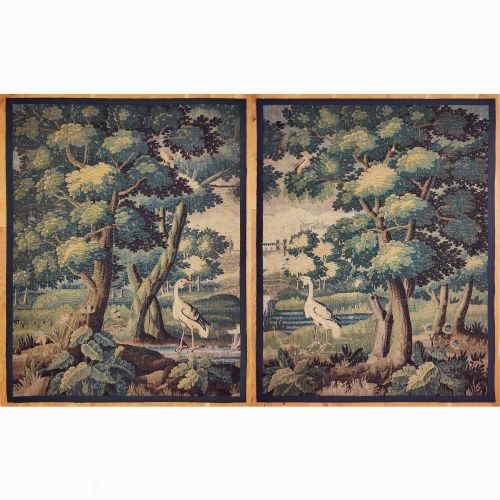
The selections span the seventeenth, eighteenth, and late nineteenth centuries, presenting both expansive room-scale compositions and narrower panel formats. Aubusson and Flemish origins dominate the pieces encountered in this category.
These textiles serve primarily as substantial wall decorations designed to insulate rooms and introduce pictorial depth. Their surviving forms include single monumental panels alongside matched pairs.
Materials and construction methods
Weavers constructed these large wall hangings using combinations of wool, silk, and linen yarns on loom setups. Wool supplied the heavy structural foundation and durable ground for the dense foliage.
Silk threads were often introduced alongside wool to catch the light within leaves and floral highlights. Needlework variations also appear, reflecting the diverse textile techniques employed across European workshops.
Materials recorded across these listings include wool, silk, and linen woven into wall hangings.
Evaluating quality in verdure textiles
Quality rests in the complexity of the botanical drawing and the variety of green tones surviving in the weave. Master weavers achieved depth by contrasting dark shadow leaves with lighter highlighted fronds.
The choice of materials dictates the texture and light reflection across the surface, with silk elements enhancing the visual richness of the composition. Preservation of the original dimensions and structural integrity also distinguishes finer examples.
The Green Foliage Verdure Tapestry Glossary
- Verdure tapestry
- A wall hanging featuring a landscape dominated by trees, plants, and leaves rather than human figures. These pieces focus on botanical detail and woodland scenery.
- Aubusson
- A town in central France famous for its historic tapestry weaving tradition. Pieces from this centre often display lighter palettes and refined floral motifs.
- Flemish Baroque
- A regional decorative style characterised by dynamic movement and lush naturalism. Flemish workshops produced many of the monumental landscape textiles surviving from the seventeenth century.
- Needlework tapestry
- A textile where designs are stitched by hand onto an existing ground fabric rather than woven on a loom. These pieces offer different textural qualities compared to traditional warp-faced weaves.
Green Foliage Verdure Tapestry: Frequently Asked Questions
How were verdure tapestries used?
These large textiles hung on the stone walls of historic rooms to provide both insulation and decoration. They absorbed dampness and warmed the atmosphere while displaying rich botanical imagery.
Today they function as major wall art pieces in large residential spaces, continuing their original role as architectural focal points.
How do I date a tapestry?
Dating relies on stylistic clues within the woven landscape, including the drawing of the foliage and architectural borders. Seventeenth-century Flemish examples often feature heavier, darker woodlands, while later French pieces tend towards brighter palettes.
Material analysis and structural examination further assist in placing the textile within a specific period.
Are these tapestries fragile?
Historic textiles require careful handling due to the natural ageing of wool, silk, and linen fibres. Long-term exposure to direct sunlight causes fading in the delicate green and blue tones.
Proper mounting distributes the weight evenly across the entire textile to prevent structural strain on the original weave.
What is an Aubusson piece?
Aubusson denotes pieces woven in or associated with the historic French manufacturing tradition centred around the Creuse valley. These works often exhibit distinct regional compositions and refined French styling.
They represent a specific geographic and stylistic branch within European textile production.