




Blue Wool Tapestry
A blue wool tapestry brings historic French and Flemish pastoral scenes directly onto interior walls.
Blue Wool Tapestry
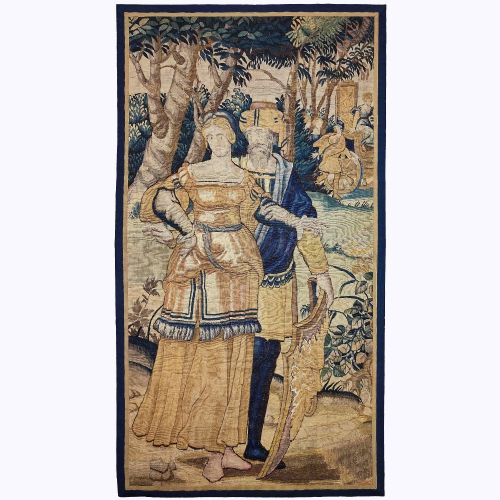
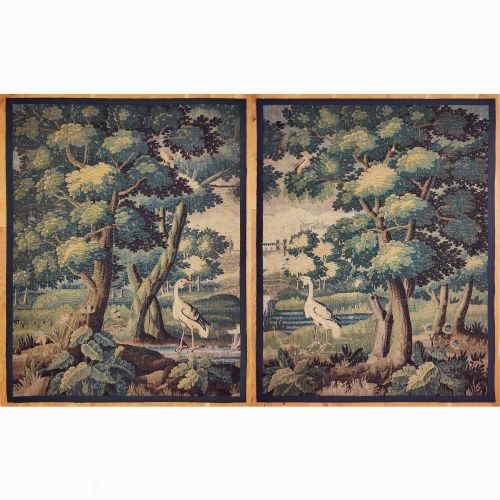
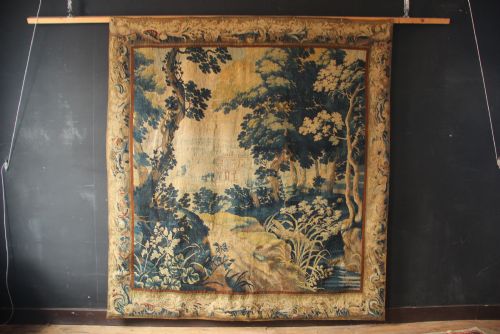
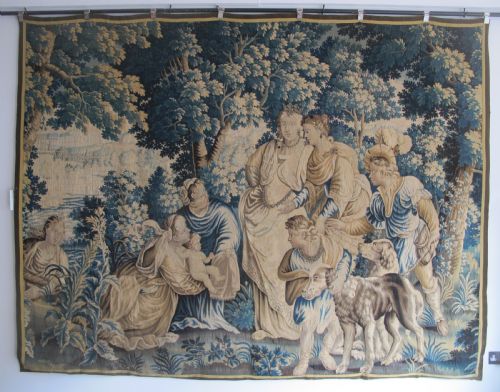
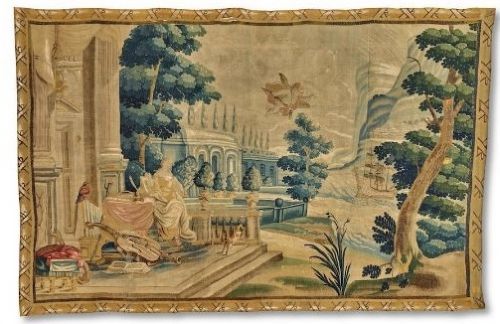
When searching for a blue wool tapestry, collectors look at woven wall art, decorative panels, and large verdure hangings from historical European centres. The most frequent pieces met on this page originate from seventeenth and eighteenth-century Flemish workshops, alongside later French examples featuring forest foliage or classical narratives.
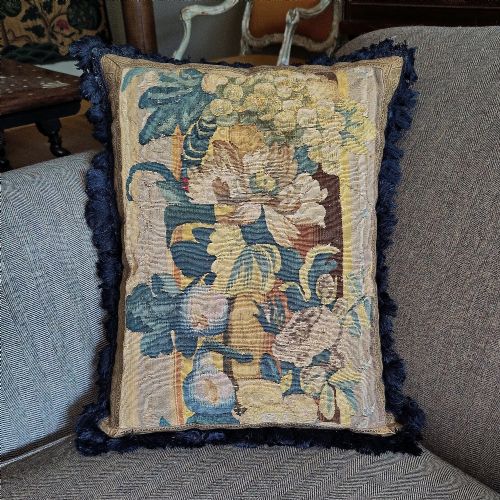
These textiles include large room-scale wall art, smaller cushion covers, and tapestry fragments repurposed as decorative panels. The surviving works display botanical foliage, mythological figures, and game parks rendered predominantly in deep indigos and muted woollen tones.
Materials and construction
The pieces documented in the listings rely primarily on natural fibres, combining wool and silk threads for texture and chromatic depth. Weavers constructed these large-scale textiles on hand looms, using dyed wool yarn for the structural warp and weft alongside supplementary silk highlights.
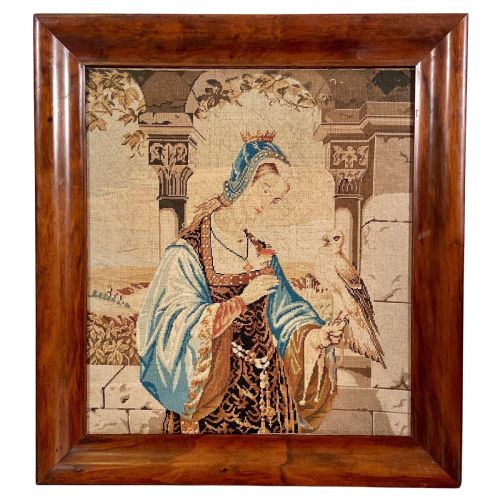
Support materials extend beyond simple wall hangings to include mounted screens and embroidered woolwork panels. The integration of cotton, linen, and occasional wooden frames or glass elements occurs in related textile pieces such as nineteenth-century needlework pictures.
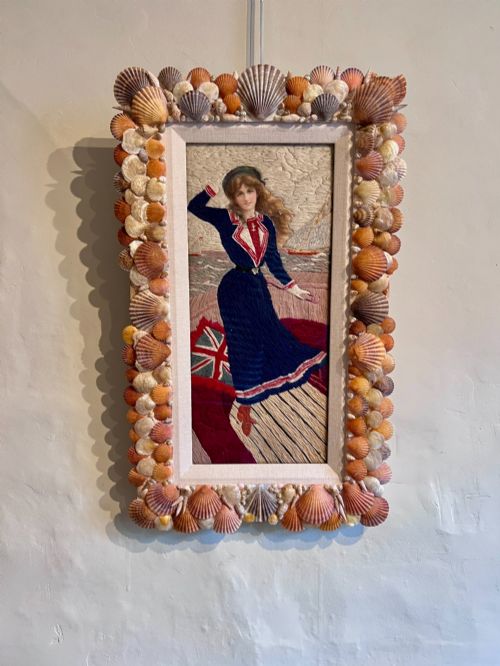
Victorian sailors created intricate woolwork pictures known as woolies between shipboard duties, recording maritime life with surprising patience.
Assessing quality and preservation
The distinction between a top-tier panel and a standard fragment involves the integrity of the composition and the provenance of the weaving centre. Intact borders, balanced proportions, and clear regional characteristics elevate particular verdure and biblical scenes above simple decorative remnants.
The Blue Wool Tapestry Glossary
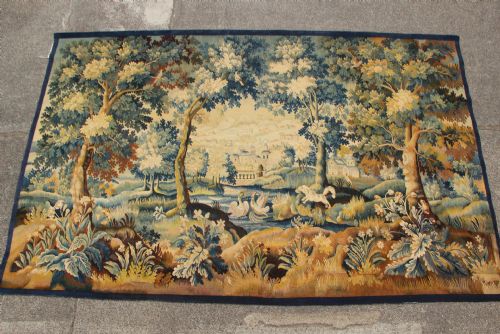
- Verdure
- A tapestry design dominated by lush foliage, trees, and woodland plants, often featuring distant castles or animals. These landscape scenes represent the most common surviving form of seventeenth-century wall hanging.
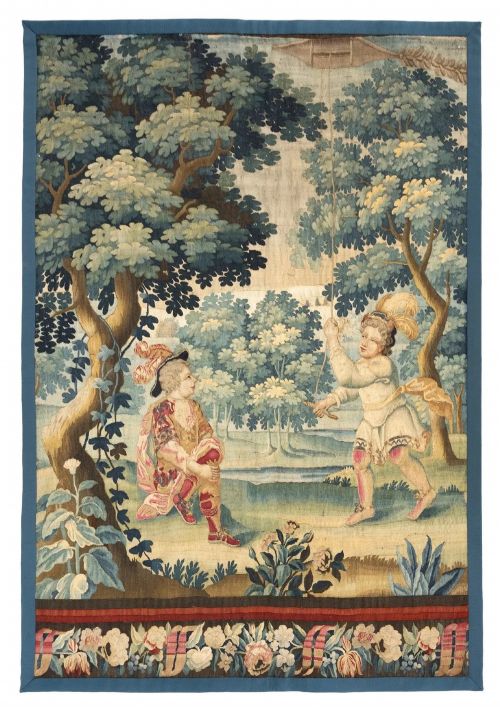
- Aubusson
- A town in France renowned for producing high-quality hand-woven tapestries and carpets since the fourteenth century. Pieces from this region frequently display classical figures, floral motifs, or verdure landscapes.
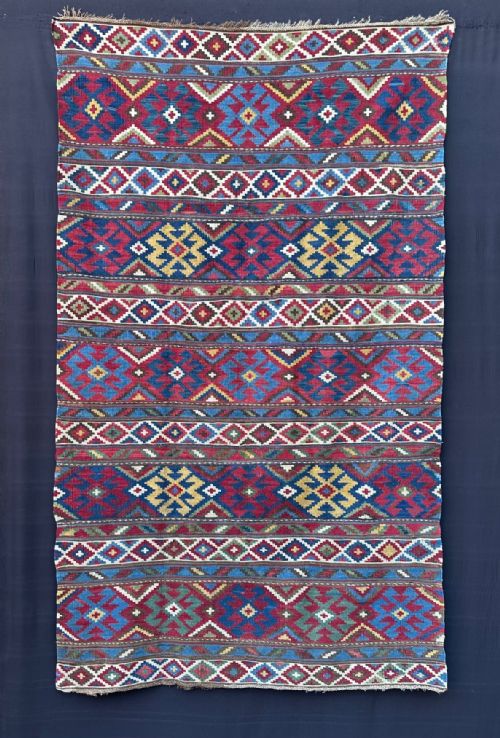
- Kilim
- A flat-woven carpet or rug produced across the Caucasus, Anatolia, and Central Asia. These textiles utilise slit-tapestry weaving techniques rather than knotted piles.
- Woolie
- A nineteenth-century sailor's embroidery made using coloured wool yarns on canvas. These works typically depict naval vessels, portraits, or maritime scenes.
- Sofreh
- A woven dining cloth or spread used historically in nomadic households for domestic food preparation and serving. They appear in regional textile collections with geometric flat-weave patterns.
Blue Wool Tapestry: Frequently Asked Questions
How do I hang a heavy tapestry safely?
Large wool wall hangings require even weight distribution across a sturdy wooden batten or hidden metal rod. Sewing a continuous cotton canvas sleeve to the reverse prevents the antique fibres from stretching or tearing under their own weight.
Direct contact with iron nails or bare timber causes permanent abrasion to delicate wool and silk yarns. Using a lined backing protects the historic textile from atmospheric dust and stabilizes the original structure against sagging.
What is the difference between Flemish and French tapestries?
Flemish workshops, particularly those operating in Audenarde and Brussels during the sixteenth and seventeenth centuries, specialised in dense verdure landscapes and dramatic mythological narratives. Their compositions utilise heavier wool yarns and deep, earthy colour palettes.
French ateliers, notably Aubusson, transitioned toward lighter, more refined pastoral scenes and classical portraits influenced by royal court aesthetics. These later works often incorporate finer silk highlights alongside the traditional wool foundation to create brighter tonal contrasts.
How should I clean antique tapestries?
Professional textile conservators advise against domestic washing or vacuuming with standard household attachments, as the suction damages fragile historic fibres. Gentle surface dust removal using a soft brush through a protective mesh screen remains the safest maintenance method.
Chemical solvents and water immersion risk shrinking the wool or bleeding ancient natural dyes. Any significant structural restoration requires specialist intervention from a qualified conservator experienced in historical textiles.
Can I use these textiles as floor rugs?
While flat-woven kilims and tribal rugs function well on the floor, historical tapestries and needlework panels are strictly unsuited for foot traffic. Wall hangings and cushion covers were engineered solely for vertical display or decorative upholstery rather than physical weight.
Placing fragile woollen wall art on the floor accelerates the wear of ancient warp and weft threads. Collectors preserve these textile panels exclusively as wall art, screens, or protected display pieces.