




Blue White Floral Chargers
Blue white floral chargers bring together cobalt pigment and tin glaze across centuries of ceramic history, offering striking wall or table decoration.
Blue White Floral Chargers
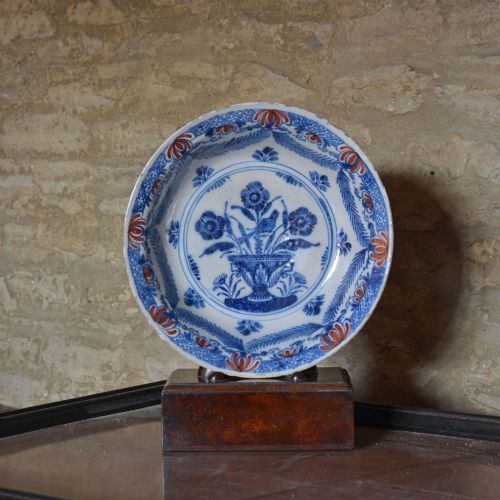
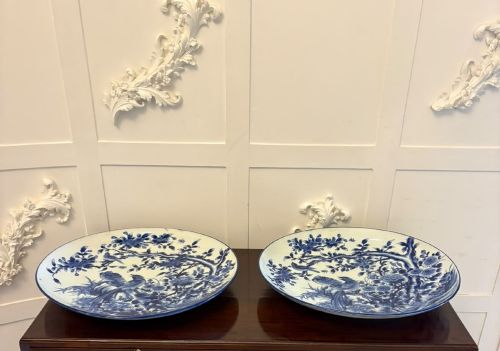
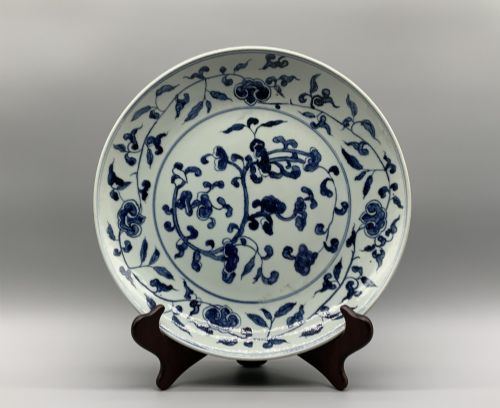
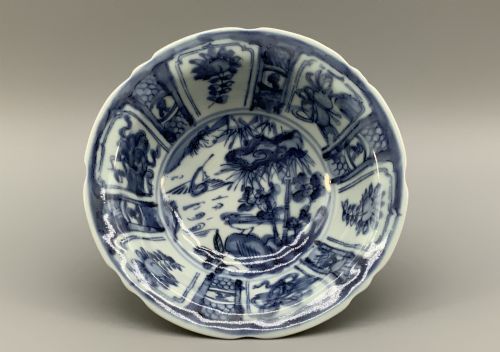
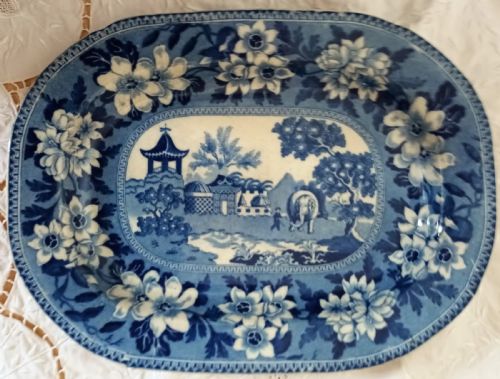
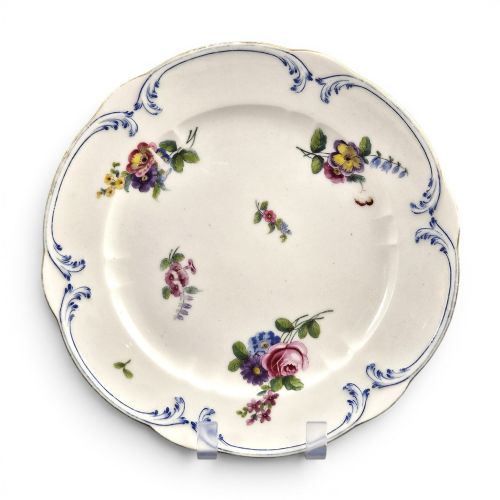
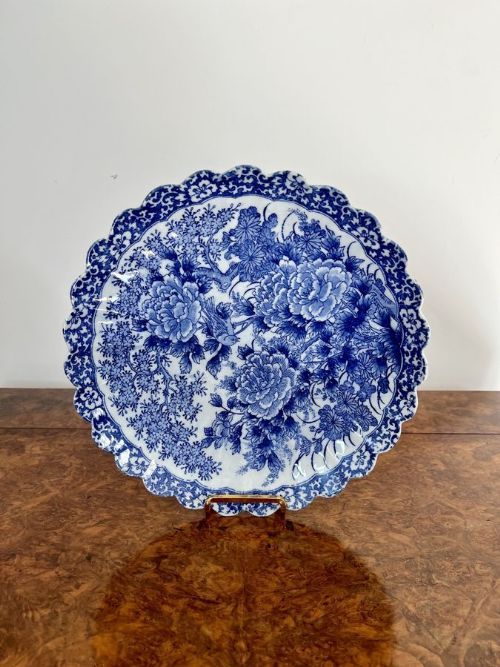
When you search for blue white floral chargers, you examine large decorative plates and platters dominated by cobalt decoration. These pieces arrive from various centres of production, spanning Chinese export wares, Japanese Imari, Dutch Delftware, and English Staffordshire pottery. The selection includes substantial chargers alongside related plates and serving dishes.
The most common examples on this page date from the eighteenth century and the later nineteenth century. Eighteenth-century pieces frequently comprise Dutch Delftware and Chinese porcelain from the Kangxi period. Nineteenth-century examples often present Japanese Arita Imari wares alongside English pottery platters.
Forms vary from standard circular chargers to lobed bowls, scalloped edge plates, and moulded dishes with barbed rims. Buyers encounter both single items and matched pairs intended for display.
Materials and Techniques
Potters shaped these objects using porcelain, earthenware, and soft-paste ceramic bodies. Cobalt pigment provided the primary blue colourant applied beneath or over the glaze. Tin glaze created an opaque white surface on earthenware bodies, particularly seen in Delftware production.
Makers utilised manual painting and transfer printing techniques to apply botanical and floral motifs. Firing in kilns fixed the cobalt pigment into the glaze, producing durable blue and white decoration that endures on chargers and plates.
Blue White Floral Chargers Retail Price Guide 2026
Typical asking prices for blue white floral chargers among the pieces listed under this phrase on Sellingantiques today, from the lower quarter to the upper quarter. They describe what is for sale here now, not the wider market.
Elephants and bees occasionally wander across these floral grounds, proving that antique potters enjoyed hiding unexpected creatures among the leaves.
Judgments of Quality
Quality rests upon the clarity and depth of the cobalt pigment against the white ground. Crisp brushwork or precise transfer printing indicates superior control during manufacture. Early pieces from the Kangxi period or eighteenth-century Delft demonstrate finer potting and more deliberate artistic execution.
The sophistication of the floral design and the integrity of the glaze surface define the upper tier of these objects. Secondary pieces often show heavier bodies, simpler execution, or standard production methods intended for everyday utility rather than formal display.
John Rogers And Son·Ambroise Michel·William Adam
The Blue White Floral Chargers Glossary
- Charger
- A large decorative plate, typically exceeding thirty centimetres in diameter, designed for display on a wall or sideboard rather than daily dining.
- Delftware
- Tin-glazed earthenware produced in the Netherlands and England, characterised by a porous ceramic body covered in an opaque white glaze painted in blue.
- Imari
- Japanese porcelain decorated in underglaze blue and overglaze iron red and gold, heavily exported to Europe from the port of Imari.
- Kangxi
- A Chinese imperial reign period associated with high-quality blue and white porcelain production featuring refined potting and brilliant cobalt pigments.
- Tin Glaze
- A ceramic glaze made opaque by the addition of tin oxide, providing a smooth white background for painted blue pigment.
Blue White Floral Chargers: Frequently Asked Questions
What distinguishes an 18th century charger from later pieces?
Earlier chargers generally utilise tin-glazed earthenware or delicate porcelain bodies characteristic of eighteenth-century Dutch and Chinese kilns. They display hand-painted cobalt botanical motifs that reflect the specific technological limits of the period.
Later nineteenth-century examples often incorporate transfer printing methods or heavier ceramic bodies. These later pieces include Japanese Arita Imari wares and English factory productions.
How were these large plates displayed historically?
Large chargers served primarily as decorative objects on sideboards, tables, or walls. Their substantial scale allowed households to exhibit fine ceramic artistry.
Servants also utilised similar platters for serving meats and communal dishes during large dining events. Display remained the primary function for finer decorated chargers.
Can these antique plates still be used for dining?
Most antique chargers and decorative plates suit display purposes rather than heavy daily dining. Their glazes and ceramic bodies can suffer from modern dishwashing and cutlery marks.
Robust nineteenth-century platters occasionally tolerate careful serving use. Collectors generally prefer to preserve them using wall hangers or plate stands.