



Blue White Ceramic Planter
A blue white ceramic planter brings scale and cobalt pattern to a room, holding everything from delicate foliage to a substantial potted palm.
Blue White Ceramic Planter
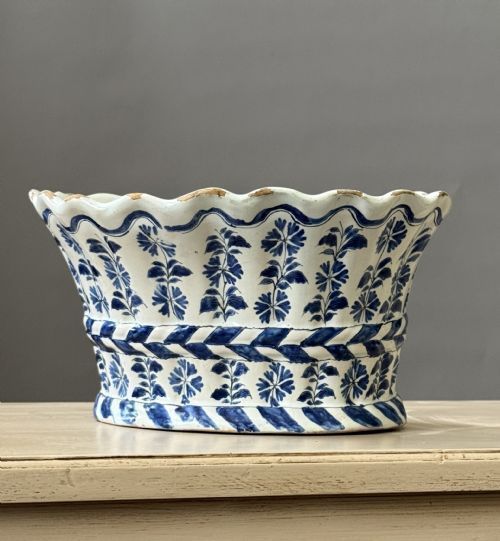
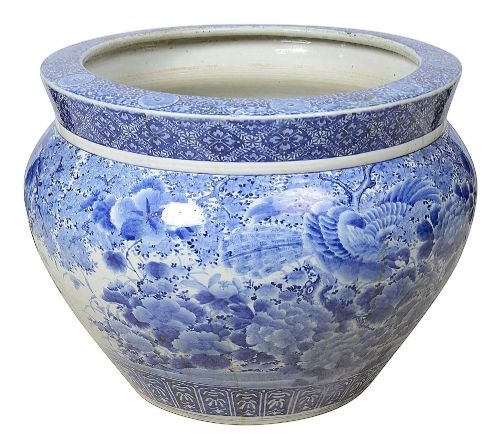
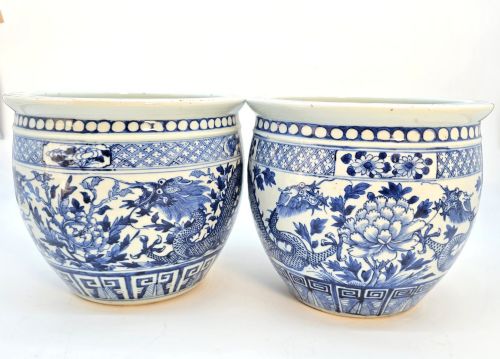
A blue white ceramic planter takes several historic forms, appearing most often as a substantial jardiniere, a deep footbath or a garden urn intended for interior display. These pieces span the eighteenth and nineteenth centuries, originating from English potteries, Chinese kilns, Japanese workshops and European delftware centres.
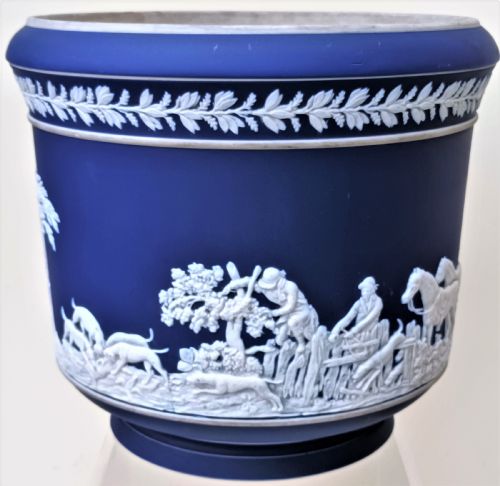
The selections available here range from early eighteenth-century Delft bough pots and Nevers faience to Victorian Staffordshire earthenware and crisp export porcelain. Buyers frequently encounter large Chinese fish bowls and Japanese Meiji period jardinieres alongside English jasperware vessels resting on feet.
Materials and technique
Potters shaped these vessels from earthenware, porcelain, stoneware and tin-glazed bodies, applying cobalt underglaze pigments by hand before firing. The resulting surfaces display deep indigo brushwork or precise transfer printing fused beneath a glossy or semi-matte glaze.
Makers utilised specialised moulding and throwing techniques to achieve thick walls capable of holding damp soil and heavy plants safely. Stoneware and jasperware examples rely on applied moulded reliefs, while delft and faience pieces depend entirely on the skill of the brush across an opaque white tin glaze.
Blue White Ceramic Planter Retail Price Guide 2026
Typical asking prices for blue white ceramic planter among the pieces listed under this phrase on Sellingantiques today, from the lower quarter to the upper quarter. They describe what is for sale here now, not the wider market.
Listings feature periods from the early eighteenth century to the late nineteenth century, spanning English earthenware, Chinese export porcelain, and Japanese Meiji ceramics.
Judging quality and character
Quality rests upon the crispness of the cobalt decoration, the uniformity of the glaze, and the structural integrity of heavy ceramic walls. Finer examples exhibit confident, fluid brushwork or sharply defined transfer details, whereas lesser pieces show muddied pigments or uneven kiln firing.
The desirability of a piece also depends on the preservation of its original surface and any associated hardwood stands. Age-related crazing and minor manufacturing imperfections are normal, but deep structural cracks or heavy restoration significantly alter the integrity of the vessel.
William Adams & Sons·Heathcote·Spode·Wedgwood
The Blue White Ceramic Planter Glossary
- Jardiniere
- An ornamental ceramic pot designed to hold a live plant or flower arrangement indoors. These vessels often feature wide rims and heavy bases to support substantial foliage.
- Footbath
- A large ceramic basin originally used for medical or hygienic bathing that now functions as a dramatic planter or decorative floor urn. They commonly include integrated handles at the sides.
- Cobalt Underglaze
- A blue metallic oxide pigment applied directly to the raw clay body before glazing and firing at high temperatures. This technique locks the deep blue colour permanently beneath a glassy protective layer.
- Jasperware
- A fine-grained, unglazed stoneware developed in the eighteenth century, typically featuring white neoclassical relief figures contrasted against a blue coloured body.
- Bough Pot
- A specialised vessel perforated or shaped to hold freshly cut branches and floral sprays for interior decoration. Early examples frequently originate from European delftware potteries.
Blue White Ceramic Planter: Frequently Asked Questions
Can I plant directly into a vintage jardiniere?
Many collectors prefer to place a plastic nursery pot inside the ceramic vessel rather than planting directly into the antique body. This protects the historic interior glaze and prevents moisture from seeping through porous historic earthenware.
Using a liner also makes watering and rearranging plants much simpler without risking damage to the heavy ceramic structure or any associated wooden stands.
How do I clean an antique blue and white planter?
Gentle cleaning with warm water and a mild soap is usually sufficient to remove dust and mild surface dirt from glazed ceramic surfaces. Avoid harsh chemical cleaners or abrasive scouring pads that can scratch the glaze or dull the cobalt underglaze decoration.
Take special care with unglazed materials like jasperware, using a soft dry brush to lift debris from delicate moulded reliefs without introducing moisture.
How can I tell an eighteenth-century piece from a Victorian copy?
Eighteenth-century pieces typically display hand-thrown potting irregularities, pooling in the glaze, and deep cobalt pigments applied directly to soft-paste or tin-glazed bodies. Victorian reproductions and later nineteenth-century pieces often feature harder porcelain or stoneware bodies with more uniform machine-like throwing and sharper transfer printing.
Examining the base for foot-ring wear, kiln scars, and the specific characteristics of the blue pigment helps establish the correct period of manufacture.
Where should I display a large fish bowl or footbath?
Large fish bowls and heavy footbaths command attention when placed directly on the floor in a hallway, near a fireplace, or positioned on a sturdy low table. Their generous scale makes them ideal focal points for corners or entryways that require a substantial decorative element.
Ensure the floor or furniture support can safely bear the combined weight of the heavy ceramic vessel, damp soil, and plant material.