



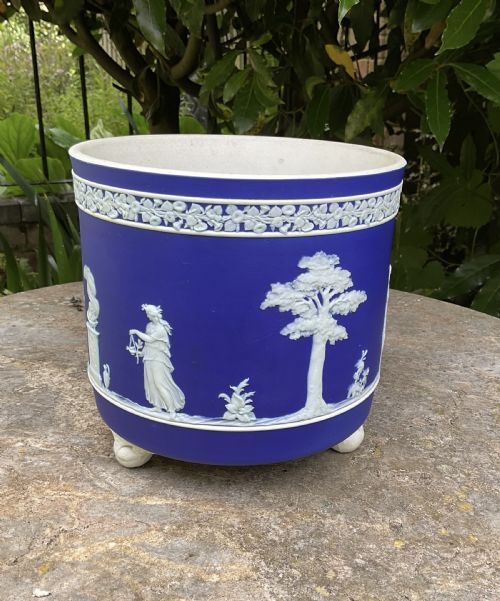


Blue and White Cachepot
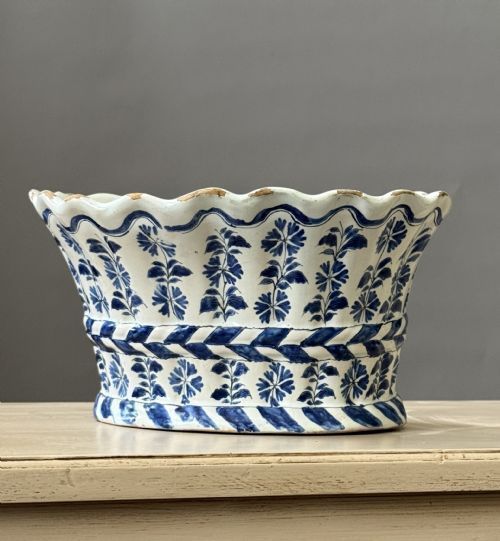
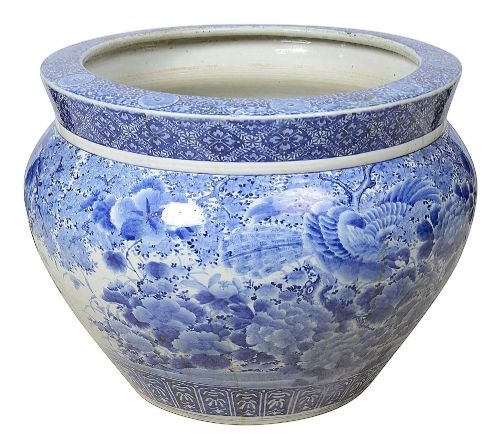
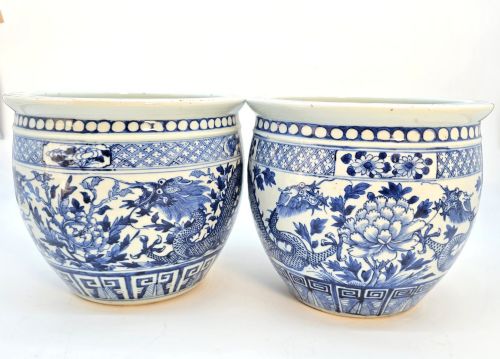
These blue and white cachepot pieces are decorative plant pot holders bringing cobalt ornament to interiors.
Blue and White Cachepot
A blue and white cachepot sits inside a room to hold a potted plant, concealing the working container within decorative ceramic walls. The selection spans periods from the eighteenth century into the nineteenth century, taking forms such as jardinières, bough pots, and planters.
Originating across English, European, and Asian workshops, these vessels display styles including Victorian Neoclassical, Delftware, Japanese Meiji, and Qing Dynasty. You encounter porcelain, ceramic, stoneware, and earthenware pieces decorated in cobalt underglaze and enamel.
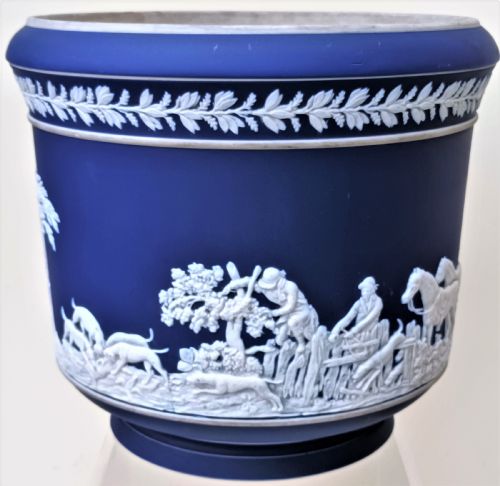
The version most likely to be met on this page is a nineteenth-century porcelain or jasperware jardinière, often carrying floral, landscape, or classical ornament. English examples from makers such as Wedgwood and William Adams appear alongside Japanese Arita Imari and Chinese export porcelain.
How they were made
Potters shaped these bodies from porcelain, ceramic, stoneware, or tin-glazed earthenware, sometimes forming tripod feet or pairing vessels with associated hardwood stands. The structural clay provided a stable foundation for holding damp soil and heavy plants.
Decoration relied on cobalt underglaze, enamel pigments, and moulded jasperware reliefs applied directly to the ceramic body before firing. Potters fused these pigments under clear glazes to achieve the deep blue tones characteristic of the tradition.
Listings feature pieces spanning the eighteenth and nineteenth centuries, utilising porcelain, ceramic, stoneware, and jasperware.
What varies in quality
Quality rests in the crispness of the cobalt painting, the precision of the moulded relief, and the stability of the ceramic body. Finer vessels show deliberate brushwork or sharp, clean mouldings that define the ornament without blurring.
The distinction between standard production and superior work lies in the depth of the glaze and the harmony of the form. Well-balanced proportions and even colour distribution elevate a piece from a simple utility container to a finished decorative object.
William Adams & Sons·Wedgwood
The Blue and White Cachepot Glossary
- Cachepot
- A decorative container designed to hide an ordinary flowerpot holding a houseplant. It has no drainage hole in the base.
- Jardiniere
- A large ornamental pot or stand used for holding flowers or plants, often taking a rounded ceramic form. The term appears frequently alongside cachepot in these listings.
- Jasperware
- A type of fine stoneware developed by Josiah Wedgwood, characterised by a matte surface and contrasting coloured relief figures. The most common colourway pairs a blue ground with white applied ornament.
- Cobalt Underglaze
- A blue pigment applied to ceramic pieces before the final glaze and firing. This technique protects the pigment beneath a glossy surface.
- Tin-Glazed Earthenware
- Pottery coated with a tin-opacified glaze that turns white and opaque upon firing, providing a smooth ground for painted decoration.
Blue and White Cachepot: Frequently Asked Questions
What is a blue and white cachepot?
A blue and white cachepot is a decorative ceramic container used to house a potted plant indoors. It lacks drainage holes, meaning it functions solely as an outer sleeve to protect furniture from water.
These vessels utilise cobalt pigment beneath a glaze or moulded white reliefs on coloured stoneware. They serve as ornamental centerpieces for tables, mantelpieces, and windowsills.
How do I care for my cachepot?
Place a smaller plastic pot with drainage holes inside your cachepot and remove it for watering. This prevents standing water from sitting against the antique ceramic body.
Dust the surface gently with a dry cloth and avoid harsh chemical cleaners that might damage the glaze or enamel decoration. Handle older porcelain and earthenware with care to protect rims and handles.
How do I date a blue and white cachepot?
Examine the base for maker marks, impressed stamps, or kiln scars that point to specific potteries and production eras. Style offers another clue, shifting from eighteenth-century Delftware and Chinese export porcelain to nineteenth-century Victorian jasperware and Japanese Meiji period pieces.
The weight, thickness of the ceramic, and composition of the blue pigment also help distinguish eighteenth-century pieces from later nineteenth-century manufacturing.
Can I plant directly into a cachepot?
Planting directly into a cachepot is discouraged because the lack of drainage holes allows water to pool at the base. Trapped moisture can rot plant roots and potentially damage older ceramics.
Using an inner nursery pot protects the antique vessel while allowing you to water plants safely. It also makes swapping or repotting plants much simpler.