



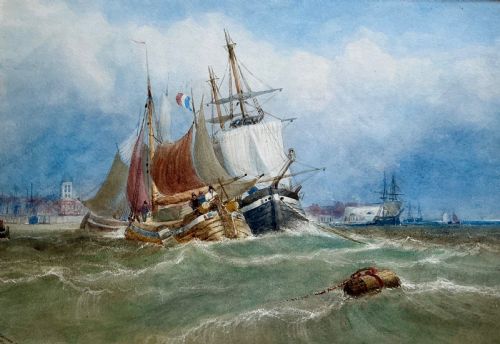


Blue Sky Coastal Landscape
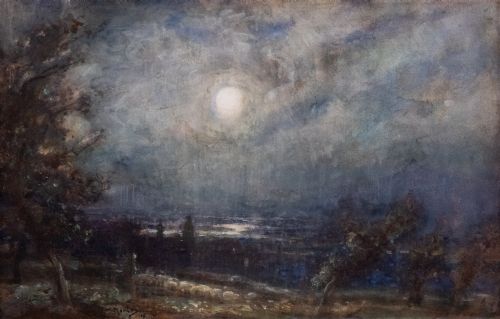
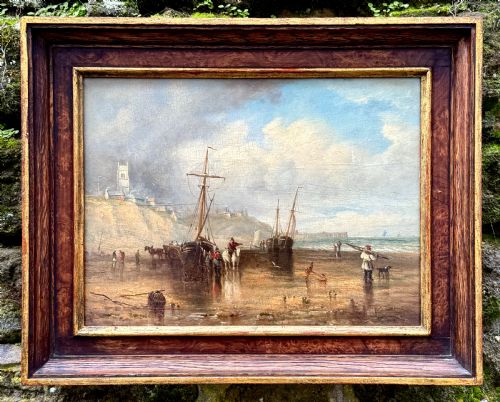
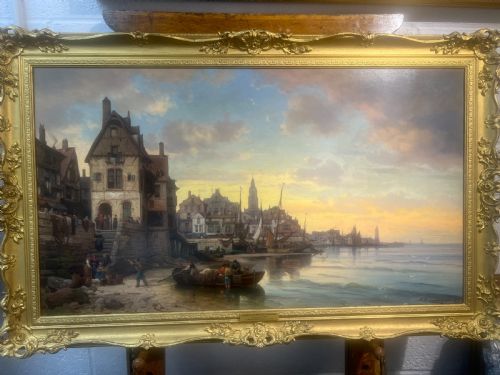
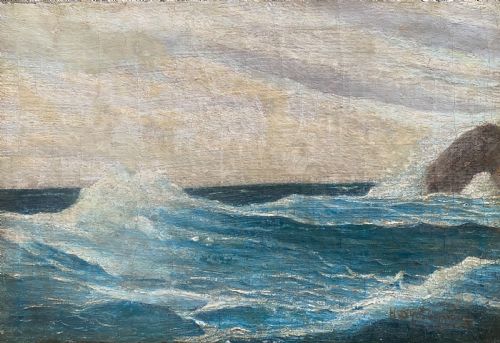
A blue sky coastal landscape captures the shifting expanse of sea and shore under broad daylight, drawing the eye toward distant harbours and open waters.
Blue Sky Coastal Landscape
A blue sky coastal landscape brings together maritime settings and open atmospheres, recording shores, estuaries, and shipping scenes. These works capture the changing light above British and European coastlines during the nineteenth and twentieth centuries.
You will encounter watercolours on paper and oil paintings on canvas, framed within varied historic styles that suit marine and maritime subjects. The selection spans periods from the Victorian era through to mid-century modern interpretations.
Depictions range from calm inland waters and bustling fishing harbours to expansive open seas under bright or overcast skies. Painters from these periods applied their brushes to record specific topographical views alongside impressionistic coastal moments.
How They Were Made
Artists utilised watercolour pigment on paper for fluid transparency, capturing light upon water with delicate washes and sharp touches of bodycolour. These works rely on the pale tone of the paper beneath to create luminous effects in skies and sea.
Oil paint on canvas or wood panel allowed practitioners to build rich textures and impasto surfaces, recording the heavier movement of waves and clouds. This medium provided durability and depth for larger maritime scenes produced across the nineteenth and twentieth centuries.
Blue Sky Coastal Landscape Retail Price Guide 2026
Typical asking prices for blue sky coastal landscape among the pieces listed under this phrase on Sellingantiques today, from the lower quarter to the upper quarter. They describe what is for sale here now, not the wider market.
The listings combine nineteenth-century watercolours with twentieth-century oil paintings on canvas and wood.
What Varies in Quality
Quality rests upon the artist's command of light, atmosphere, and spatial depth within the maritime setting. Stronger examples demonstrate confident handling of water and sky, capturing the specific weather and mood of the coast rather than relying on formulaic compositions.
The preservation of the pigment and the integrity of the original support dictate the longevity of the work. Well-maintained watercolours retain their brightness without excessive fading, while oil paintings show stable surfaces free from disruptive cracking.
John E. Aitken·Thomas William Morley·Paul Bret·Thomas Creswick·Charles Euphraisie Kuasseg·Henry Barlow Carter·William Frederick Settle·Charles William Adderton·Helen Layfield Bradley·Gustave De Bréanski·Sir Thomas Newenham Dean·Herbert Royle·Thomas Bush Hardy·Stanley Leader·Hendrik Willebrord Jansen·George Gregory·Florence Hess·George Hamilton Constantine·Donald McIntyre·James Thomas Watts·R.P.Noble·Frederick Williamson·Sam Bough·Albert Robert Quinton·Denys Garle
The Blue Sky Coastal Landscape Glossary
- Watercolour
- A painting method where fine pigment is suspended in a water-soluble binder and applied to paper. It relies on the white of the paper to reflect light through transparent washes.
- Impasto
- Paint applied thickly to a canvas or panel so that the brush or palette knife marks stand proud of the surface. This technique adds tactile dimension to waves, clouds, and coastal rocks.
- Estuary
- The tidal mouth of a large river where the tide meets the stream. Artists frequently painted these transitional waters for their broad horizons and shipping activity.
- Barque
- A sailing ship with three or more masts. These vessels appear frequently in maritime watercolours and oil paintings from the nineteenth century.
Blue Sky Coastal Landscape: Frequently Asked Questions
What periods do these coastal paintings span?
The listings span from the mid-eighteenth century through the Victorian and Edwardian eras into the mid-twentieth century. This timeline covers shifting artistic movements from traditional marine art to early modernist interpretations.
Victorian and Edwardian works sit alongside later mid-century pieces, reflecting changing approaches to maritime subjects over generations.
How do I care for a watercolour painting?
Watercolours require protection from direct sunlight to prevent the pigments from fading over time. Keeping them behind UV-filtering glass helps preserve the paper and the integrity of the washes.
Maintain a stable indoor environment away from damp walls to protect both the paper support and the historic frame.
What is the difference between oil and watercolour marine art?
Oil paintings utilise pigments bound in drying oils on canvas or wood panels, offering rich textures and deep colour saturation. They capture the heavy, dramatic movement of waves and stormy skies with physical depth.
Watercolours employ pigment suspended in water-soluble binders on paper, creating luminous, transparent effects that excel at depicting bright daylight and subtle atmospheric mists.
Where were these coastal scenes typically painted?
Painters recorded locations around British coasts, including Yorkshire harbours like Whitby and Scarborough, alongside European destinations in Italy, France, and Norway. Artists often travelled to active fishing ports and estuaries to capture working vessels.
Topographical views record specific piers, castle ruins, and coastal landscapes as they appeared during the nineteenth and twentieth centuries.