





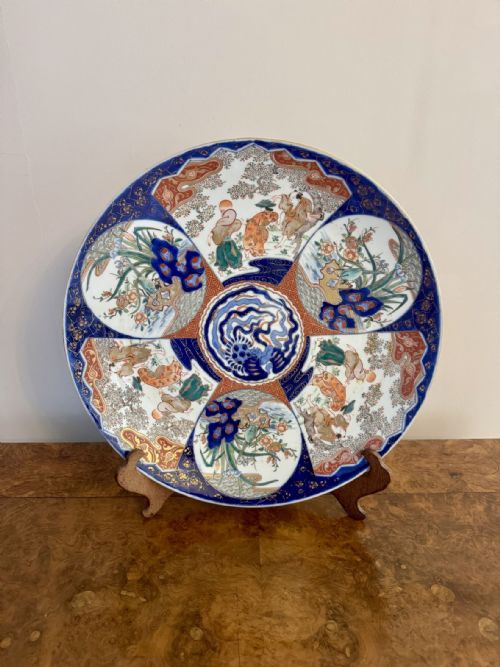
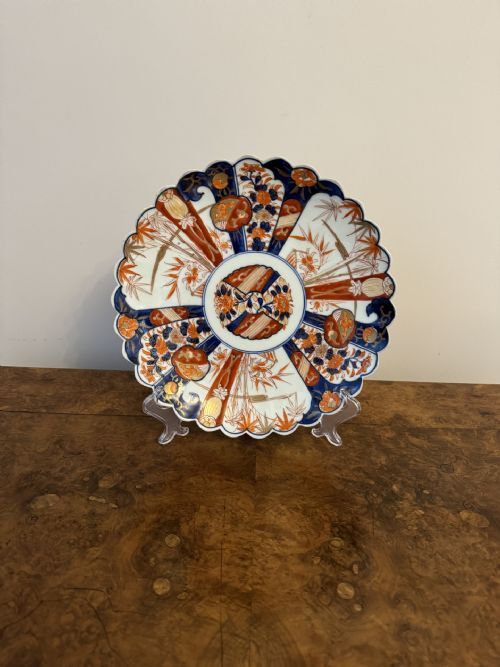

Blue Red Imari Charger
A blue red imari charger brings vibrant ceramic artistry to a room, offering rich visual depth through traditional palettes.

Blue Red Imari Charger
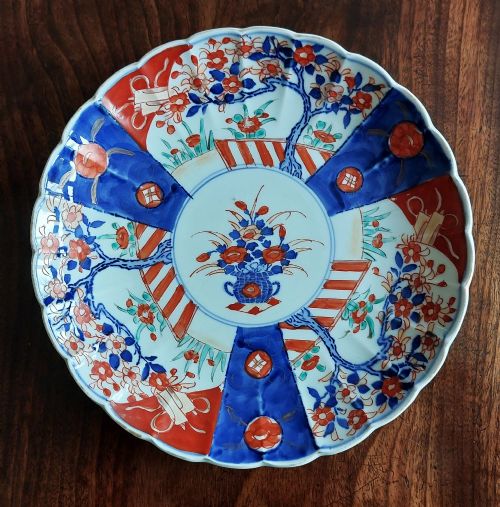
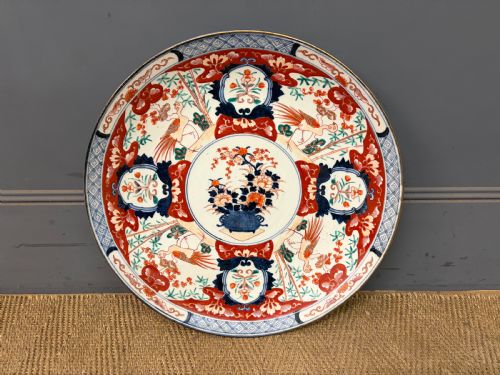
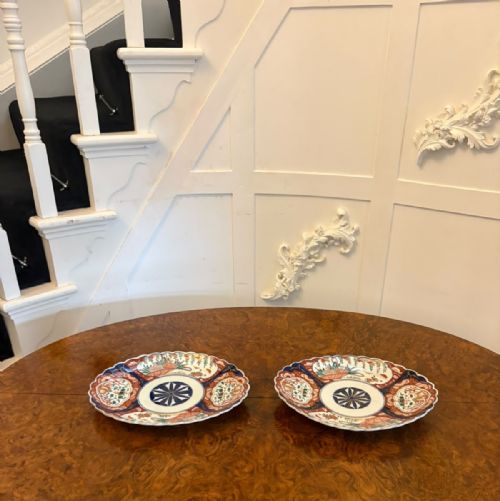
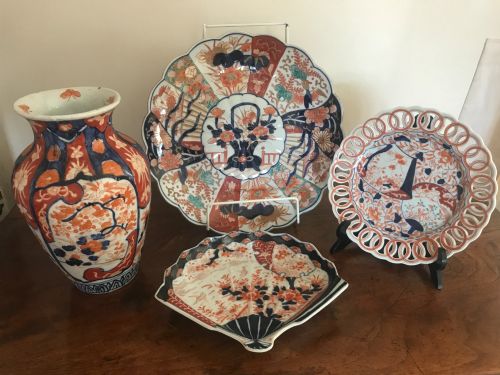
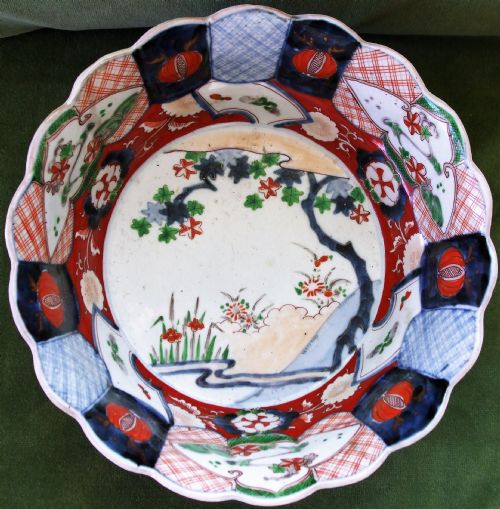
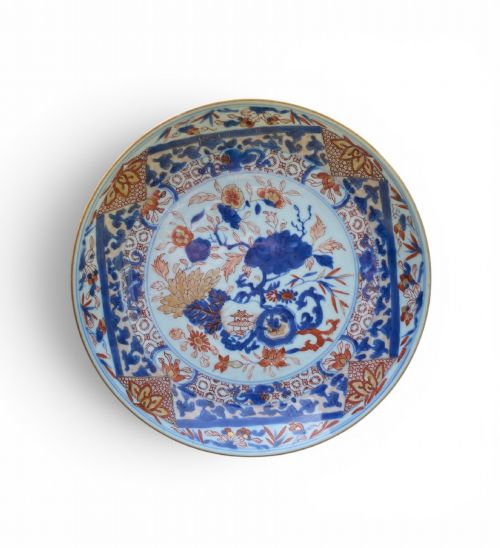
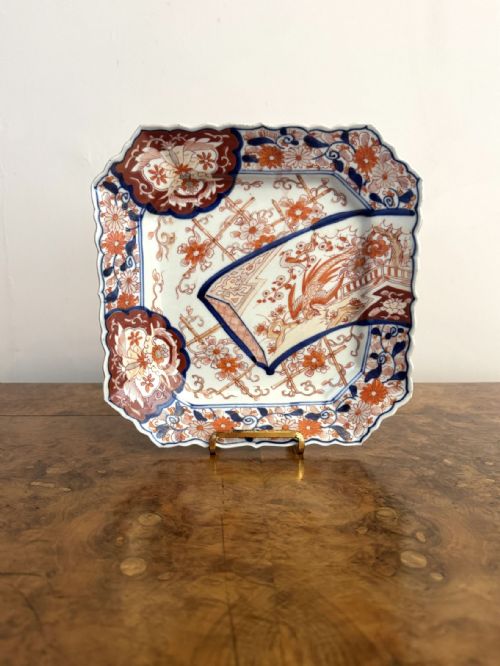
A blue red imari charger represents a striking form of decorative ceramic ware originating primarily from Japanese traditions, alongside Chinese export examples. These large display pieces arrive in various shapes including round chargers, scalloped plates, and expansive bowls.
Buyers will most commonly encounter nineteenth century Japanese Meiji period examples on this page. These items showcase intricate hand painted floral and bird designs, often featuring depictions like the seven lucky gods.
The objects serve primarily as decorative wall plates or table centerpieces. Their distinct palette and generous scale make them focal points within traditional and eclectic interiors.

How they were made
Makers shaped porcelain and ceramic bodies before applying underglaze blue and overglaze iron red pigments. Artisans then integrated gold leaf, gilt, and enamel highlights to achieve the characteristic rich surface decoration.
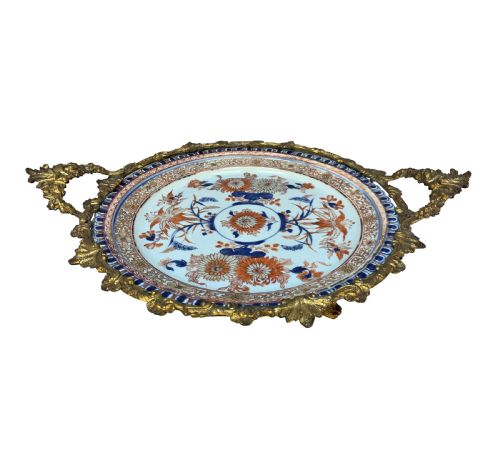
Certain decorative plates and dishes received supplementary ormolu mounts made from gilt bronze, particularly Chinese export pieces destined for European markets. Kiln firing fixed the cobalt blue pigment beneath the glaze, while subsequent low temperature firings bonded the red enamel and gilding.
Blue Red Imari Charger Retail Price Guide 2026
Typical asking prices for blue red imari charger among the pieces listed under this phrase on Sellingantiques today, from the lower quarter to the upper quarter. They describe what is for sale here now, not the wider market.
Keep watch for the seven lucky gods hiding amongst the foliage.
What varies in quality
The precision and detail of the hand painted brushwork set superior examples apart from simpler production. Pieces featuring crisp depictions of exotic birds, floral motifs, or complex figural scenes command greater attention.
The preservation of the overglaze enamels and gilding dictates the overall visual impact. Strong retention of gold leaf and bright red enamel across scalloped edges and complex shapes denotes careful handling over generations.
The Blue Red Imari Charger Glossary
- Imari
- A style of Japanese porcelain decorated in underglaze blue, iron red, and gold. This aesthetic gained immense popularity across Europe during the export period.
- Charger
- A large decorative plate or dish used traditionally for display rather than service. These expansive pieces anchor wall arrangements or cabinet displays.
- Meiji Period
- A Japanese historical era spanning from eighteen sixty eight to nineteen twelve. Ceramics from this timeframe often display highly detailed hand painted motifs.
- Ormolu
- Gilded bronze mounts applied to furniture and ceramics. French rococo influences sometimes led to these metallic additions on export porcelain.
- Scallop Edge
- A decorative border formed of curved indentations. This shaping appears frequently on plates and bowls within the selection.
Blue Red Imari Charger: Frequently Asked Questions
How were chargers displayed?
These large plates were traditionally shown on sideboards or hung upon walls to highlight their intricate painted surfaces.
Their generous dimensions and rich coloration allowed them to function as primary decorative elements within a room.
What is Chinese imari?
Chinese imari refers to porcelain manufactured in China during the eighteenth century for export, copying the Japanese aesthetic.
These pieces often incorporated European metal mounts such as ormolu to suit Western tastes.
How do I date imari pieces?
Dating relies upon examining the ceramic body, the vibrancy of the enamel colours, and stylistic indicators from specific historical periods.
Nineteenth century Meiji examples frequently exhibit dense floral and avian compositions executed with fine brushwork.
Can these plates be used for food?
These ceramics function primarily as decorative display items rather than utilitarian tableware.
The delicate overglaze enamels and gold leaf are best preserved by avoiding direct contact with food and moisture.