





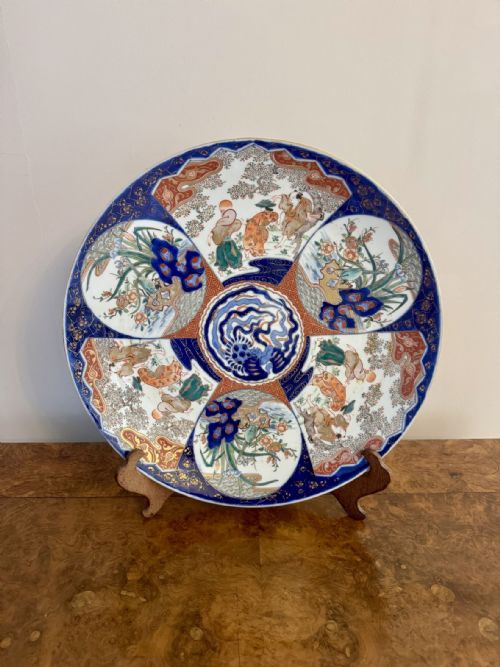


Blue Red Ceramic Chargers
Blue red ceramic chargers are decorative display pieces that bring rich cobalt and iron red palettes to an interior.
Blue Red Ceramic Chargers
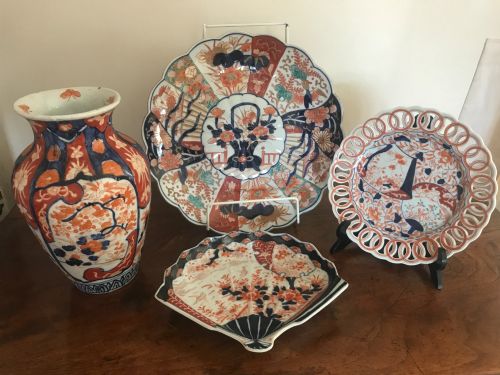
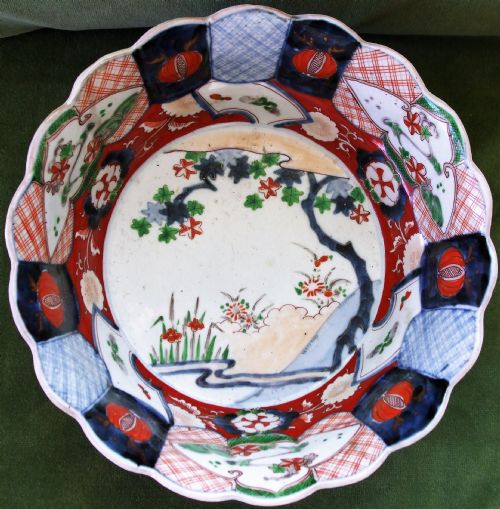
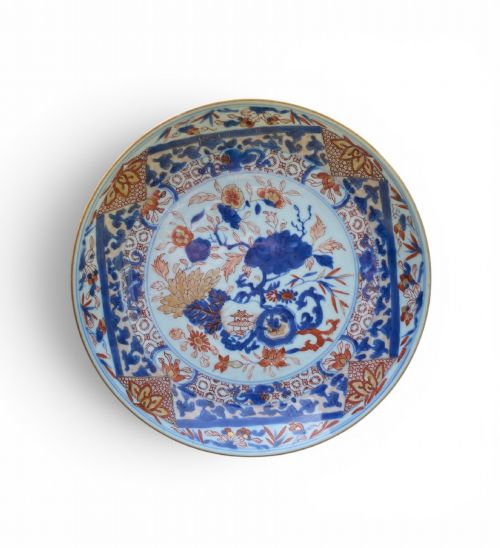
When you search for blue red ceramic chargers, you encounter large decorative plates and chargers produced primarily in Japanese Imari and Chinese Imari styles. These works span periods from the eighteenth century through the late nineteenth and early twentieth centuries, including the Meiji period.
How they were made
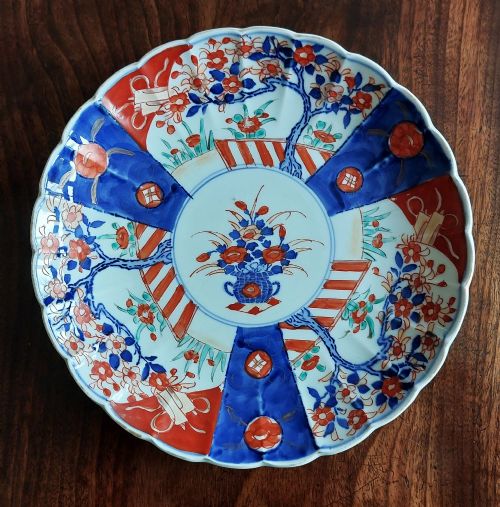
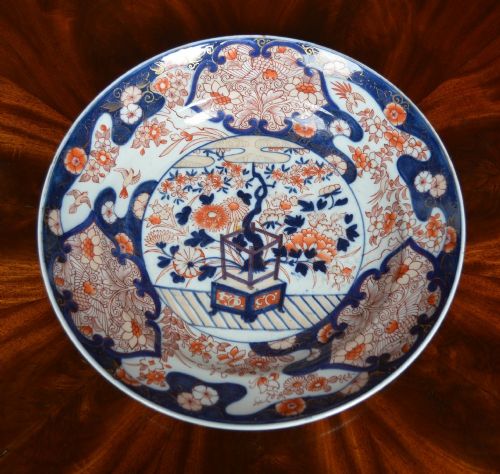
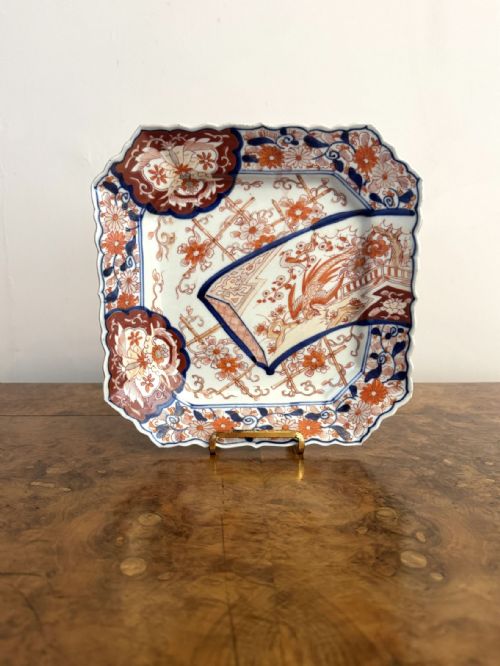
Potters shaped these pieces from porcelain clay before applying cobalt underglaze pigments and iron red enamel detailing. Many examples incorporate gilding and gold leaf accents over the fired ceramic body.
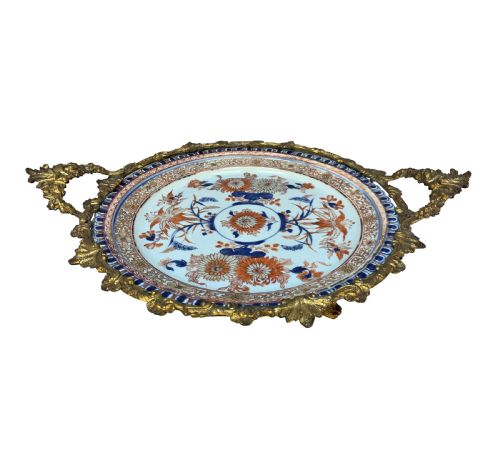
Techniques relied on hand painting methods to execute intricate floral and bird motifs across large chargers and scalloped plates. Certain works also integrated metal mounts such as orrmolu framing the porcelain.
Certain chargers depict the Seven Lucky Gods sharing space with exotic birds on scalloped porcelain.
What varies in quality
The standard of painting on these ceramics dictates the visual strength of the piece, separating standard production from exceptional artistry. Crispness in the cobalt underglaze work and precision in the iron red enamel and gilding define the finer examples.
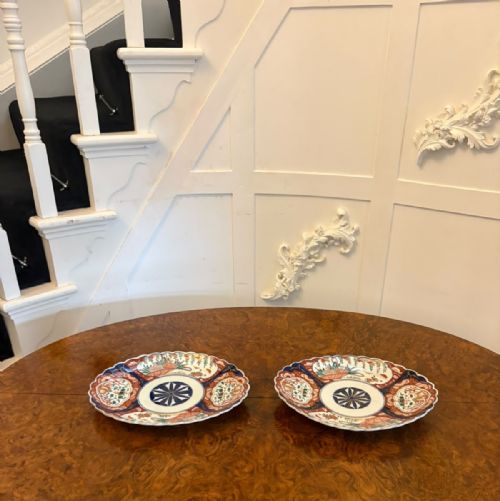
Form and handling also differentiate the range, as seen in unusual shapes such as square or hexagonal plates and deeply scalloped edges. Pieces depicting complex narratives, such as the Seven Lucky Gods, demonstrate greater ambition in the workshop.
The Blue Red Ceramic Chargers Glossary
- Charger
- A large decorative plate traditionally used for display rather than service. These items form the centrepiece of many ceramic collections.
- Imari
- A style of Japanese and Chinese porcelain characterised by a distinct palette of cobalt blue, iron red, and gold. Production dates across the Edo and Meiji periods.
- Meiji Period
- An era in Japanese history spanning from eighteen sixty-eight to nineteen twelve. Pieces from this time often display meticulous hand painted botanical and avian motifs.
- Scalloped Edge
- A decorative rim shaped into undulating curves resembling sea shells. This contour appears frequently on eighteenth and nineteenth century display dishes.
- Cobalt Underglaze
- A blue pigment applied directly to the raw ceramic body before glazing and firing. This technique ensures the colour remains permanent beneath the glossy surface.
Blue Red Ceramic Chargers: Frequently Asked Questions
How do I display blue red ceramic chargers?
These large plates suit wall mounting using appropriate wire display hangers or placement on sturdy plate stands on furniture surfaces.
Their striking red and blue palettes allow them to anchor a room when positioned in strong natural light away from direct heat sources.
What is Chinese Imari compared to Japanese Imari?
Chinese Imari porcelain was produced for export to Europe during the eighteenth century, inspired by earlier Japanese styles.
Both traditions utilise the signature blue, red, and gold colour scheme, though body density and brushwork nuances distinguish their origins.
Can these ceramic chargers be used for food?
Historic decorative chargers are intended for visual display rather than daily dining use. Their antique glazes and delicate gilt surfaces require careful treatment.
Gentle dusting with a soft dry cloth is recommended for routine maintenance rather than immersion in water.
How are different periods identified on these plates?
Dating relies on stylistic markers, potting characteristics, and historical context rather than a single definitive stamp. Eighteenth century export wares differ in body weight and enamel texture from late nineteenth century Meiji period examples.
Comparing brushwork precision and iron red tones helps establish the era of production.