
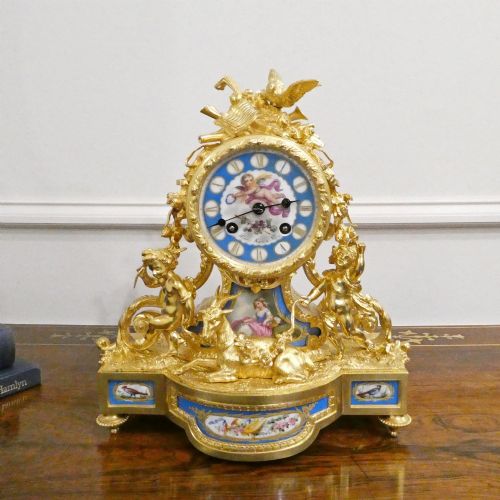

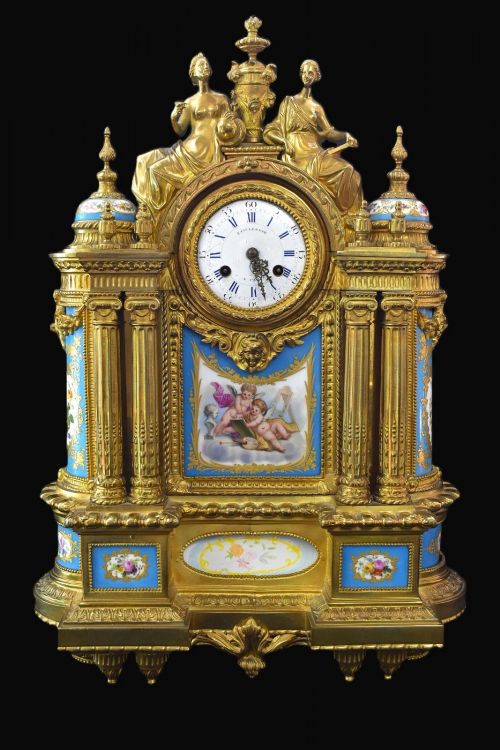
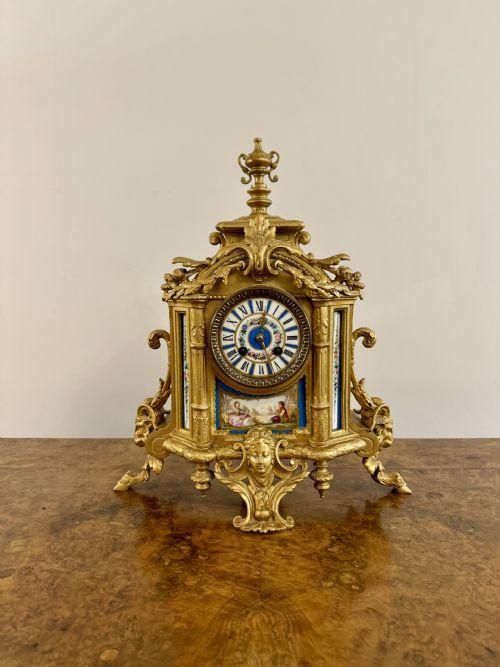


Blue Porcelain Clock
A blue porcelain clock brings rich nineteenth-century French ormolu, hand-painted ceramic panels, and reliable mechanical timekeeping together on the mantelpiece.
Blue Porcelain Clock
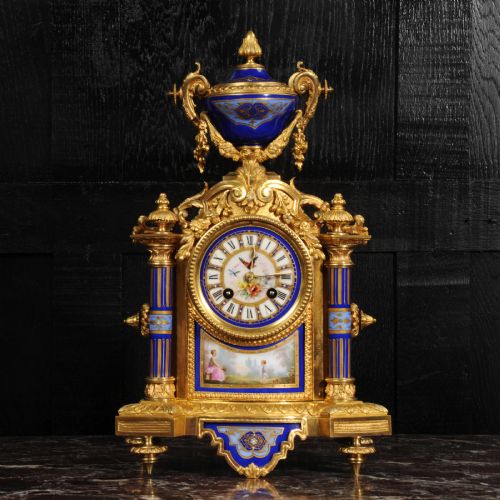
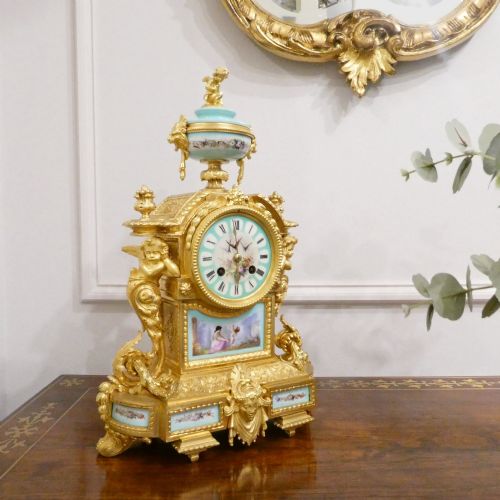
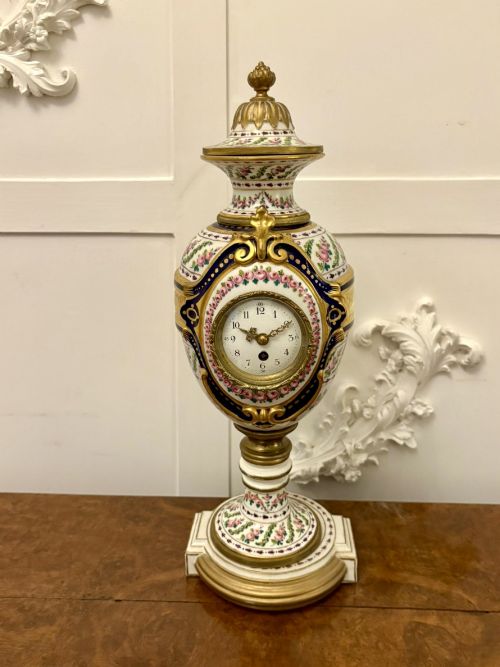
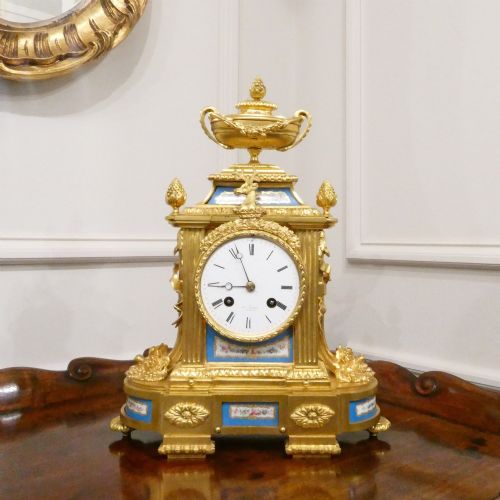
When you search for a blue porcelain clock, you encounter nineteenth-century European timepieces, most frequently originating from French workshops during the Victorian, Napoleon III, and Second Empire periods. These objects combine ceramic bodies with cast metal mounts, taking the form of mantel clocks, elaborate garniture sets with matching side urns, and striking lyre or urn shapes.
The dominant style on this page is French Rococo and Louis XVI Revival, where deep blue ceramic glazes serve as a canvas for hand-painted pastoral scenes or floral motifs. You will also find pieces incorporating Delft blue and white earthenware, alongside KPM Berlin porcelain and mounted Chinese blue and white ceramics.
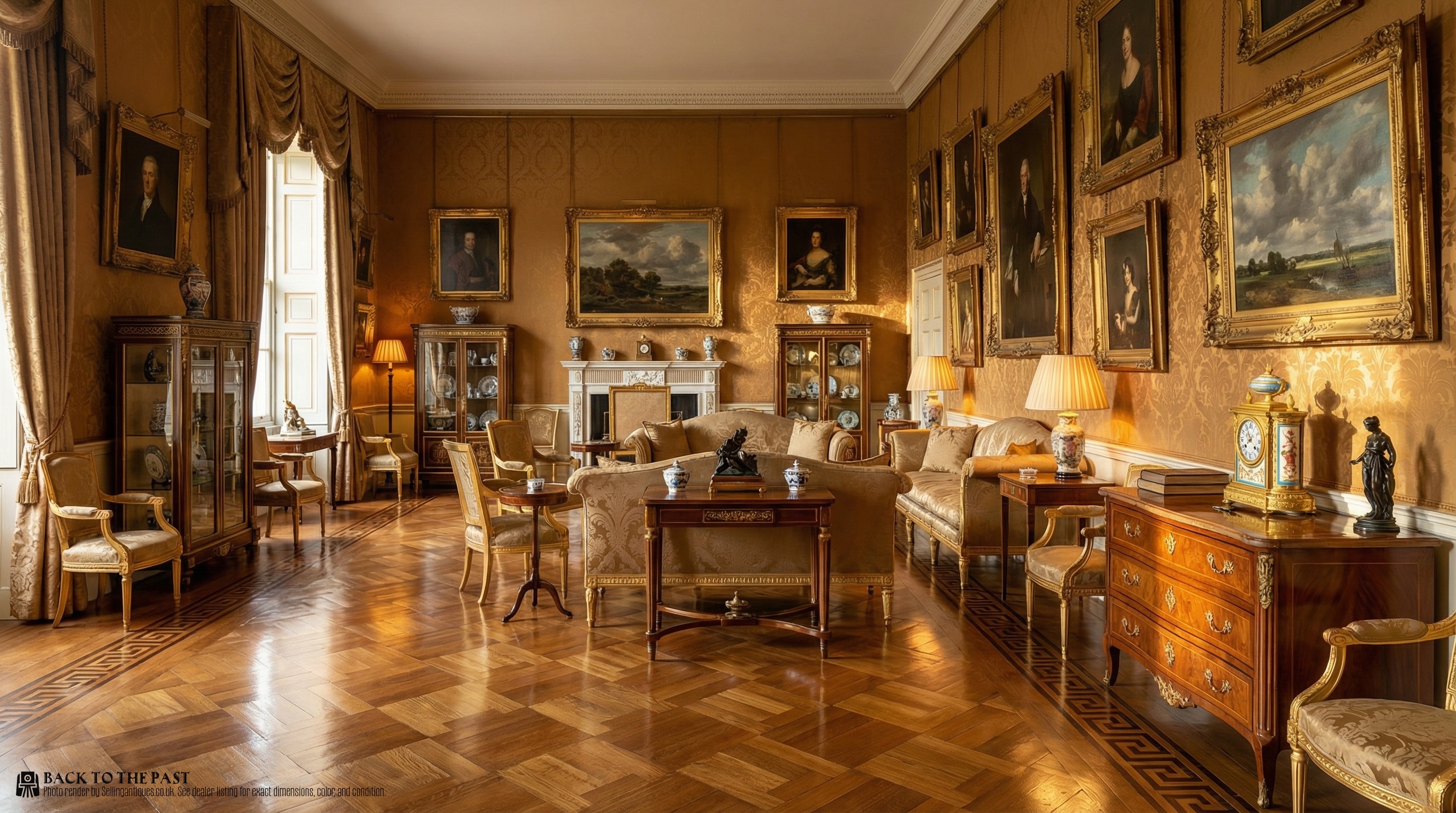
Most pieces function as mantel clocks designed to sit centrally in a formal room, often accompanied by candelabra or side vases as part of a complete garniture set. The scale ranges from delicate boudoir pieces to massive architectural bracket clocks.
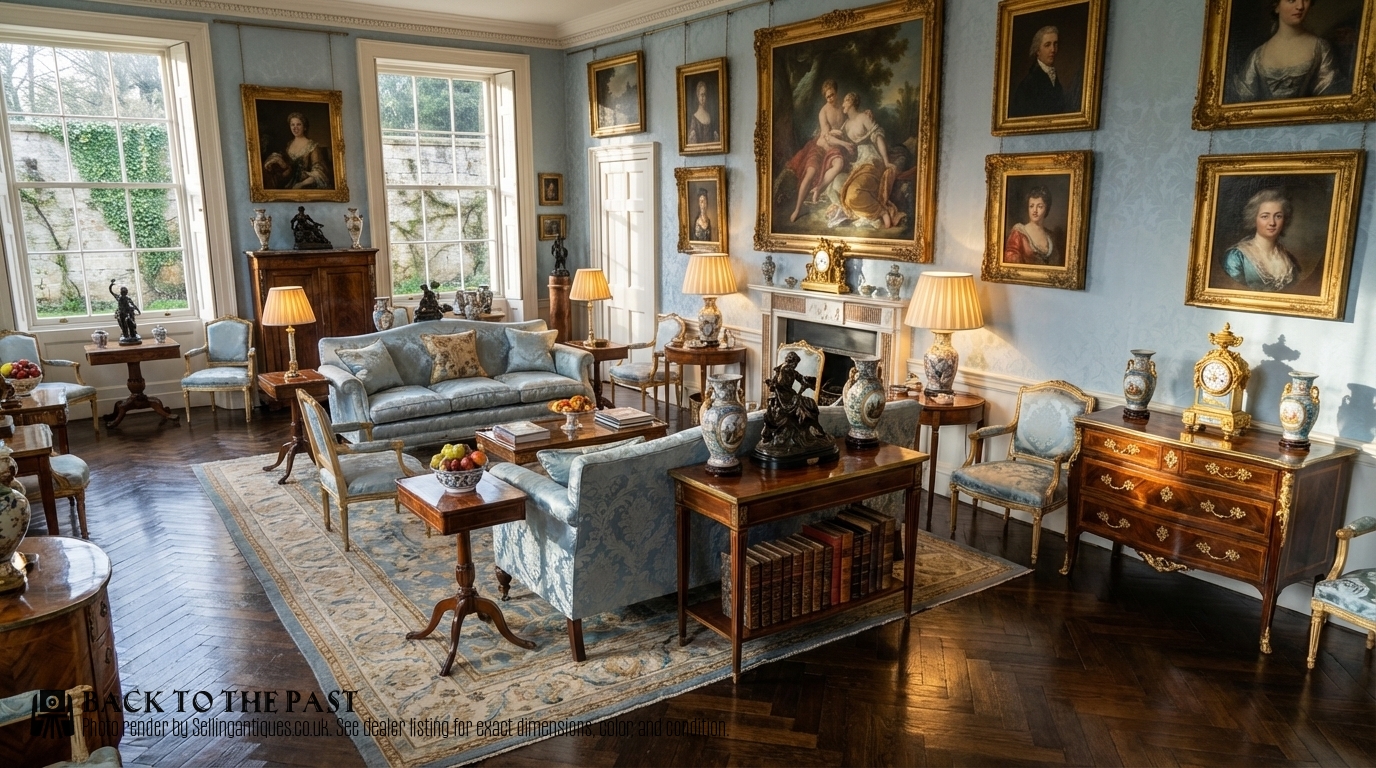
How they were made
The construction relies on the union of fired ceramic bodies and cast metal frameworks, principally gilt bronze, ormolu, or gilt metal. Potters shaped the porcelain, applying rich cobalt or Bleu de Roi glazes before hand-painting decorative panels and firing them with enamel details.
Foundry workers cast the brass and bronze mounts using traditional lost-wax or sand-casting methods, subsequently chasing the metal details by hand and applying mercury gilding or electroplating. Skilled movement makers fitted mechanical brass clockwork movements, often incorporating bell or gong strikes, behind enamel dials.
Clockmakers and bronze-founders collaborated to mount the porcelain securely within the metal armature, using threaded pins and custom bezels to protect the ceramic body from the weight and tension of the movement.
Blue Porcelain Clock Retail Price Guide 2026
Typical asking prices for blue porcelain clock among the pieces listed under this phrase on Sellingantiques today, from the lower quarter to the upper quarter. They describe what is for sale here now, not the wider market.
Several porcelain clocks incorporate delicate gilded cherubs lounging casually across the bronze mounts to supervise the passing hours.
What varies in quality
Quality in these timepieces rests upon the crispness of the bronze casting and the artistic merit of the porcelain painting. Superior pieces display deeply chased ormolu mounts with sharp relief, whereas lesser examples feature softer, cast-indistinct metalwork with minimal hand-finishing.
The ceramic component similarly dictates the tier of the piece, with hand-painted Sevres-style panels exhibiting intricate brushwork and fine gilding standing well above plain factory-glazed bodies. Movement execution also separates the makers, with signed Parisian mechanisms by established makers offering superior longevity compared to unmarked movements.
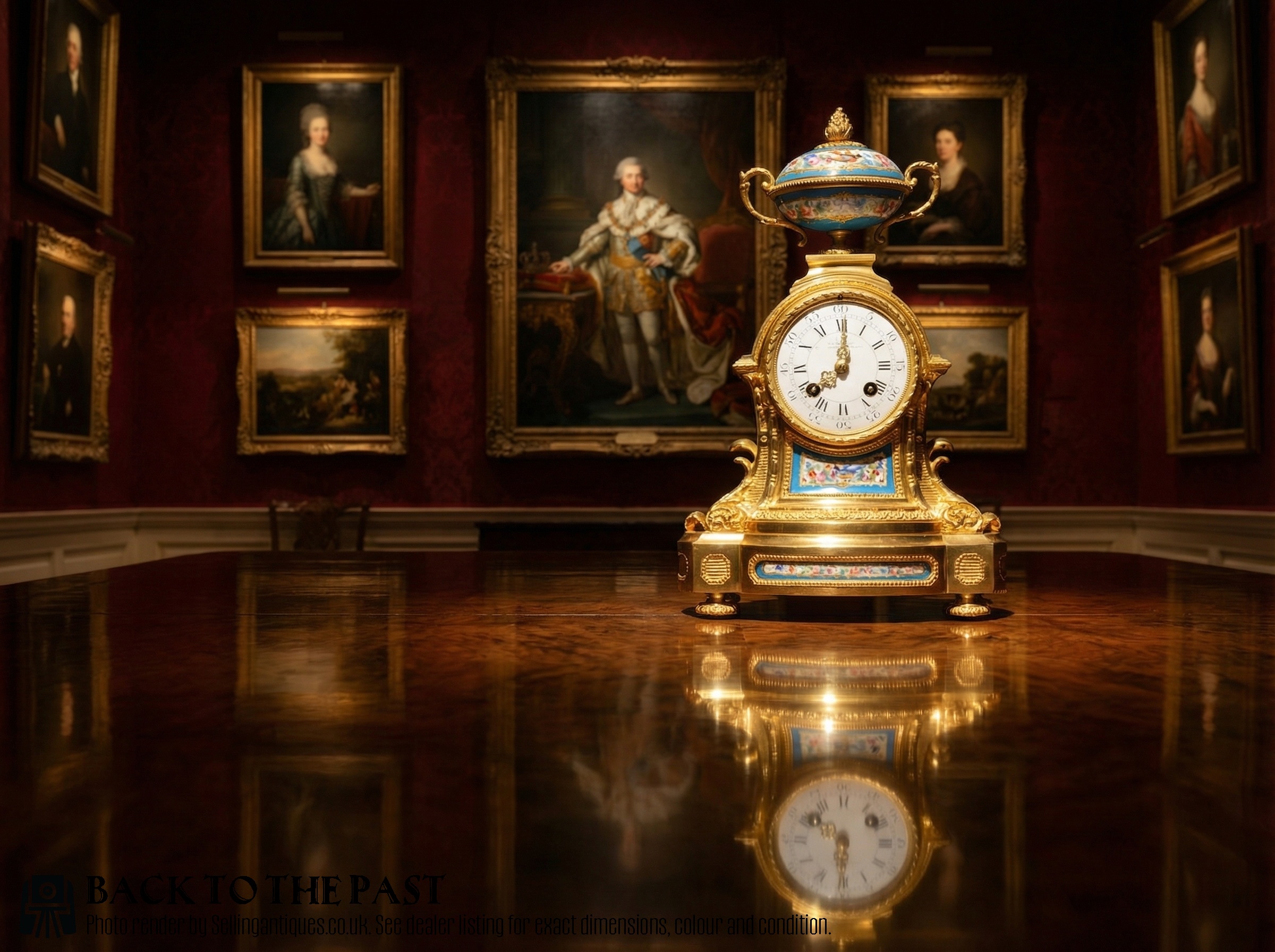
Japy Freres·Henry Marc·Etienne Lenoir·PH Mourey·Achille Brocot and Delettrez·Vincenti of Paris·Miroy Freres·Jean Baptiste Delettrez
The Blue Porcelain Clock Glossary
- Ormolu
- Gilded bronze, where a fine layer of gold is applied to a cast brass or bronze base using mercury amalgamation or electroplating. This technique gives the metal mount its bright, enduring golden surface.
- Garniture
- A set of matching decorative objects designed to be displayed together on a mantelpiece, typically comprising a central clock flanked by two matching vases or candelabra.
- Bleu de Roi
- A rich, deep royal blue ceramic glaze developed at the Sevres porcelain factory in the eighteenth century and widely imitated throughout the nineteenth century.
- Lyre clock
- A clock featuring a case shaped like the ancient musical instrument, often constructed with a porcelain body framed by ormolu and glass panels showing the swinging pendulum.
- Cloisonne
- An ancient metalworking technique where thin metal wires are soldered to a metal base to form compartments, which are then filled with coloured enamel paste and fired.
Blue Porcelain Clock: Frequently Asked Questions
How do I wind the clock?
Most mechanical pieces on this page require a matching key inserted into the winding arbors on the enamel dial. Turn the key gently until you feel resistance, taking care not to overwind the mainspring.
After winding, set the time by moving the minute hand forward. Avoid turning the hands backwards, as this can damage the internal striking train.
What is a clock garniture?
A clock garniture is a matched set of three or more decorative mantel pieces. The central clock is accompanied by two matching side ornaments such as urns, vases, or candelabra.
These sets were designed to create a balanced, symmetrical display across a fireplace mantel. The side pieces often repeat the porcelain glaze and metal mounts of the main clock.
How do I identify a Sevres style clock?
Sevres style clocks feature rich cobalt blue porcelain panels adorned with hand-painted pastoral scenes, portraits, or floral reserves framed in raised gilding. Many carry painted factory marks on the reverse of the porcelain.
It is important to distinguish between pieces actually made at the royal Sevres factory and nineteenth-century pieces produced in the Sevres style by independent Parisian makers.
Where should I place my clock?
Position your timepiece on a stable, level surface away from direct sunlight, heating vents, and damp areas. A sturdy mantelpiece or a dedicated console table provides the ideal environment for heavy bronze and porcelain cases.
Ensuring the surface is level is crucial for the pendulum to beat evenly and keep accurate time. Use small shams beneath the base if necessary to achieve balance.