





Blue Patterned Hallway Runner
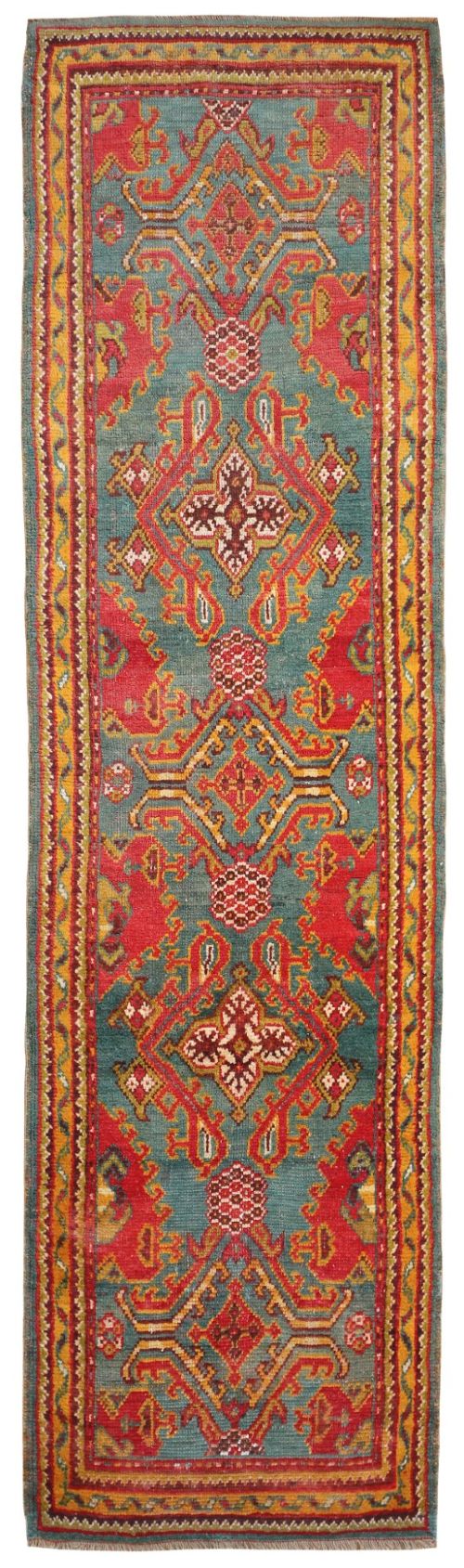
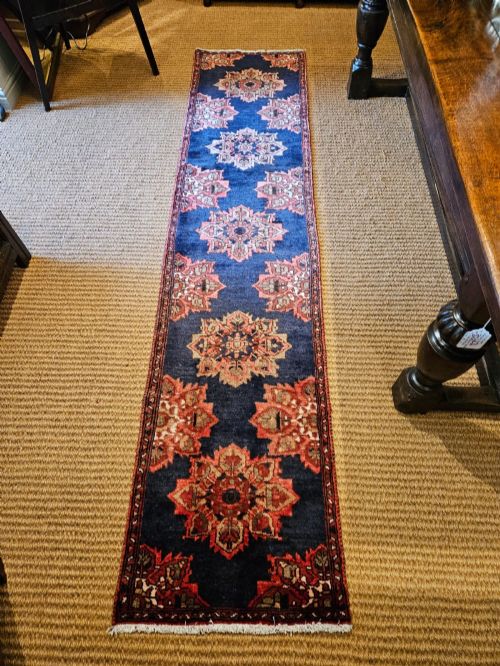
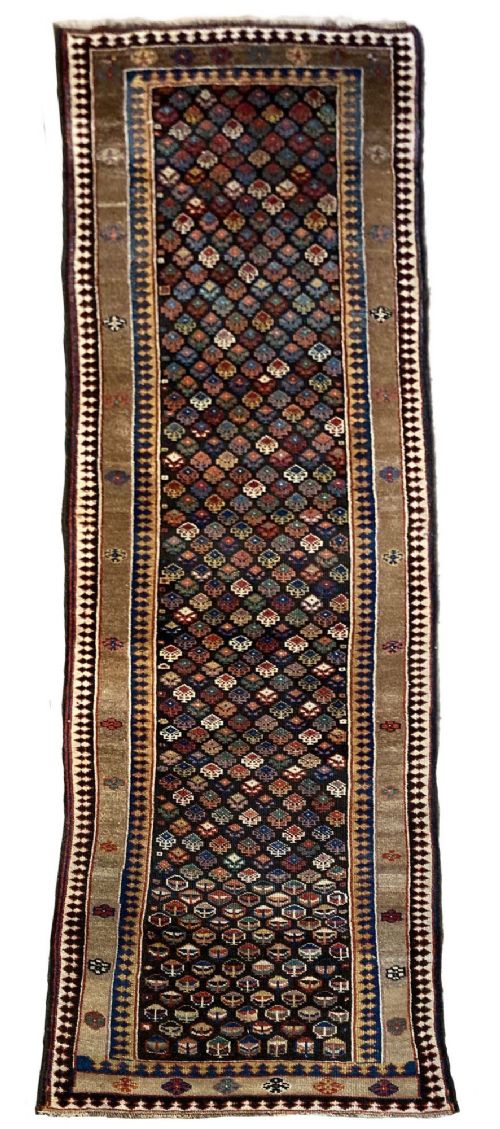
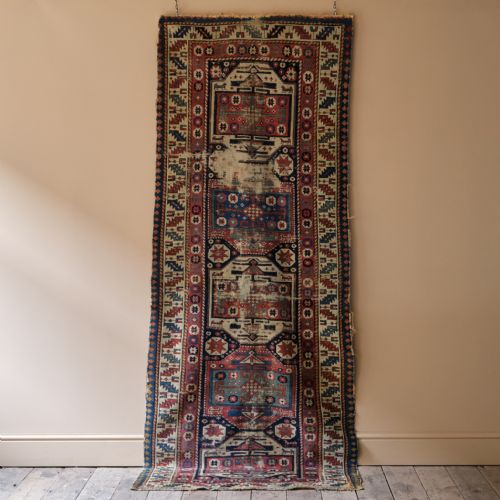
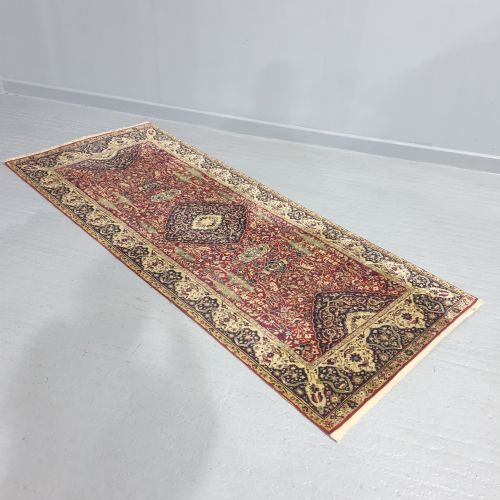
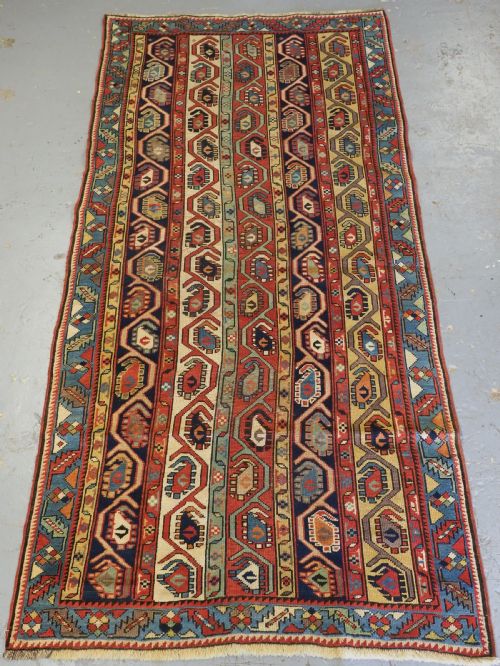
A blue patterned hallway runner grounds a narrow space with deep indigo tones and tribal motifs woven by Persian and Caucasian hands.
Blue Patterned Hallway Runner
A blue patterned hallway runner is an elongated floor covering designed specifically for narrow corridors, bridging rooms with traditional motifs and deep indigo fields. When you search for a blue patterned hallway runner, you meet antique wool pieces originating from Persian and Caucasian weaving traditions.
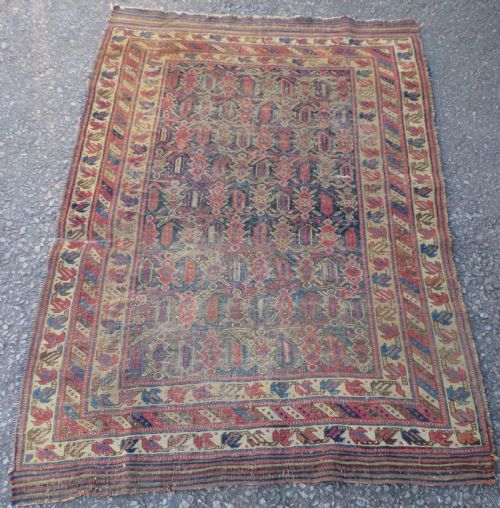
The selections span the late nineteenth century into the early twentieth century, taking the form of long, narrow formats tailored for corridors and galleries. These textiles carry regional designs such as boteh patterns, geometric medallions, and stylized floral repeats.
Makers from various tribal groups and village workshops constructed these floor coverings to withstand heavy foot traffic while providing rich colour underfoot. Each piece reflects the specific weaving vocabulary of regions like Heriz, Kazak, Kurdish, and Afshar.
How they were made
Weavers constructed these long carpets using hand-spun wool for the pile and foundation, providing both resilience and a dense texture. Natural dyes supplied the deep blues, madders, and earthy tones that define the palette.
Nomadic and village workshops knotted these textiles by hand on vertical looms, employing structural variations specific to Caucasian or Persian districts. The resulting pile locked the organic colour securely within the wool fibres, ensuring lasting depth.
Blue Patterned Hallway Runner Retail Price Guide 2026
Typical asking prices for blue patterned hallway runner among the pieces listed under this phrase on Sellingantiques today, from the lower quarter to the upper quarter. They describe what is for sale here now, not the wider market.
One exceptionally crooked Kazak runner proves that human hands guided every asymmetric knot along the corridor.
What varies in quality
The integrity of the hand-spun wool and the saturation of the natural dyes dictate the visual strength of the textile over decades of use. Tighter knot densities allow complex geometric and floral motifs to hold crisp edges along the narrow field.
Proportion and balance within the border systems separate standard village weaving from superior regional examples. The harmonious arrangement of boteh repeats and central medallions reveals the precision of the original weaver.
The Blue Patterned Hallway Runner Glossary
- Boteh
- A stylized almond or pear-shaped motif representing a seed or floral spray, frequently repeated in rows across the field of Persian and Caucasian runners.
- Kelleh
- A large, rectangular format intermediate in proportion between a standard carpet and a long narrow runner.
- Mina Khana
- An all-over recurring pattern of stylized geometric flowers connected by delicate lattice lines, common in Persian village weaving.
- Natural Dyes
- Colourants derived from plants, roots, and insects rather than synthetic compounds, producing nuanced tones that age with rich patination.
Blue Patterned Hallway Runner: Frequently Asked Questions
How do I place a runner?
Lay the textile centrally along the corridor floor, leaving an equal margin of bare timber or stone on either side to frame the pattern. This arrangement protects high-traffic zones while displaying the linear design.
Ensure the surface beneath is level and fitted with a suitable underlay to prevent sliding and reduce wear on the hand-spun wool pile.
Are these runners made of wool?
Most examples utilise hand-spun wool for both the pile and the foundational warp and weft threads, providing natural durability for narrow spaces.
Cotton foundations also appear in specific regional workshops from the late nineteenth century onward, supporting the dense knotting.
How do I clean an antique runner?
Vacuum the piece gently using suction only, avoiding the rotating brush roll that can pull at the hand-spun wool knots and fringe.
Professional textile conservation specialists should handle deeper cleaning to protect the natural dyes and historical structure.
What regions made these rugs?
Weavers across Persia and the Caucasus produced these elongated formats in villages, tribal camps, and regional production centres.
Districts such as Heriz, Kazak, Kurdish regions, and Afshar territories each contributed distinct geometric and floral design vocabularies.