

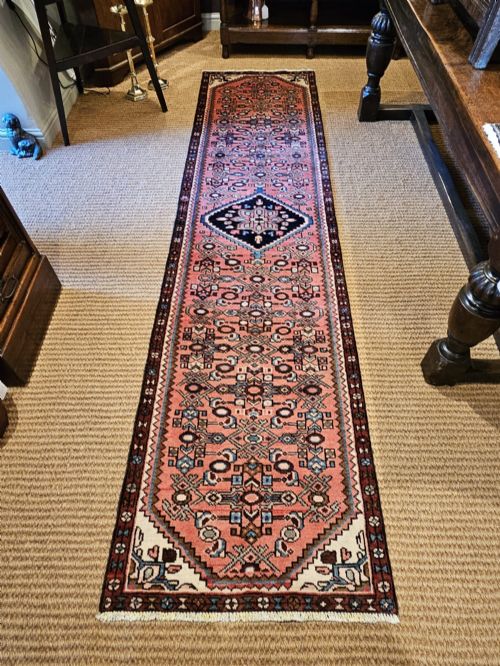
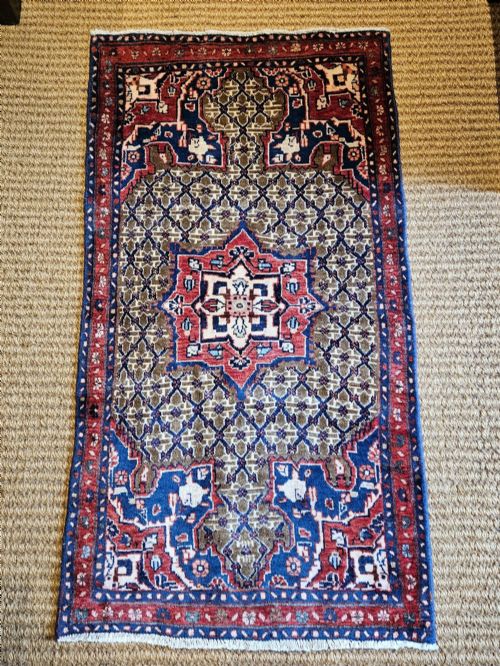
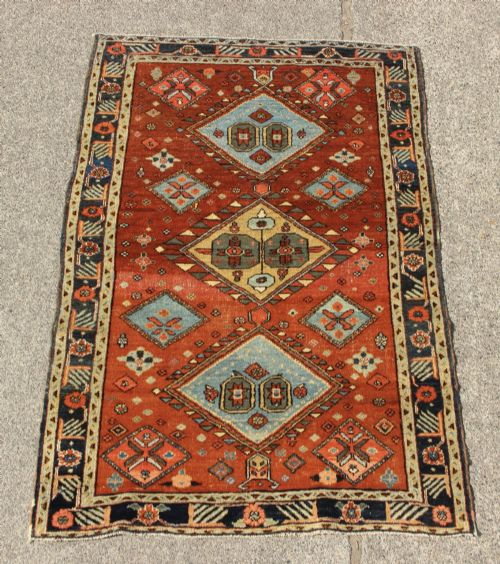
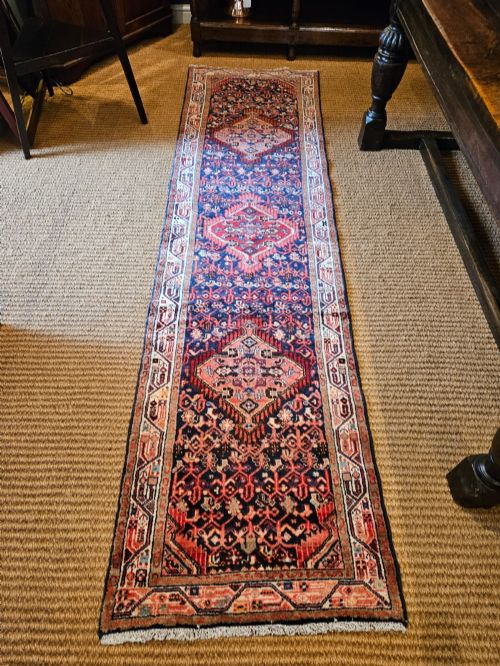
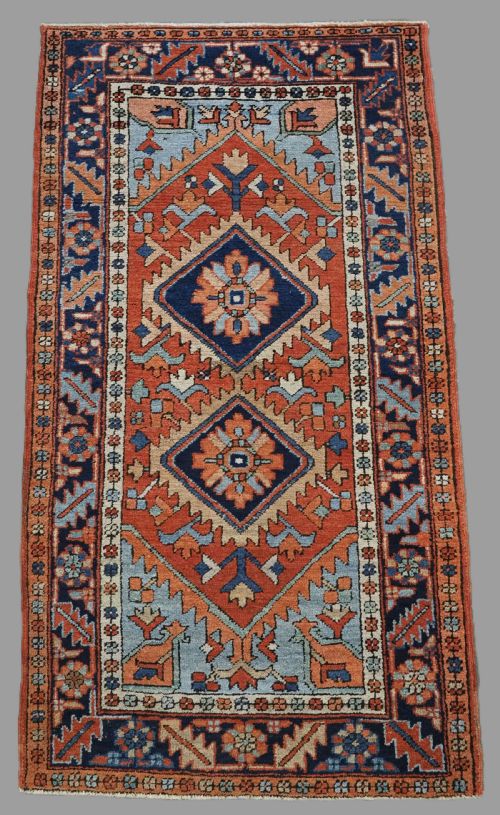
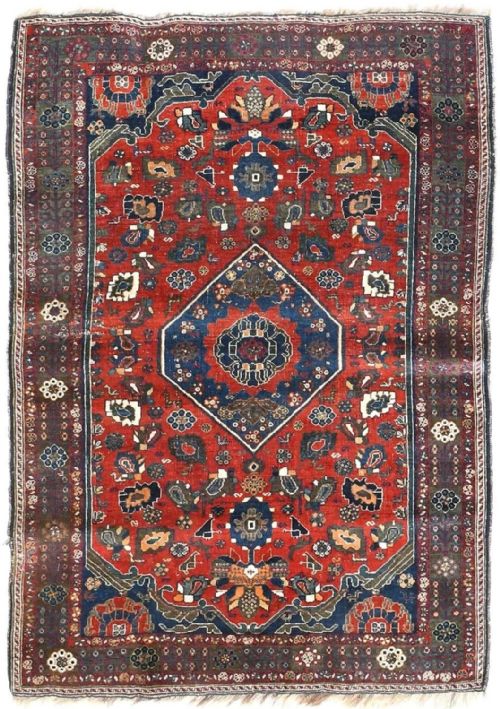
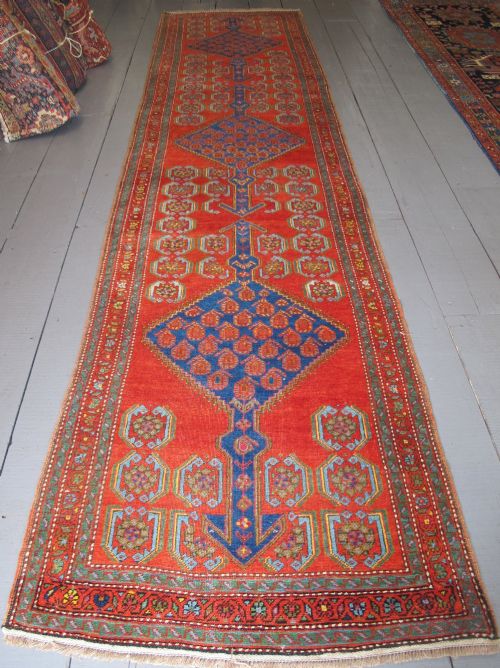
Heriz Tribal Rug
These heriz tribal rug pieces bring robust Persian village weave into a room, offering geometric motifs and durable wool underfoot.
Heriz Tribal Rug
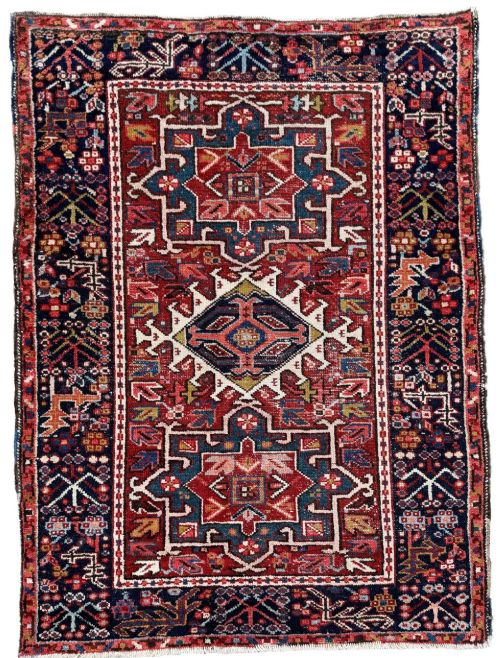
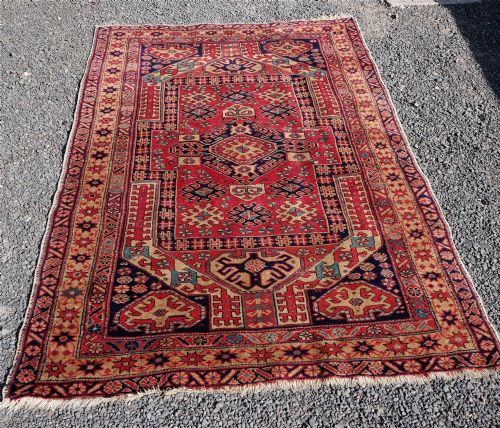
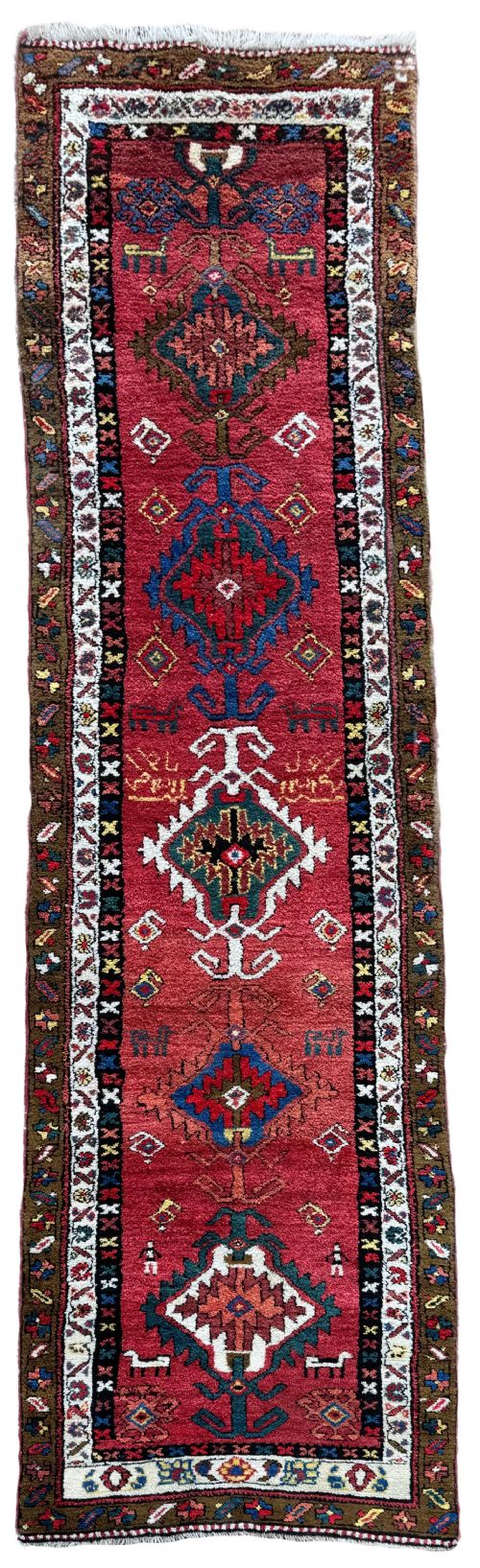
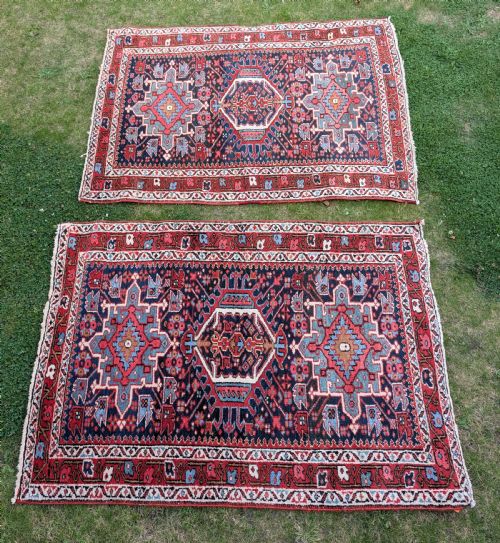
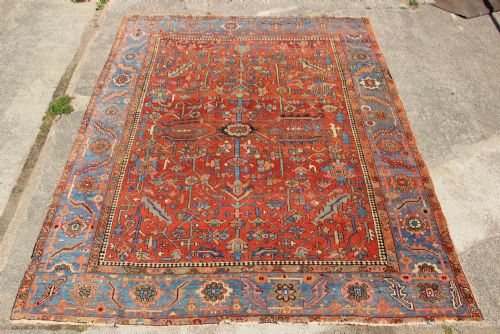
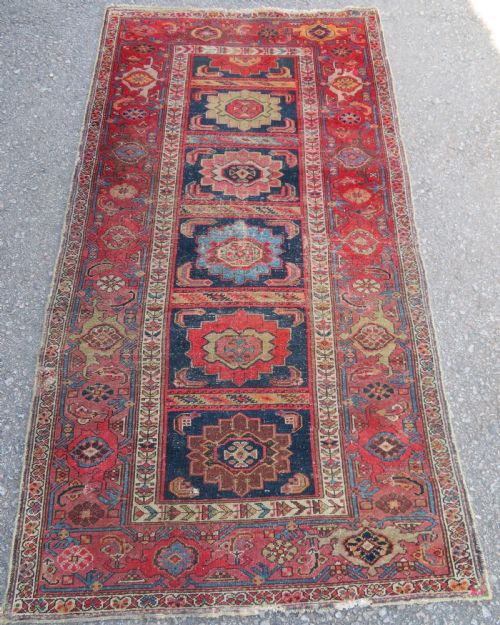
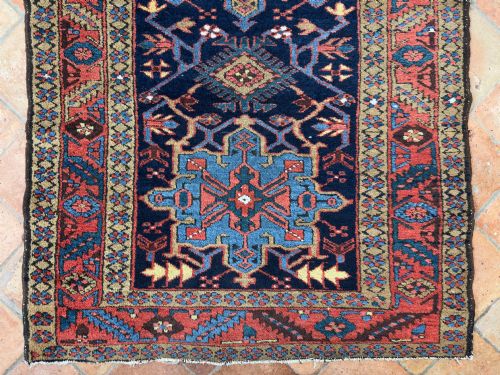
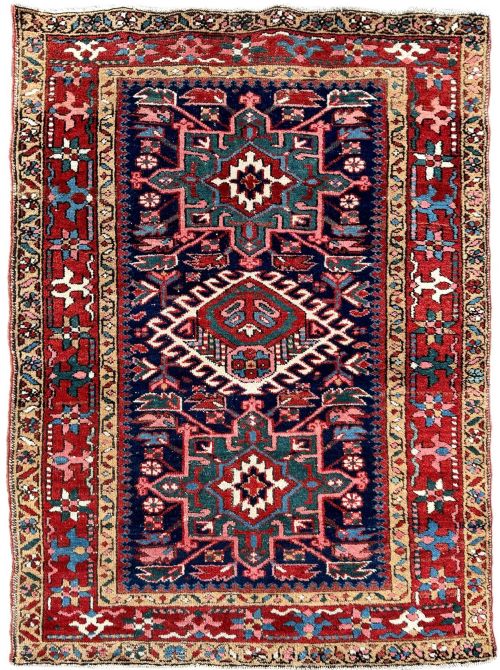
A heriz tribal rug brings substantial Persian village character to floors, appearing in formats ranging from small hearth sizes to long hallway runners and large carpets. The pieces available span styles such as traditional Persian, Serapi, Karaja, and Bakshaish, reflecting the rich weaving traditions of north-west Persia.
Most examples date from the late nineteenth century through the early decades of the twentieth century, bringing historic patterns directly into modern interiors. Buyers frequently encounter room-sized carpets alongside narrow runners and compact bag faces, each displaying the distinctive regional geometry associated with these workshops.
Materials and construction
These floor coverings rely on sturdy wool pile knotted onto a cotton foundation, often incorporating hand-spun wool for added texture and depth. The combination of wool and cotton warp provides the structural strength necessary for heavy domestic use over generations.
Weavers in the north-west Persian region utilised robust knotting techniques paired with natural dyes to achieve deep colour saturation. This construction method allows the pile to wear evenly while preserving the sharp linear definition of the central medallions and geometric borders.
Some runners are narrow enough to make even the most determined hallway dachshund look like a seasoned explorer.
Distinctions in quality
Quality rests upon the crispness of the drawing and the complexity of the geometric medallion design within the field. Stronger examples display balanced proportions, confident linework, and a harmonious palette developed through skilled dye preparation.
The handle and density of the wool pile also separate standard village production from finer workshop pieces. Better-executed rugs maintain a supple yet resilient foundation that lies flat and withstands decades of foot traffic without losing structural integrity.
The Heriz Tribal Rug Glossary
- Medallion
- The central ornamental motif dominating the field of the rug. It serves as the primary focal point around which the corner spandrels and borders are arranged.
- Warp
- The vertical threads stretched lengthwise on the loom that carry the foundation of the rug. Cotton warp provides dimensional stability and strength to the finished piece.
- Runner
- A long, narrow format designed specifically for hallways, corridors, and stairs. These pieces balance linear geometry to fit restricted spatial dimensions.
- Spandrel
- The triangular corner areas situated between the central medallion field and the outer borders. They help frame the primary design elements.
- Bag face
- The decorative front panel of a nomadic storage bag, woven with dense knotting and distinctive tribal motifs. These items function as small accent rugs in modern settings.
Heriz Tribal Rug: Frequently Asked Questions
Where should I place a heriz tribal rug?
These pieces suit high-traffic zones such as hallways, living rooms, and dining spaces where durable wool construction handles daily movement.
Long runners fit narrow corridors, while larger carpets anchor furniture groupings in reception rooms.
How do I clean a vintage wool rug?
Regular gentle vacuuming without a beater bar removes loose dust and debris from the pile without pulling the foundation threads.
Professional specialist cleaning remains essential for deep washing to protect the natural dyes and wool fibres.
Are these rugs suitable for modern interiors?
The geometric designs and earthy palettes complement contemporary minimalist schemes as well as traditional period rooms.
Their graphic character acts as a focal point that grounds modern furniture arrangements.
How do I tell regional styles apart?
Serapi variations tend to feature more open fields and softer, spacious palettes with prominent geometric medallions.
Karaja and Bakshaish examples display distinct tribal motifs, alternate medallion layouts, and varied village colour distributions.