

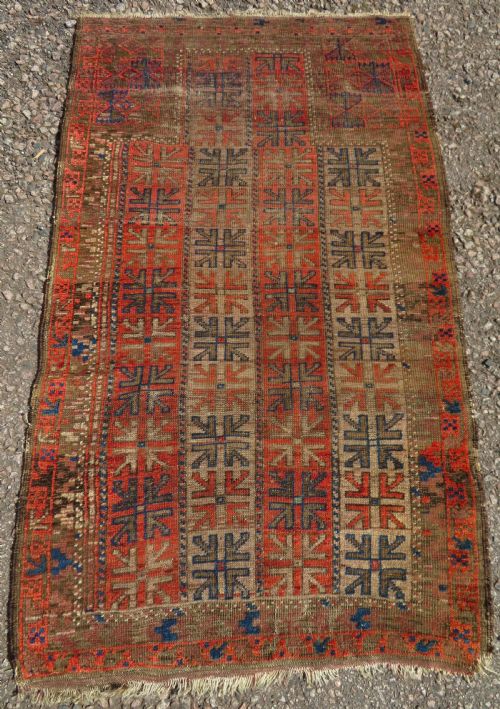


Rustic Persian Rug
A rustic persian rug brings hand-knotted tribal character and rich wool texture directly into a room.
Rustic Persian Rug
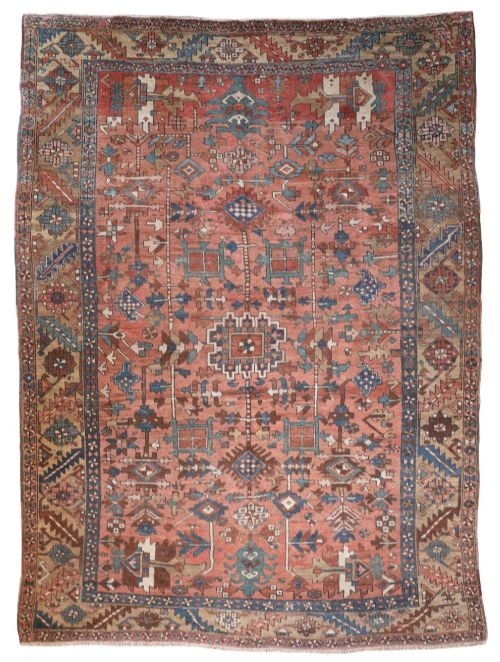
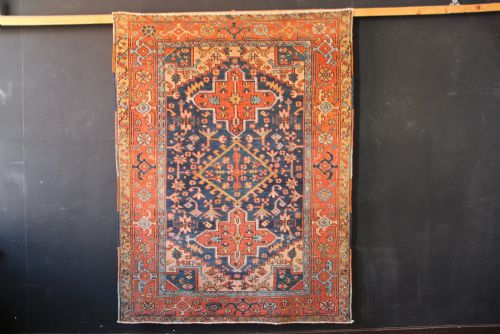
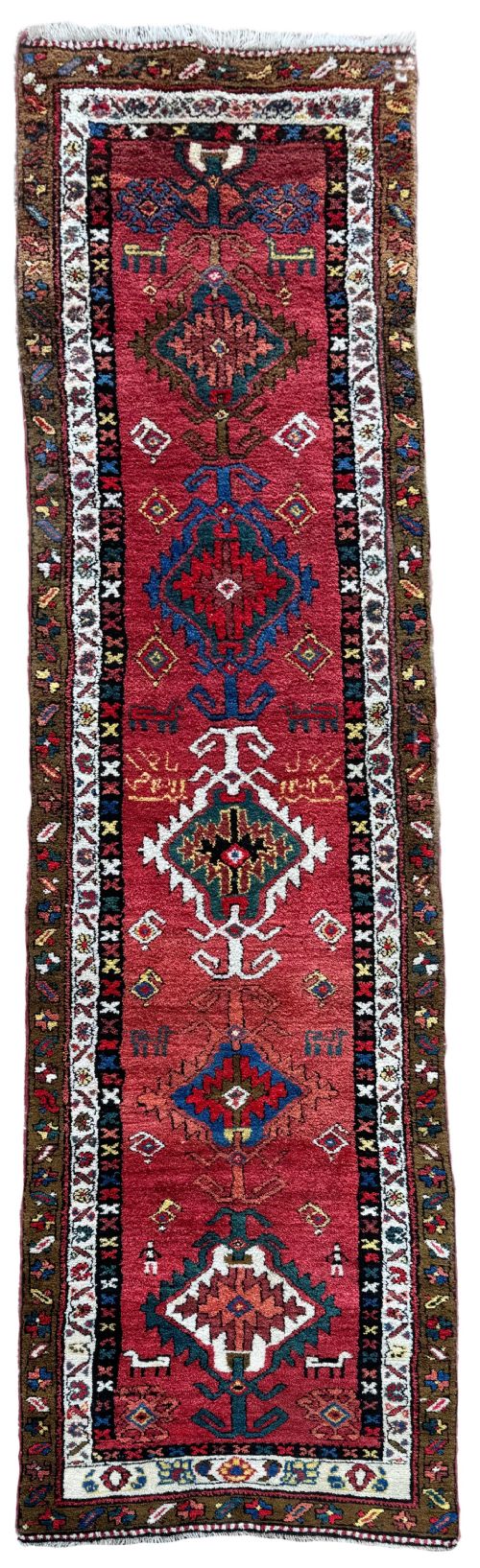
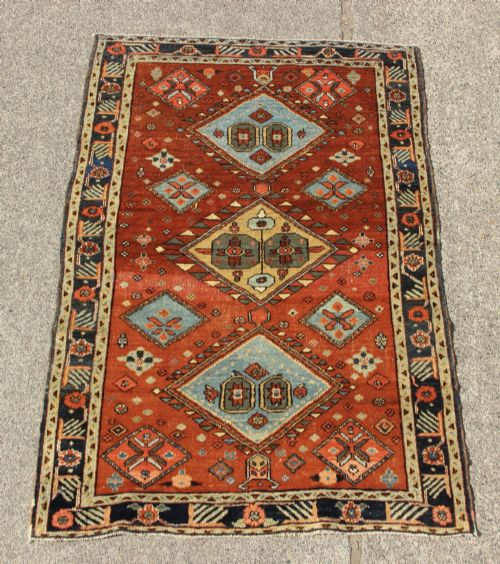
A rustic persian rug encompasses handwoven tribal and village floor coverings originating from various weaving traditions across nineteenth and early twentieth century Persia. When buyers search for a rustic persian rug, they encounter authentic wool pieces created by nomadic and village weavers, including Heriz, Baluch, Kurdish, Shiraz, Karaja, and Bakshaish types. These pieces range from small prayer rugs and area rugs to long runners and room-size carpets.
The aesthetic of a rustic persian rug leans heavily into nomadic tribal designs, geometric medallions, and distressed surfaces shaped by age. Many examples utilise traditional regional patterns, such as the Salar Khani design by Quchan Kurds or classic Heriz formats, paired with unrefined natural dyes. This selection frequently highlights older weaves, notably pieces dating from the eighteen-fifties through the nineteen-thirties.
How they were made
A rustic persian rug relies entirely on hand-spun wool pile knotted onto sturdy foundations of cotton warp or wool. Weavers often incorporated camel wool alongside standard sheep wool to achieve natural variations in tone and texture across the field.
These floor coverings were handwoven on vertical or horizontal looms using traditional village and tribal techniques. The integration of durable materials ensured the survival of these carpets through decades of daily use.
Rustic Persian Rug Retail Price Guide 2026
Typical asking prices for rustic persian rug among the pieces listed under this phrase on Sellingantiques today, from the lower quarter to the upper quarter. They describe what is for sale here now, not the wider market.
Several small cushions on this page began life as nomadic bag faces used for carrying household belongings across the desert.
What varies in quality
The quality of a rustic persian rug depends heavily on the fineness of the knotting and the integrity of the wool pile. Tighter structures and resilient hand-spun wool create surfaces that withstand heavy foot traffic while maintaining their structural form.
Colour depth and dye stability also dictate the upper tier of these textiles. Superior examples display rich, harmonious hues derived from natural sources, whereas lesser pieces may show muddy or uneven dye distribution.
The Rustic Persian Rug Glossary
- Heriz
- A style of Persian carpet originating from the Heris region, known for bold geometric medallions and sturdy construction. These carpets often feature durable cotton warps.
- Baluch
- A tribal weaving group originating from the borderlands of Persia and Afghanistan, frequently producing smaller prayer rugs and dark-hued cushions. Their work often incorporates camel wool.
- Warp
- The vertical threads stretched tightly on a loom before knotting begins, forming the foundational skeleton of the rug. Cotton warp is common in many Persian village carpets.
- Kilim
- A flat-woven carpet or textile produced without a pile, often utilised for smaller cushions and decorative furnishings. These pieces lack the knotted surface of standard rugs.
- Karaja
- A village rug style from the Northwest of Persia featuring geometric patterns and tribal motifs akin to Heriz production. They typically appear in smaller room sizes and runners.
Rustic Persian Rug: Frequently Asked Questions
Where should I place a rustic persian rug?
A rustic persian rug suits living rooms, hallways, and studies where its durable wool pile can handle daily use. Smaller formats work well as accent pieces or bedside rugs.
Runners fit narrow corridors and entryways, while larger room-size carpets anchor dining and seating areas effectively.
How do I care for an antique wool rug?
Regular gentle vacuuming without a rotating brush roll helps remove embedded dust from the wool pile. Professional cleaning is recommended for deep maintenance.
Keeping the rug away from prolonged direct sunlight preserves the natural dyes and prevents uneven fading across the textile.
What is the difference between a Heriz and a Baluch rug?
Heriz rugs typically feature large geometric medallions and robust structures designed for larger room sizes. They are woven in Northwest Persia with sturdy foundations.
Baluch pieces tend to be smaller prayer rugs or formats featuring darker colour palettes and nomadic tribal motifs associated with pastoral groups.
How can I tell the age of a Persian rug?
Age is determined by evaluating the weave structure, wool quality, and dye characteristics. Pieces from the nineteenth and early twentieth centuries often show distinctive hand-spun textures and natural colour variation.
Subtle wear patterns and regional construction methods also provide clear indicators of the era in which the textile was knotted.