


Persian Karaja Rug
These hand-knotted wool floor coverings offer robust tribal character and deep saturated hues, bringing genuine Northwest Persian heritage into everyday rooms.
Persian Karaja Rug
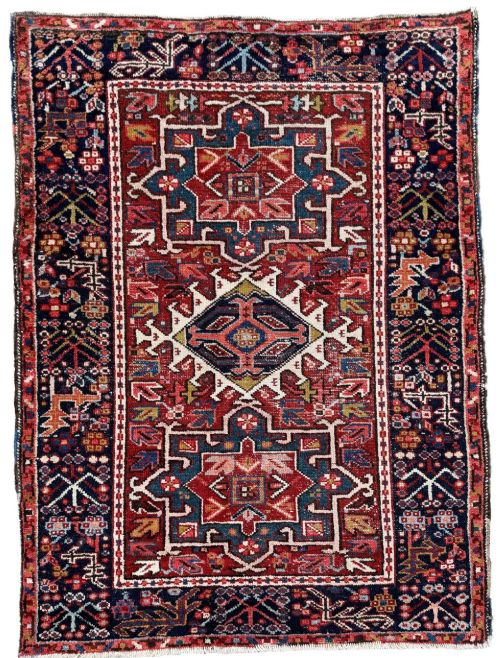
A persian karaja rug originates from the Northwest region of Persia, yielding distinct tribal geometry and structured village patterns. Buyers searching this term encounter formats ranging from small scatter sizes to substantial room carpets and long hallway runners.
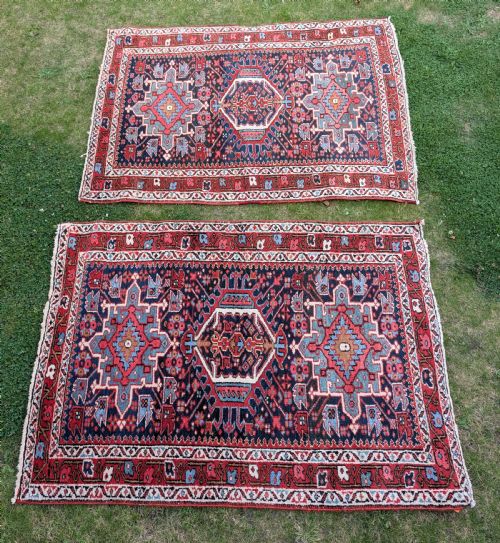
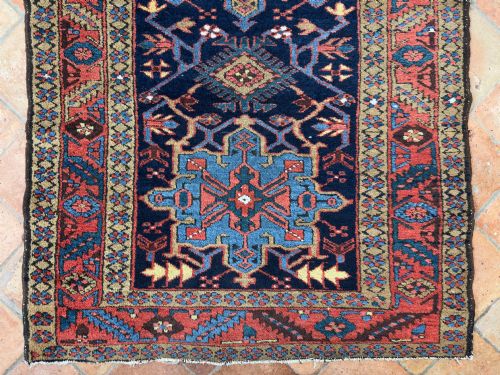
Most examples span the late nineteenth century through to the early decades of the twentieth century. Production embraces traditional formats like square rugs, rectangular area sizes, pairs, and narrow runners suited for corridors.
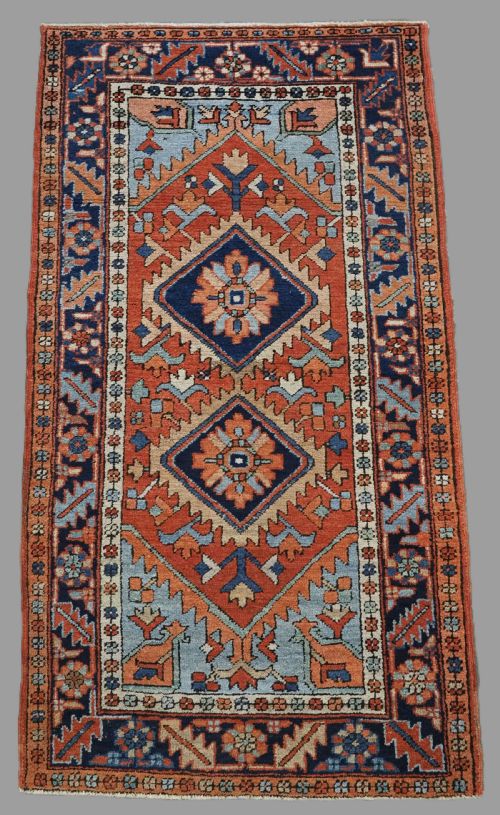
Designs typically display geometric medallion layouts and repeating village motifs rooted in regional weaving traditions. The aesthetic sits firmly within North West Persian and tribal expressions rather than courtly workshop designs.
Assessing Quality and Execution
Quality rests upon knot density, precision of the geometric drawing, and the vibrancy of the wool pile. Finer examples display crisper lines within the medallion framework and tighter foundation tension.
Colour saturation strongly dictates visual impact, with deeper and more intense palettes marking superior pieces. The integrity of the wool and the accuracy of traditional tribal motifs further separate standard village weaves from exceptional historical examples.
Persian Karaja Rug Retail Price Guide 2026
Typical asking prices for persian karaja rug among the pieces listed under this phrase on Sellingantiques today, from the lower quarter to the upper quarter. They describe what is for sale here now, not the wider market.
Current listings span production dates from the 1870s through the 1930s, using hand-knotted wool and cotton.
The Persian Karaja Rug Glossary
- Runner
- A long and narrow format rug intended primarily for hallways, corridors, or narrow passageways.
- Medallion
- A central ornamental design motif placed in the middle field of the rug, often geometric in regional village pieces.
- Pile
- The upright yarn surface of the rug formed by hand-tied knots above the foundation.
- Foundation
- The structural base of cotton warp and weft threads that support the wool knots.
- Warp
- The vertical foundation threads stretched tightly on the loom before knotting begins.
Persian Karaja Rug: Frequently Asked Questions
Where were these rugs made?
Production centres in the Northwest region of Persia, specifically around the village of Karaja and surrounding tribal areas.
Weavers in these communities produced robust village textiles characterised by strong geometric layouts and durable wool construction.
How do I choose the right size?
Small formats and scatter sizes suit entryways or hearths, while larger room carpets anchor living spaces and dining areas.
Narrow runner formats fit hallways and corridors where length matters more than width.
Are these runners durable?
Hand-knotted wool construction on cotton foundations creates a dense fabric built to withstand heavy daily foot traffic.
Proper placement with an appropriate underlay helps protect the foundation over decades of domestic use.
How do I date an older piece?
Dating relies on stylistic indicators, structural materials, dye characteristics, and traditional Northwest Persian motifs recorded across the nineteenth and early twentieth centuries.
Minor variations in wool texture and fringe construction provide further clues to the period of origin.