
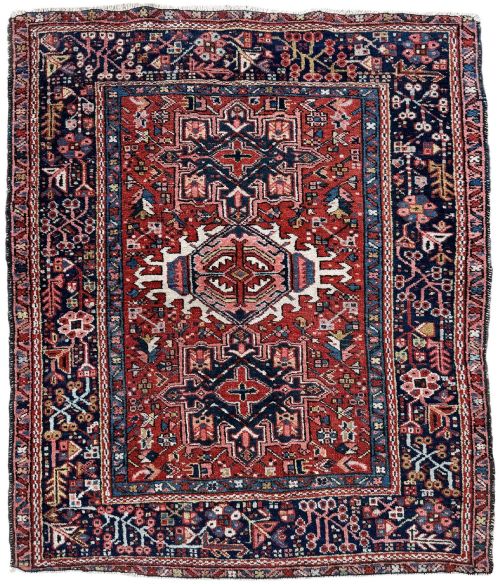
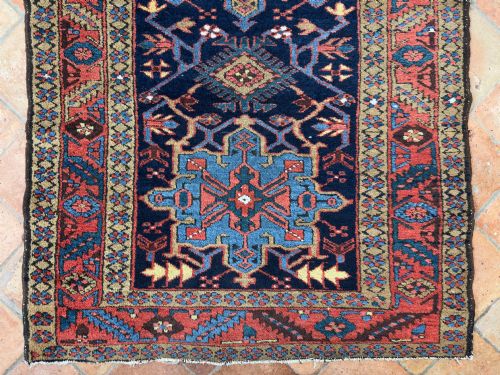
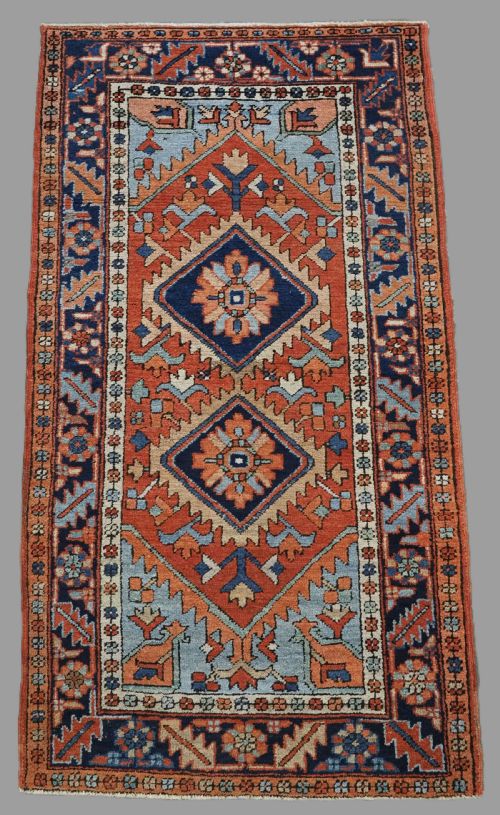


Antique Karaja Runner
These antique karaja runners are heavy village and tribal floor coverings from north-west Persia, prized for their durable weave and striking geometric designs.
Antique Karaja Runner
An antique karaja runner is a narrow, elongated floor covering originating from the villages of north-west Persia. These pieces serve practical functions in hallways and galleries while displaying distinct tribal motifs.
The pieces on this page span the late nineteenth century and the early twentieth century. They appear under various descriptions including narrow runners, long rugs, and traditional room dividers.
Makers in this tradition draw on Persian tribal and Heriz regional designs. The resulting rugs combine village utility with robust, geometric artistry.
Assessing quality and proportion
Quality in an antique karaja runner rests upon the crispness of the geometric design and the depth of the wool pile. Tighter knotting and well-balanced proportions separate finer examples from standard village work.
Colour variation also dictates desirability, with soft, naturally aged tones and superb saturated hues commanding greater appreciation among collectors.
Some runners are so narrow they seem designed exclusively for the brisk transit of Victorian servants rushing between drafty country house chambers.
The Antique Karaja Runner Glossary
- Karaja
- A village weaving tradition from north-west Persia known for bold geometric patterns and strong room-size formats. These designs often relate closely to the broader Heriz style.
- Runner
- A long, narrow carpet format traditionally used in hallways, corridors, and galleries. Such pieces manage high-traffic spaces efficiently.
- Heriz region
- A major carpet-producing area in north-west Persia encompassing several weaving villages. Pieces from this district share sturdy wool construction and architectural motifs.
- Tribal
- A descriptive category for rugs made by nomadic or village groups following traditional folk patterns rather than urban workshop designs.
Antique Karaja Runner: Frequently Asked Questions
Where were antique karaja runners made?
These runners originate from the villages of the Heriz region in north-west Persia. Local weavers produced them using traditional tribal designs.
The production centres around rural workshops where generational techniques dictated the use of local wool and cotton.
How do I use a runner in a hallway?
Runners fit narrow spaces such as corridors, staircases, and entrance halls. Their elongated format protects flooring while adding warmth and pattern.
Ensure you measure both the length and width of your hallway carefully, noting narrow dimensions like those found on specific village pieces.
What materials are used in these rugs?
The pile is spun from wool, offering resilience against heavy foot traffic. Foundations rely on cotton for structural stability.
This combination of materials ensures the heavy, hard-wearing quality typical of nineteenth-century Persian village weaving.
How can I tell the age of a runner?
Dating relies on material analysis, structural wear, and stylistic indicators such as natural dye palettes and specific tribal motifs. Pieces on this page primarily date from the late nineteenth and early twentieth centuries.
Examining the tightness of the weave and the handling of the wool also provides clues to the period of manufacture.