





Caucasian Style Hallway Runner
A caucasian style hallway runner brings geometric strength and rich colour to narrow passages, offering robust floor coverings woven to last generations.
Caucasian Style Hallway Runner
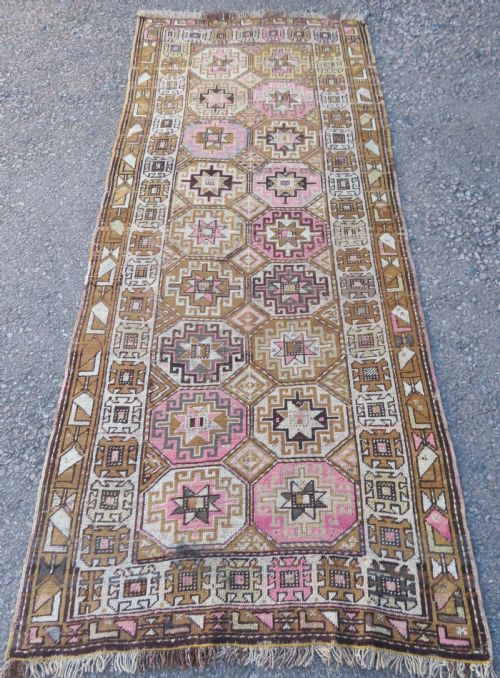
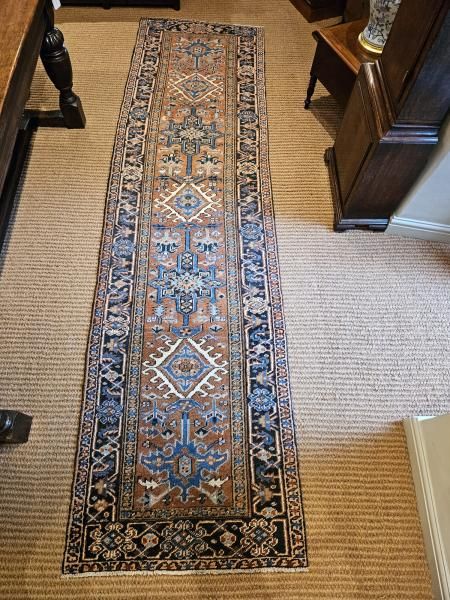
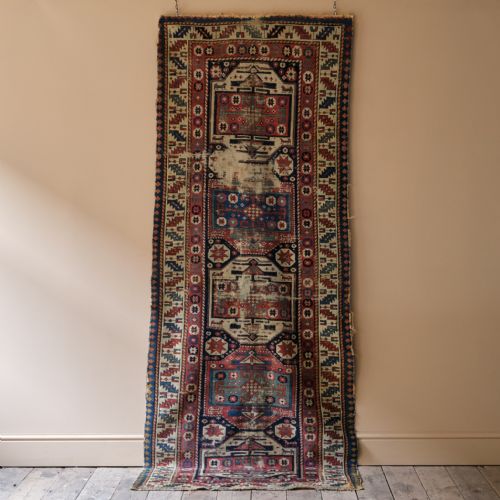
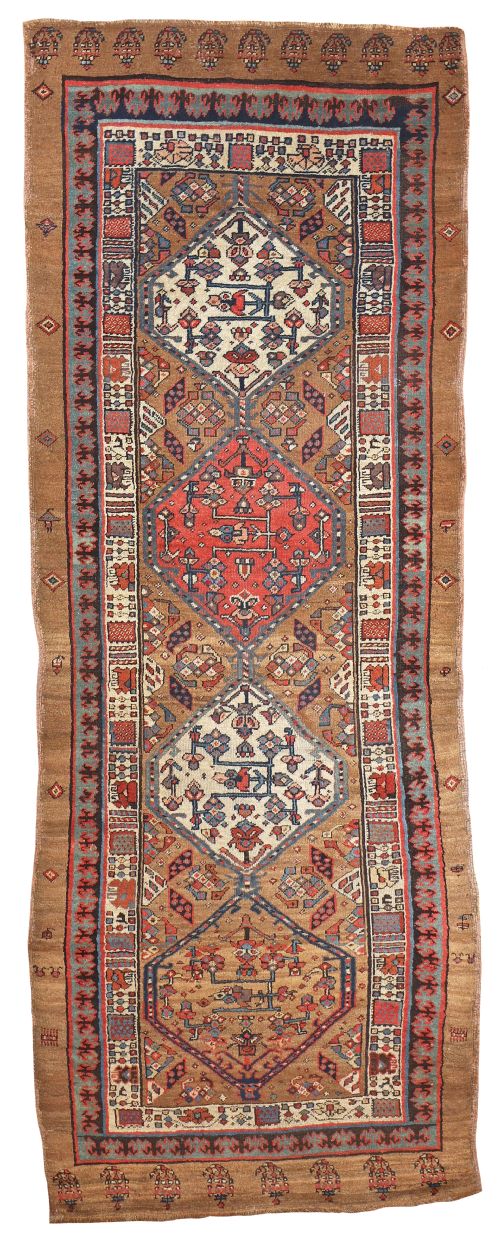
When you search for a caucasian style hallway runner, you encounter long, narrow floor coverings originating primarily from village and tribal workshops in nineteenth and early twentieth century Persia and the Caucasus. These pieces include specific regional types such as Sarab, Karaja, Heriz, Kazak, and Gendje, spanning dates from eighteen seventy through to nineteen twenty. You are most likely to meet wool runners featuring traditional geometric medallions, repeated boteh motifs, or bold striped field patterns designed to fit extended corridors.
The format of a caucasian style hallway runner prioritises utility in high-traffic spaces, balancing narrow proportions with striking visual symmetry. Village weavers produced these elongated formats using sturdy foundations suited to domestic hallways, porches, and landings. The visible repertoire draws directly from traditional Persian and Caucasian tribal styles, combining angular motifs with deeply saturated natural dyes.
Materials and construction
Weavers employed traditional hand-knotting techniques to build dense, durable piles that lock the geometric patterns firmly into place. The integration of wool and cotton structural elements provides the necessary tension to keep long, narrow formats straight along the margins. Natural dyeing methods yielded robust hues that deepen characterfully with age.
Materials documented across these listings comprise wool, cotton, and camel hair.
Factors of quality
Quality in a caucasian style hallway runner depends upon the precision of the knotting and the crispness of the geometric drawing across a long format. Finer knot densities allow intricate medallions and boteh motifs to maintain sharp definition rather than blurring into the surrounding field. The integrity of the wool pile dictates how well the surface resists wear over decades of heavy use in a corridor.
The proportion and balance of the narrow field relative to the borders separate superior examples from standard production. Artisans who maintained consistent width and straight margins throughout a lengthy warp achieved a structural harmony prized by collectors. Furthermore, the vibrancy and saturation of the original dye palette elevate the overall impact of the piece.
The Caucasian Style Hallway Runner Glossary
- Boteh
- A stylised almond or pear-shaped motif representing a-leaf, bush, or flame, frequently repeated across the field of antique runners.
- Warp
- The vertical foundation threads stretched tightly on the loom before knotting begins, which form the fringe at either end of the rug.
- Weft
- The horizontal threads passed back and forth between warp threads to bind the knots securely into the body of the textile.
- Medallion
- A large central ornamental design set into the middle of the rug field, common in Persian village and town weaving traditions.
Caucasian Style Hallway Runner: Frequently Asked Questions
How do I clean an antique runner?
Maintenance requires gentle surface brushing and occasional professional cleaning designed specifically for antique vegetable-dyed wool textiles.
Avoid harsh chemical treatments or excessive water immersion to protect the integrity of the natural fibres and historical dyes.
Are these runners suitable for heavy hallways?
These textiles were originally constructed by village weavers to endure heavy daily footfall in domestic corridors and passageways.
The dense wool pile and sturdy hand-knotted foundations provide excellent durability for modern high-traffic entryways.
How do I identify a Sarab runner?
Sarab runners typically display camel hair tones alongside repeating Herati or geometric medallion patterns within narrow proportions.
They originate from the Sarab region in north-west Persia and date predominantly from the late nineteenth and early twentieth centuries.
Why are these rugs long and narrow?
The elongated format was specifically produced to furnish hallways, stair landings, and narrow connecting rooms in traditional homes.
Weavers adjusted their looms to create functional runners that protected wooden floorboards while adding warmth and decoration to transitional spaces.