

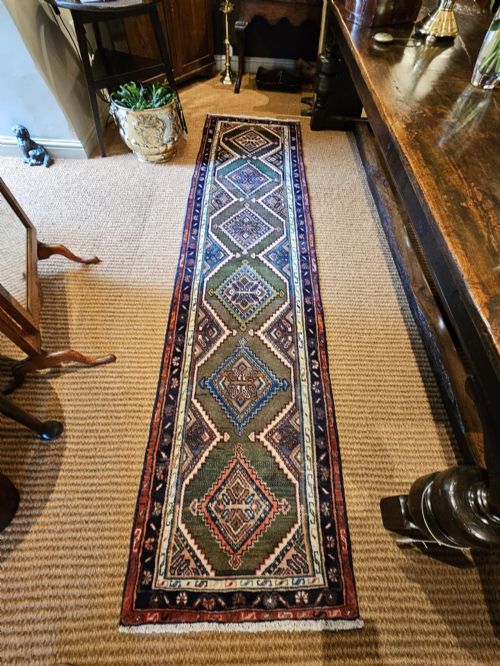



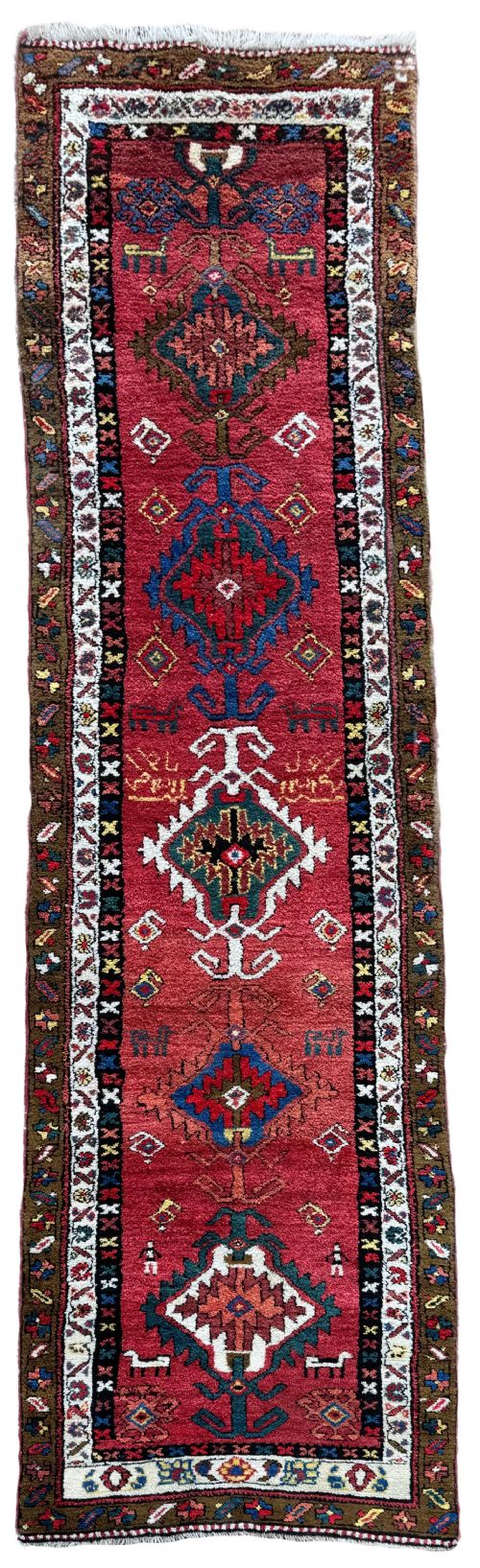
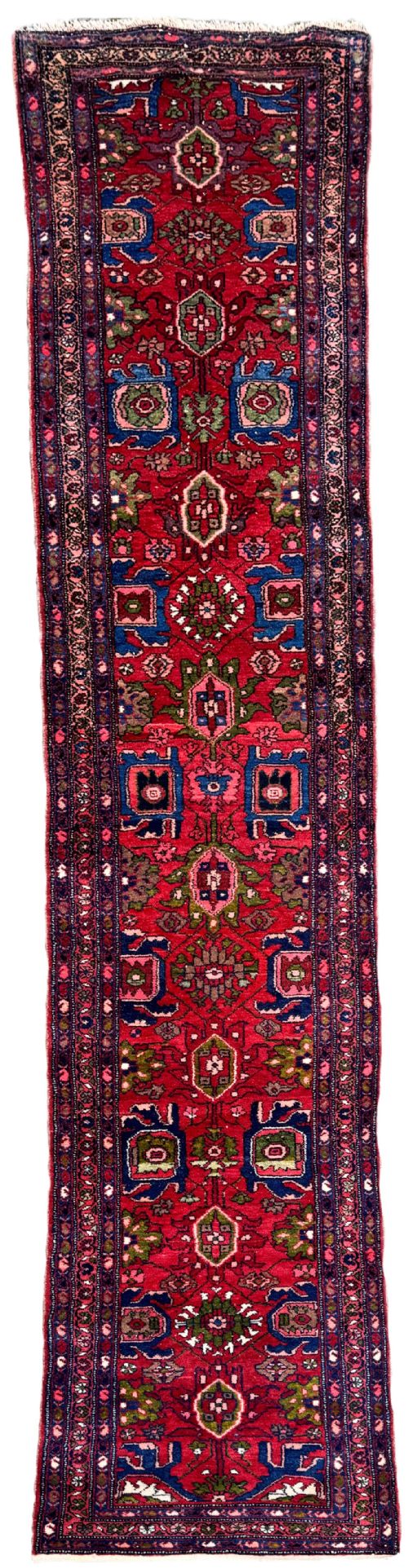
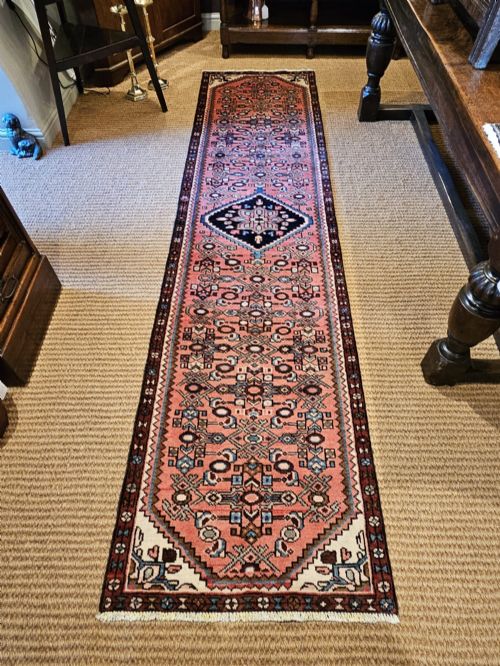
Geometric Persian Hallway Rug
A geometric persian hallway rug brings linear tribal motifs and enduring practical length to a corridor.
Geometric Persian Hallway Rug
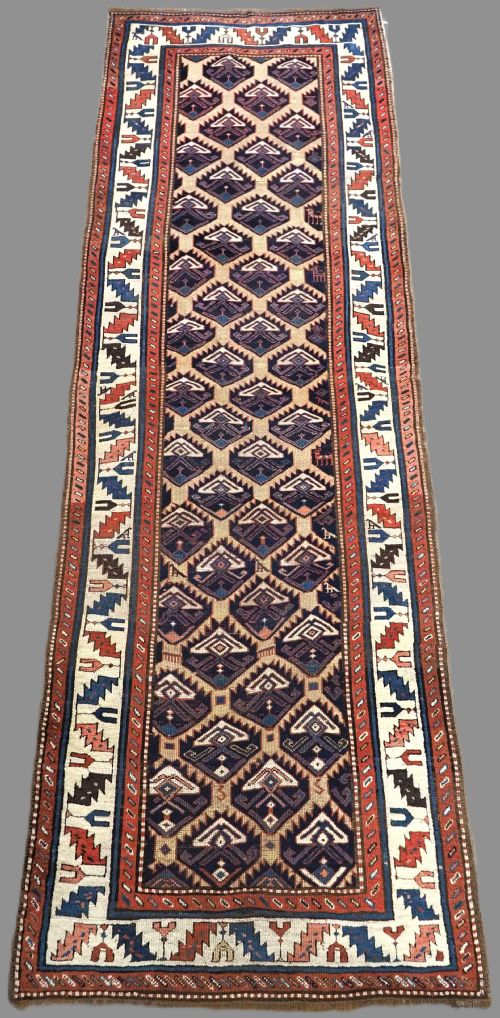
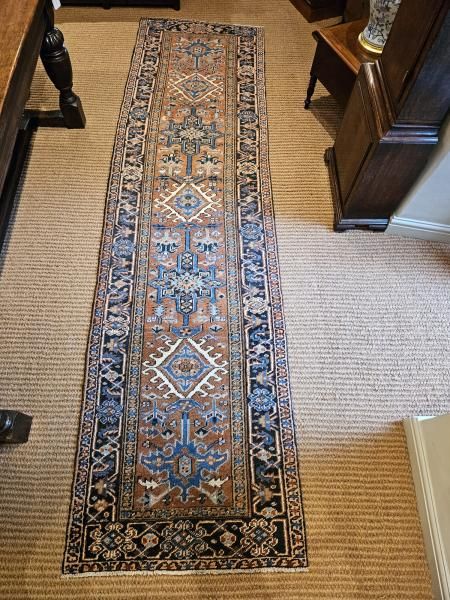
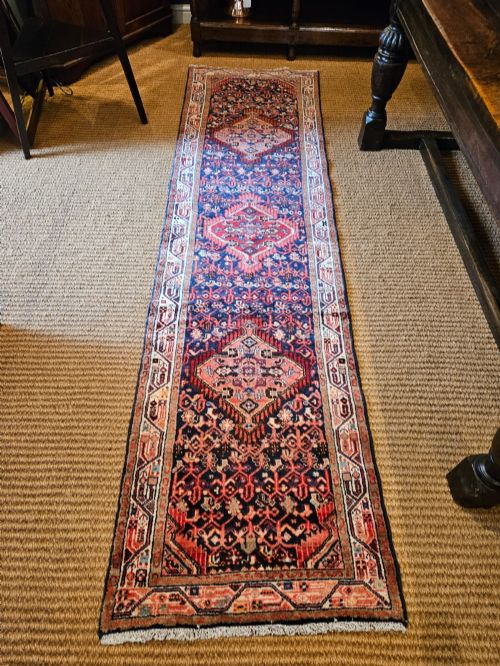
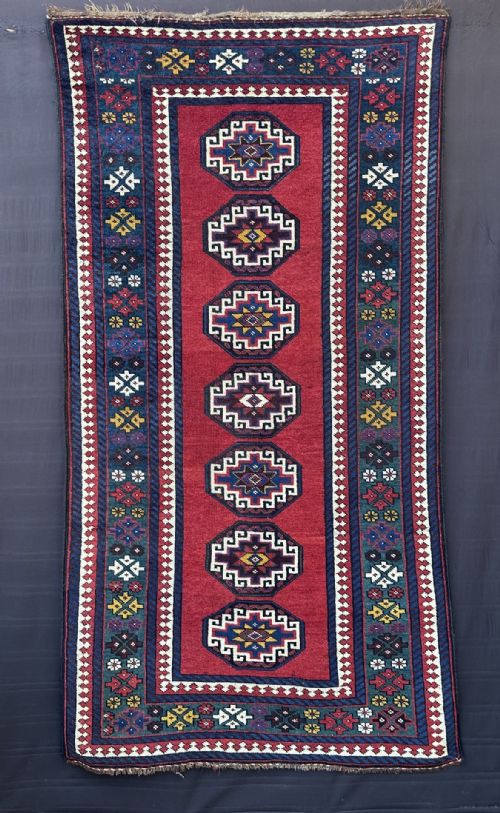
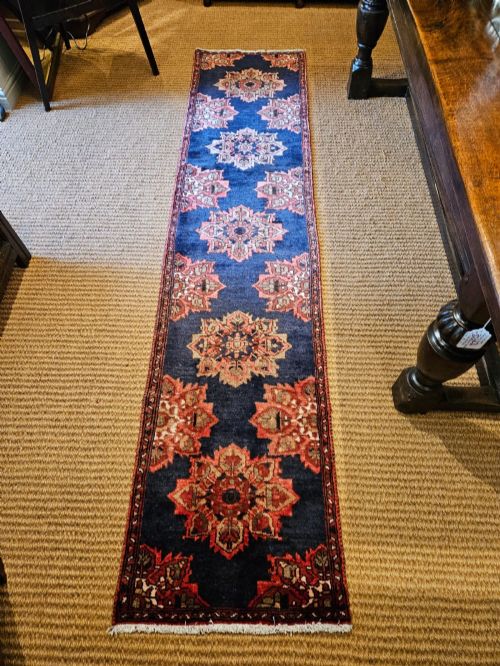
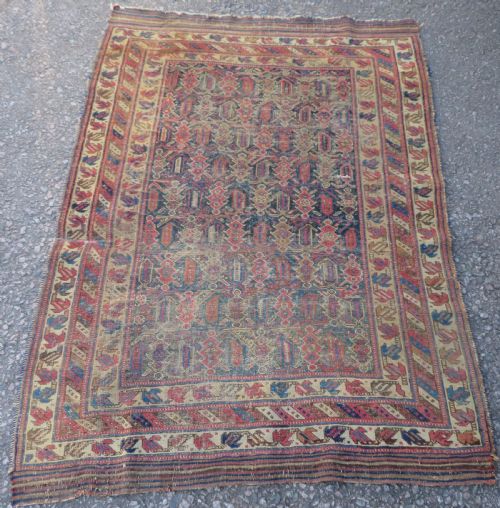
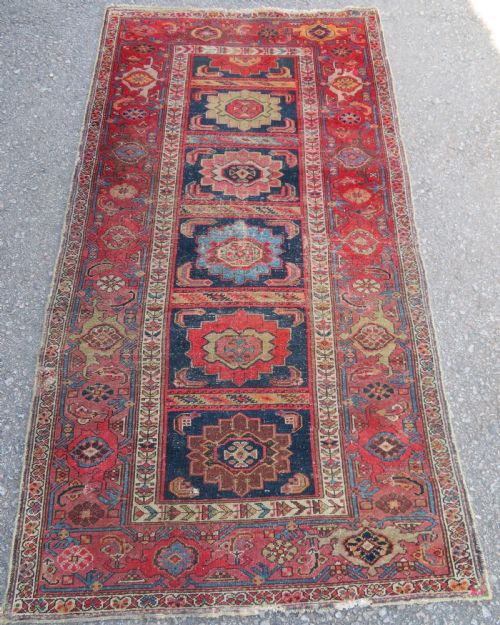
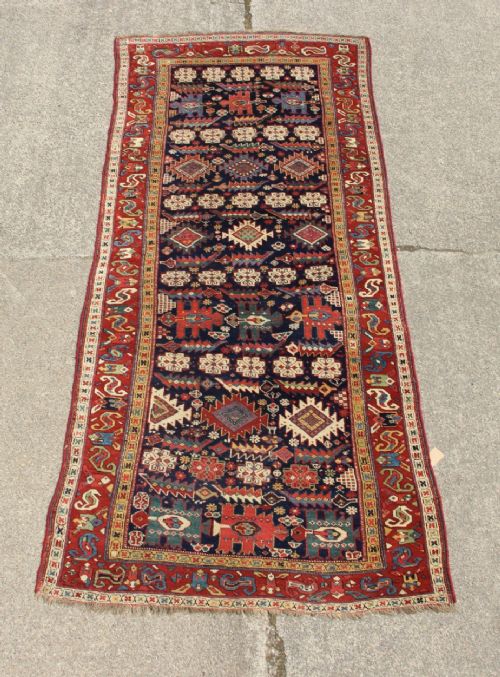
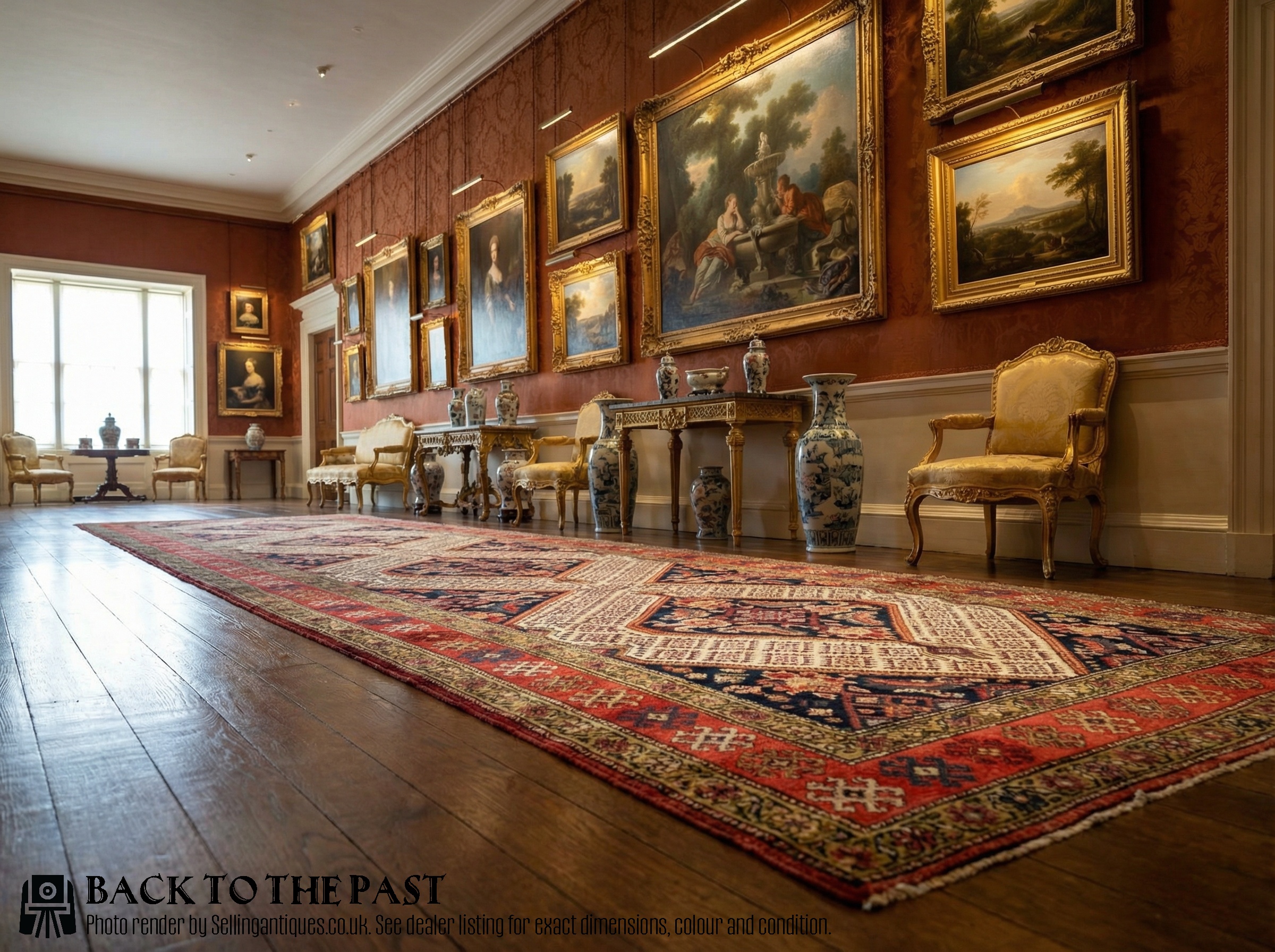
A geometric persian hallway rug is a long, narrow floor covering created in the nineteenth and early twentieth centuries. These pieces originate from various weaving traditions across Persia and neighbouring regions, designed specifically to fit corridors and narrow spaces. A buyer searching for this phrase encounters elongated formats intended to handle high foot traffic while displaying traditional motifs.
The inventory on this page primarily consists of antique runners and long rugs produced between the late nineteenth century and the 1930s. Common regional attributions include Heriz, Hamadan, Kurdish, and Bakshaish, alongside pieces from Caucasian and Anatolian traditions. These formats rely on repeated medallions, lattice patterns, and angular borders rather than curved floral designs.
Materials and construction
These floor coverings are constructed predominantly from wool pile set upon cotton or wool foundations. Many examples incorporate hand-spun wool, yielding variable texture and distinctive absorption of natural dyes across the surface. The materials reflect traditional pastoral and village production methods utilised by weavers in the nineteenth and early twentieth centuries.
Weavers employed hand-knotting techniques to build dense, durable structures capable of withstanding decades of domestic use. The resulting fabric combines resilience with flexibility, allowing long runners to lie flat along hallways. Variations in knot density and wool preparation contribute to the individual character of each piece.
Several runners display slight asymmetries and crooked lines, reminding every observer that human hands guided every single knot.
What separates examples
Quality in these floor coverings rests upon the integrity of the wool, the precision of the tribal geometry, and the depth of the dye palette. Superior examples display crisp, balanced proportions in their medallions and borders, executed with resilient materials that retain their structural integrity. Weaving fineness and the clarity of the primary design dictate the visual impact of an individual runner.
Condition and original dimensions also differentiate pieces within this category. While age brings natural wear and surface softening, examples retaining strong edges, balanced pile height, and unaltered proportions command greater appreciation from collectors. The relationship between length, width, and the scale of the central pattern governs the overall harmony of the runner.
Heriz·Hamadan·Kurdish·Bakshaish·Shahsavan·Afshar
The Geometric Persian Hallway Rug Glossary
- Runner
- A long, narrow carpet format designed principally for corridors, staircases, and hallways. These pieces typically measure significantly greater in length than in width.
- Medallion
- A central ornamental motif positioned within the field of the rug. It forms the focal point of many traditional designs.
- Pile
- The upright yarn loop surface of the rug that provides the tactile texture and absorbs wear. It is knotted onto the foundation warps and wefts.
- Warp
- The vertical foundational threads running lengthwise through the rug from end to end. Fringe typically extends from these structural elements.
- Weft
- The horizontal threads passed across the warp threads between rows of knots to secure the pile. This construction element shapes the rigidity of the fabric.
Geometric Persian Hallway Rug: Frequently Asked Questions
Where should I place a long runner?
These narrow formats suit corridors, entrance halls, and narrow passageways where linear floor coverings soften timber boards and absorb sound. Their dimensions align with transitional spaces in older properties.
Ensure the chosen length leaves appropriate clearance at doorways and skirting boards so the floor covering rests flat without bunching under foot traffic.
How do I care for antique wool runners?
Routine maintenance involves gentle vacuuming without a rotating brush roll to prevent snagging the hand-knotted pile. Professional cleaning suited to antique textiles preserves the natural lanolin in the wool.
Positioning a suitable underlay beneath the piece prevents slipping on hard surfaces and reduces friction between the foundation and the floor.
What defines tribal geometric designs?
Tribal patterns rely on rectilinear motifs, angular medallions, hexagons, and repeating latch-hook borders rather than curving naturalistic florals. These designs reflect regional weaving heritage passed through generations of village artisans.
Each motif often carries symbolic meaning linked to the specific weaving group or geographic district of origin.
How do I determine the age of an old runner?
Dating relies on assessing dye characteristics, structural wear, material preparation, and regional weaving traits. Hand-spun wool and traditional palette ranges typically indicate production from the nineteenth or early twentieth century.
Variations in wool consistency and selvedge construction offer further clues regarding the period and method of manufacture.