

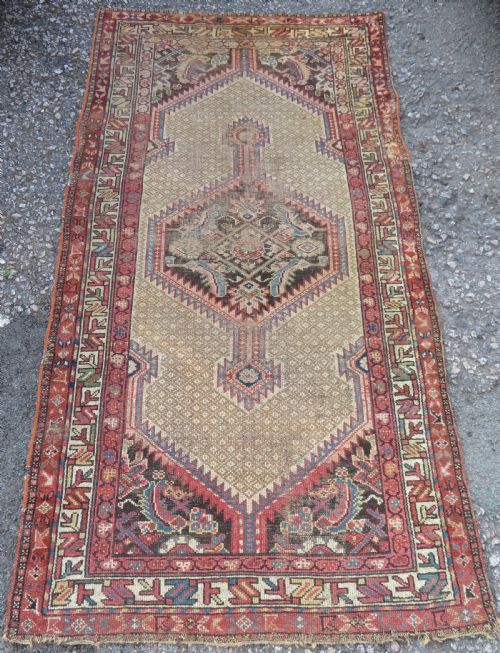


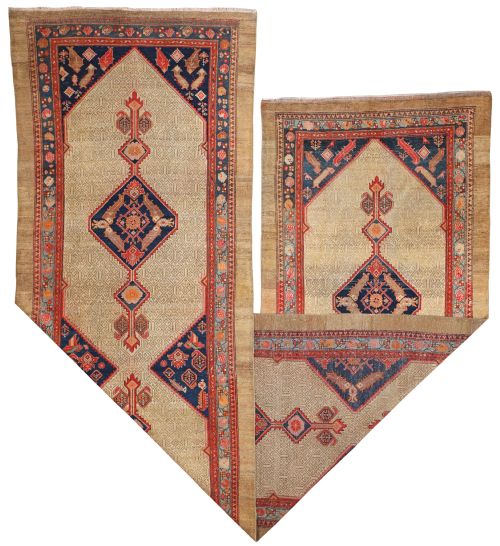
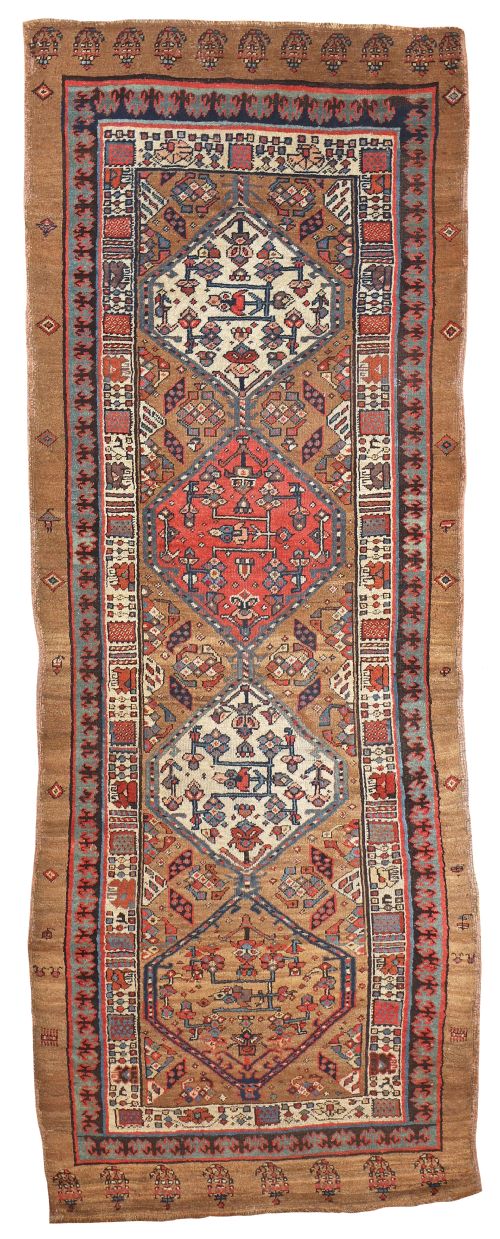


Antique Sarab Runner
An antique sarab runner brings hand-knotted Persian village artistry straight to a hallway with rich wool and earthy tones.
Antique Sarab Runner
When you search for an antique sarab runner, you look at elongated floor coverings woven in the villages of north-west Persia. These pieces serve primarily as narrow formats designed for corridors, hallways, and long spaces.
The versions most commonly met on this page span the late nineteenth century through to the early twentieth century. They arrive categorised variously as runner rugs, hallway runners, and traditional village rugs.
These textiles emerge from Persian tribal and village traditions rather than large urban workshops. They display robust construction suited to heavy foot traffic while maintaining distinctive regional character.
How they were made
Weavers constructed these long carpets using wool for the pile, often incorporating camel hair directly into the ground weave. Cotton frequently serves as the foundation material for the warp and weft threads.
Makers tied dense knots by hand across these cotton foundations to create durable surfaces. Natural dye sources produced the soft colours and earthy camel grounds characteristic of the region.
Antique Sarab Runner Retail Price Guide 2026
Typical asking prices for sarab runner among the pieces listed under this phrase on Sellingantiques today, from the lower quarter to the upper quarter. They describe what is for sale here now, not the wider market.
Listings feature pieces dated across the late nineteenth and early twentieth centuries, spanning periods from 1870 to 1920.
What varies in quality
The finesse of the knotting and the clarity of the traditional design distinguish superior examples from simpler ones. Tighter construction yields a sharper definition in the geometric patterns.
The handling of the camel wool ground and the preservation of soft colours elevate certain pieces. Condition plays a role, though natural wear reflects genuine age in these hallway carpets.
The Antique Sarab Runner Glossary
- Village runner
- A narrow rectangular carpet produced in a rural domestic setting rather than a city workshop. These formats suit corridors and long rooms.
- North West Persia
- The geographical region encompassing the Sarab district where these tribal rugs originate. This area has a long history of distinctive hand-knotted textile production.
- Warp and weft
- The foundational threads of a woven textile that run vertically and horizontally. Cotton serves as the standard material for this underlying structure.
Antique Sarab Runner: Frequently Asked Questions
What materials make up these runners?
The pile consists primarily of wool, frequently incorporating natural camel hair for the background field.
Cotton provides the strong structural foundation for the warp and weft threads beneath the knotted surface.
How do I style a hallway runner?
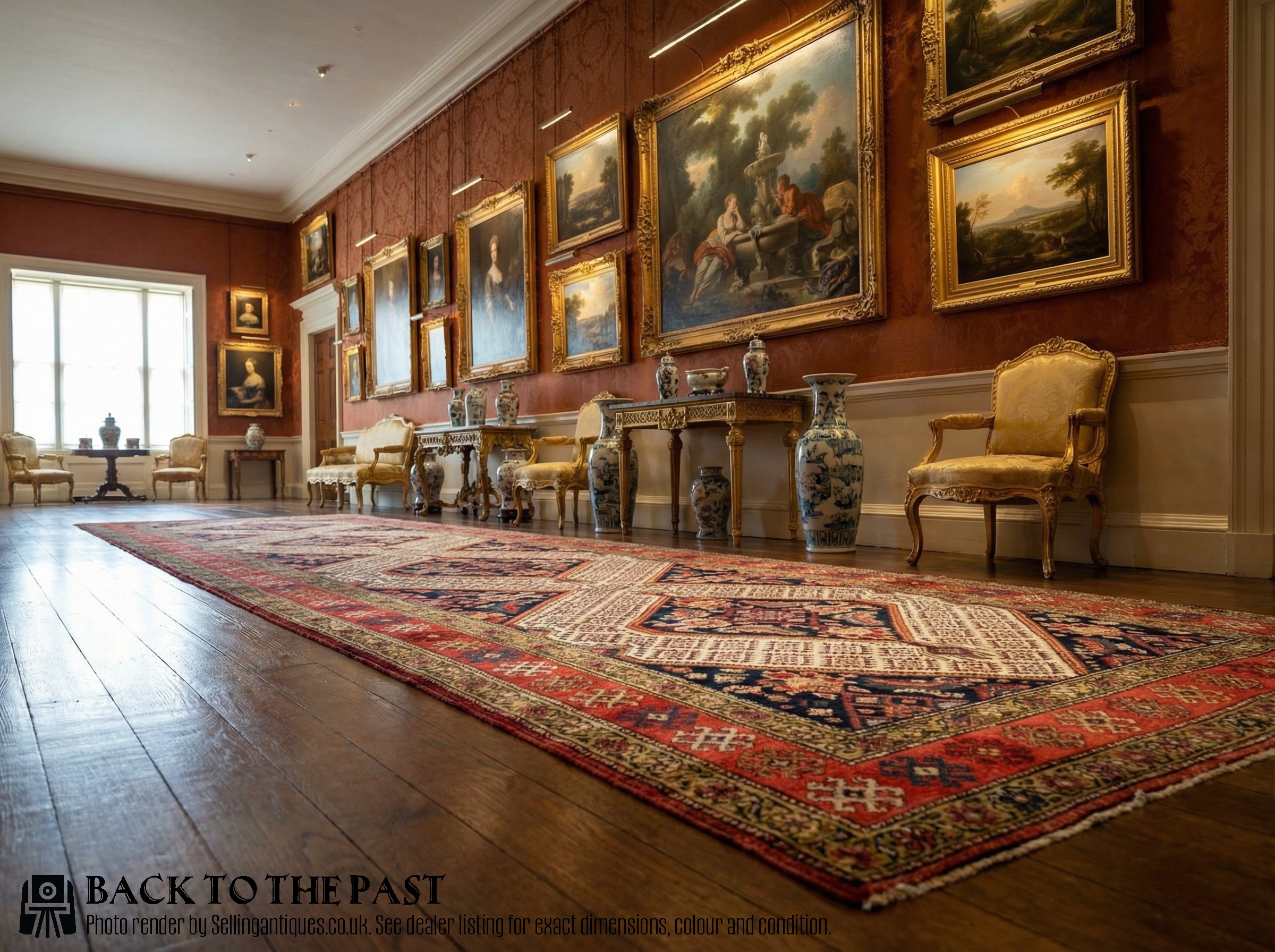
Place these narrow formats in corridors, long entryways, or passages where their elongated shape fits naturally.
Protect the antique wool pile by placing a suitable underlay beneath the rug to prevent slipping and excessive friction.
How do I date an antique sarab runner?
Examine the specific dye palette, structural materials, and stylistic elements recorded across late nineteenth and early twentieth-century examples.
Village characteristics, such as camel wool grounds and traditional tribal motifs, help place the piece within this broader timeframe.