





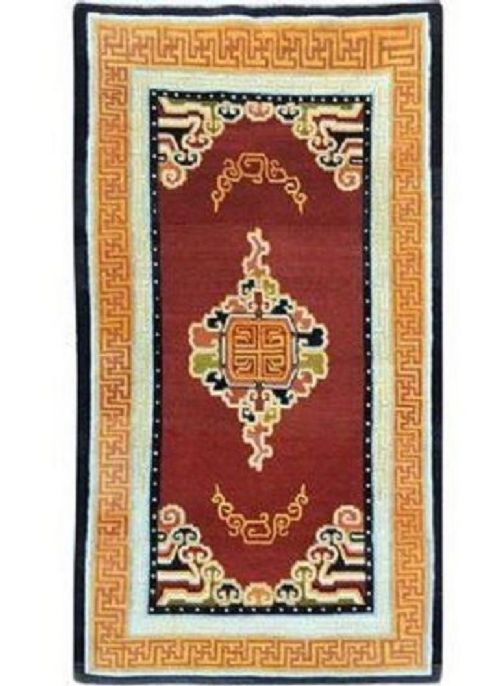
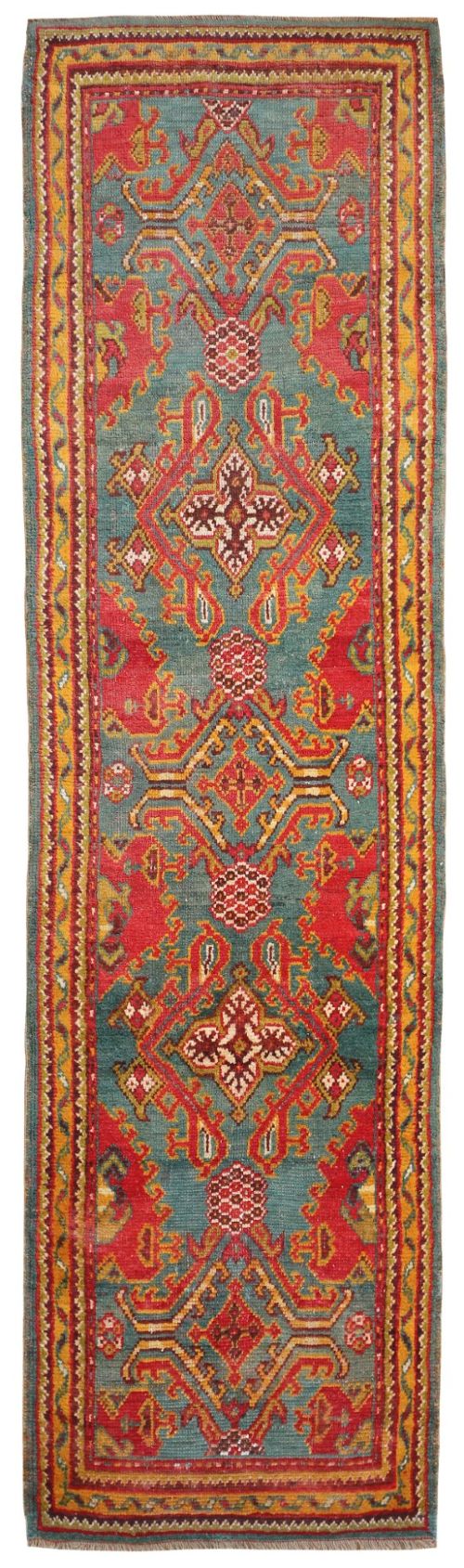
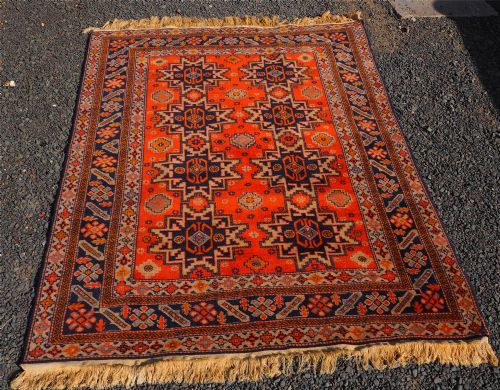
Vintage Wool Runner Carpet
These vintage wool runner carpets bring lasting colour and history to narrow spaces, spanning tribal weaves and town pieces from the late nineteenth century onwards.
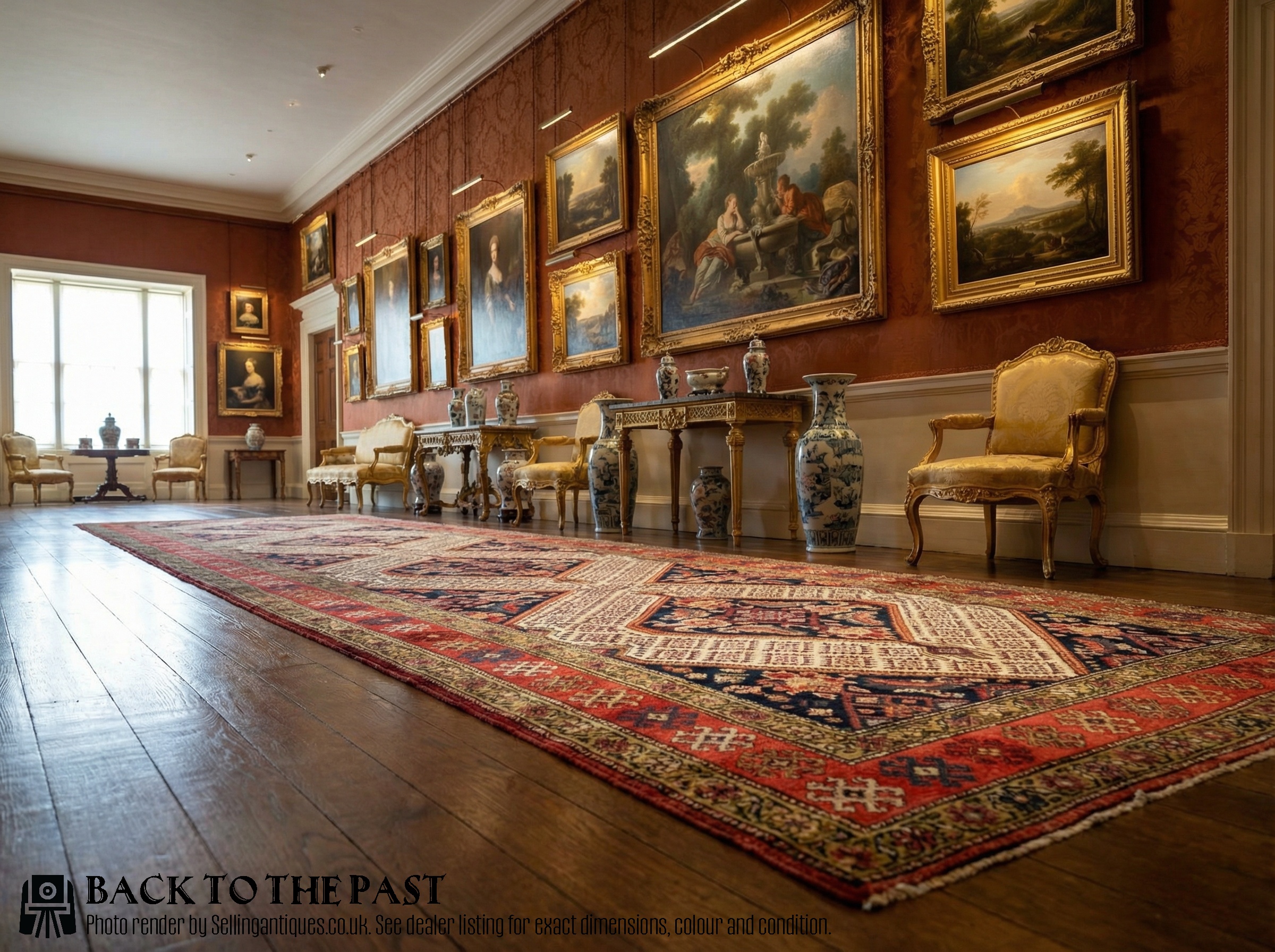
Vintage Wool Runner Carpet
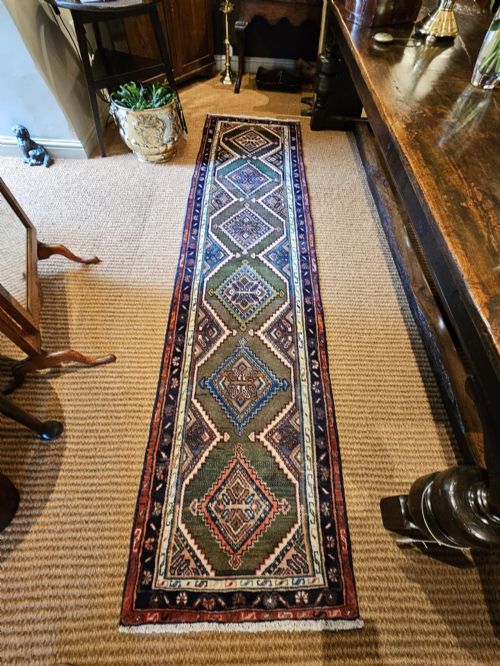
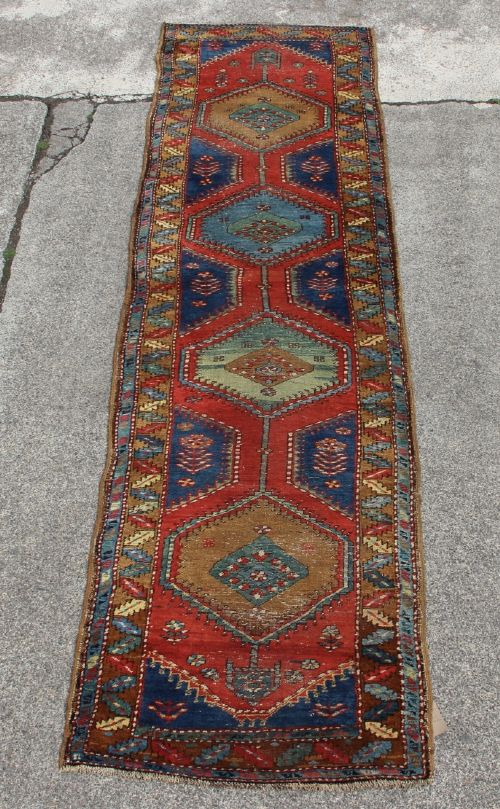
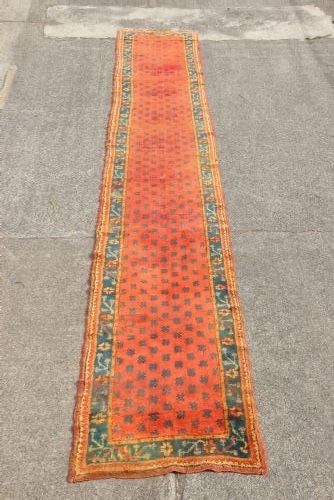
A vintage wool runner carpet provides a long, narrow format suited to hallways, landings and corridors. When searching for this phrase, a buyer encounters hand-knotted and flatwoven textiles originating from Persia, the Caucasus, Turkey, Tibet and Turkmenistan.
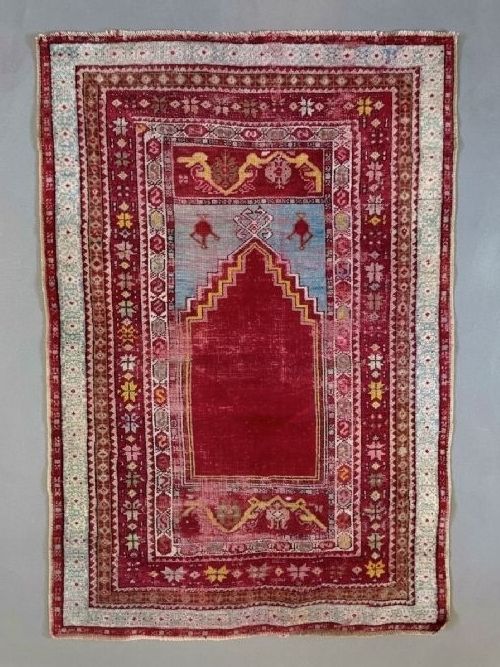
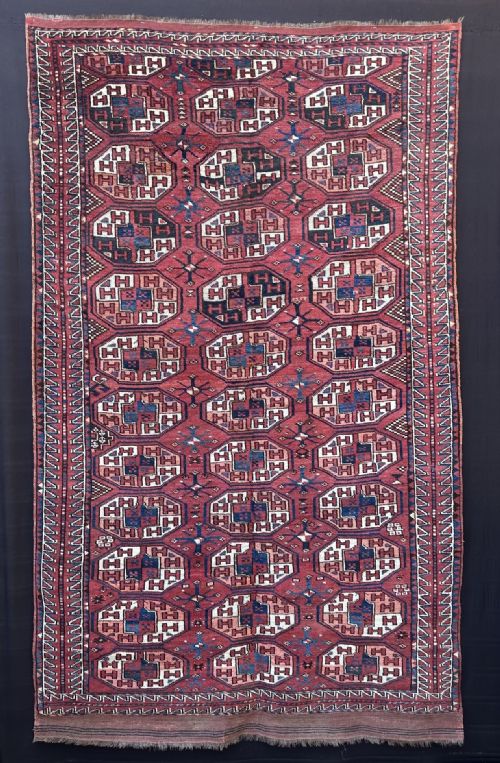
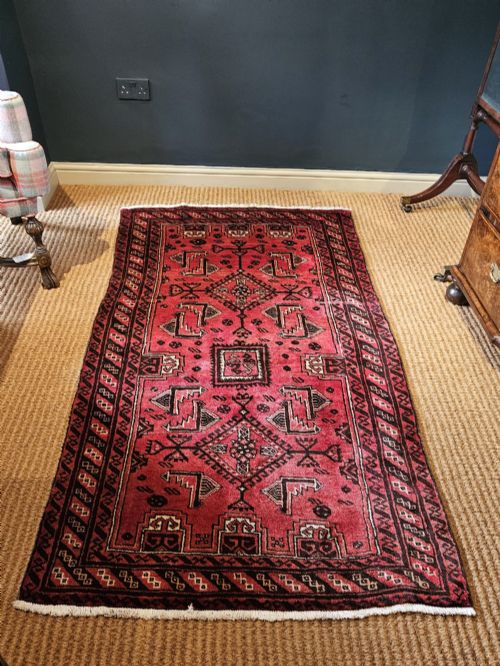
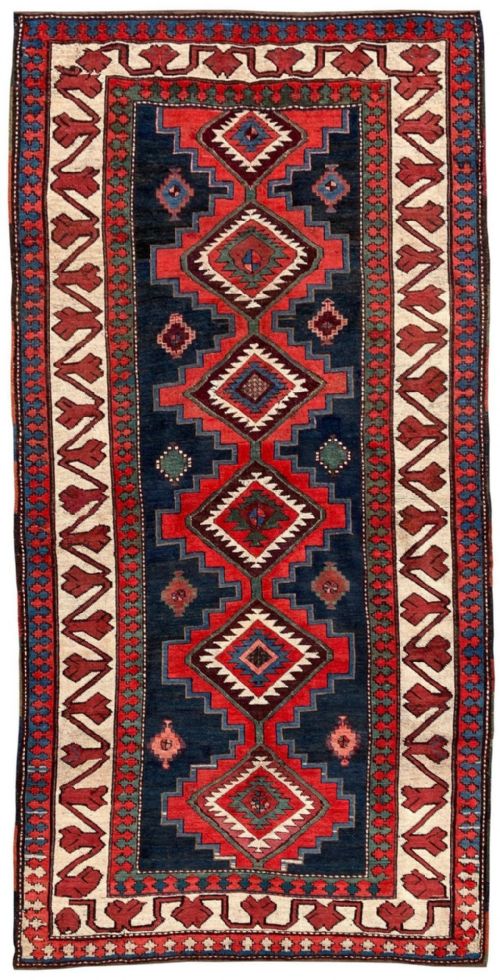
The selection on this page ranges from village and tribal floor coverings dated around eighteen-eighty to nineteen-thirty. Pieces include specific regional types such as Kazak, Heriz, Ushak, Kurdish and Saroukh, alongside plain wool runners with olive green or navy backgrounds.
Most examples combine durable wool pile with sturdy cotton foundations. Buyers find both room-sized formats and elongated runners designed specifically for heavy transit areas.
How they were made
Weavers constructed these carpets using natural wool yarns spun by hand or machine, frequently pairing them with cotton warp and weft threads for structural stability. Certain regional pieces also incorporate camel hair within the pile or foundation.
Knotting techniques vary by origin, from the symmetrical and asymmetrical knots of Persian and Turkish workshops to the distinctive weaves of Caucasian and Tibetan makers. Natural dyestuffs and early synthetic colours yielded the characteristic palettes seen across these nineteenth and twentieth-century floor coverings.
Some runners retain the exact footprints of nomadic weavers who worked outside while singing old folk tunes.
What varies in quality
The integrity of the wool pile and the tightness of the knotting dictate the durability of each runner. Denser foundations hold up better to foot traffic in hallways.
Clarity of design and depth of colour separate standard village works from finer town carpets. Regional integrity, such as authentic tribal motifs in Caucasian or Kurdish examples, also influences the character of the piece.
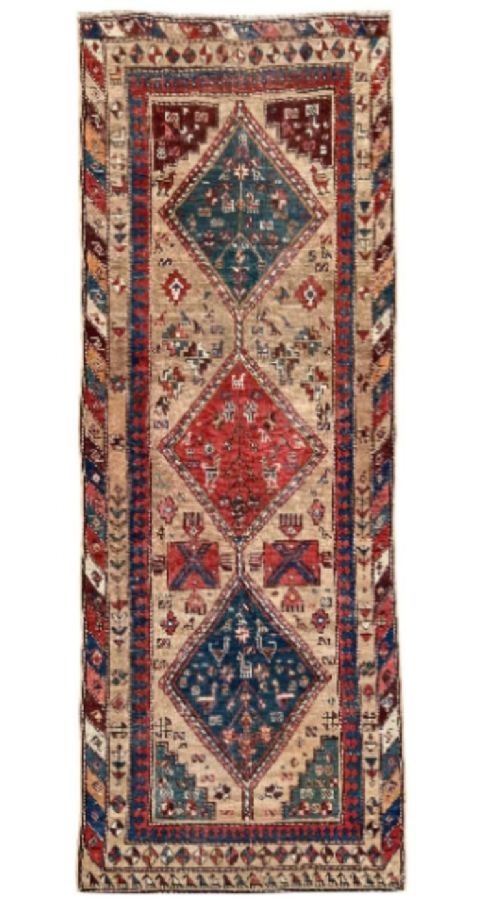
Kizyl Ayak Tribe·Kashgai Carpet
The Vintage Wool Runner Carpet Glossary
- Runner
- A long, narrow carpet designed principally for hallways, corridors and stairs. They connect rooms while protecting wooden or tiled floors.
- Pile
- The upright yarn loops or cut ends that form the soft surface of a carpet. Wool pile provides cushioning and insulation underfoot.
- Kilim
- A flatwoven carpet or rug made without a pile. These pieces are lighter and versatile enough for wall hanging or floor placement.
- Warp
- The stationary vertical threads stretched onto a loom before weaving begins. The foundation strength largely depends on these parallel strands.
- Weft
- The horizontal threads passed across and under the warp to hold the knots in place. Tight beating of the weft creates a firm textile structure.
Vintage Wool Runner Carpet: Frequently Asked Questions
Where should I place a wool runner?
These long carpets suit narrow spaces like hallways, corridors, entryways and staircases where foot traffic is frequent. Their durable wool construction handles everyday movement while adding warmth to transitional areas of a home.
Measuring your hallway beforehand ensures the runner leaves a uniform margin of exposed floorboards or tiles on either side for a balanced look.
How do I care for a vintage wool runner?
Regular gentle vacuuming without a rotating brush roll keeps dust and grit from settling into the wool pile. Professional cleaning suited for antique textiles preserves the natural lanolin and dyes.
Rotating the carpet every six months ensures even wear patterns, particularly if one end sits in direct sunlight or receives heavier foot traffic.
What is the difference between a rug and a runner?
Runners are distinguished by their elongated, narrow proportions specifically tailored for hallways and stairs. Standard rugs tend to be square or rectangular for placement beneath furniture in open rooms.
Both formats utilise similar hand-knotted or flatwoven wool techniques originating from Persian, Caucasian, Turkish and Tibetan traditions.
How do I identify the origin of my carpet?
Regional characteristics such as geometric medallions in Caucasian Kazaks, large floral motifs in Persian Heriz pieces, or the distinct palette of Turkish Ushaks point toward specific weaving traditions. Examining the knot count and fringe finish also offers clues.
Comparing structural details against documented tribal and town carpets helps narrow down the geographical source and estimated period between eighteen-eighty and nineteen-thirty.