

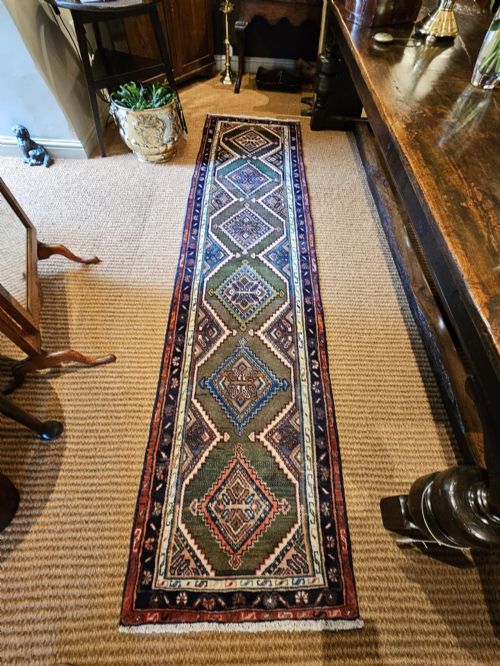
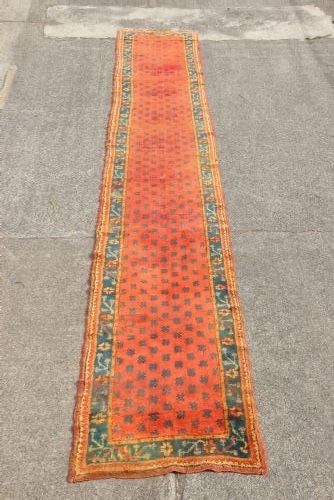

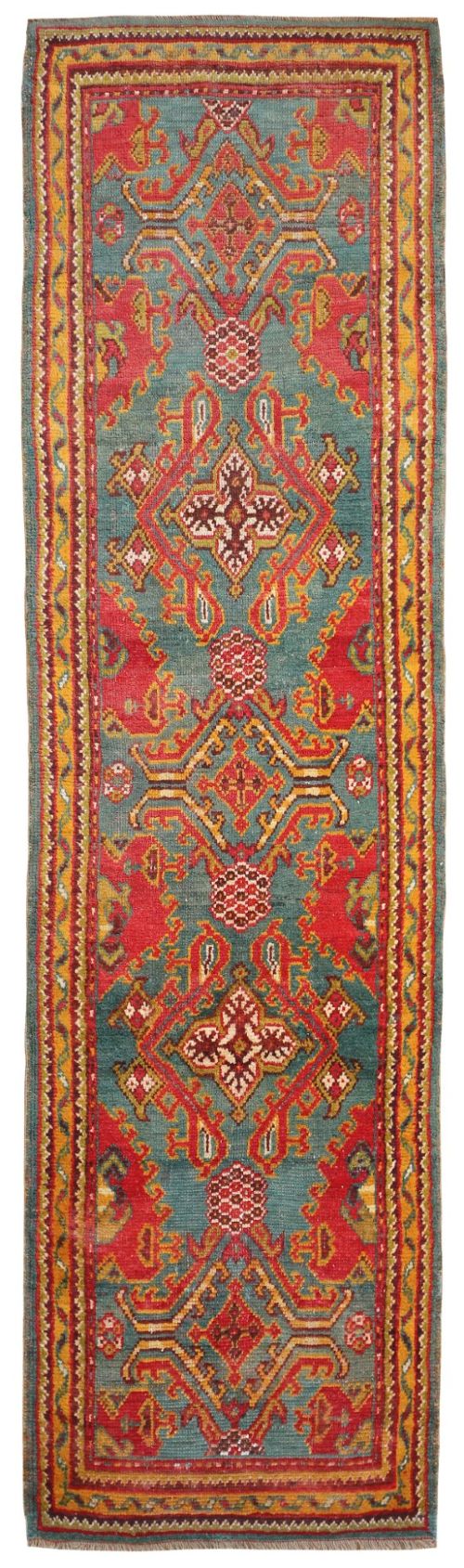
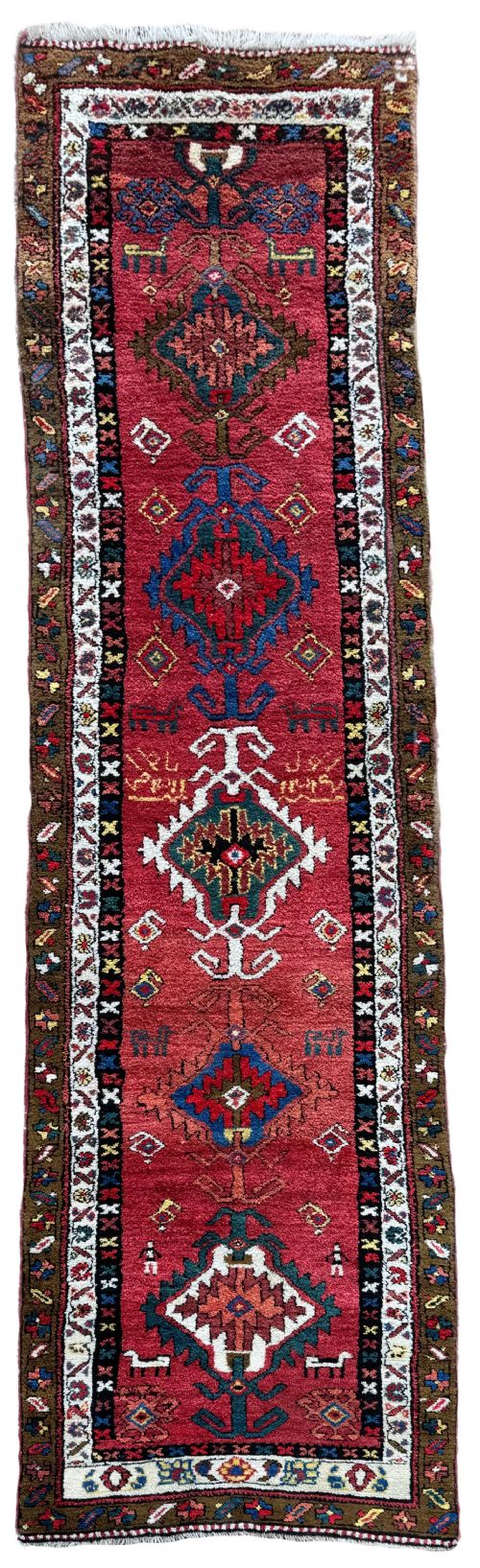
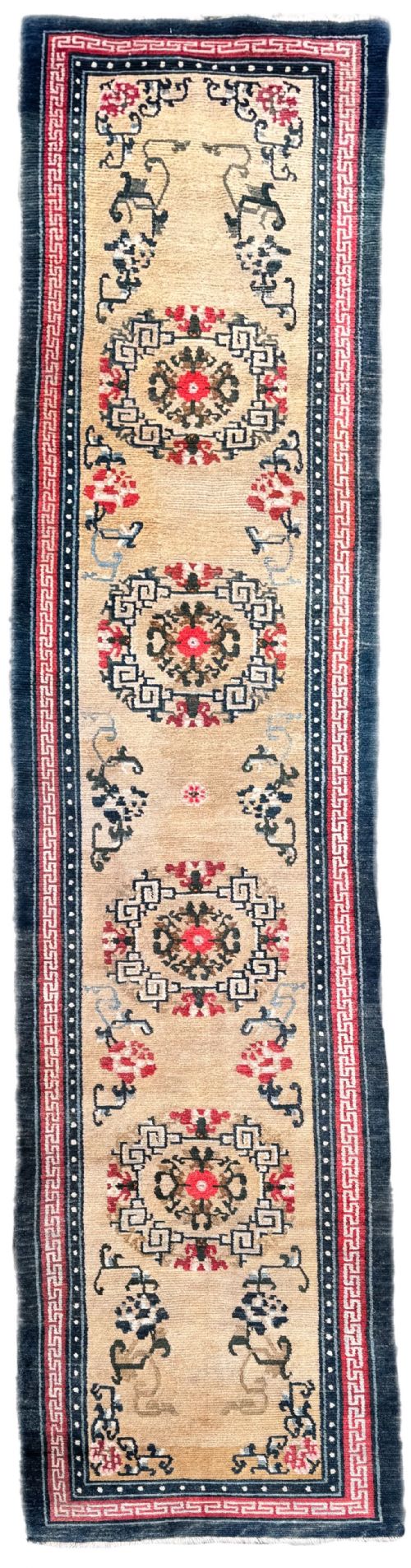
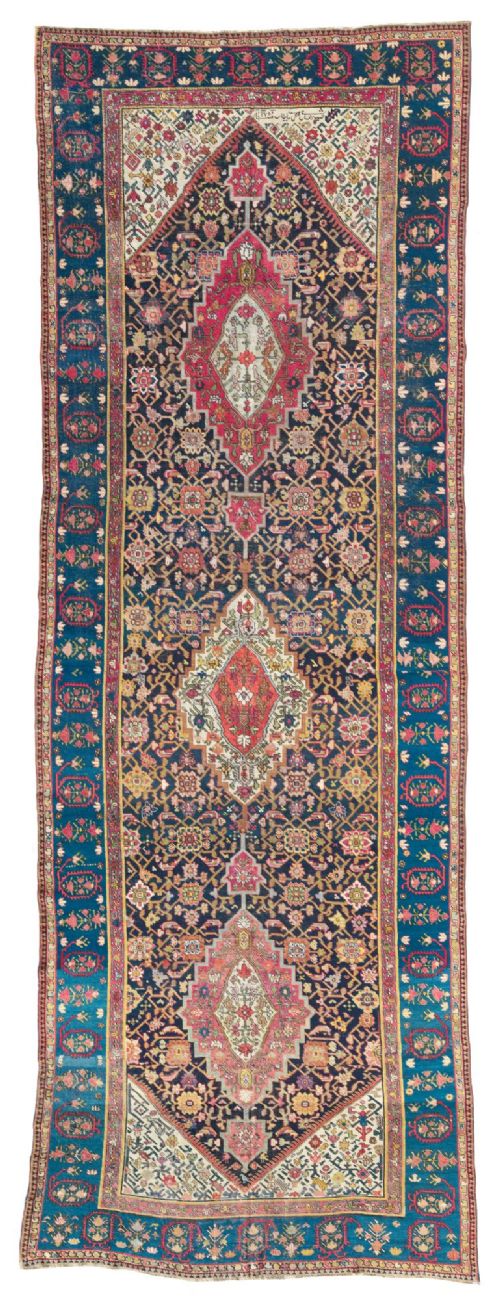

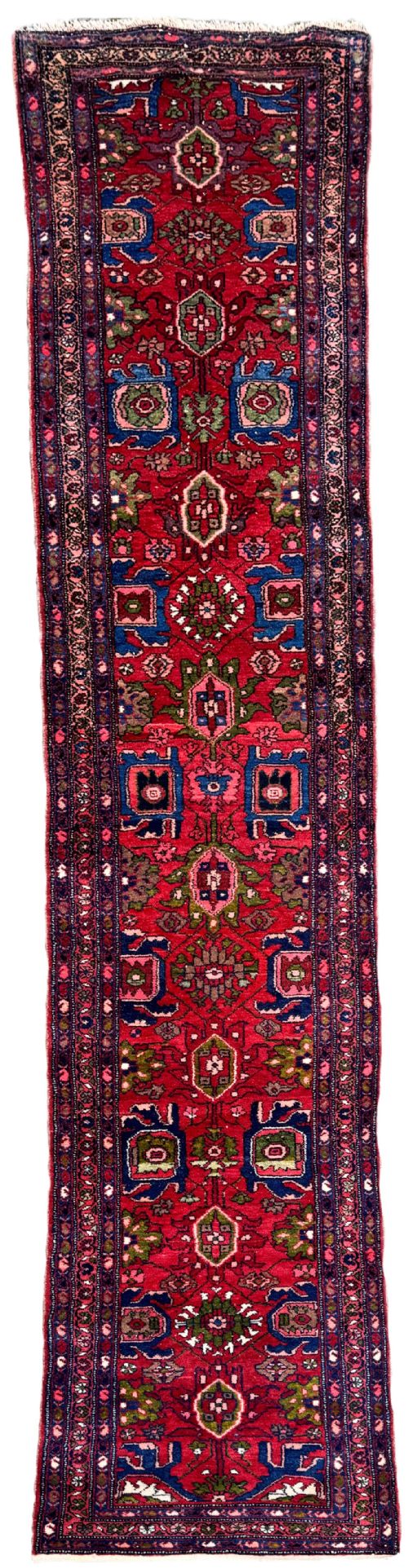
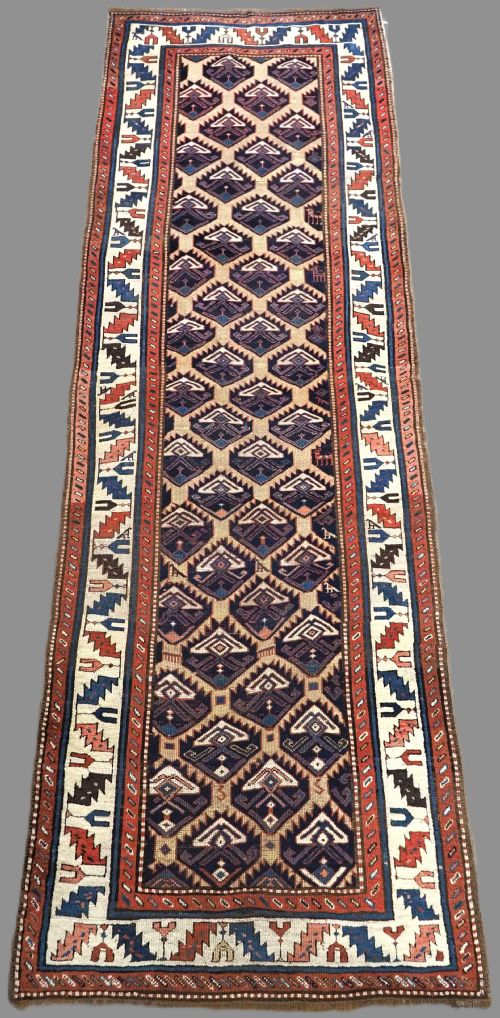
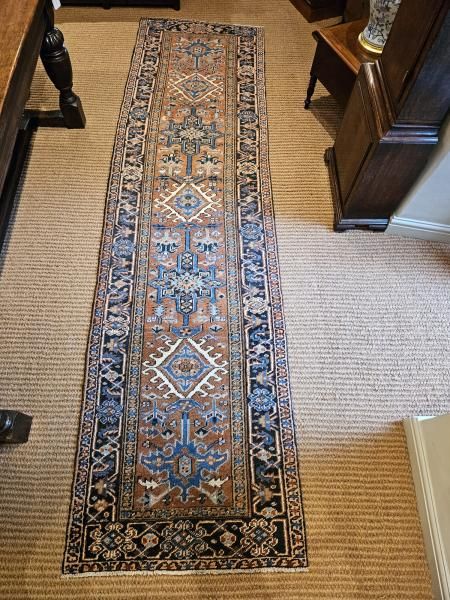
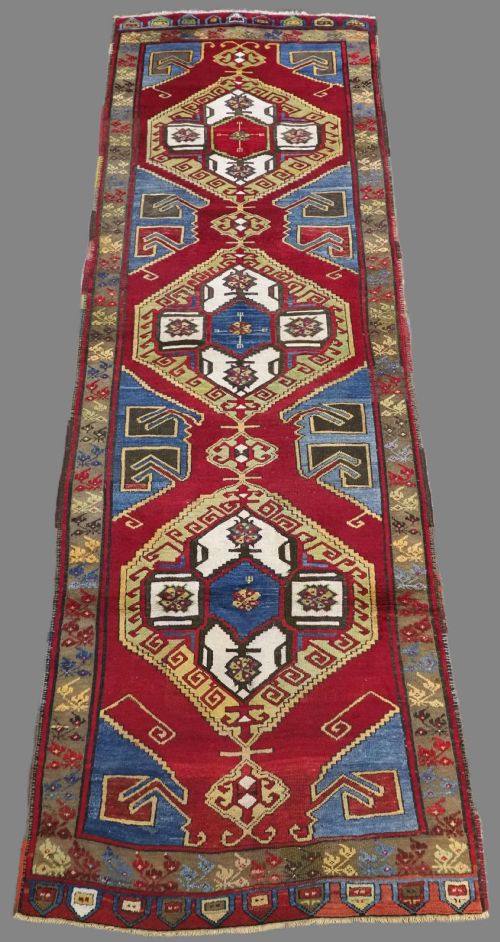
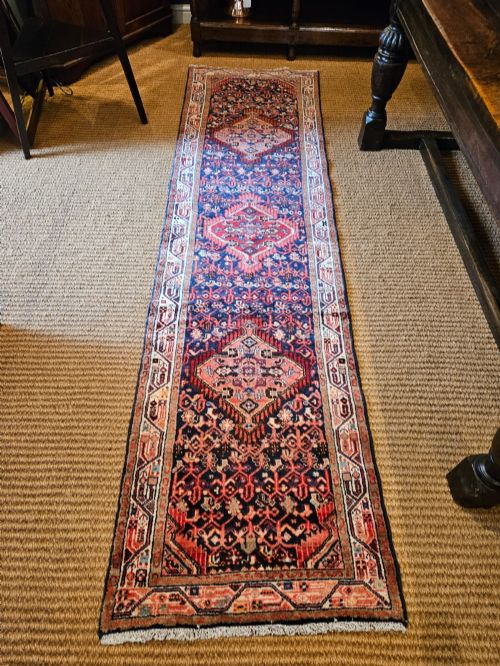
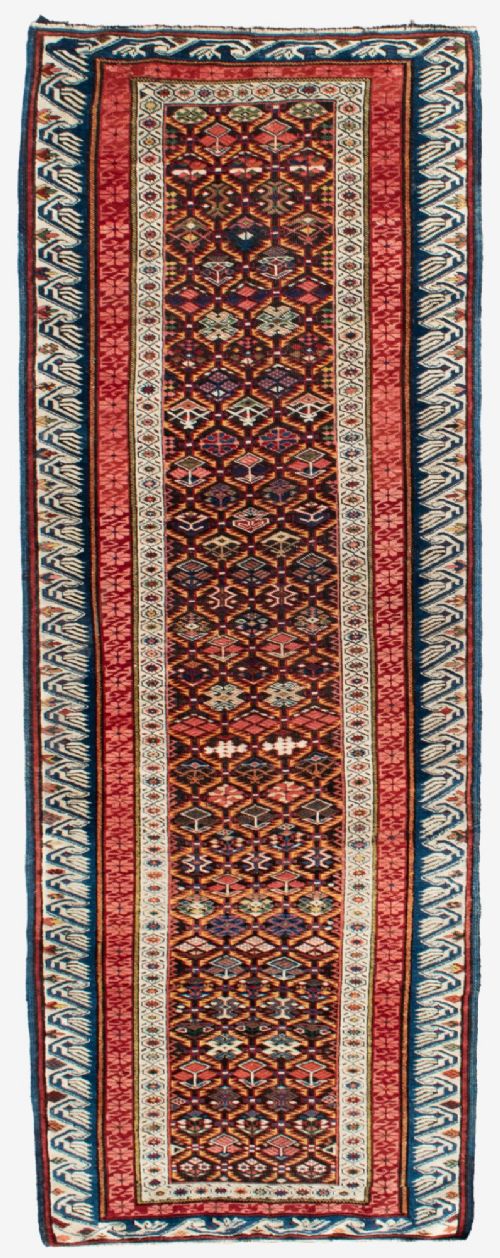
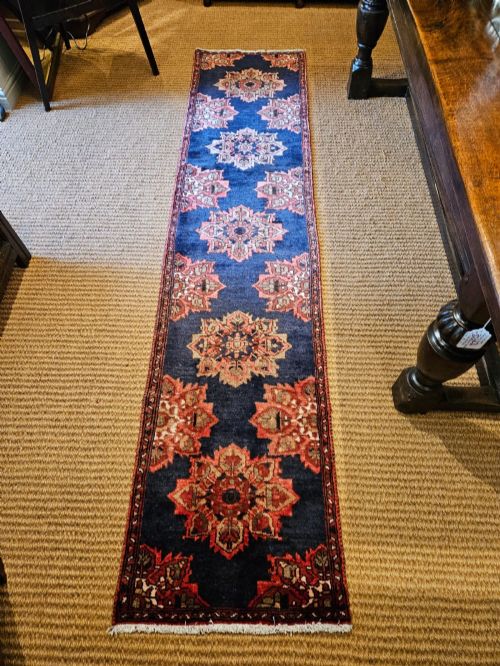
Traditional Corridor Runner Rug
These traditional corridor runner rugs bring linear geometry and deep wool pile to narrow hallways, anchoring period interiors with centuries of weaving heritage.
Traditional Corridor Runner Rug
A traditional corridor runner rug is an elongated floor covering designed specifically for narrow spaces like hallways, landings, and passages. The pieces seen here span from the mid-nineteenth century through the early twentieth century, originating from Persian, Turkish, Caucasian, Kurdish, and Tibetan weaving traditions.
Buyers searching for a traditional corridor runner rug encounter elongated formats including Heriz, Ushak, Hamadan, and Kazak styles. These examples range from compact lengths of two metres up to dramatic galleries exceeding five metres, constructed to handle high-traffic areas while displaying tribal and geometric motifs.
How they were made
The primary structural material across these listings is wool, frequently complemented by hand-spun wool and cotton foundations. Weavers knotted these natural fibres by hand on vertical looms, creating dense piles designed for durability in heavy-use corridors.
Dyes derived from natural sources provide the saturated palettes seen in these runners, including deep indigo blues, olive greens, and rich reds. The integration of wool pile on cotton or wool warps gives each runner its characteristic weight and flexibility along narrow floorboards.
What varies in quality
Quality in these runners rests on the density of the knotting and the precision of the tribal geometry executed by the weaver. Finer examples exhibit crisp delineation in motifs like the Mina Khani lattice or tribal medallions, while coarser pieces show charming irregularities in the repeat patterns.
The integrity of the wool pile and the survival of the original outer borders dictate the visual balance of a runner. Pieces retaining their structural edges and uniform pile depth present a more cohesive presence along a hallway.
The Traditional Corridor Runner Rug Glossary
- Runner
- An elongated rug format intended for corridors, hallways, and stairs. Its proportions prioritise length over width to guide movement through a space.
- Kelleh
- A large, room-sized carpet format or an extended runner proportion found in Persian and Caucasian weaving traditions. It offers broader dimensions than a standard hallway runner.
- Kilim
- A flatweave textile produced without a pile, often utilised in runner forms or combined with knotted-pile sections for texture.
- Mina Khani
- A traditional all-over floral lattice pattern commonly found on Kurdish and Persian carpets. It arranges repeating rosettes connected by delicate vines across the field.
- Warp
- The vertical threads stretched on the loom that carry the tension of the weave. Cotton and wool warps form the structural skeleton of the runner.
Traditional Corridor Runner Rug: Frequently Asked Questions
How do I choose the correct length for a hallway runner?
Measure the clear floor space of your corridor, leaving an equal margin of bare wood or stone visible around the perimeter of the rug. Standard lengths in these pieces vary from under three metres to over five metres to suit different passage dimensions.
Ensure doors swing clear of the runner's expected thickness by checking the pile height listed for each specific carpet. Long narrow formats work best when centered precisely between opposing walls.
Are these runners durable enough for heavy daily foot traffic?
The dense hand-spun wool pile traditionally utilised in nineteenth and early twentieth-century tribal rugs stands up exceptionally well to regular walking. Natural wool fibres possess inherent resilience and bounce back after compression.
Pairing the runner with a quality underlay prevents slipping and cushions the weave against hard subfloors, extending the functional lifespan of the textile.
What is the difference between Persian and Caucasian runner styles?
Persian runners like Heriz and Hamadan frequently feature curvilinear floral designs, intricate medallion systems, and deeply saturated botanical colour palettes. They project a structured, formal elegance suited to traditional interiors.
Caucasian and Kurdish runners, such as Kazak and Gendje examples, favour bold geometric polygons, stark tribal symbols, and high-contrast primary colours. Their designs showcase primitive energy and direct symbolic storytelling.
How should I clean and maintain an antique wool runner?
Regular gentle vacuuming without a beater bar removes surface grit from the wool pile before it settles deep into the foundation. Professional specialist cleaning remains the safest method for addressing deeper soil or spills.
Rotating the runner every six months ensures even wear patterns across the surface, particularly in hallways where traffic concentrates down the exact centre.