

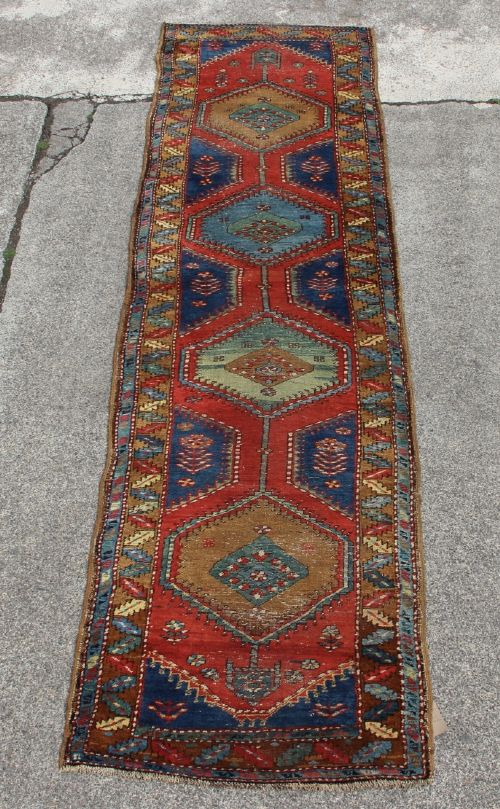
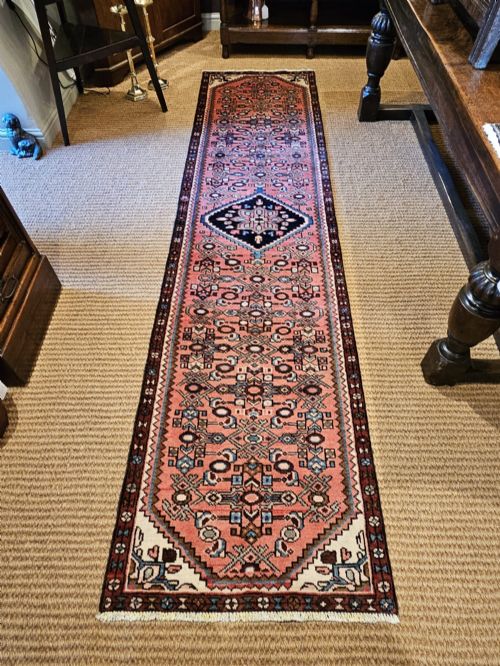
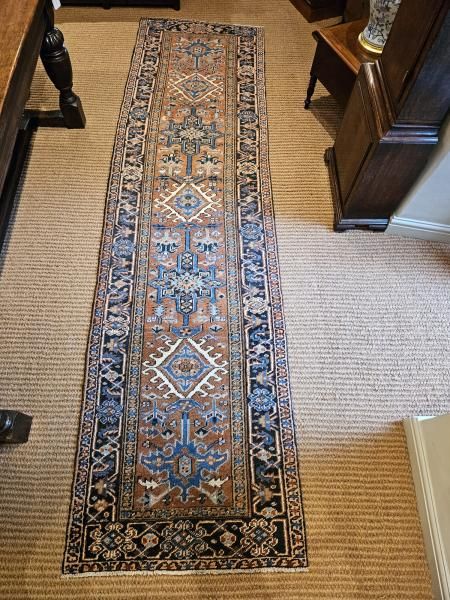
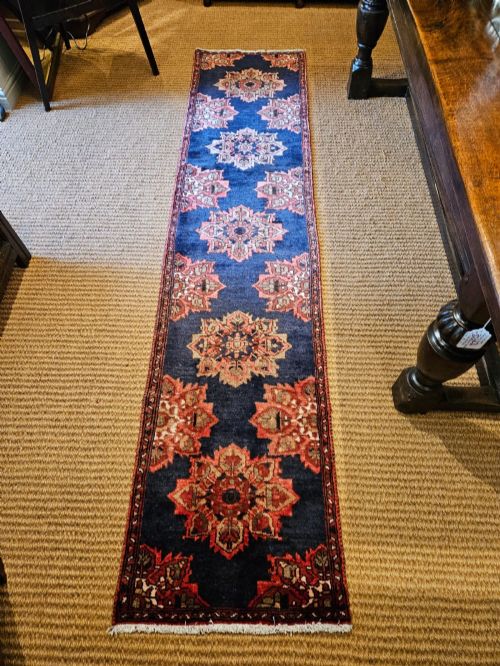

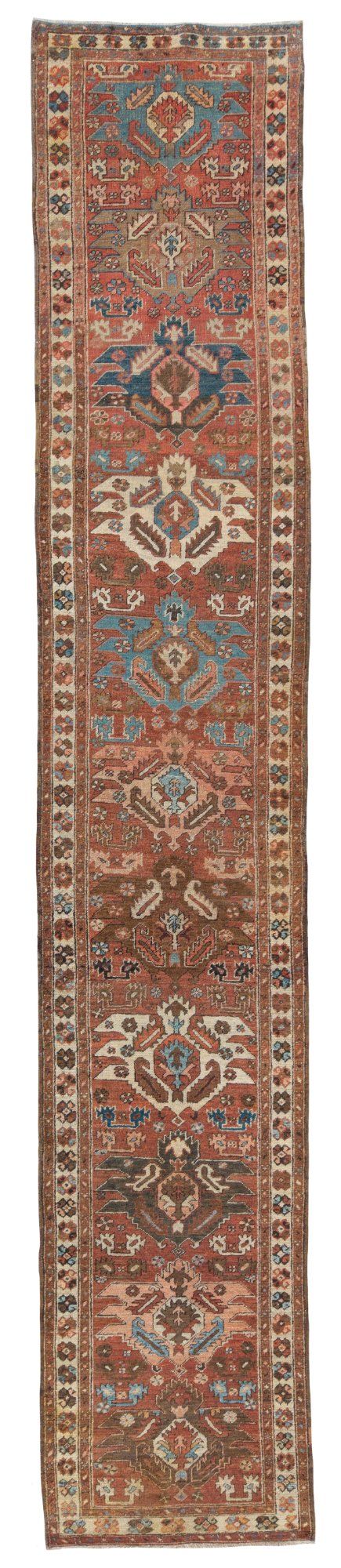
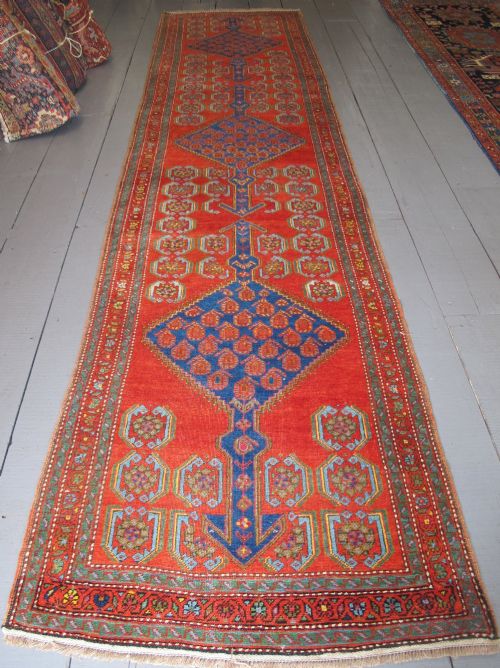


Terracotta Persian Hallway Runner
A terracotta persian hallway runner brings geometric warmth and enduring craftsmanship to narrow spaces through traditional regional weaving.
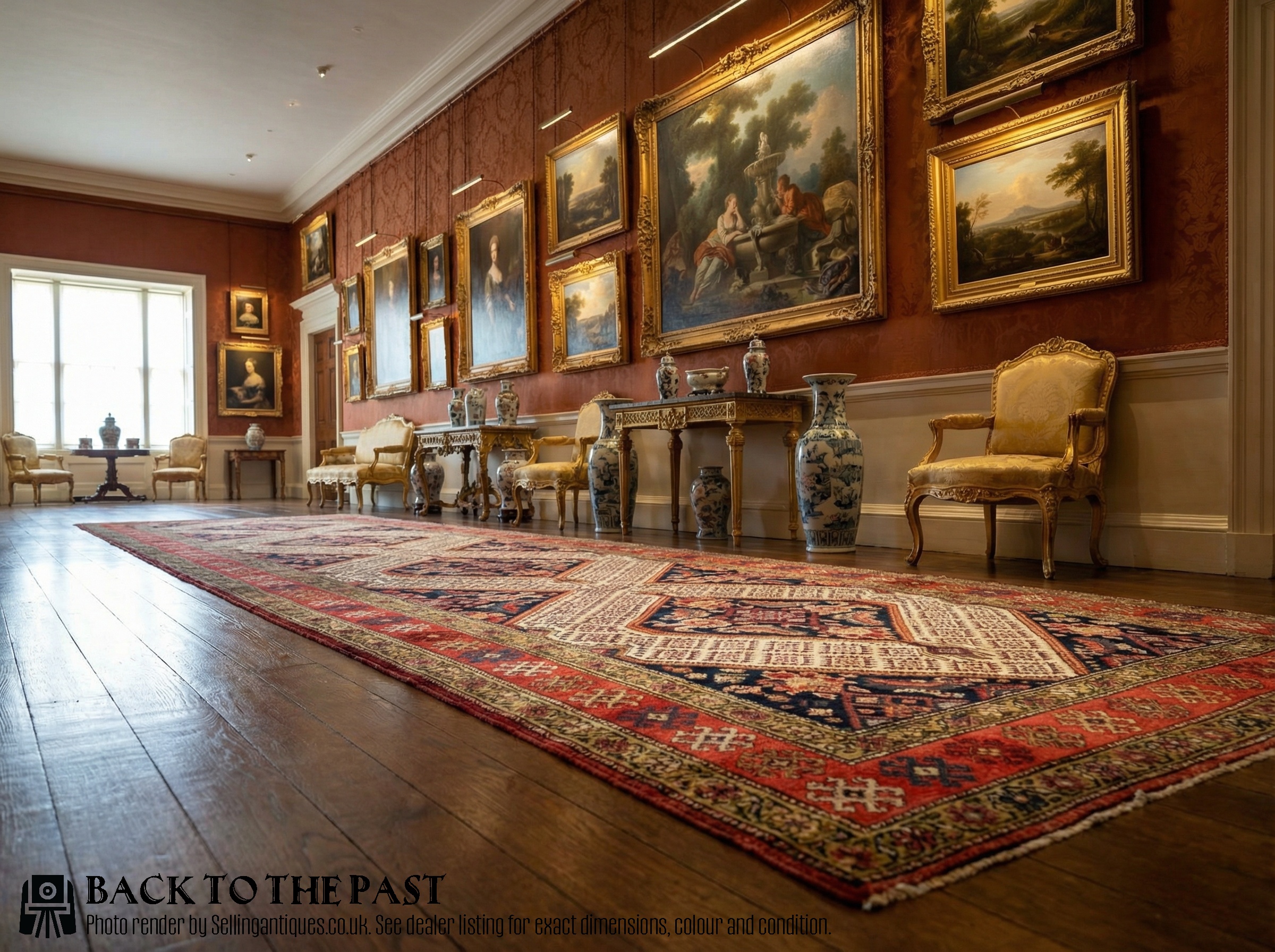
Terracotta Persian Hallway Runner
A terracotta persian hallway runner is a long, narrow floor covering designed for corridors, utilising earthy reddish-brown tones derived from regional materials. These textiles originate from nineteenth- and early twentieth-century weaving traditions across western Asia, including Heriz, Bidjar, Bakshaish, and Kurdish districts.
The pieces appearing on this page span several decades from the late nineteenth century into the twentieth century, specifically incorporating formats suited to lengthy domestic spaces. Buyers encountering these rugs meet traditional tribal and village designs characterised by repeating geometric medallions, all-over shrub patterns, and structured borders.
Most examples measure significantly longer than they are wide, fulfilling the practical purpose of carpeting passages while displaying notable regional artistry. The visual identity relies heavily on terracotta and rust hues combined with navy blue, ivory, and deep reds.
Materials and construction methods
These floor coverings rely primarily on wool and cotton foundations, utilising hand-spun wool for the pile to achieve durability and texture. Weavers employed natural dyes to colour the wool, resulting in rich terracotta, indigo, and madder tones that age with considerable character.
The construction involves hand-knotting techniques executed on vertical looms, creating dense structures capable of withstanding heavy foot traffic in corridors. Selected pieces incorporate flatweave kilim techniques alongside knotted pile work, demonstrating diverse regional construction methods from the nineteenth and early twentieth centuries.
The inventory includes specific regional types such as Heriz, Bidjar, Bakshaish, and Kurdish tribal runners in narrow corridor proportions.
Distinctions in quality
Quality in these runners depends heavily on the density of the knotting and the fineness of the wool used in the pile. Tighter knots allow for sharper geometric precision in patterns such as Heriz medallions or Bidjar room-size structures.
The depth and complexity of the natural dye palette also determine distinction, with varied terracotta and abrash colour shifts indicating skilled artisanal dyeing. Furthermore, the structural integrity of the cotton foundations and the regularity of the narrow proportions separate standard village pieces from exceptional regional examples.
The Terracotta Persian Hallway Runner Glossary
- Runner
- A long, narrow carpet format specifically proportioned for corridors, hallways, and stairs. These pieces measure significantly greater in length than width.
- Natural Dyes
- Colourants derived from plants, roots, and minerals rather than synthetic compounds. These materials yield rich terracotta, indigo, and madder tones that develop subtle variations over time.
- Hand-Spun Wool
- Sheep's fleece processed and spun by hand rather than by industrial machinery. This traditional method produces varied yarn textures that absorb natural dyes unevenly, creating depth.
- Kilim
- A flatweave textile produced without a pile by tightly interweaving warp and weft threads. These rugs often feature geometric bands and lightweight structures.
- Abrash
- A natural variation in colour shading across a rug caused by changes in dye batches or hand-spun wool. This tonal shift adds visual texture to terracotta and blue fields.
Terracotta Persian Hallway Runner: Frequently Asked Questions
Where should I place a long runner?
These narrow textiles suit high-traffic corridors, hallways, and entrance passages where length and durability are primary requirements. Their proportions also function effectively alongside galley kitchens or beside bedroom furniture.
Ensure you measure the available floor space carefully, leaving a consistent border of exposed wood or stone around the edges of the carpet.
How do I care for an antique wool runner?
Regular gentle vacuuming without a rotating brush roll prevents dust accumulation within the hand-spun wool pile. Professional cleaning suited for antique textiles should be utilised periodically.
Avoid exposing natural dyes to direct, prolonged sunlight to preserve the rich terracotta and indigo tones over the coming years.
What is the difference between Heriz and Bidjar runners?
Heriz runners typically display bold geometric medallions and strong, rectilinear formatting woven with sturdy wool foundations. They originate from northwestern districts known for robust village craftsmanship.
Bidjar pieces are frequently noted for exceptionally dense knotting and heavy structures, often referred to as the iron rugs of Kurdistan due to their resilience.
How can I tell the age of these textiles?
Age is indicated by the use of hand-spun wool, natural dye palettes, and specific structural characteristics associated with nineteenth and early twentieth-century production. Minor irregularities in symmetry often point to traditional village or tribal origin.
Comparing the border designs, knot density, and regional weaving styles helps place a runner within the 1870 to 1930 timeframe.