




Oriental Hallway Rug
An oriental hallway rug brings traditional pattern and enduring warmth to narrow spaces through centuries-old weaving traditions.
Oriental Hallway Rug
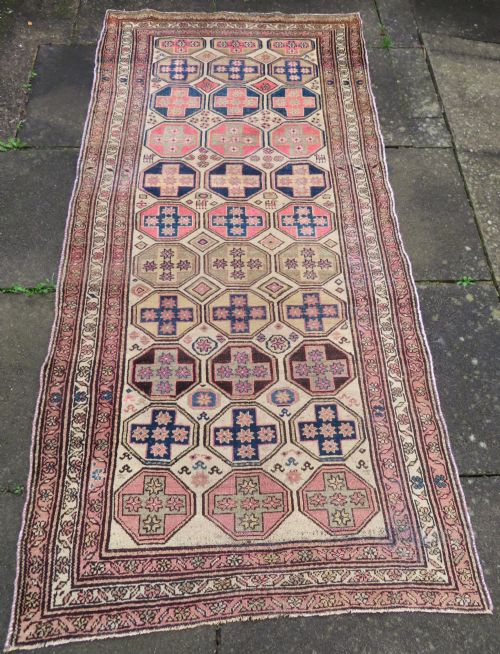
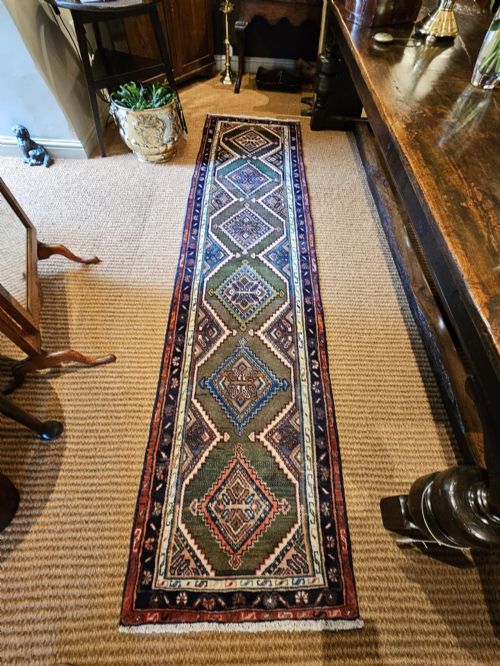
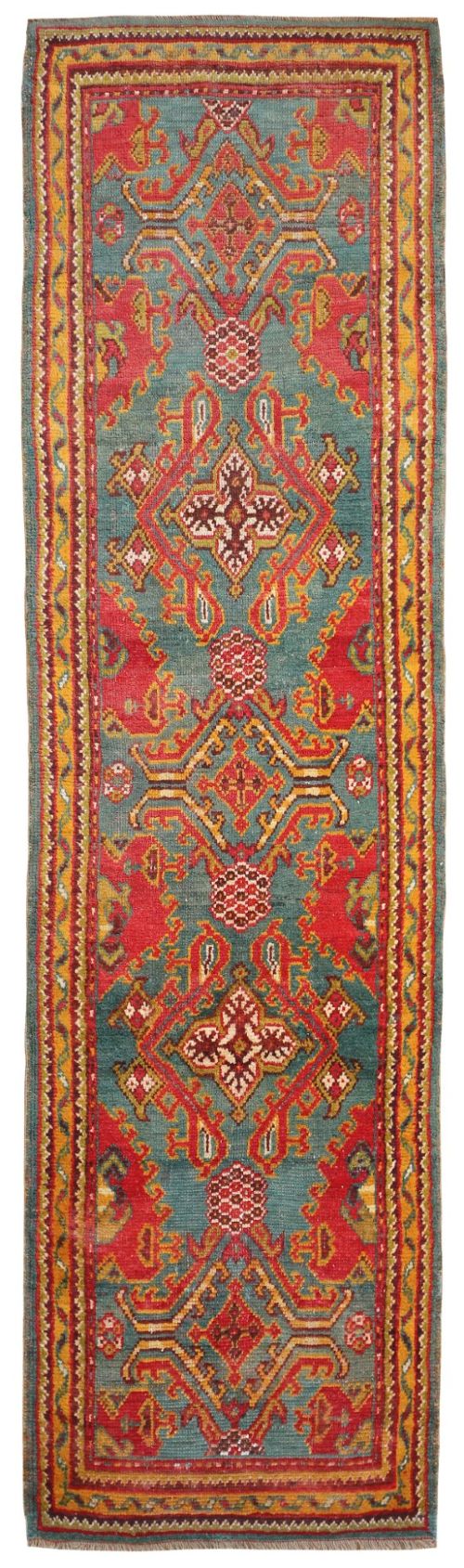
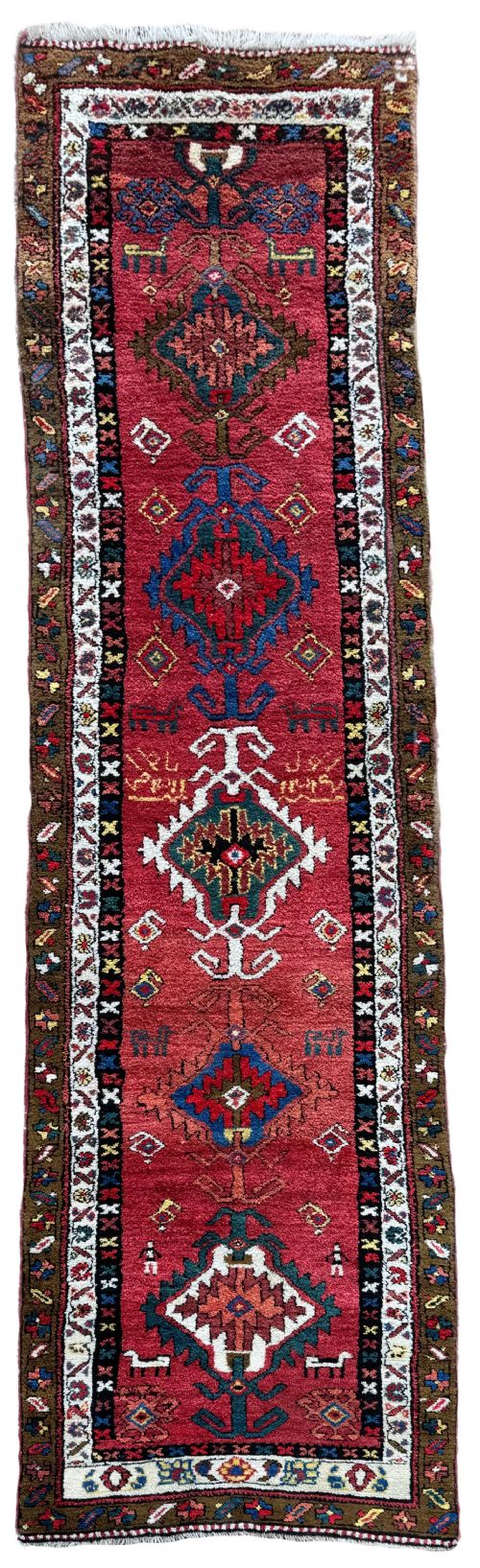
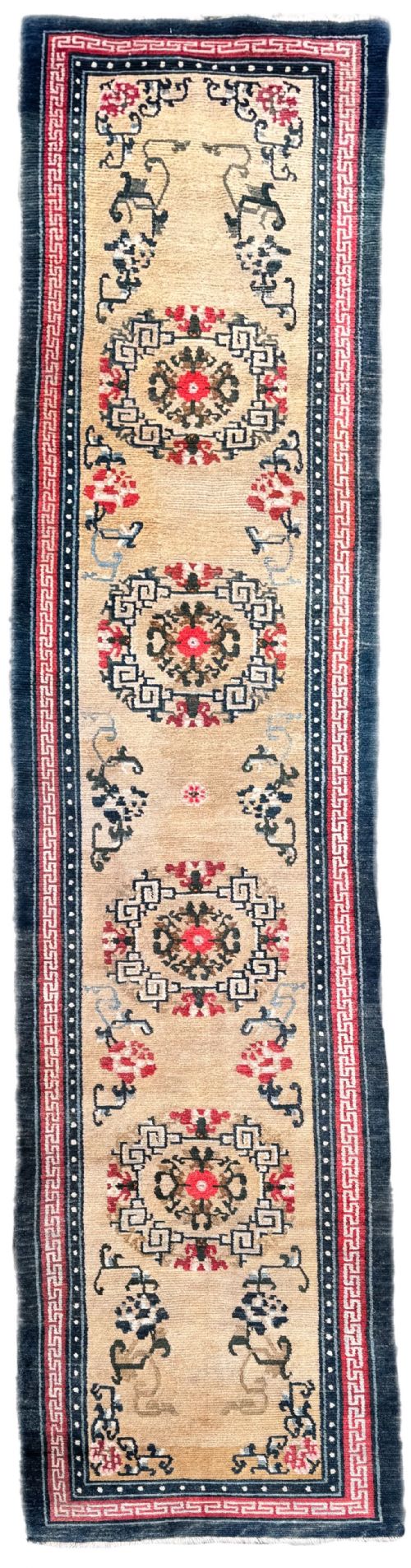
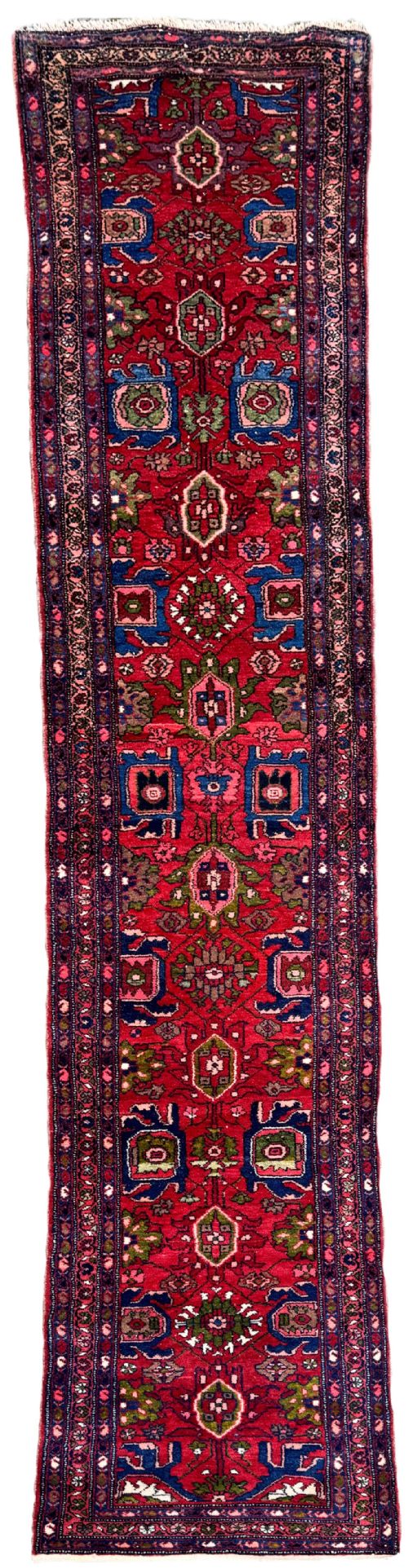
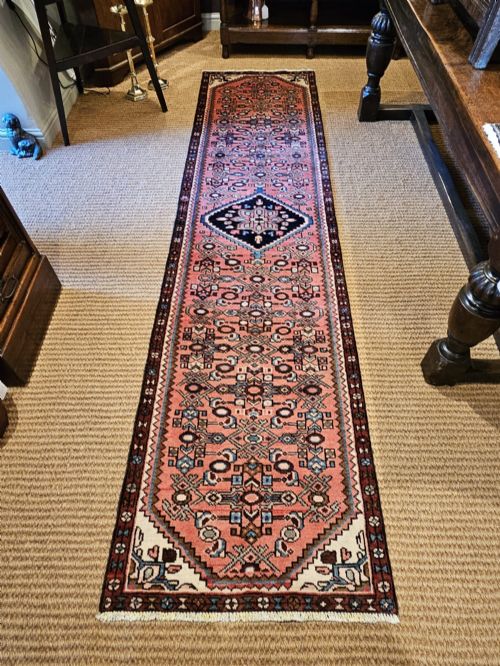
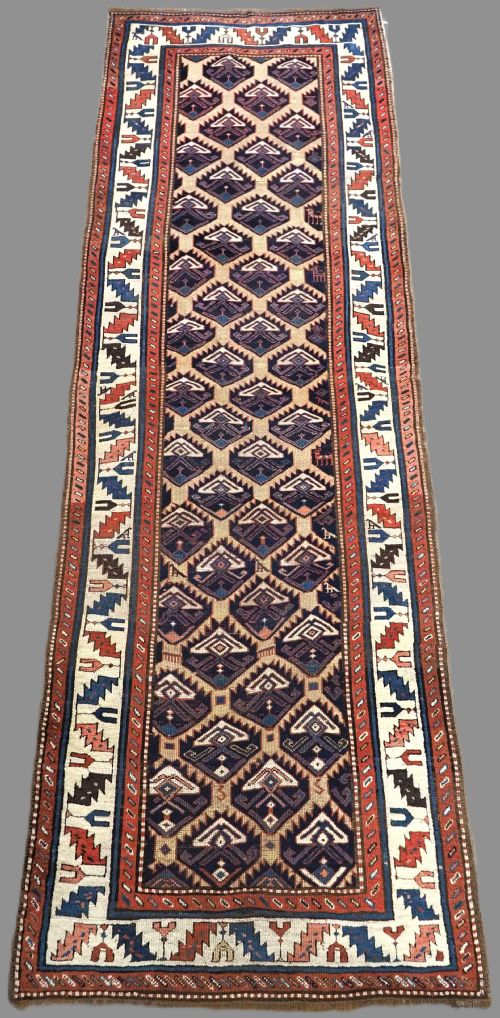
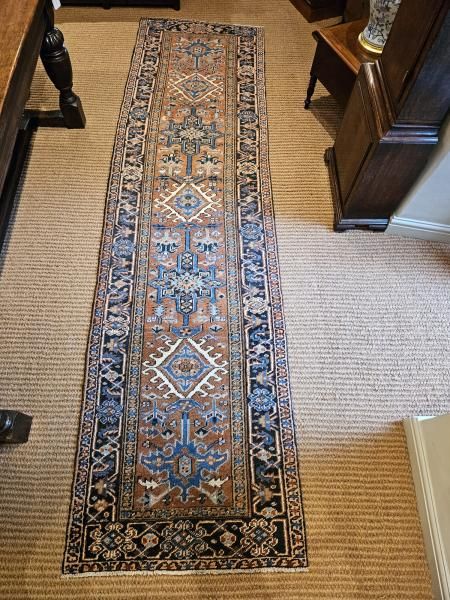
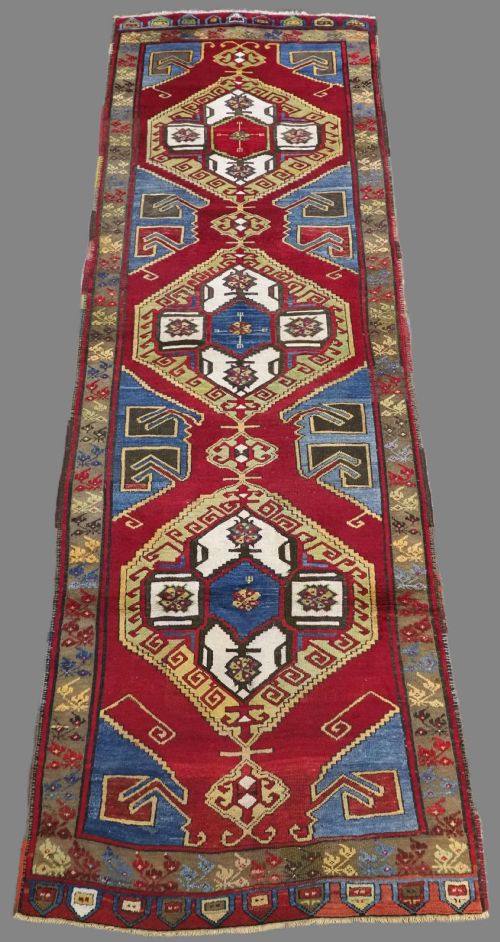
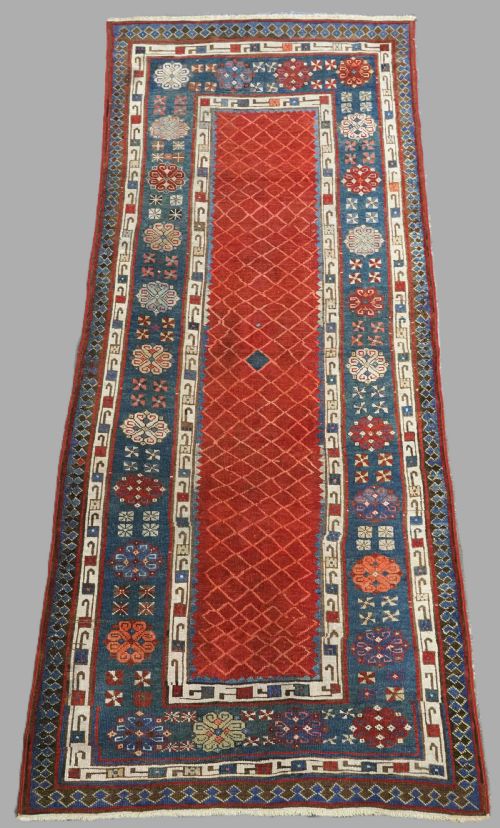
When searching for an oriental hallway rug, collectors and homeowners encounter elongated runner formats designed specifically for corridors, halls, and landings. These pieces originate from various weaving traditions across Persia, Turkey, the Caucasus, and Tibet, spanning from the late nineteenth century into the twentieth century.
The most common forms on this page are antique runner rugs and long rug runners measuring narrow widths alongside considerable lengths. These textiles utilise traditional geometric, lattice, and tribal motifs passed down through generations of regional weavers.
Materials and construction methods
The pieces recorded in these listings are constructed primarily from wool and cotton. Weavers utilised resilient wool for the pile to withstand heavy foot traffic in corridors, while cotton often served as the foundation warp and weft for structural stability.
Traditional handweaving techniques dominate these textiles, resulting in durable flatweaves and knotted pile carpets. Natural dyeing methods created the deep background colours seen across Turkish Oushak, Persian Heriz, and Caucasian Gendje examples.
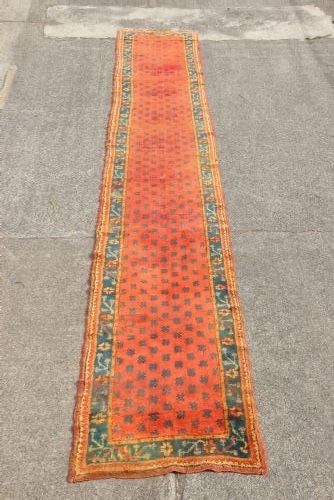
One exceptional hallway runner stretches an astonishing thirty-two feet in length, offering enough runway for the most enthusiastic corridor pacing.
Judging quality and character
Quality in these runners rests upon the tightness of the weave, the handling of the wool, and the clarity of the design motifs. Finer knot densities and carefully balanced natural dyes separate standard utility pieces from exceptional tribal and regional examples.
The integrity of the foundation and the uniformity of the runner width dictate the longevity of the textile. Pieces that retain their original borders and secure edges demonstrate superior preservation regardless of surface wear or age.
The Oriental Hallway Rug Glossary
- Runner
- A long, narrow carpet format specifically woven for hallways, corridors, and staircases. These pieces typically measure significantly greater in length than in width.
- Pile
- The vertical or slanted loops of yarn that form the soft surface of a knotted rug. Wool pile provides both cushioning and durability for high-traffic areas.
- Warp
- The stationary lengthwise threads stretched across a loom that form the foundational skeleton of the rug. Cotton is frequently utilised for this structural element.
- Weft
- The horizontal threads passed across and interlaced through the warp threads to hold the knots in place. Together with the warp, they create the sturdy foundation grid.
- Lattice design
- A repeating geometric grid pattern framework enclosing secondary motifs or floral ornaments. This layout appears frequently in Caucasian and Persian runner traditions.
Oriental Hallway Rug: Frequently Asked Questions
How do I measure for a hallway runner?
Measure the clear floor space of your corridor while leaving an even border of exposed wood or stone around the perimeter. Ensure doors can swing freely over the thickness of the wool pile.
Account for any radiators, skirting boards, or architectural projections that might restrict the maximum width or length of the rug.
Are these rugs suitable for heavy traffic?
Wool pile construction naturally resists dirt and withstands the continuous foot traffic typical of hallways and landings. Regular rotation helps distribute wear evenly across the length of the runner.
Using a quality underlay beneath the rug prevents slipping and provides extra cushioning against hard flooring.
How do I distinguish regional rug styles?
Caucasian runners often feature sharp geometric lattices and crisp primary colours, whereas Persian Heriz and Kurdish pieces display bolder tribal medallions and earthy tones. Turkish Oushak and Ushak runners tend toward softer, muted palettes and larger-scale floral elements.
Examining the knotting style and border motifs helps identify the specific weaving origin.
How should I clean an antique wool runner?
Gentle vacuuming without a rotating brush roll removes everyday dust and loose debris from the wool pile. Professional specialist cleaning remains essential for addressing deeper soil or spills.
Avoid soaking the cotton foundation or using harsh chemical detergents that can damage natural dyes.