




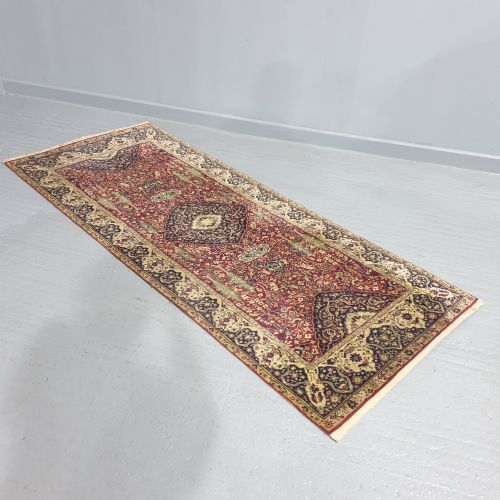

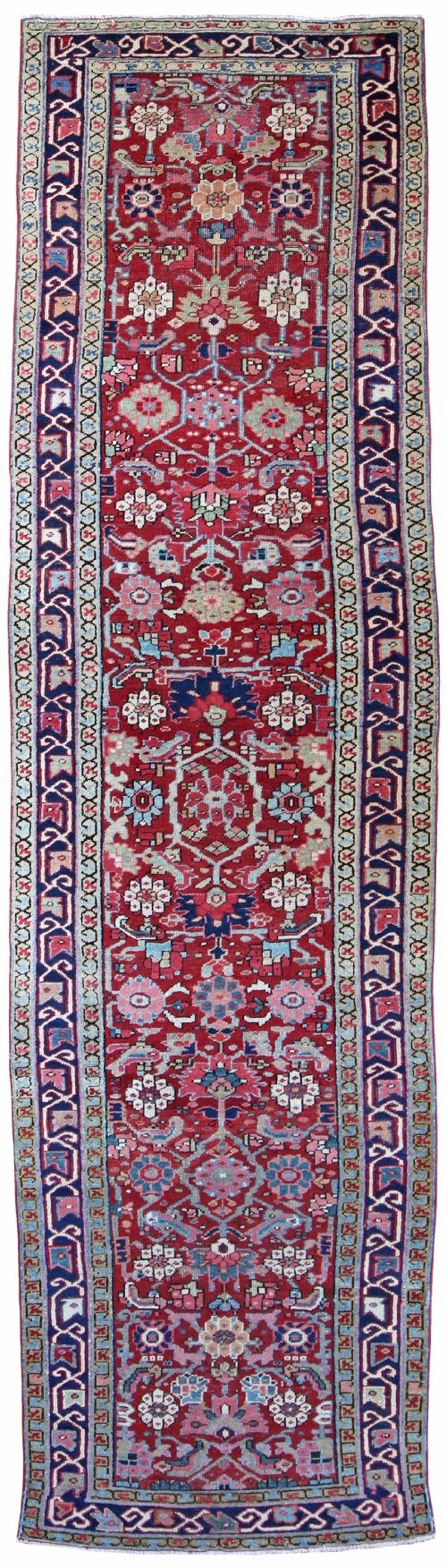
Crimson Persian Hallway Runner
These crimson persian hallway runner examples offer rich wool floor coverings designed to anchor long spaces with traditional craftsmanship.
Crimson Persian Hallway Runner
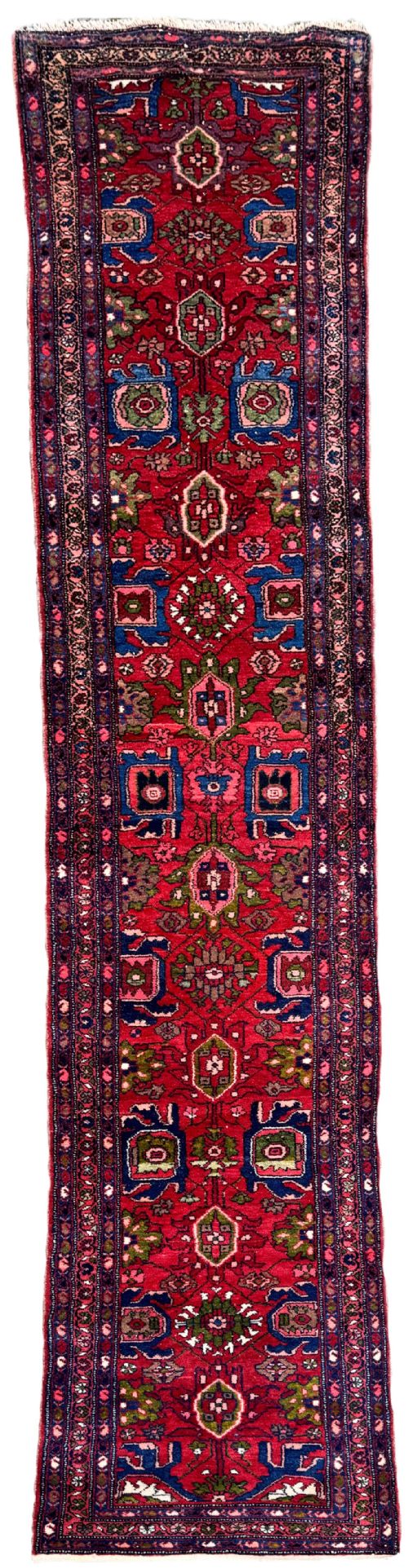
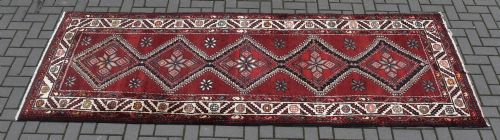
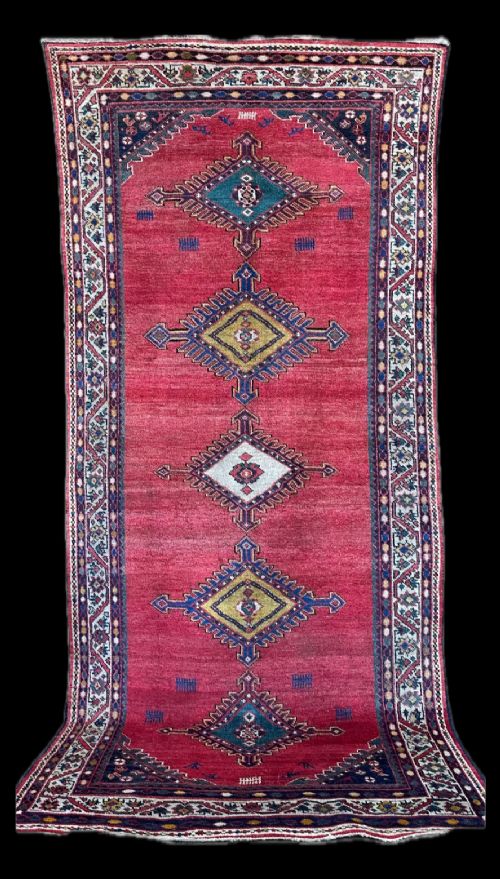
A crimson persian hallway runner is a long, narrow floor covering suited for corridors, halls, and landings. These pieces draw on traditional rug-making traditions originating from Persian weaving centres and tribal regions.
You will most commonly encounter antique and vintage examples dating from the late nineteenth century through to the mid-twentieth century. The selection includes specific regional styles such as Heriz, Hamadan, Feraghan, Sarouk, and Kurdish village weaves.
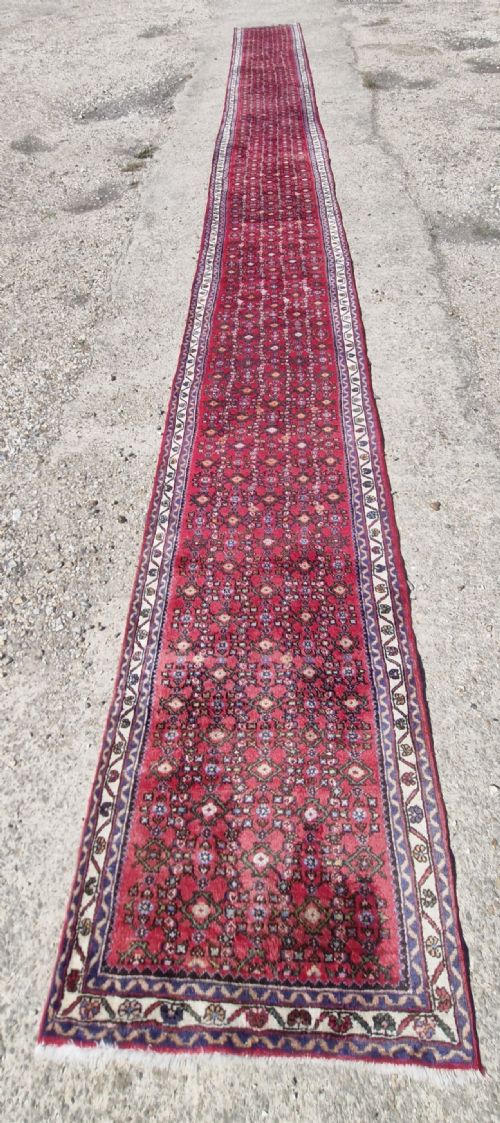
Formats range from standard corridor lengths to exceptionally long narrow proportions measuring over seven or thirty metres. They provide practical floor protection while bringing deep red tones and intricate patterning into interior spaces.
How they were made
These runners are handwoven using natural wool for the pile and cotton for the foundational warps and wefts. The textile construction relies on traditional hand-knotting techniques performed on vertical looms.
Weavers utilised natural and traditional dye sources to achieve deep crimson and red ground colours. The resulting structure combines resilient wool pile with durable cotton foundations designed to withstand heavy corridor traffic.
One extraordinary piece stretches to thirty-two feet, proving that past weavers took serious hallway marathons in their stride.
What varies in quality
Quality in these long formats rests upon the integrity of the wool, the precision of the hand-weaving, and the clarity of the design. Finer knot density allows for sharper geometric or floral motifs along the narrow field.
Proportion and scale also dictate desirability, particularly in exceptionally long runners that maintain uniform width and straight edges over extended lengths. The depth and saturation of the crimson dye work further elevate the visual impact.
The Crimson Persian Hallway Runner Glossary
- Heriz
- A style originating from North-West Persia known for bold geometric medallions and robust wool construction. These pieces often feature large-scale graphic motifs.
- Hamadan
- A regional classification covering hundreds of villages in western Persia that produced durable runners with distinctive medallion or repeated field patterns. They utilise sturdy cotton foundations.
- Feraghan
- A type originating from the Feraghan district recognised for fine weave quality and sophisticated classical floral designs. Collectors prize their refined handling of traditional palettes.
- Warp
- The vertical threads stretched lengthwise on the loom that carry the tension of the weave. In these pieces, the warp is typically made from cotton.
- Pile
- The dense surface layer of hand-knotted wool that forms the visible and tactile part of the rug. High-grade pile offers better resilience underfoot.
Crimson Persian Hallway Runner: Frequently Asked Questions
How do I choose the right length?
Measure your hallway carefully, leaving a uniform border of exposed flooring around the perimeter of the rug. Consider whether you need a standard corridor length or an exceptionally long format for extended landings.
Ensure doorways can swing freely over the thickness of the wool pile and cotton foundation. A proper fit enhances both the safety and the visual balance of the hallway.
Where do these runners work best?
These narrow formats suit long hallways, corridors, stair landings, and narrow kitchen spaces. Their linear proportions guide the eye through architectural transitional areas.
Rich crimson tones add warmth and depth to high-traffic circulation zones. They function effectively on timber, stone, or tiled flooring.
How do I care for an antique wool runner?
Vacuum the rug gently and regularly using suction only, avoiding the rotating brush bars that can damage hand-knotted wool pile. Rotate the runner periodically to ensure even wear across the length.
Use a quality underlay to prevent slipping and reduce friction between the cotton foundation and the floor. Professional cleaning by a specialist in antique textiles is recommended when deep maintenance is needed.
How do I identify a regional style?
Examine the specific patterning, such as the bold geometric medallions typical of Heriz weaving or the village motifs associated with Hamadan production. The tightness of the weave and the handling of the crimson ground colour offer further clues.
Consult the listed origin and period details to understand the traditional characteristics of each specific weaving region. Comparing knot structure and wool texture helps distinguish tribal pieces from workshop productions.