
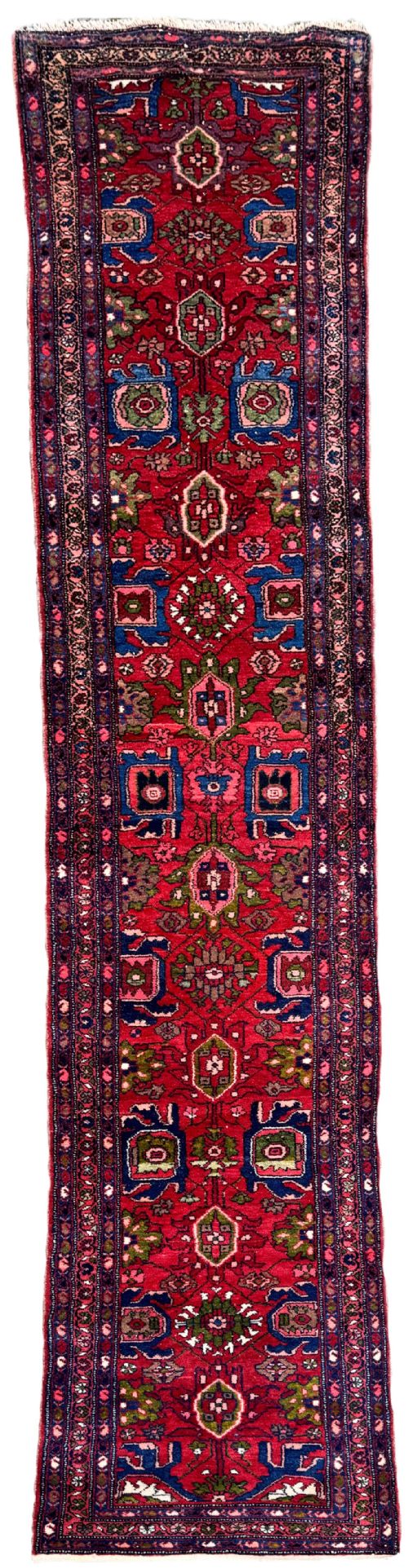


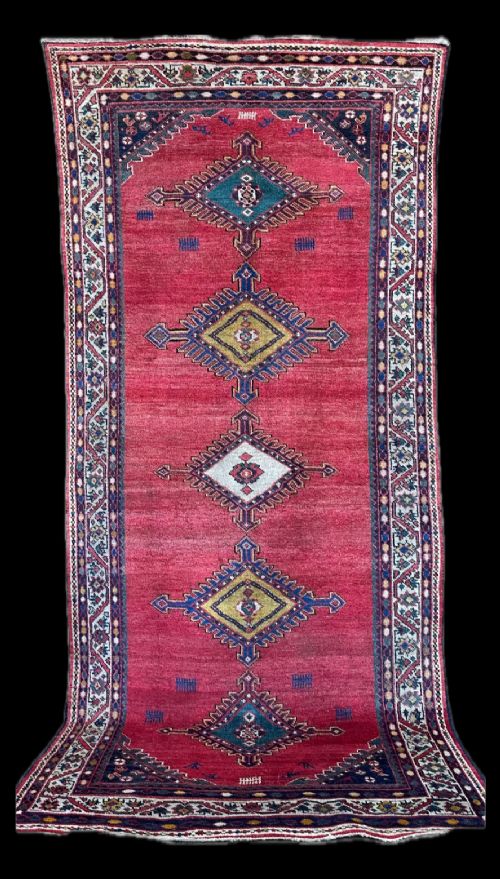


Long Red Persia Runner
A long red persia runner brings deep colour and centuries of village craftsmanship straight to narrow hallways and corridors.
Long Red Persia Runner
A long red persia runner is a floor covering designed specifically for hallways, corridors and narrow interior spaces. The selection on this page focuses heavily on village and tribal weaves from nineteenth and early twentieth century Persia, including Hamadan, Kurdish, Heriz and Bidjar origins.
Most examples take the form of narrow runner rugs and long carpets spanning from the late Victorian era up to the nineteen-twenties. These pieces utilise traditional Persian village aesthetics, often dominated by rich red fields paired with geometric or tribal motifs.
Buyers seeking a long red persia runner will encounter formats that stretch well over three metres in length while maintaining a slender profile suited for long walkways. The designs reflect the heritage of specific weaving regions across North-West Persia and beyond.
Materials and construction
These floor coverings are constructed primarily from natural wool pile woven onto supportive cotton foundations. The heavy use of resilient wool gives each runner the durability required for heavy foot traffic in busy hallways.
Weavers utilised traditional hand-knotting techniques alongside sturdy warps and wefts to create dense, long-lasting textile structures. Natural dye traditions provided the deep red tones that anchor the colour palettes of these village rugs.
One exceptional narrow Kurdish runner even preserves the woven figures of two local tribeswomen within its deep red field.
Judging quality in Persian runners
Quality in these runners rests on the tightness of the knotting and the precision of the village design work. Denser knots allow intricate geometric patterns and border details like the crab motif to remain crisp and well-defined.
The condition of the wool pile and the integrity of the cotton foundation determine how well a piece has survived decades of domestic use. Strong, even pile and stable edges distinguish exceptional tribal weaving from heavily worn examples.
Waring and Gillow
The Long Red Persia Runner Glossary
- Runner
- A long, narrow carpet format designed primarily for hallways, stairs and corridors. These rugs measure significantly longer than they are wide.
- Knot density
- The number of knots per square unit, which dictates the fineness and durability of the woven pile. Higher densities allow for sharper pattern definition.
- Foundation
- The underlying structure of warps and wefts that supports the visible wool pile. Cotton is the standard material used for these foundational threads in the listed pieces.
- Harshang
- A traditional geometric border pattern often referred to as the crab design. It appears frequently in North-West Persian village weaving.
- Kelleh
- A large format rug or long carpet that is longer than a standard scatter rug but broader than a narrow corridor runner.
Long Red Persia Runner: Frequently Asked Questions
Where should I place a long runner?
These narrow carpets suit hallways, corridors and long entryways where floor space is restricted. Their elongated proportions draw the eye along the length of the room while protecting high-traffic wooden floors.
Positioning a runner away from heavy moisture keeps the natural wool and cotton fibres stable over time. They also work effectively in narrow kitchens or alongside large beds.
How do I care for antique wool rugs?
Regular gentle vacuuming without a rotating brush roll prevents dust from settling deep into the wool pile. Professional cleaning by specialists in antique textiles ensures the natural dyes remain protected.
Rotating the runner periodically balances wear across the length of the piece if placed in a high-traffic hallway. Using a quality underlay prevents slipping and cushions the foundation against hard floors.
How can I tell the age of a Persian runner?
Age is identified through structural clues, dye characteristics and traditional regional design motifs seen across the piece. Late nineteenth and early twentieth century examples show specific wool textures and hand-spun irregularities distinct from modern production.
Examining the sides, ends and foundation threads helps reveal the age and authentic village origin of the rug. Natural variations in the red dye field often point towards traditional preparation methods.
What does tribal Persian design mean?
Tribal Persian design refers to geometric patterns and stylized motifs created by nomadic or village weavers rather than city workshops. These designs rely on generational knowledge and local symbolic forms rather than printed templates.
Runners from regions like Kurdistan, Hamadan and Heriz exhibit these distinct village characteristics. The resulting aesthetics feature bold medallions, repeating geometric borders and deeply saturated red fields.