








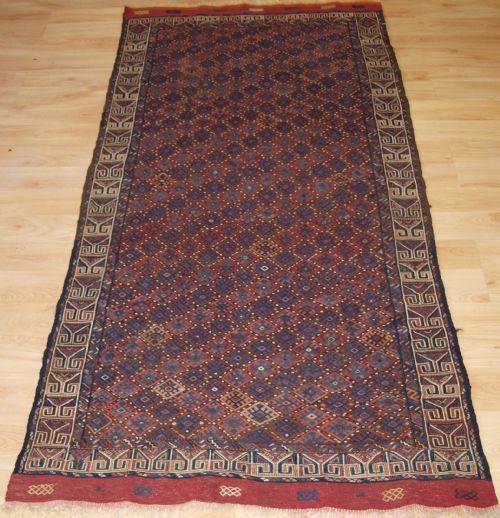


Dark Blue Hallway Rug
A dark blue hallway rug brings depth and steady colour to a narrow space through hand-knotted wool and traditional tribal patterns.
Dark Blue Hallway Rug
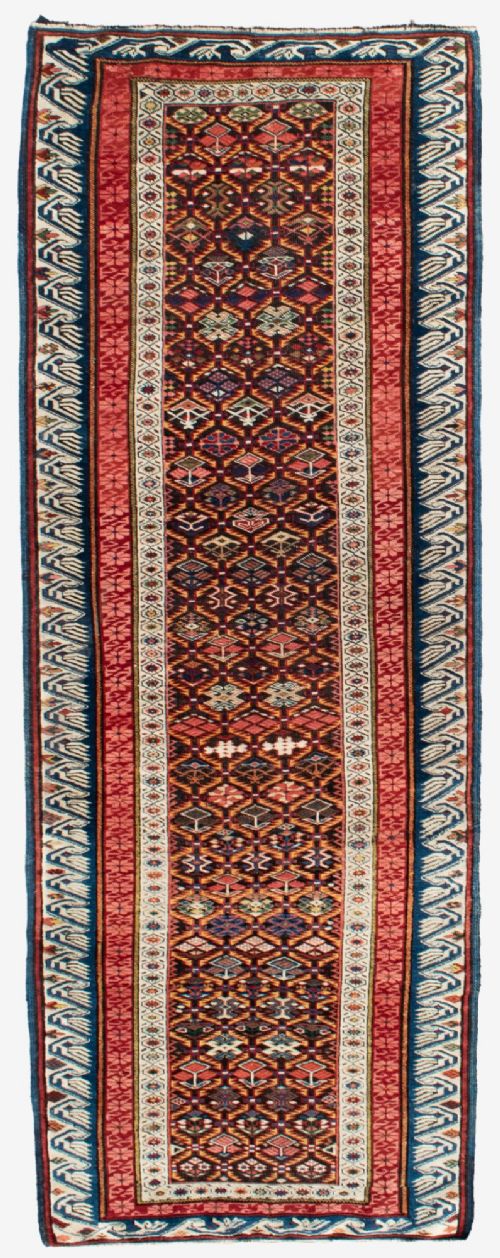
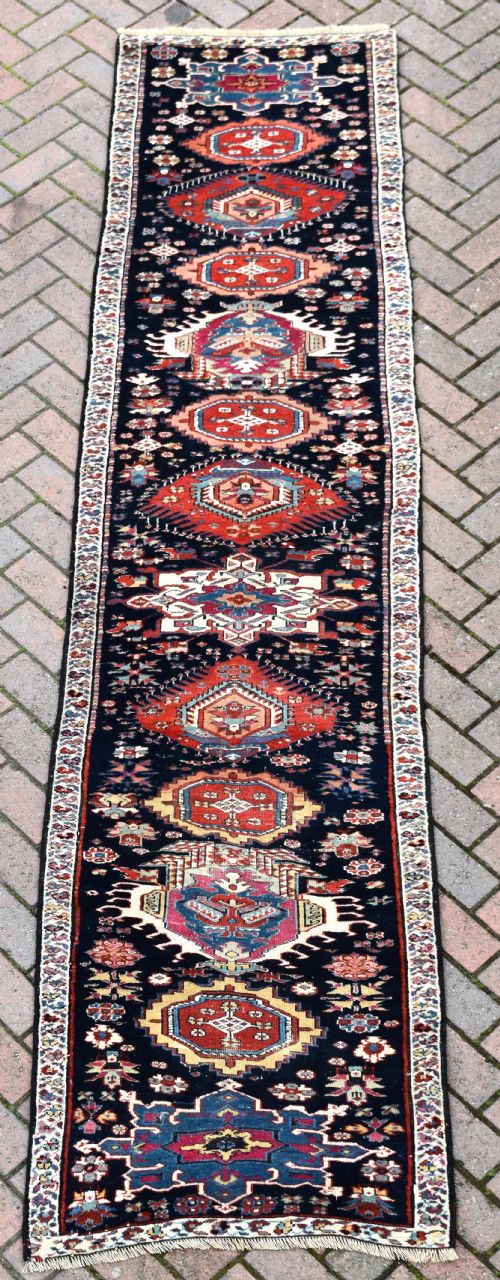
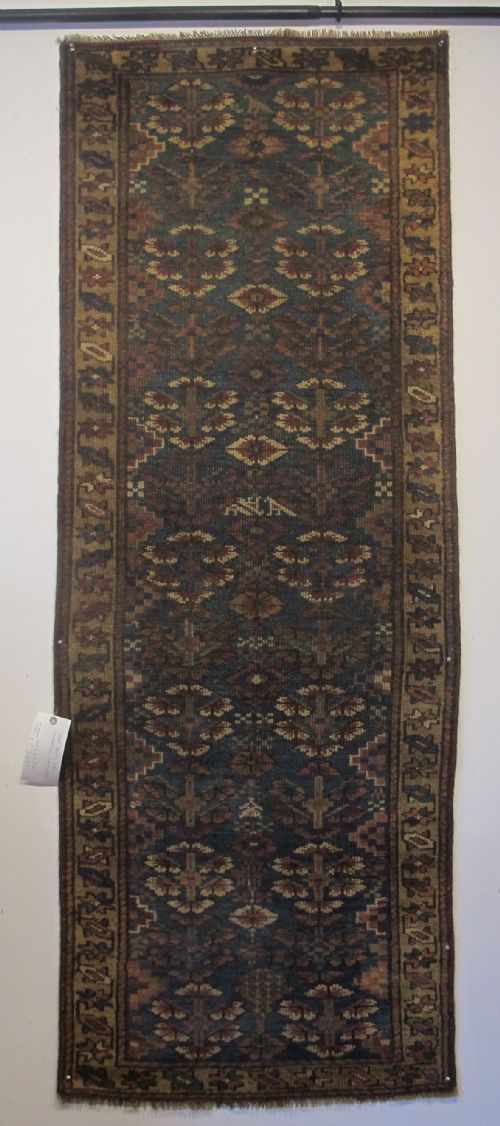
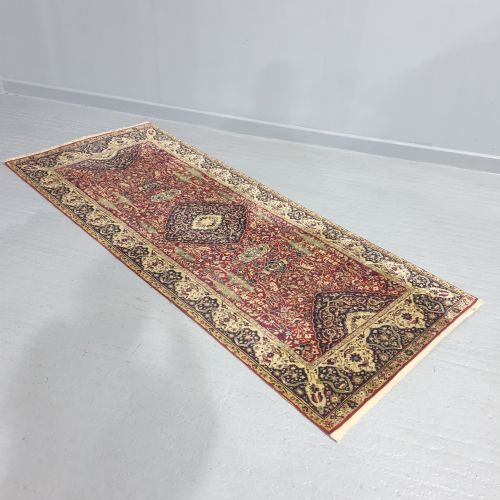
A dark blue hallway rug typically takes the form of an elongated runner designed for corridors and narrow passages. These pieces span production from the late nineteenth century into the early decades of the twentieth century, originating largely from Persian and Anatolian weaving traditions.
The format appears as narrow runners and long rugs created by village and tribal makers. Examples include specific regional types such as Heriz, Kurdish, Gendje, and Seychor pieces.
Buyers encounter formats built for high-traffic corridors, often featuring dense geometric arrangements or stylized floral motifs. The palette relies heavily on deep indigo and navy grounds contrasted with ivory, madder red, and secondary blues.
Materials and construction
Construction relies upon hand-spun wool pile knotted onto sturdy foundations of wool or cotton. Natural dyes provide the rich indigo and blue tones that anchor the palette of these antique runners.
Weavers utilised traditional upright looms, employing symmetrical or asymmetrical knots depending on the regional workshop or tribal origin. The resulting textiles combine supple handle with durable pile suited to heavy domestic use.
Dark Blue Hallway Rug Retail Price Guide 2026
Typical asking prices for dark blue hallway rug among the pieces listed under this phrase on Sellingantiques today, from the lower quarter to the upper quarter. They describe what is for sale here now, not the wider market.
Certain antique Kurdish runners preserve the stitched signatures and spirited depictions of local tribeswomen right inside the wool border.
Factors of quality
Quality reveals itself in the crispness of the drawing and the saturation of the indigo dye. Tighter knot density and finer wool preparation separate superior village and tribal pieces from simpler commercial output.
The integrity of the original side cords, known as selvages, and the completeness of the end finishes distinguish well-preserved examples. Proportion also dictates quality, with narrower, elongated formats remaining sought after for specific corridor layouts.
The Dark Blue Hallway Rug Glossary
- Runner
- A long, narrow carpet format specifically proportioned for corridors, hallways, and staircases. These pieces measure significantly longer than they are wide.
- Suleymani
- A regional designation often associated with traditional Anatolian and Persian pile weaving. It denotes specific structural characteristics and wool preparation.
- Soumak
- A flat-weave technique where pattern threads wrap over the warp threads before passing back, creating a textured surface resembling embroidery on the reverse.
- Knot density
- The number of knots per square unit of rug, which influences the definition of the design and the durability of the pile.
- Selvage
- The finished vertical edge of a rug formed by wrapping the outermost warp threads, preventing the sides from unravelling.
Dark Blue Hallway Rug: Frequently Asked Questions
How do I choose the right length for a hallway?
Measure your corridor length while leaving an equal margin of bare floor visible around the perimeter of the rug. This frames the textile properly within the architectural space.
Account for door clearances at both ends so the door swing passes freely over the pile without catching.
Where should I place a narrow tribal runner?
These elongated formats suit high-traffic thoroughfares such as entrance hallways, landing corridors, and gallery spaces. Their durable wool construction handles frequent foot traffic effectively.
Keep them away from continuous direct sunlight to protect the natural indigo and madder dyes from fading over time.
How do I identify a Kurdish or Persian village rug?
Look for characteristic geometric medallions, asymmetric tribal motifs, and saturated blue or red wool grounds. Regional quirks in border arrangements often point to specific tribal groups.
Examine the back of the rug to observe knot patterns and structural irregularities typical of independent village workshops rather than urban factories.
What underlay should I use for antique hallway runners?
Select a breathable, mesh-style rug pad designed specifically for historic textiles on wooden or stone floors. This prevents slipping while allowing air circulation beneath the wool pile.
Avoid rubber-backed grips that trap moisture and can degrade the original cotton or wool foundation yarns.