




Heriz Hallway Runner Rug
A heriz hallway runner rug brings geometric structure and deep colour to narrow spaces, woven in North-West Persia across the late nineteenth and early twentieth centuries.
Heriz Hallway Runner Rug
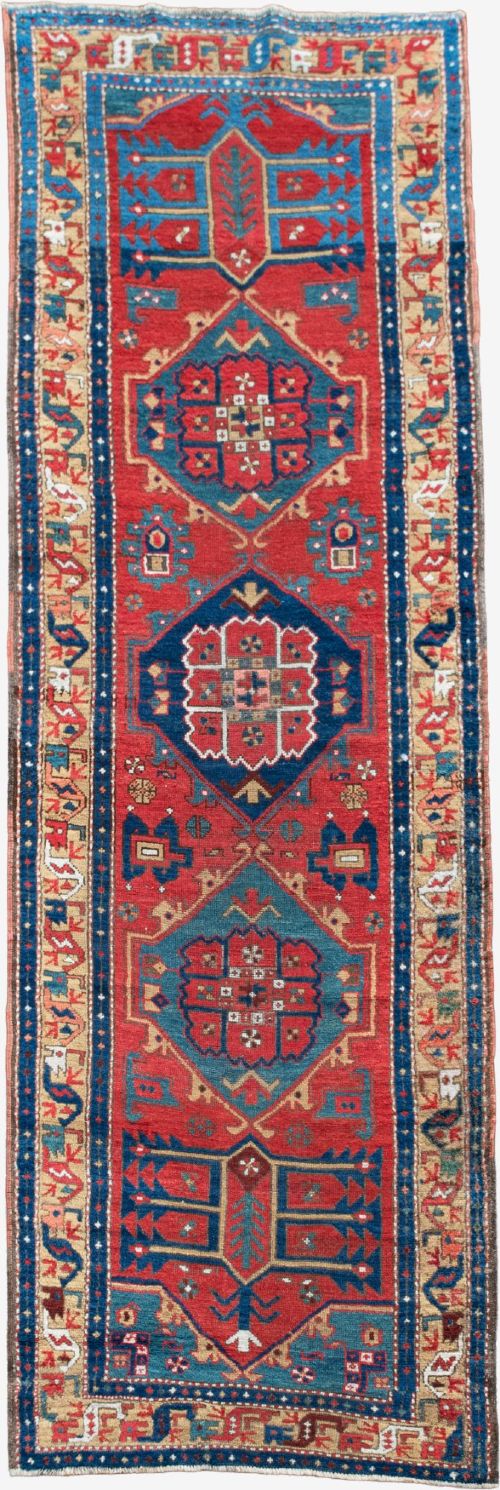
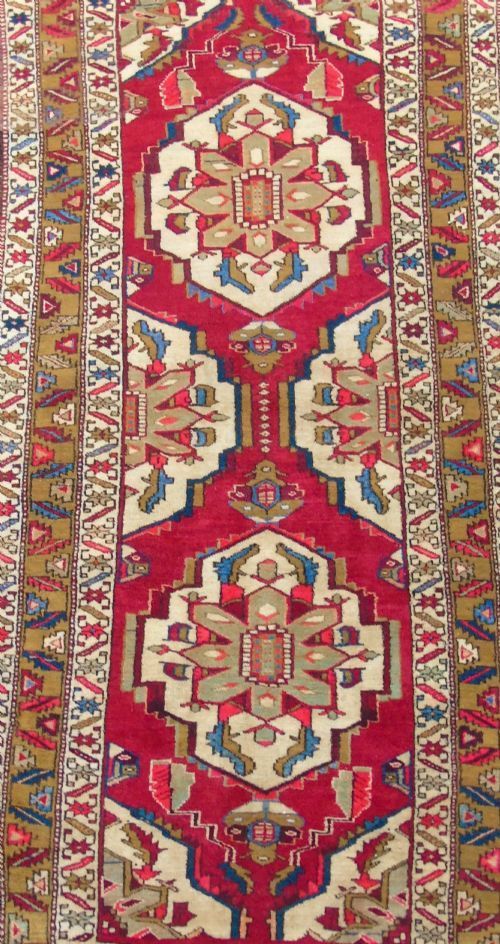
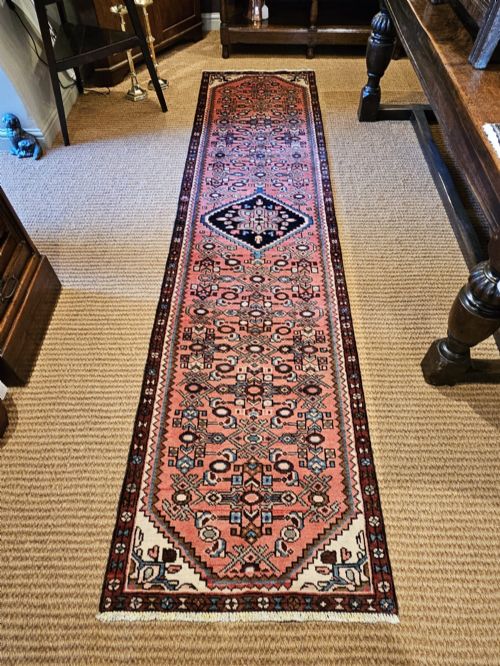
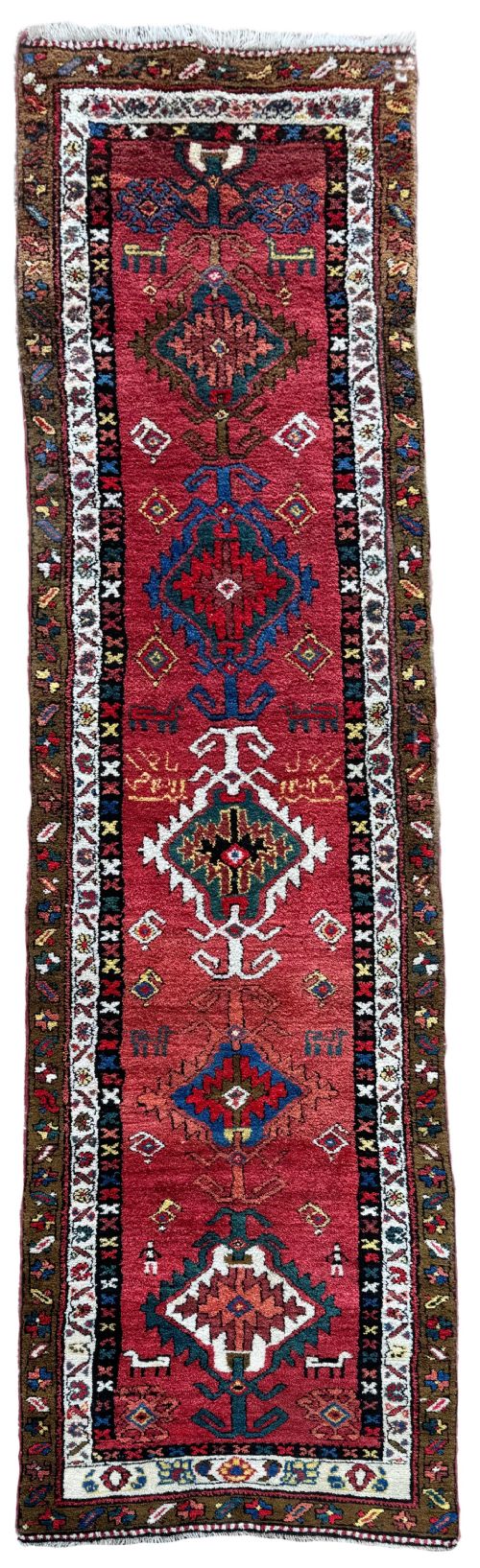
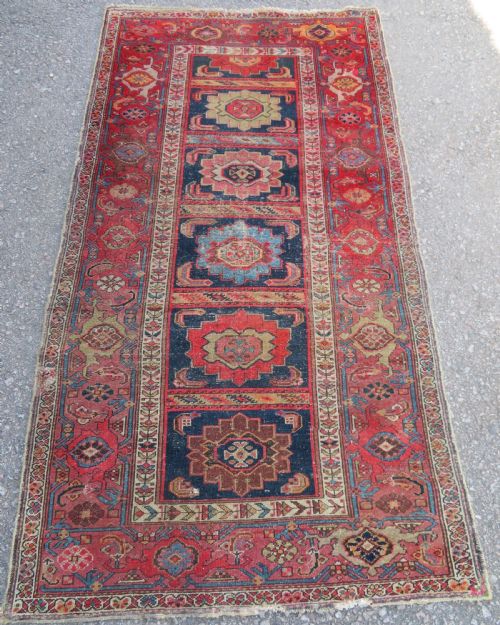
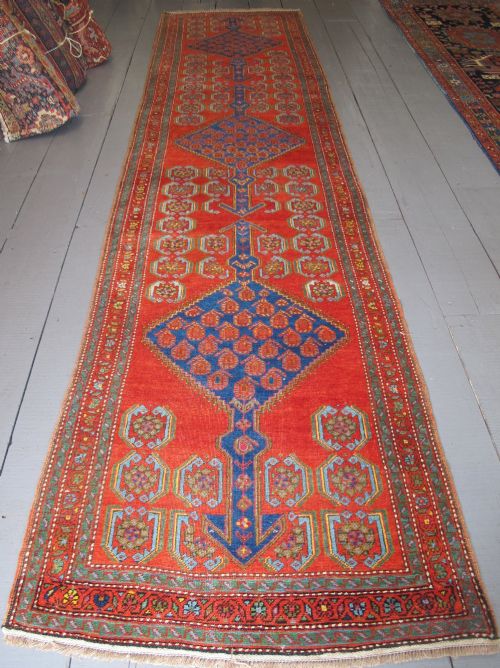
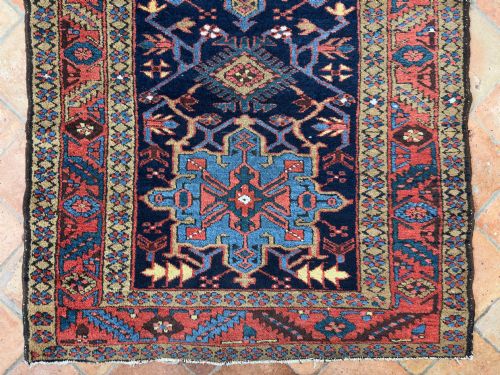
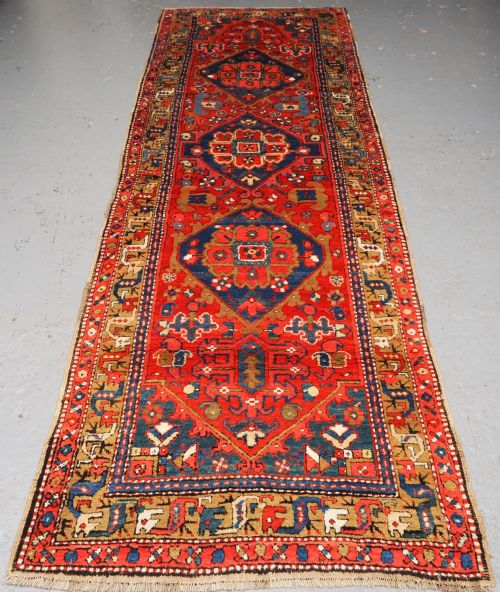
A heriz hallway runner rug is a long, narrow floor covering originating from the villages and towns of North-West Persia. These pieces were designed specifically to fit corridors, hallways, and galleries, providing robust floor protection with distinct tribal and traditional Persian patterns.
The selections available here span from the eighteen-eighties to the nineteen-thirties, encompassing regional variants such as Karaja, Serapi, Gorevan, Bakshaish, and Hastrud. Most examples meet the eye with sturdy, elongated proportions and large geometric medallions that anchor long walkways.
How They Were Made
These runners are built on sturdy cotton foundations that provide the structural grid for the weave. Wool pile is hand-knotted tightly onto this cotton base, creating a dense and resilient surface suited to heavy foot traffic in corridors.
Weavers utilised hand-spun wool dyed with traditional vegetable and natural colourants. This combination gives the pile a rich depth and allows the tones to soften gracefully over decades of use.
Heriz Hallway Runner Rug Retail Price Guide 2026
Typical asking prices for heriz hallway runner rug among the pieces listed under this phrase on Sellingantiques today, from the lower quarter to the upper quarter. They describe what is for sale here now, not the wider market.
Listings span four decades from eighteen-eighties to nineteen-thirties, using wool and cotton.
What Varies in Quality
The distinction in quality lies in the crispness of the geometric drawing and the balance of the central medallion within the narrow field. Tighter knotting allows for sharper lines in the intricate tribal motifs.
Proportion and scale dictate the visual success of a corridor carpet, where narrow widths demand precise framing to maintain harmony along the length of the runner.
Waring and Gillow
The Heriz Hallway Runner Rug Glossary
- Medallion
- A large central ornamental design motif placed in the middle of the rug field. Heriz runners frequently employ bold, geometric versions of this design.
- Pile
- The upright yarn loops that form the soft surface of the rug. It is traditionally woven from wool in these North-West Persian pieces.
- Warp
- The vertical threads stretched tightly on the loom that hold the entire structure of the rug. In these pieces, the warp is made from cotton.
- Weft
- The horizontal threads passed through the warp lines to lock the knots in place. This forms the firm foundation grid beneath the wool pile.
- Gallery carpet
- A term used for exceptionally long rugs designed for spacious corridors or large exhibition halls. They share the same robust weaving traditions as hallway runners.
Heriz Hallway Runner Rug: Frequently Asked Questions
Where should I place a heriz hallway runner rug?
These long formats suit narrow entryways, corridors, and long hallways where foot traffic is heavy. Their linear proportions guide the eye down the passage while protecting wooden floors.
Ensure you measure the clear width between skirting boards so the runner sits centrally without curling at the edges.
How do I care for an antique wool runner?
Vacuum the rug gently on a low suction setting without a rotating brush roll to protect the vintage wool pile. Professional cleaning is recommended every few years to preserve the natural lanolin in the fibres.
Keep the runner out of direct, prolonged sunlight to prevent the natural dyes from fading unevenly over time.
How do I distinguish a Heriz from a Karaja runner?
Heriz runners typically feature large, prominent geometric medallions with angular corner spandrels. Karaja pieces often display smaller, repeating geometric motifs or distinct pendant designs across a narrower field.
Both styles hail from North-West Persia and share similar cotton and wool materials from the same era.
Do I need an underlay beneath the rug?
A breathable, non-slip underlay keeps the runner securely in place on hardwood or tiled hallway floors. This prevents sliding and adds a layer of cushioning underfoot.
An underlay also reduces friction between the cotton foundation and the floorboards, extending the lifespan of the antique weave.