

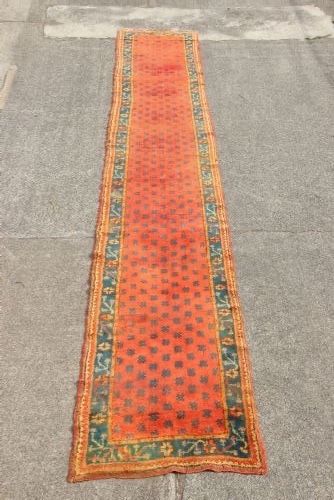
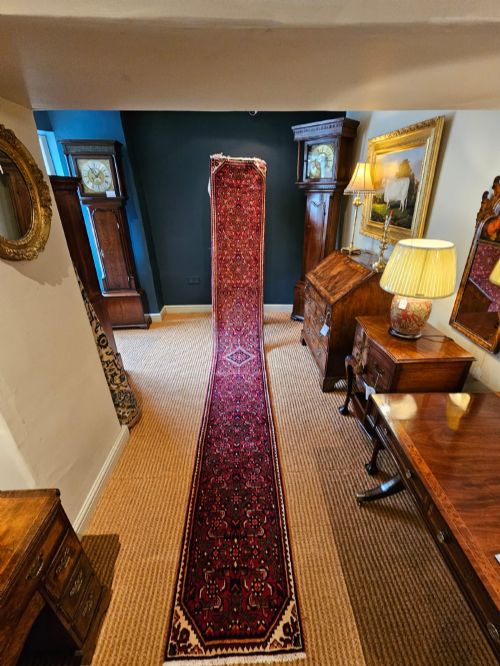
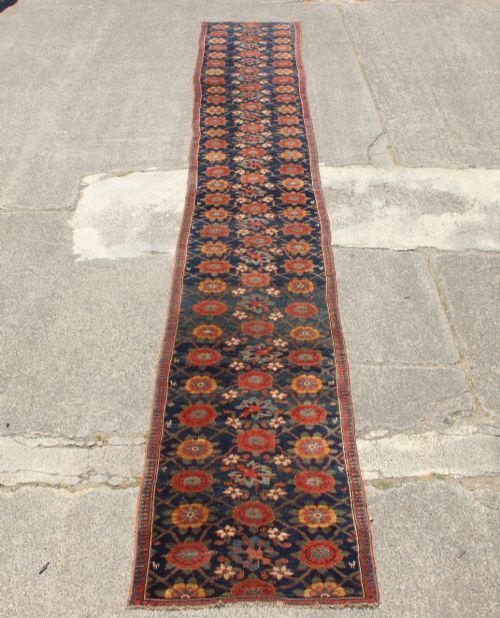
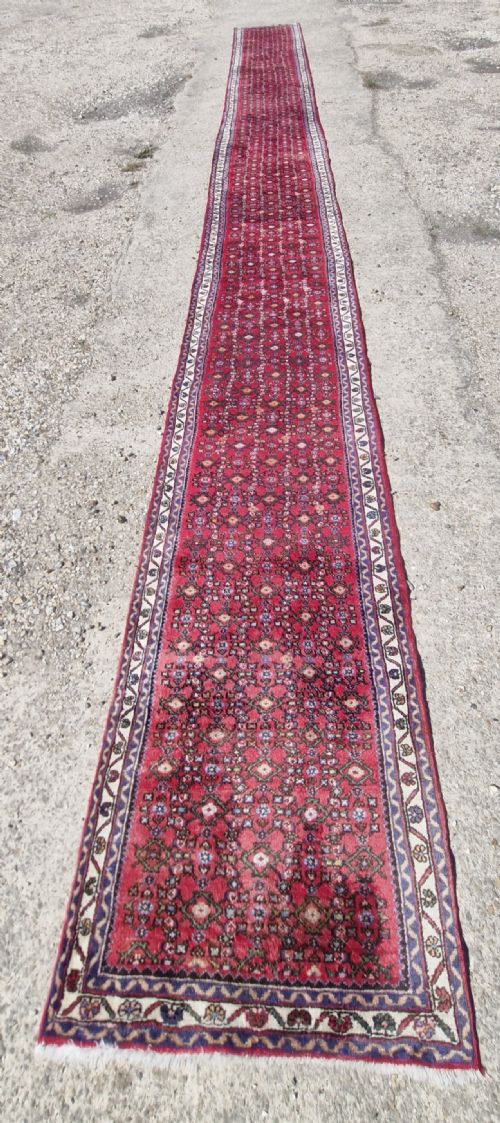


Extra Long Hallway Runner
An extra long hallway runner stretches out across extended corridors, bringing warmth and defined pattern to bare timber floors.
Extra Long Hallway Runner
An extra long hallway runner spans extended passages and stairwells, fulfilling a practical need for floor protection in narrow domestic spaces. These pieces arrive in proportions stretching from over four metres to immense lengths exceeding twelve metres, tailored specifically for grand halls and landings.
The selections span diverse origins, featuring traditional Persian styles alongside Kurdish tribal work, Moroccan Berber pieces, and Turkish Oushak or Konya kilim designs. Production dates stretch from the mid-nineteenth century through the mid-twentieth century, offering genuine period character for long circulation spaces.
Most examples appear as narrow rectangular carpets designed to anchor transit zones without overwhelming the corridor width. Buyers encounter woven formats that range from densely knotted pile carpets to flatwoven kilim structures.
Distinctions in quality
Quality rests in the precision of the weave and the structural stability across extended dimensions, ensuring the runner lies flat without warping along its length. Finer knots and tighter foundation packing separate masterwork tribal and village pieces from standard utility floor coverings.
The integrity of the wool pile and the preservation of natural dyes dictate the visual depth of the design over time. Superior examples maintain crisp geometric or floral motifs even when showing the softening effects of age.
Extra Long Hallway Runner Retail Price Guide 2026
Typical asking prices for extra long hallway runner among the pieces listed under this phrase on Sellingantiques today, from the lower quarter to the upper quarter. They describe what is for sale here now, not the wider market.
Periods represented span from eighteen-fifty through nineteen-sixty in various rug formats.
The Extra Long Hallway Runner Glossary
- Runner
- A long, narrow carpet designed specifically for hallways, corridors, and staircases. These pieces measure significantly longer than they are wide.
- Kilim
- A flatwoven carpet produced without a pile, created by tightly interweaving warp and weft strands. This technique yields a lightweight, reversible textile with distinct geometric patterns.
- Warp
- The vertical foundation threads stretched lengthwise on a loom before weaving begins. All other threads are interlaced through this stable framework.
- Weft
- The horizontal threads passed across the warp to hold the knots or pattern elements in place. Together, warp and weft form the structural grid of the textile.
- Pile
- The upright cut or looped surface yarn of a carpet that forms the soft top layer. Pile density contributes substantially to physical durability and sound absorption.
Extra Long Hallway Runner: Frequently Asked Questions
How do I measure for an extra long hallway runner?
Measure the clear floor space of your corridor, leaving a uniform border of exposed wood or tile on all sides. Account for door clearance so the runner does not jam when interior doors open.
Ensure you record the maximum length accurately, remembering that very long runners may span multiple thresholds or turn corners on landings.
Are these runners suitable for high traffic areas?
Natural wool construction provides robust durability designed to handle heavy daily foot traffic. Dense knotting in traditional Persian and tribal formats offers inherent resistance to crushing and wear.
Regular underlay placement helps absorb impact, protecting the historic foundation fibres from direct friction against hard subfloors.
How do I care for an antique wool runner?
Vacuum gently using suction attachment only, avoiding rotating brush bars that can pull at historic pile fibres. Rotate the runner periodically to ensure even wear patterns across high traffic zones.
Professional specialist cleaning is recommended to preserve natural lanolin in the wool and maintain dye stability over decades of use.
What styles are available in long runners?
Selections include traditional Persian village designs like Heriz, Bakhtiari, and Sarouk, alongside Kurdish tribal patterns. You will also find Moroccan Berber pieces and flatwoven Turkish kilims from Oushak and Konya.
Each regional style brings distinct motifs, ranging from geometric tribal medallions to expansive Mina Khani floral layouts.