



Blue Orange Imari Chargers
Blue orange imari chargers bring rich palettes and decorative presence to a room, offering the bold patterns collected for centuries.
Blue Orange Imari Chargers
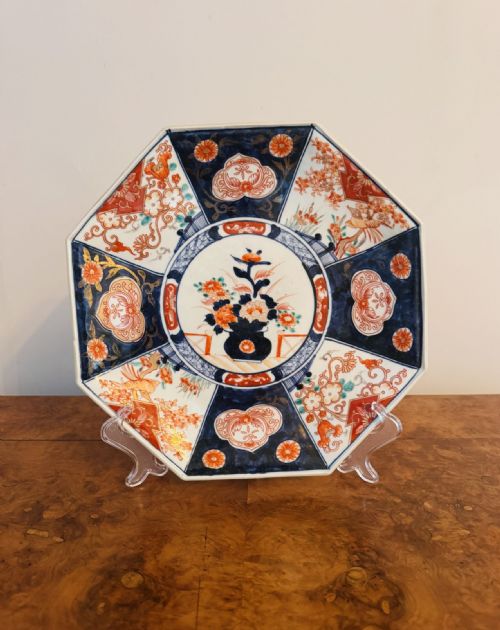
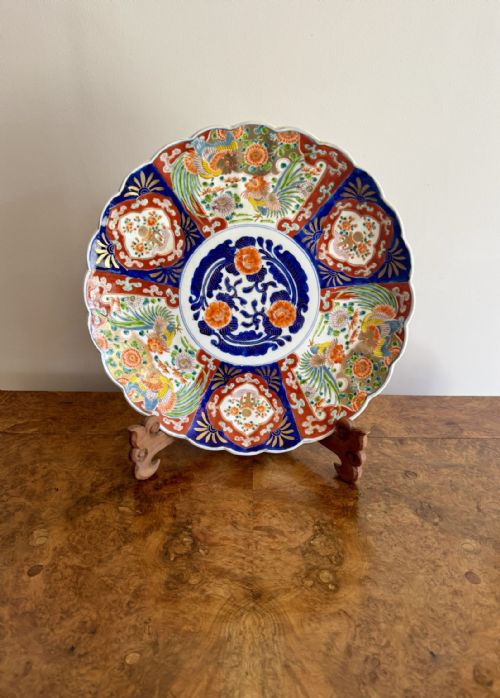
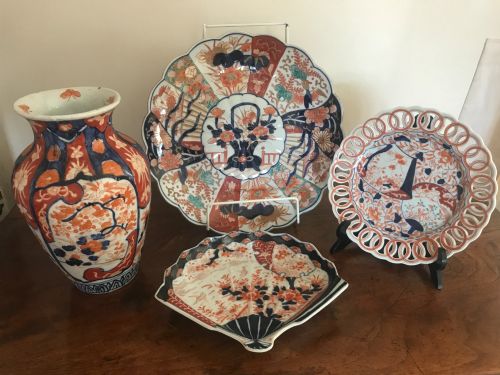
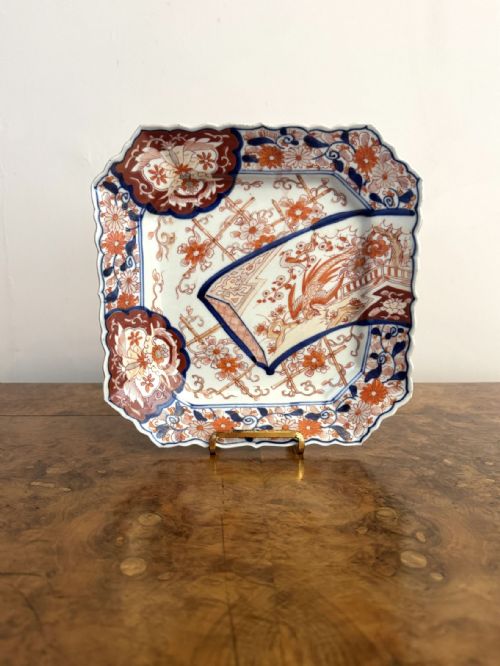
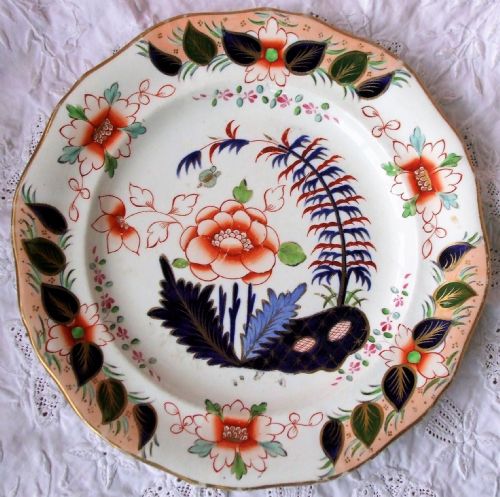
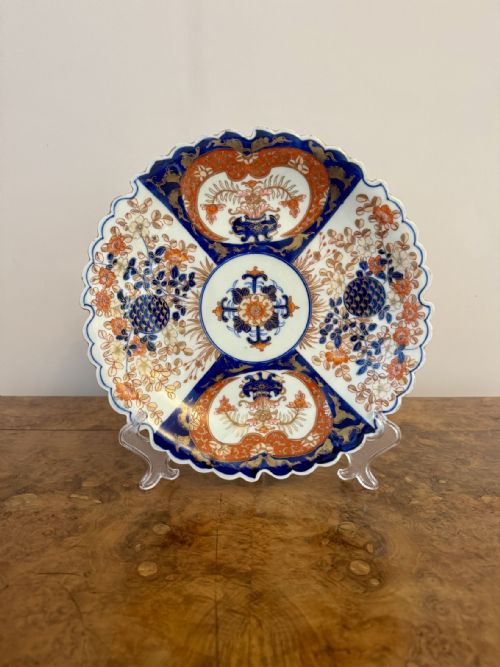
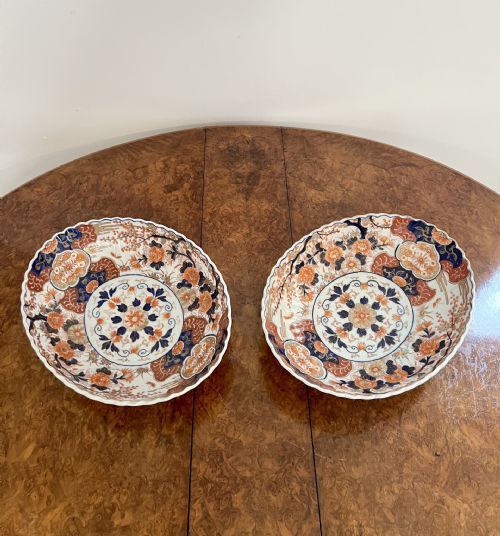
When searching for blue orange imari chargers, a buyer encounters striking decorative plates and large display dishes originating mainly from Japanese Edo and Meiji periods alongside Chinese export pieces and English ironstone. The pieces on this page lean heavily towards Japanese Imari porcelain items dating around nineteen hundred, nineteenth century, and earlier eras, spanning diverse shapes like square, fan-shaped, and scalloped designs.
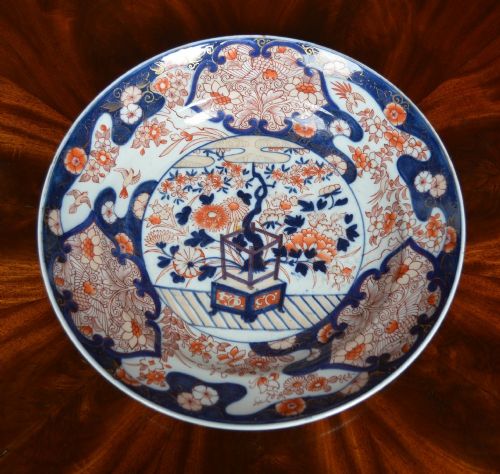
Beyond the standard circular chargers, the selection includes decorative bowls, wall plates, and large display dishes. These larger items provide substantial visual weight and were historically created for display rather than everyday dining, making them focal points in a traditional interior.
Materials and construction methods
The foundation of these pieces rests on hard porcelain, ceramic glaze, and ironstone, shaped into plates, bowls, and large chargers. Artisans applied hand-painted designs utilising enamel colours, gold leaf, gilt, and gilding to achieve the signature rich palette.
Firing techniques in Japanese and Chinese kilns allowed underglaze blue to combine with overglaze red and gilt details. This combination required multiple firings to set the durable glaze and the metallic highlights securely onto the ceramic body.
Several plates depict the Seven Lucky Gods sharing space with traditional floral motifs, bringing divine company straight to the sideboard.
Distinctions in grade and execution
The distinction between standard examples and the finest works lies in the precision of the hand painting and the complexity of the depicted subjects, such as figurative scenes of the Seven Lucky Gods. Superior pieces display crisp enamel application, vibrant gilding that retains its brilliance, and well-balanced compositions across unusual forms like fan-shaped or square plates.
The physical weight, the quality of the ceramic glaze, and the preservation of the original hand-painted palette define the upper tier of the range. Finer items show exceptional depth in the cobalt blue underglaze coupled with meticulously rendered iron-red and gold details.
John Davenport of Longport
The Blue Orange Imari Chargers Glossary
- Imari
- A style of ceramic originating in Japan and copied in China and Europe, typically decorated in underglaze blue, iron-red, and gilt. The name derives from the port from which the wares were shipped.
- Charger
- A large decorative plate intended for display on a wall or sideboard rather than for serving food at table. These pieces measure significantly larger than standard dinner plates.
- Meiji Period
- A period in Japanese history spanning from eighteen sixty-eight to nineteen twelve, known for opening trade and producing intricate export ceramics. Pieces from this era often show refined hand-painted details.
- Edo Period
- The period in Japanese history lasting from sixteen hundred and three to eighteen sixty-eight, preceding the Meiji era. Early chargers from this time display robust potting and deep cobalt tones.
- Ironstone
- A type of durable ceramic developed in nineteenth century England as a tough alternative to porcelain. English makers utilised this heavy body to produce Imari pattern tableware and display pieces.
Blue Orange Imari Chargers: Frequently Asked Questions
What is an imari charger?
An imari charger is a large decorative ceramic plate or dish featuring a distinctive palette of underglaze blue, iron-red, and gold. These pieces were produced for export and display.
They measure larger than standard dining plates and were traditionally shown on sideboards or hung on walls to catch the light.
How do I display a large charger?
Large chargers require secure wall mounts designed for heavy ceramics or sturdy plate stands placed on deep mantels and sideboards. Their substantial weight demands proper support to prevent slipping.
Positioning them away from direct sunlight protects the delicate enamel and gilt highlights from fading over time.
How do I tell Edo from Meiji period pieces?
Edo period ceramics typically exhibit heavier potting and deeper cobalt blue tones under simpler, bolder compositions. Meiji pieces often introduce finer brushwork and more complex decorative schemes.
Examining the foot ring and the texture of the glaze helps reveal the manufacturing traits characteristic of each distinct era.
Were these plates used for dining?
Chargers of this size served primarily as decorative showpieces for grand interiors rather than functional tableware for meals. Their intricate gilt surfaces were easily worn by cutlery.
Instead, they functioned as statements of wealth and taste, displayed prominently in reception rooms and dining halls.