


Vintage Japanese Art Ceramics
These vintage japanese art ceramics bring together centuries of kiln mastery and intricate enamel work to anchor any room with distinct character.
Vintage Japanese Art Ceramics
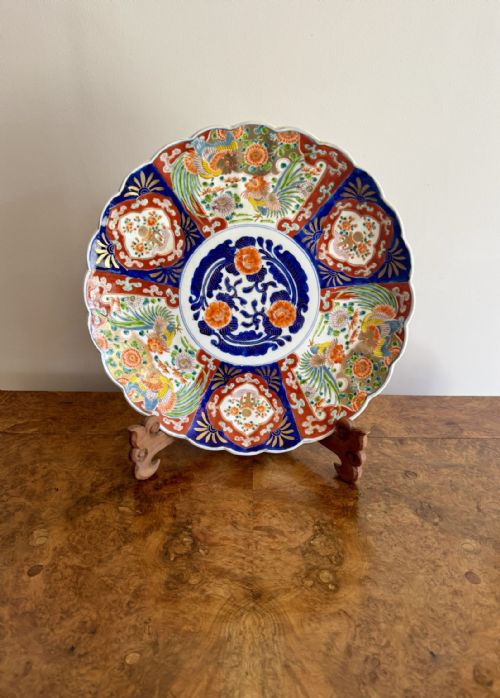
When you search for vintage japanese art ceramics, you enter a diverse field spanning late nineteenth-century export wares and twentieth-century studio pieces. The selection includes vibrant Imari chargers, delicate Satsuma vases, and expressive earthenware figures.
You are most likely to encounter porcelain vases, decorative plates, and sculptural okimono produced across the Meiji, Taisho, and early Showa periods. These objects range from household export items to ambitious works bearing studio signatures.
Forms vary from slender neck vases and wide jardinieres to figural depictions of deities and immortals. Each piece reflects the specific aesthetic concerns of its decade of production.
Materials and methods
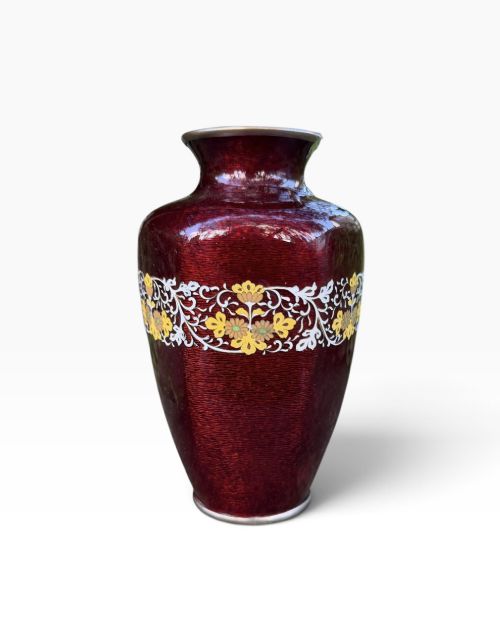
Potters shaped these objects from fine porcelain, heavy earthenware, and dense stoneware before applying mineral glazes and underglaze pigments. Techniques such as ginbari cloisonné incorporated raised metal foils beneath translucent enamels to create textured patterned backgrounds.
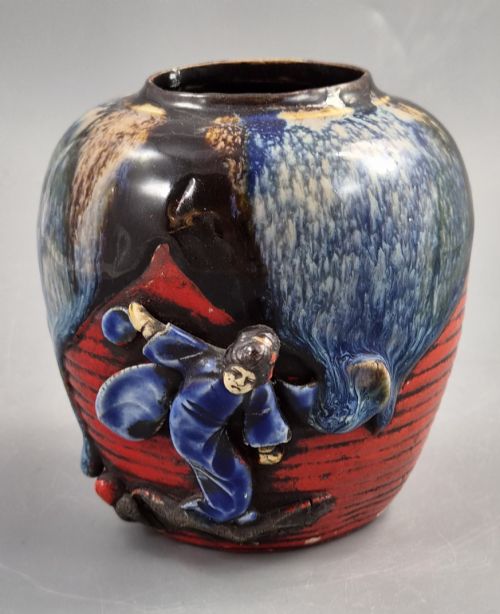
Decoration often relied on rich cobalt blues, copper reds, and heavy applications of gold leaf and gilt detailing. Kiln operators controlled reduction and oxidation firing to achieve distinctive flambé effects and glossy finishes.
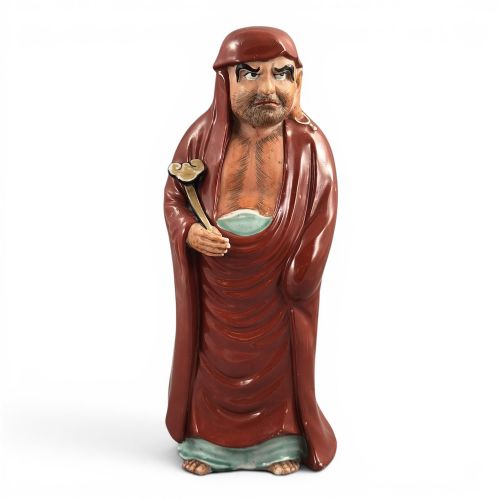
Several ceramic figures depict Daruma in deep contemplation, serving as a permanent, silent reminder not to fall asleep during your tea.
Assessing quality
Quality rests upon the precision of the hand-painted brushwork, the clarity of the enamel colours, and the balance of the overall form. Superior pieces display crisp detailing in faces, robes, and botanical motifs without blurring or pooling in the glaze.
The weight of the ceramic body and the neatness of the foot ring indicate the care taken during production. Finer studio works show deliberate individual artistry, whereas standard export items rely on established decorative formulas.
The Vintage Japanese Art Ceramics Glossary
- Imari
- A style of Japanese export porcelain featuring deep cobalt blue and iron red, frequently highlighted with gold. This palette developed in Arita and became immensely popular across European markets.
- Satsuma
- Earthenware pottery characterised by a fine, ivory-coloured crackle glaze and elaborate polychrome enamel decoration. Many pieces incorporate raised gold work known as moriage.
- Okimono
- A standalone Japanese display figure carved from wood, ivory, or modelled in ceramic. These sculptural objects were designed specifically for interior display in a tokonoma alcove.
- Ginbari
- A specialised Japanese cloisonné technique where a textured metal foil is applied to the base vessel before translucent enamel is laid over top. This creates a shimmering, patterned depth beneath the coloured surface.
- Kutani
- A style of Japanese porcelain and pottery originating from Ishikawa prefecture, known for bold pictorial designs and vibrant green, yellow, red, and purple enamels.
Vintage Japanese Art Ceramics: Frequently Asked Questions
How do I date these ceramics?
Dating relies on stylistic shifts, historical periods like Meiji or Taisho, and characteristic glaze formulations. Kiln marks and baseline signatures also help narrow the decade of manufacture.
Examine the potting technique and wear patterns on the base to confirm whether a piece belongs to the nineteenth or twentieth century.
Where were these pieces displayed?
Many large chargers and vases served as focal points in Victorian and Edwardian drawing rooms. Smaller okimono figures sat on mantelpieces or within dedicated display alcoves.
Their robust construction allowed them to function both as decorative containers and as standalone sculptures.
How do I clean antique ceramics?
Dust surfaces gently with a soft, dry brush to prevent abrasive particles from scratching delicate gilt and enamel layers. Avoid using chemical cleaners or immersing pieces with exposed earthenware bodies.
For glazed porcelain, a damp cloth with mild soap suffices, provided the piece has no structural cracks or previous repairs.
What is the difference between earthenware and porcelain?
Earthenware is fired at lower temperatures, resulting in a porous, heavier body that usually requires an opaque glaze like Satsuma. Porcelain uses fine kaolin clay fired at high heat to vitrify the material into a dense, non-porous white ceramic.
Porcelain pieces often ring when lightly tapped, whereas earthenware produces a duller sound.